Welcome to this UK AstraZeneca produced and funded website

This website is intended for UK Healthcare Professionals only.


The website contains both promotional and non-promotional content.


If you are a patient or a carer of a patient prescribed an AstraZeneca product, please visit myazmed.co.uk


For any other UK residents please visit astrazeneca.co.uk

I am not a Healthcare Professional
Prescribing Information Forxiga® (dapagliflozin)
Adverse Event Reporting

This website is intended for UK Healthcare Professionals only. Other UK residents please visit astrazeneca.co.uk

AstraZeneca-logo
  • Our Medicines
    • Cardiovascular, Renal & Metabolism
      • ATTR Amyloidosis
        • WAINZUA®▼(eplontersen)
      • Chronic Kidney Disease (CKD)
        • FORXIGA® (dapagliflozin)
      • Heart Failure
        • FORXIGA® (dapagliflozin)
      • Hyperkalaemia
        • LOKELMA® (sodium zirconium cyclosilicate)
      • Type 2 Diabetes (T2D)
        • FORXIGA® (dapagliflozin)
    • Oncology
      • Breast Cancer
        • LYNPARZA® (olaparib)
        • TRUQAP®▼(capivasertib)
      • Bladder Cancer
        • IMFINZI® (durvalumab)
      • Endometrial Cancer
        • IMFINZI® (durvalumab)
        • LYNPARZA® (olaparib)
      • Gastrointestinal Cancer
        • IMFINZI® (durvalumab)
        • IMJUDO®▼(tremelimumab)
      • Lung Cancer
        • IMFINZI® (durvalumab)
        • TAGRISSO® (osimertinib)
      • Ovarian Cancer
        • LYNPARZA® (olaparib)
      • Prostate Cancer
        • LYNPARZA® (olaparib)
        • ZOLADEX® (goserelin)
    • Respiratory
      • Asthma
        • TEZSPIRE®▼ (tezepelumab)
        • SYMBICORT® (budesonide/formoterol)
      • Chronic Obstructive Pulmonary Disease(COPD)
        • TRIXEO AEROSPHERE® (formoterol fumarate dihydrate/glycopyrronium/budesonide)
        • BEVESPI® (glycopyrronium/formoterol fumarate dihydrate)
    • Vaccines
      • Flu
        • FLUENZ® nasal spray suspension (influenza vaccine, live attenuated, nasal)
  • Therapy Areas
    • Cardiovascular, Renal & Metabolism
      • ATTR Amyloidosis
      • Chronic Kidney Disease (CKD)
      • Heart Failure
      • Hyperkalaemia
      • Type 2 Diabetes (T2D)
    • Oncology
      • Breast Cancer
      • Bladder Cancer
      • Endometrial Cancer
      • Gastrointestinal Cancer
      • Lung Cancer
      • Ovarian Cancer
      • Prostate Cancer
    • Respiratory
      • Asthma
      • Chronic Obstructive Pulmonary Disease(COPD)
    • Vaccines
      • Flu
  • About us
    • AZ Commitment
  • Contact us
  • AstraZeneca UK
  • Forxiga (dapagliflozin)
  • Heart-failure
  • Welcome to Forxiga
  • Type 2 Diabetes
  • Chronic Kidney Disease
  • Heart Failure
  • Safety
FORXIGA (dapagliflozin) and Heart Failure | AstraZeneca UK


FORXIGA (dapagliflozin) and heart failure

FORXIGA (dapagliflozin) has a well-established safety profile and was able to, in addition to standard of care (SoC), reduce the composite risk of worsening heart failure (HF) or cardiovascular (CV) death compared with placebo plus SoC.1-3


Please click here for the safety and tolerability profile of dapagliflozin

  • Unmet need
  • Guidelines
  • Clinical trials
  • Efficacy
  • Patient materials

Dapagliflozin, an SGLT2 inhibitor, is indicated in adults for the treatment of symptomatic chronic heart failure (HF)1

Our landmark DAPA-HF trial investigated the efficacy and safety of dapagliflozin in the treatment of HFrEF (LVEF≤ 40%). Dapagliflozin demonstrated a clinically meaningful improvement in HF symptoms compared with placebo1,2

There was a reduction in the composite of worsening HF or CV death vs. placebo, in patients who took dapagliflozin2

The DELIVER trial investigated the efficacy and safety of dapagliflozin in patients with LVEF>40%3

Sodium-glucose co-transporter-2 inhibitors (SGLT-2i), like dapagliflozin, are now recommended by the European Society of Cardiology (ESC) as an option for first-line treatment for symptomatic heart failure across the range of ejection fractions

ESC definition of heart failure with reduced ejection fraction, mildly reduced ejection fraction, and preserved ejection fraction:4

Type of HF
HFrEF
HFmrEF
HFpEF**
Criteria1Symptoms ± signs*Symptoms ± signs*Symptoms ± signs*
2LVEF ≤40%LVEF 41–49%†LVEF ≥50%

© ESC 2023


**Objective evidence of cardiac structural and/or functional abnormalities consistent with the presence of LV diastolic dysfunction/raised LV filling pressures, including raised natriuretic peptides‡

*Signs may not be present in the early stages of HF (especially in HFpEF) and in optimally treated patients. †For the diagnosis of HFmrEF, the presence of other evidence of structural heart disease (e.g., increased left atrial size, LV hypertrophy, or echocardiographic measures of impaired LV filling) makes the diagnosis more likely. ‡For the diagnosis of HFpEF, the greater the number of abnormalities present, the higher the likelihood of HFpEF.

The unmet need in heart failure

HF prevalence

heart-beat-icon heart-beat-icon

>1,000,000

people in the UK have HF5

heart-beat-icon heart-beat-icon

~200,000

people are diagnosed with HF annually in the UK5

Impact of HF on patient’s lives

heart-beat-icon heart-beat-icon

~87%

of patients with HF present with >3 co-morbidities, including diabetes, CKD and AF6

heart-beat-icon heart-beat-icon

~1 in 4

patients with HF are readmitted within 30 days of hospital admission7

heart-beat-icon heart-beat-icon

The 5-year mortality rate

in patients with HF is ~50%, which increases significantly after each HF readmission8

Impact of HF on the healthcare system

heart-beat-icon heart-beat-icon

HF accounts

for ~1 million bed days per year in the NHS9

heart-beat-icon heart-beat-icon

Up to 2%

of total National Health Service (NHS) expenditure is attributed to the treatment of patients with HF, with 60–70% related to costs of hospitalisation10

Back to top

Dapagliflozin in heart failure treatment guidelines


Explore the current guidelines and treatment recommendations for heart failure (HF)


In national and international guidelines, dapagliflozin is recommended for the treatment of eligible patients with Heart Failure3,11-15

Dapagliflozin in heart failure: UK guidelines and recommendations

National Institute for Health and Care Excellence (NICE) recommend and Scottish Medicines Consortium (SMC) accept use of dapagliflozin for the treatment of eligible patients with symptomatic chronic heart failure11,12

Dapagliflozin HFrEF treatment recommendations

one-icon one-icon

Dapagliflozin is recommended as an option for treating symptomatic chronic HFrEF in adults, only if it is used as an add-on to optimised standard of care with:

  • Angiotensin-converting enzyme inhibitors (ACEi) or angiotensin 2 receptor blockers (ARBs), with beta blockers, and, if tolerated, mineralocorticoid receptor antagonists (MRAs),
    
OR
  • Sacubitril valsartan, with beta blockers, and, if tolerated, MRAs
two-icon two-icon

Start treatment of symptomatic HFrEF with dapagliflozin on the advice of a HF specialist. Monitoring should be done by the most appropriate healthcare professional

three-icon three-icon

These recommendations are not intended to affect treatment with dapagliflozin that was started in the National Health Service (NHS) before this guidance was published.

People receiving treatment outside of these recommendations may continue with their treatment, without changes being made to the funding arrangements put in place for them prior to these guidelines being published, until they and their NHS clinician consider it appropriate to stop

Dapagliflozin HFmrEF and HFpEF treatment recommendation

Dapagliflozin is recommended, within its marketing authorisation, as an option for treating symptomatic chronic heart failure with preserved or mildly reduced ejection fraction in adults13

FORXIGA (dapagliflozin) for the treatment of HFrEF

SMC have accepted use of dapagliflozin (Forxiga) in adults for the treatment of symptomatic chronic heart failure with reduced ejection fraction


In a randomised, double-blind, phase III study, dapagliflozin demonstrated a significant reduction in the composite outcome of hospitalisation for heart failure, urgent heart failure visit and cardiovascular death compared with placebo in patients with heart failure with reduced ejection fraction receiving current standard of care.


Heart failure treatment was optimised and stable for at least 4 weeks before study enrolment and, unless contraindicated or not tolerated, included an ACE inhibitor or ARB or sacubitril/valsartan and betablocker, and if considered appropriate by the patient’s treating physician, a MRA.

FORXIGA (dapagliflozin) for the treatment of chronic heart failure

FORXIGA has been accepted for use within NHS Scotland, by the SMC, in adults for the treatment of symptomatic chronic heart failure with left ventricular ejection fraction (LVEF) >40%14

Dapagliflozin in heart failure: International guidelines

ESC 2021 HF guidelines:15

  • SGLT2 inhibitors, such as dapagliflozin, receive a Class 1A recommendation in all symptomatic chronic HFrEF patients to reduce the risk of mortality and heart failure hospitalisations

  • SGLT2 inhibitors are recommended as one of the four cornerstone therapies for HFrEF by the ESC 2021 Heart Failure Guidelines


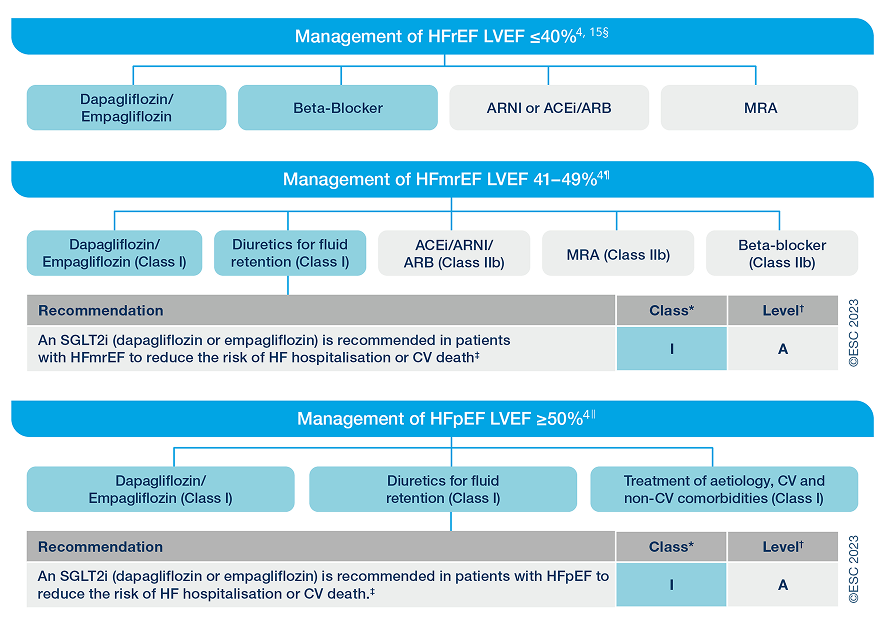
2023 Focused update of 2021 ESC HF guidelines:4

  • SGLT2 inhibitors, such as dapagliflozin, receive a Class 1A recommendation for reducing the risk of HF hospitalisation or CV death in patients with symptomatic HFmrEF​4

  • SGLT2 inhibitors, such as dapagliflozin, receive a Class 1A recommendation for reducing the risk of HF hospitalisation or CV death in people with symptomatic HFpEF​4

management-graph management-graph

Adapted from ESC 2021 and 2023

* Class of recommendations.

† Level of evidence.

‡ This recommendation is based on the reduction of the primary composite endpoint used in the EMPEROR-Preserved and DELIVER trials and in a meta-analysis. However, it should be noted that there was a significant reduction only in HF hospitalisations and no reduction in CV death.

§ For HFrEF (≤40%): ARNI/ACEi/ARB, Beta-blocker, MRA, and SGLT2i are all Class I, Level A recommendations (ESC 2021; ESC Focused Update 2023).

¶ For HFmrEF (41–49%): SGLT2i therapy is Class I, Level A (ESC 2023). ACEi/ARB/ARNI, Beta-blocker, and MRA remain Class IIb.

‖ For HFpEF (≥50%): SGLT2i therapy is Class I, Level A (ESC 2023). Other therapies are supportive (e.g., diuretics for symptom relief, comorbidity management).

Back to top

Dapagliflozin studies & trials: DAPA-HF and DELIVER

DAPA-HF was the first study to investigate the use of a sodium-glucose co-transporter-2 inhibitor (SGLT-2i) in patients with heart failure (HF), with or without type 2 diabetes (T2D)1,2

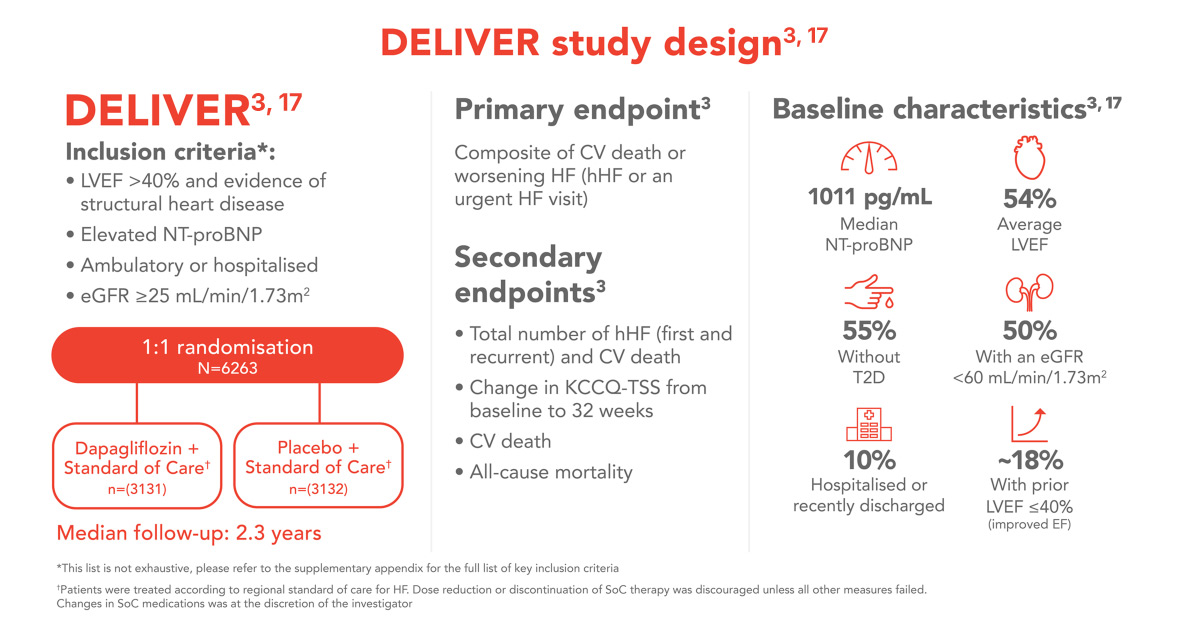
DELIVER was the largest trial to date to evaluate patients with heart failure with mildly reduced ejection fraction (HFmrEF) and heart failure with preserved ejection fraction (HFpEF).1,3

DAPA-HF was an international, multicentre, randomised, double-blind, placebo-controlled study in patients with heart failure with reduced ejection fraction (HFrEF), regardless of the presence of T2D, evaluating the effect of dapagliflozin 10 mg, compared with placebo, given once daily, in addition to standard care.

The DELIVER trial was a phase 3, international,multicentre, double-blind, randomised, controlled trial in which patients with chronic heart failure and a left ventricular ejection fraction of more than 40% received dapagliflozin or matching placebo, in addition to their usual therapy.

Dapa-hf-study-design Dapa-hf-study-design

*Experience with dapagliflozin in NYHA class IV is limited

† Worsening HF was defined as either an unplanned hospitalisation or an urgent HF visit requiring intravenous (IV) therapy for HF


‡ Patients received background standard drug and device therapy for HFrEF, in accordance with recognised guidelines. Standard drug therapy included an angiotensin-converting enzyme inhibitor, angiotensin receptor blocker, or sacubitril-valsartan plus a beta blocker, unless contraindicated or resulted in unacceptable side effects. Use of an aldosterone receptor antagonist was encouraged1,2


heart-beat-icon heart-beat-icon

Key exclusion criteria:*2,16

  • Recent treatment with, or unacceptable side effects associated with, an SGLT-2i
  • In patients with type 1 diabetes
  • Patients with symptoms of hypotension or a systolic blood pressure of <95 mm Hg

*This list is not exhaustive, please refer to the supplementary appendix for the full list of key exclusion criteria


study-design study-design
Back to top

Dapagliflozin and heart failure: efficacy

DAPA-HF Clinical trial

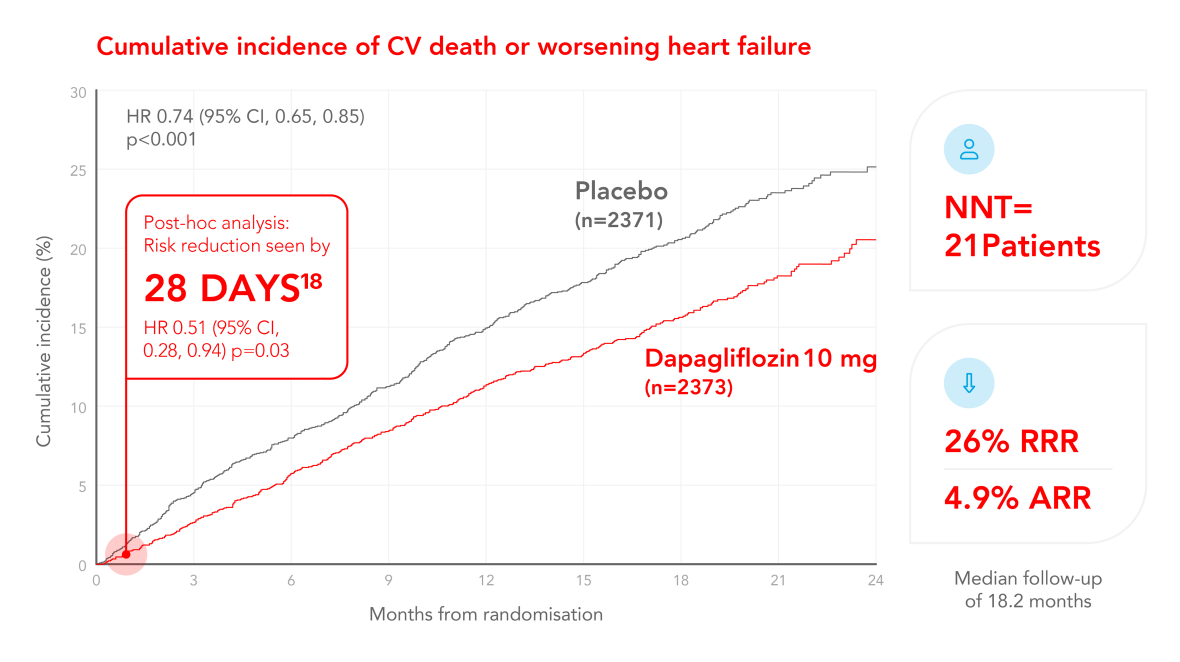
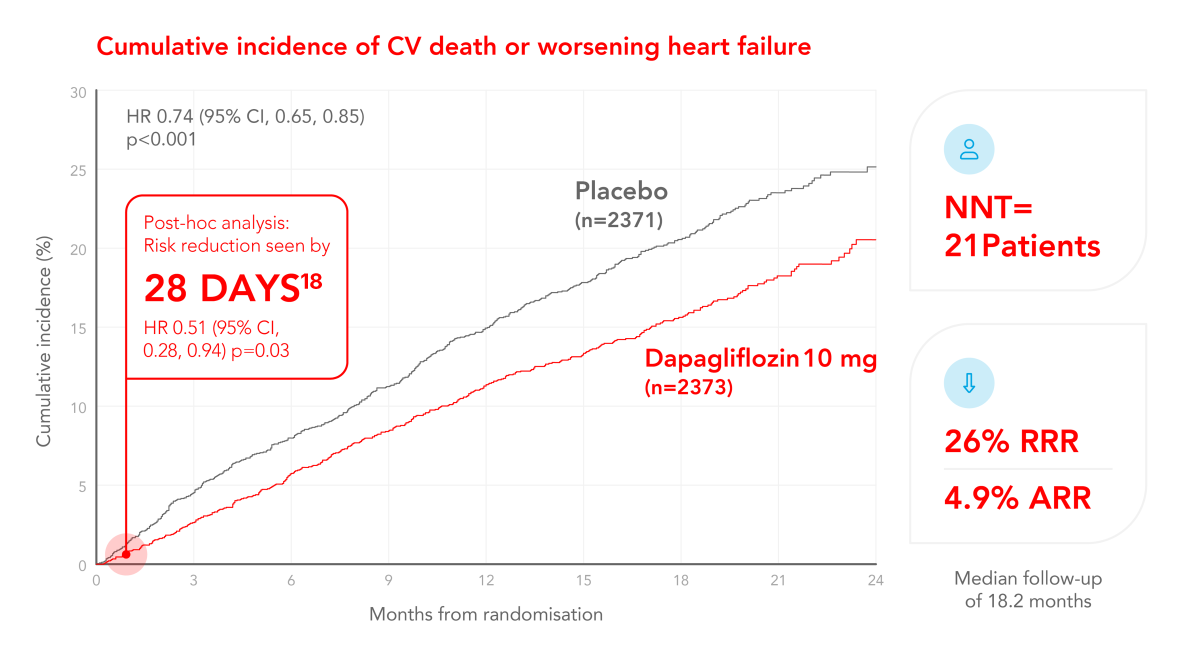
Primary endpoint: A composite of CV death or worsening HF (an episode of worsening HF was either an unplanned hospitalisation or an urgent HF visit requiring intravenous [IV] therapy for HF)2


Cummulative-incidence Cummulative-incidence

Adapted from McMurray et al. 20192

heart-beat-icon heart-beat-icon

Dapagliflozin reduced the risk of the composite endpoint of CV death or worsening heart failure. All components of the composite outcome favoured treatment with dapagliflozin compared with placebo2


A post-hoc analysis showed that risk reduction was seen within the initial 28 days of dapagliflozin treatment, this impact was also long-lasting as it persisted throughout the study which has a median follow-up of 18.2 months2,18

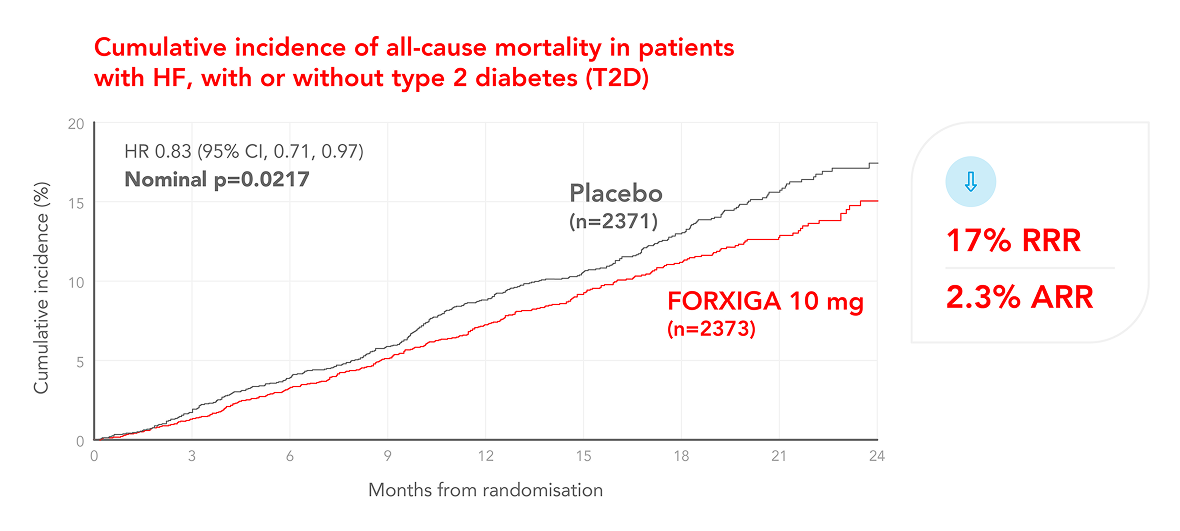
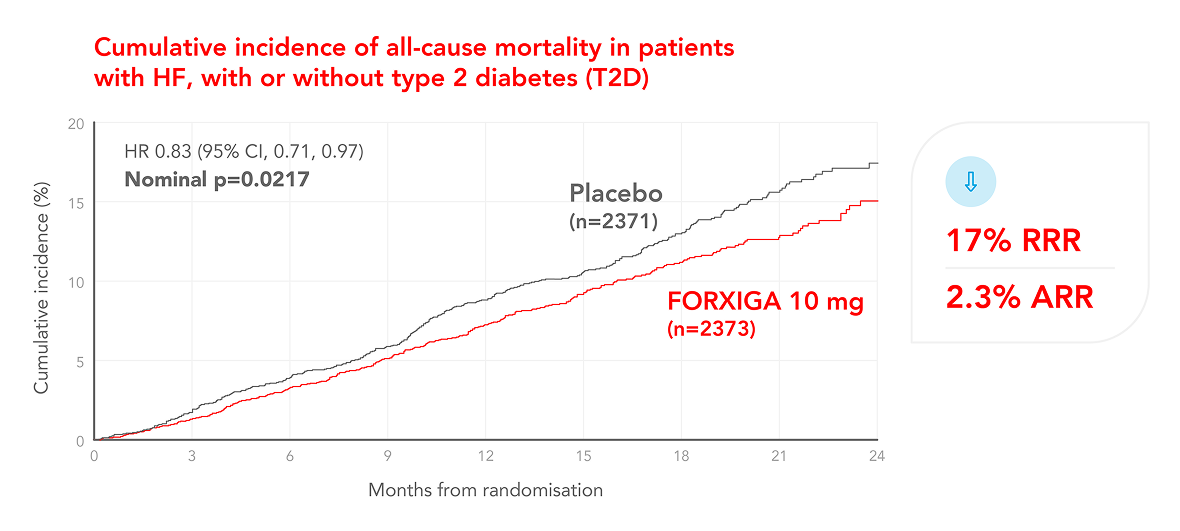
Secondary endpoint: All-cause mortality1,2

On top of standard of care, dapagliflozin reduced the risk of all-cause mortality (nominal p=0.0217)1,2*

Cummulative-incidence Cummulative-incidence

*Due to the hierarchical testing strategy, all-cause mortality was nominally significant.

Adapted from McMurray et al. 20192


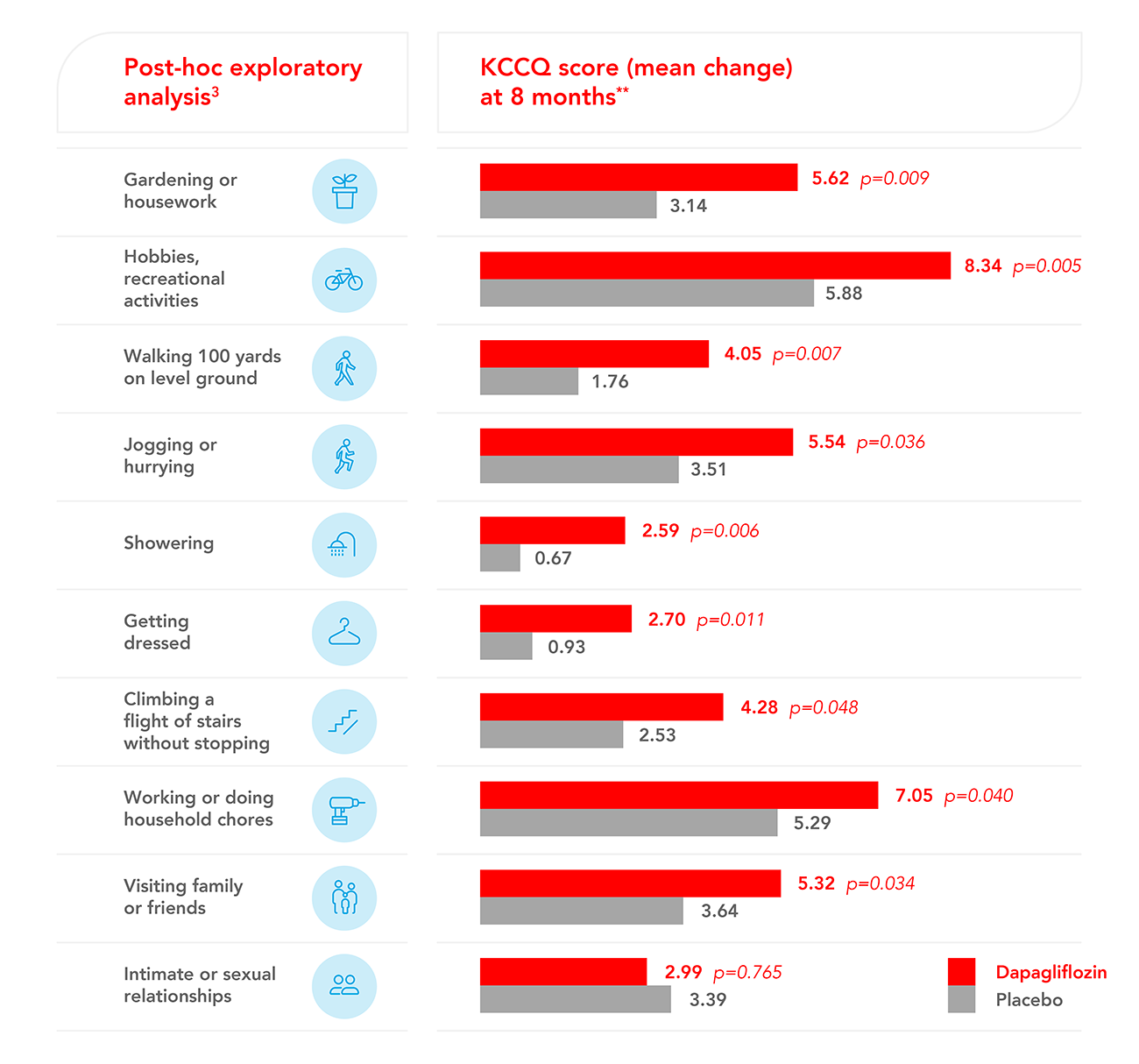
In a post-hoc* quality-of-life analysis, dapagliflozin demonstrated an improvement in several physical 
and social limitations vs placebo.19,20

On top of standard of care, treatment with dapagliflozin resulted in a clinically meaningful improvement in HF symptoms1,2

*Measured by the change from baseline at Month 8 in the KCCQ-TSS (win ratio 1.18; 95% CI: 1.11-1.26; p<0.0001).1,2 Symptom improvement was assessed by the KCCQ-TSS, which quantifies HF symptom frequency and severity, including fatigue, peripheral oedema, dyspnoea and orthopnoea.1,2


post-host-exploratory post-host-exploratory


**In DAPA-HF, 4443 patients had available KCCQ data19,20

A ≥5-point change in the KCCQ score was classed as clinically meaningful1,2

DELIVER clinical trial

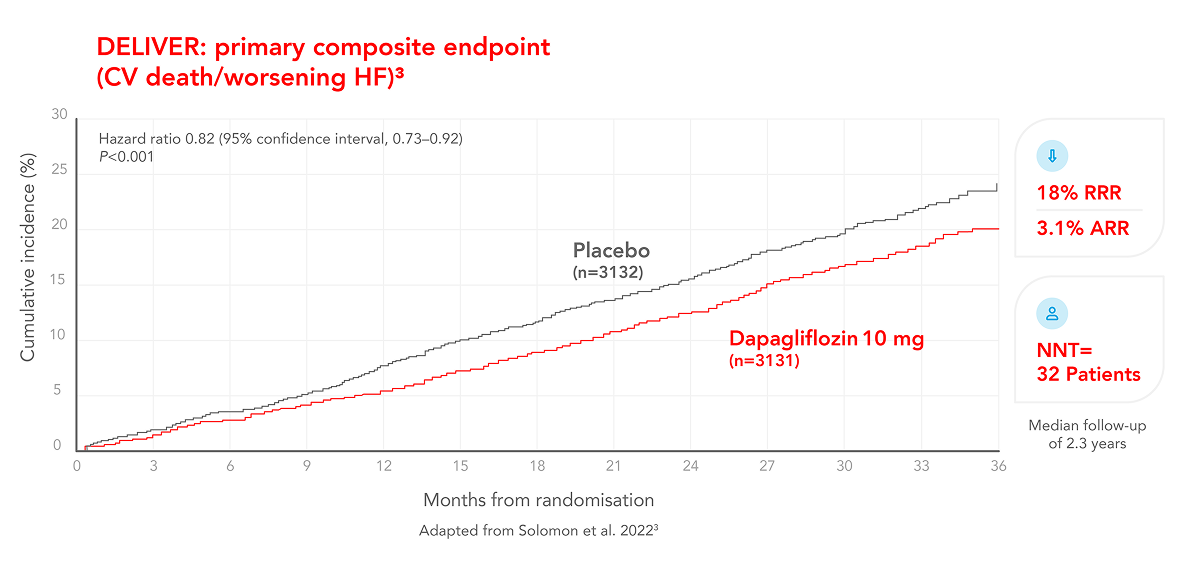
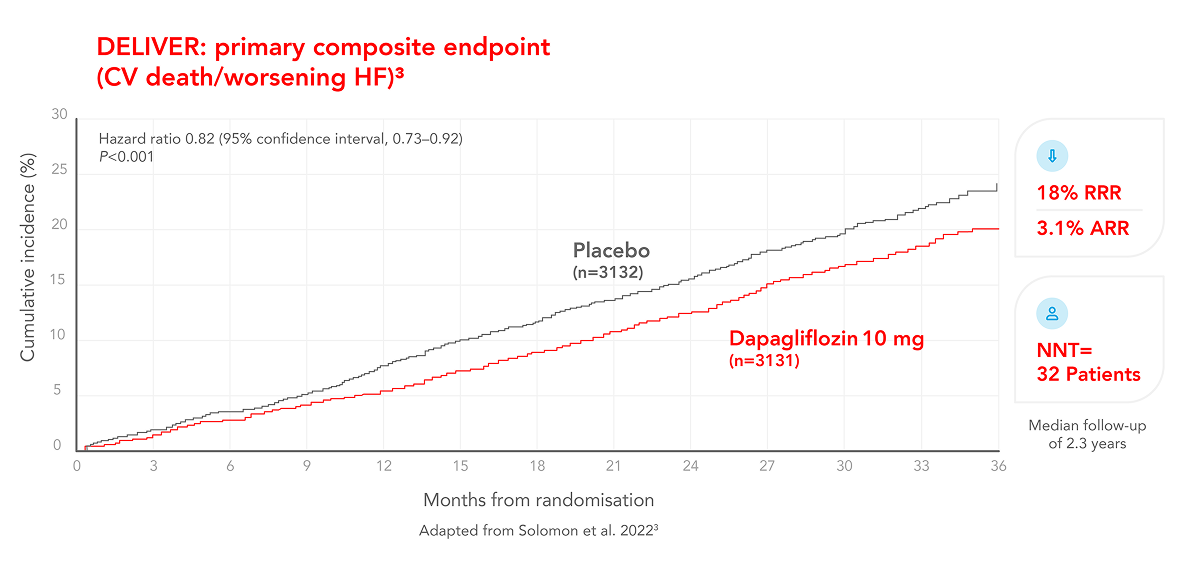
Dapagliflozin reduced the risk of CV death or worsening HF for patients with LVEF >40%3

Delivery-primary Delivery-primary
Back to top

Shield-icon

Safety profile

Understand key safety considerations about the use of dapagliflozin.

Find out more

For your patients living with heart failure.

A comprehensive and patient-friendly guide that helps your patients better understand heart failure.

Download Now

A short leaflet to support patients manage their heart failure treatment during an illness.

Download Now
Back to top

ACE, angiotensin converting enzyme inhibitor; AF, atrial fibrillation; ARB, angiotensin receptor blockers; ARNI, angiotensin receptor-neprilysin inhibitors; ARR, absolute risk reduction; CI, confidence interval; CKD, chronic kidney disease; CV, cardiovascular; DAPA-HF, Dapagliflozin and Prevention of Adverse Outcomes in Heart Failure; DELIVER, Dapagliflozin Evaluation to Improve the Lives of Patients with Preserved Ejection Fraction Heart Failure; ESC, European Society of Cardiology; eGFR, estimated glomerular filtration rate; GDMT, guideline-directed medical therapy; HF, heart failure; HFA-ESC, Heart Failure Association of the ESC; HFmrEF, heart failure with mildly-reduced ejection fraction; HFpEF, heart failure with preserved ejection fraction; hHF, hospitalisation for heart failure; HR, hazard ratio; IV, intravascular; KCCQ-TSS, Kansas City Cardiomyopathy Questionnaire-Total symptom score; LVEF, left ventricular ejection fraction; MRA, mineralocorticoid receptor antagonists; NHS, National Health Service; NICE, National Institute for Health and Care Excellence; NNT, number needed to treat; NT-proBNP, N-terminal pro–B-type natriuretic peptide; NYHA, New York Heart Association; RRR, relative risk reduction; SGLT2i, Sodium-glucose Cotransporter-2 inhibitor; SMC, Scottish Medicines Consortium; T2D, type 2 diabetes.


  1. FORXIGA 10 mg film-coated tablets – Summary of Product Characteristics (SmPC).
  2. McMurray JJV, et al. Dapagliflozin in Patients with Heart Failure and Reduced Ejection Fraction. N Engl J Med. 2019;381:1995–2008.
  3. Solomon SD, et al. Dapagliflozin in Heart Failure with Mildly Reduced or Preserved Ejection Fraction. N Engl J Med. 2022;387(12):1089–1098.
  4. McDonagh TA, et al. Eur Heart J. 2023;00:1–31.
  5. BHF UK Factsheet 2025. Available at https://www.bhf.org.uk/-/media/files/for-professionals/research/heart-statistics/bhf-cvd-statistics-uk-factsheet.pdf. Last accessed January 2025.
  6. Conrad N, et al. Lancet. 2018;391:572–580.
  7. Loops M, et al. J Am J Cardiol. 2016;118(1):79–85.
  8. Cowie MR, et al. ESC Heart Fail. 2014;1(2):110–145.
  9. NHS Heart Disease Training Directory. October 2023. Available at: https://www.hee.nhs.uk/sites/default/files/documents/Heart%20Disease%20Training%20Directory.pdf. Accessed June 2025.
  10. Cowie MR. The heart failure epidemic: a UK perspective. Echo Res Pract. 2017;4(1):R15–R20.
  11. NICE (2023) Dapagliflozin for treating chronic heart failure with reduced ejection fraction. [TA679]. Available from: https://www.nice.org.uk/guidance/ta679/resources/dapagliflozin-for-treating-chronic-heart-failure-with-reduced-ejection-fraction-pdf-82609327895605. Accessed June 2025. All rights reserved. Subject to notice of rights. NICE guidance is prepared for the National Health Service in England. All NICE guidance is subject to regular review and may be updated or withdrawn. NICE accepts no responsibility for the use of its content in this product/publication.

  12. Scottish Medicines Consortium. Dapagliflozin for the treatment of adults with symptomatic chronic heart failure with reduced ejection fraction: Decision Advice Document (DAD)–Published 12 April 2021. Available at: https://scottishmedicines.org.uk/medicines-advice/dapagliflozin-forxiga-full-smc2322/.Last accessed July 2025.
  13. NICE (2023) Dapagliflozin for treating chronic heart failure with preserved and/or mildly reduced ejection fraction. [TA902]. Available from: https://www.nice.org.uk/guidance/ta902 Accessed June 2025.
  14. Scottish Medicines Consortium. Use of SGLT2 inhibitors in people with heart failure with left ventricular ejection fraction (LVEF) > 40%: Decision Advice Document (DAD) – Published 07 August 2023. https://www.scottishmedicines.org.uk/medicines-advice/dapagliflozin-forxiga-abb-smc2577/ Accessed June 2025.
  15. McDonagh TA, et al. Eur J Heart Fail. 2021;24(3):3599–3726.
  16. McMurray JJV, et al. A trial to evaluate the effect of the sodium-glucose co-transporter 2 inhibitor dapagliflozin on morbidity and mortality in patients with heart failure and reduced left ventricular ejection fraction (DAPA-HF). Eur J Heart Fail. 2019;21(5):665–675.
  17. Solomon SD, et al. Baseline Characteristics of Patients With HF With Mildly Reduced and Preserved Ejection Fraction: DELIVER Trial. JACC Heart Fail. 2022;10(3):184–197.
  18. Berg DD, et al. Time to Clinical Benefit of Dapagliflozin and Significance Of Prior Heart Failure Hospitalization in Patients With Heart Failure With Reduced Ejection Fraction. JAMA Cardiol. 2021;6(5):499–507.
  19. Kosiborod MN, et al. Effects of Dapagliflozin on Symptoms, Function, and Quality of Life in Patients with Heart Failure and Reduced Ejection Fraction: Results From the DAPA-HF Trial. Circulation. 2020;141(2):90–99.
  20. Docherty K, et al. Presentation at AHA Scientific Sessions 2020. 13–17 November 2020; Virtual.


GB-64438 | September 2025

Adverse events should be reported. Reporting forms and information can be found at www.mhra.gov.uk/yellowcard or search for MHRA Yellow Card in the Google Play or Apple App Store. Adverse events should also be reported to AstraZeneca by visiting https://contactazmedical.astrazeneca.com/ or by calling ‌‌‌0‌‌‌8‌‌‌‌‌0‌‌‌‌0‌‌‌ ‌‌7‌‌‌‌‌‌8‌‌‌3‌‌‌ ‌‌0‌‌‌‌‌0‌‌‌‌3‌‌‌‌3‌‌‌.

Connessiallasalute.it

This website was created for UK HCPs and has been designed to provide information to educate, empower and enable them in the great work they are doing for patients across a range of therapy areas. This website is intended for doctors, nurses, and pharmacists in the UK. Other UK residents please visit astrazeneca.co.uk.

Terms of use

Privacy Policy

Cookie Policy

Contact Us

LinkedIn

Twitter

©2024 AstraZeneca. GB-70329 | DOP: September 2025