Welcome to this UK AstraZeneca produced and funded website

This website is intended for UK Healthcare Professionals only.


The website contains both promotional and non-promotional content.


If you are a patient or a carer of a patient prescribed an AstraZeneca product, please visit myazmed.co.uk


For any other UK residents please visit astrazeneca.co.uk

I am not a Healthcare Professional
Prescribing Information FLUENZ® nasal spray suspension (influenza vaccine, live attenuated, nasal)
Adverse Event Reporting

This website is intended for UK Healthcare Professionals only. Other UK residents please visit astrazeneca.co.uk

AstraZeneca-logo
  • Our Medicines
    • Cardiovascular, Renal & Metabolism
      • ATTR Amyloidosis
        • WAINZUA®▼(eplontersen)
      • Chronic Kidney Disease (CKD)
        • FORXIGA® (dapagliflozin)
      • Heart Failure
        • FORXIGA® (dapagliflozin)
      • Hyperkalaemia
        • LOKELMA® (sodium zirconium cyclosilicate)
      • Type 2 Diabetes (T2D)
        • FORXIGA® (dapagliflozin)
    • Oncology
      • Breast Cancer
        • LYNPARZA® (olaparib)
        • TRUQAP®▼(capivasertib)
      • Bladder Cancer
        • IMFINZI® (durvalumab)
      • Endometrial Cancer
        • IMFINZI® (durvalumab)
        • LYNPARZA® (olaparib)
      • Gastrointestinal Cancer
        • IMFINZI® (durvalumab)
        • IMJUDO®▼(tremelimumab)
      • Lung Cancer
        • IMFINZI® (durvalumab)
        • TAGRISSO® (osimertinib)
      • Ovarian Cancer
        • LYNPARZA® (olaparib)
      • Prostate Cancer
        • LYNPARZA® (olaparib)
        • ZOLADEX® (goserelin)
    • Respiratory
      • Asthma
        • TEZSPIRE®▼ (tezepelumab)
        • SYMBICORT® (budesonide/formoterol)
      • Chronic Obstructive Pulmonary Disease(COPD)
        • TRIXEO AEROSPHERE® (formoterol fumarate dihydrate/glycopyrronium/budesonide)
        • BEVESPI® (glycopyrronium/formoterol fumarate dihydrate)
    • Vaccines
      • Flu
        • FLUENZ® nasal spray suspension (influenza vaccine, live attenuated, nasal)
  • Therapy Areas
    • Cardiovascular, Renal & Metabolism
      • ATTR Amyloidosis
      • Chronic Kidney Disease (CKD)
      • Heart Failure
      • Hyperkalaemia
      • Type 2 Diabetes (T2D)
    • Oncology
      • Breast Cancer
      • Bladder Cancer
      • Endometrial Cancer
      • Gastrointestinal Cancer
      • Lung Cancer
      • Ovarian Cancer
      • Prostate Cancer
    • Respiratory
      • Asthma
      • Chronic Obstructive Pulmonary Disease(COPD)
    • Vaccines
      • Flu
  • About us
    • AZ Commitment
  • Contact us
  • AstraZeneca UK
  • Welcome to Fluenz
  • About Fluenz
  • Welcome to Fluenz
  • About Fluenz
  • The Importance of Vaccination
  • Who is Eligible
  • FAQs and Training
  • Supportive Resources
About Fluenz


About Fluenz: Nasal Spray Suspension Influenza Vaccine

Learn more about Fluenz, the advantages of the live attenuated influenza vaccine (LAIV) and how to administer the nasal spray flu vaccine.

  • Benefits of LAIV
  • Mechanism of Action
  • How is Fluenz administered?
  • Safety profile
  • Fluenz Ingredients

Fluenz is the only nasal spray vaccine licensed in the UK to help protect children (aged 2 to <18) from flu1

  • Fluenz is a live attenuated influenza vaccine (LAIV) engineered to stimulate an immune response.1
  • Since the start of the childhood flu National Immunisation Programme in 2013, the JCVI has advised that Fluenz should be offered to children; if the nasal spray is not suitable, an alternative may be offered.2,3

Why is Fluenz the recommended vaccine for children?

The JCVI evaluated that LAIV, such as Fluenz, has several advantages over inactivated flu vaccine:4

More effective protection4

Direct protection; LIAV offers higher efficacy in children, particularly after a single dose​.


Indirect protection to the broader community via transmission reduction benefits.

Find out which children are eligible for vaccination

Could provide protection even if flu changes4

Potential to provide protection against circulating strains that have drifted from those contained in the vaccine​, by providing cross-protection against non-matched strains

Learn more about the importance of vaccination

Potential for long-term immunity4

Live virus replicates natural infection more closely than inactivated vaccines – having potential to induce better immune memory

Learn more about the Fluenz MOA

No needles, just a quick spray4

Fluenz, given as a nasal spray, provides flu protection without the need for an injection.

Click to view our Fluenz administration video

Back to top


Fluenz became part of the childhood flu National Immunisation Programme in 2013, and more than 10 years on, vaccinating children plays an important part of the programme.2

In 2013, JCVI guidance supported the introduction of the programme for 2- to under 5-year-olds. The programme has since expanded to include children from the age of 2 up to teenagers in secondary school.2,5

Find out which children are eligible for vaccination

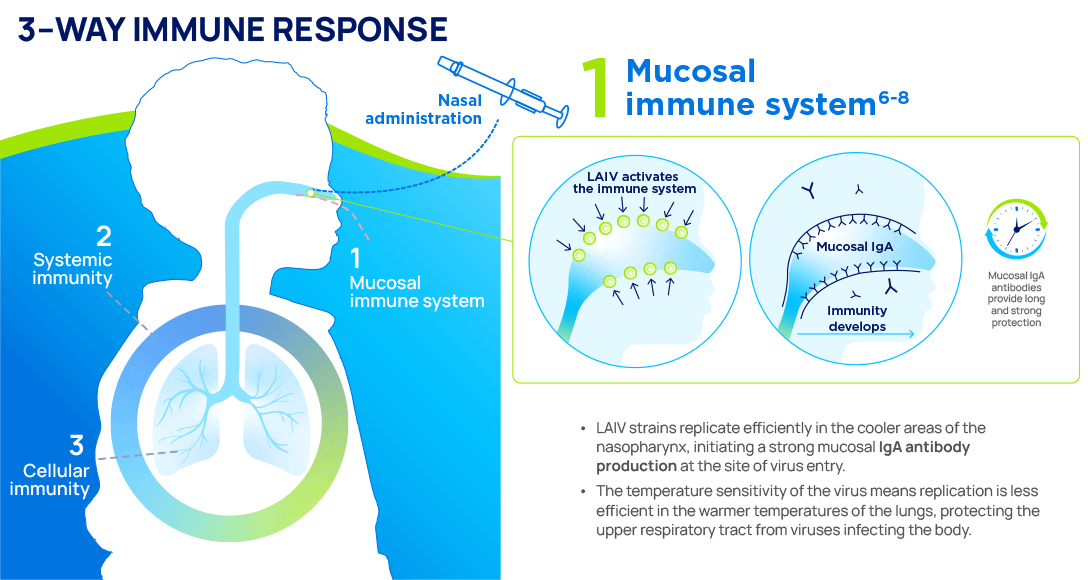
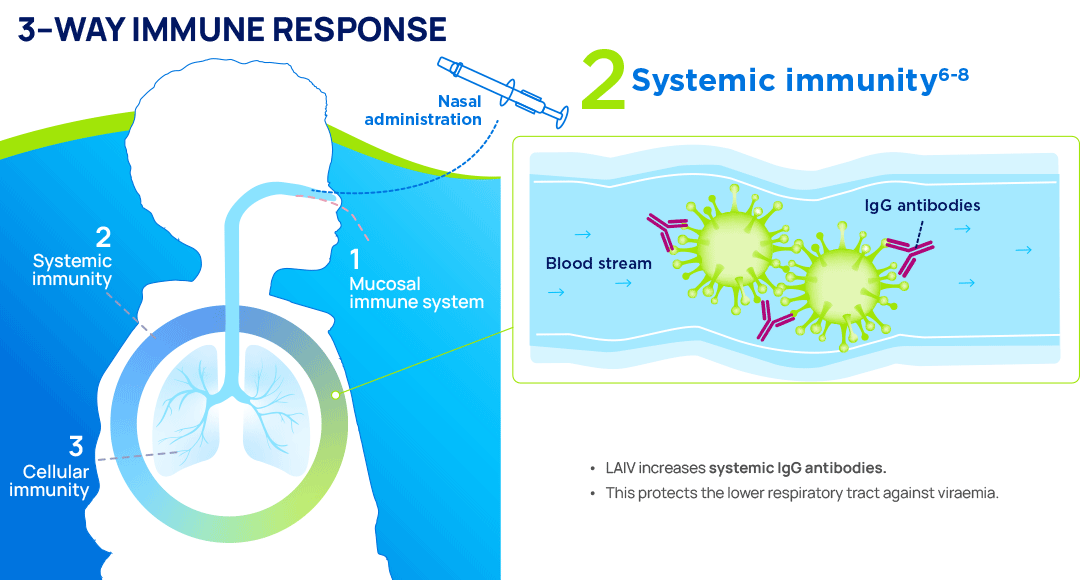
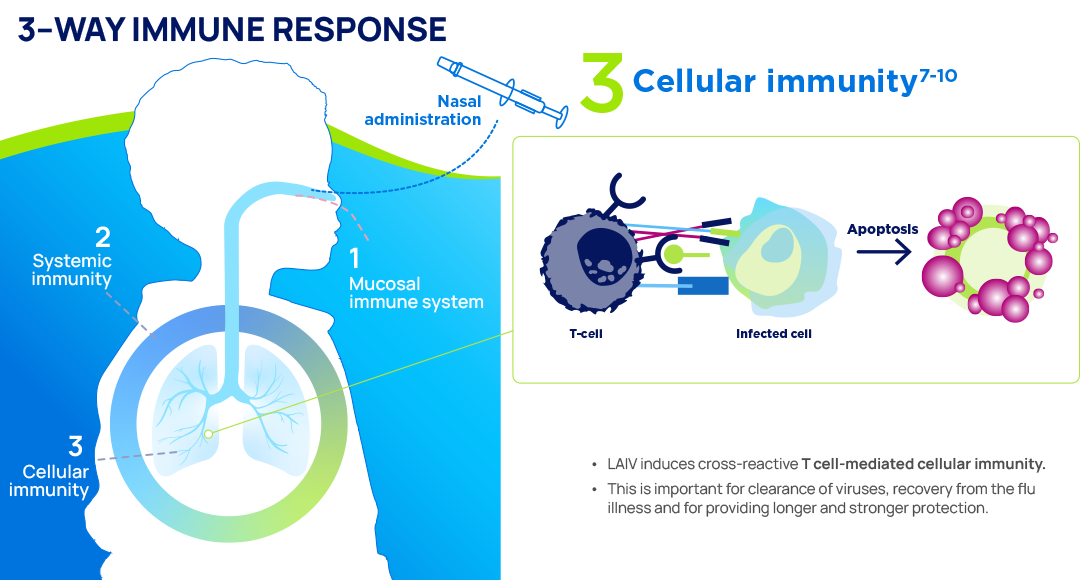
By mimicking the natural route of infection, Fluenz stimulates three-way protection and immunity

In children, LAIV elicits strong mucosal IgA antibody production, increases systemic IgG antibodies and induces cross-reactive T cell-mediated cellular immunity. Scroll through the carousel below to see how each arm plays a distinct role in flu protection:6-10

Infographic showing the Fluenz nasal spray flu vaccine mechanism of action. Part 1: Mucosal immune system Infographic showing the Fluenz nasal spray flu vaccine mechanism of action. Part 1: Mucosal immune system
Infographic showing the Fluenz nasal spray flu vaccine mechanism of action. Part 2: Systemic immunity Infographic showing the Fluenz nasal spray flu vaccine mechanism of action. Part 2: Systemic immunity
Infographic showing the Fluenz nasal spray flu vaccine mechanism of action. Part 3: Cellular immunity Infographic showing the Fluenz nasal spray flu vaccine mechanism of action. Part 3: Cellular immunity
  1. 1
  2. 2
  3. 3

Back to top

How is Fluenz administered?

Needle fear is a common barrier to vaccination that affects 5-13% of children, with 45% of 4 to 6-year-olds showing distress during routine injections. Fluenz is a nasal spray flu vaccine that provides flu protection without the need for injection.11-13


Watch the video below for guidance on how to administer the Fluenz nasal spray flu vaccine to children:

Click here for additional resources on Fluenz administration

Back to top

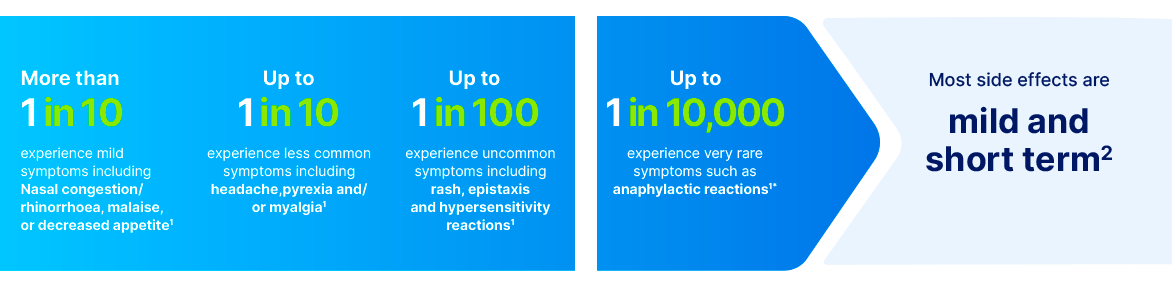
Do children who receive the nasal spray flu vaccine experience side effects?

  • The nasal spray flu vaccine has already been given to millions of children worldwide and is generally well tolerated.14
  • The majority of children only experience mild side effects.1
Infographic outlining side effects of the Fluenz nasal spray flu vaccine Infographic outlining side effects of the Fluenz nasal spray flu vaccine

*Signs of a severe allergic reaction may include shortness of breath and swelling of the face or tongue ​


Adverse events for which the frequency is not known (cannot be estimated from available data) include: Guillain-Barré syndrome, exacerbation of symptoms of Leigh syndrome (mitochondrial encephalomyopathy).1 As with most vaccines, appropriate medical treatment and supervision should always be readily available to manage an anaphylactic event or serious hypersensitivity event following the administration of Fluenz. Additional safety information can be found in the Summary of Product Characteristics of Fluenz.

Back to top

What do the ingredients in the nasal spray flu vaccine do?

Scroll through the carousel below to learn more about the key ingredients in Fluenz and understand their role in delivering flu protection.

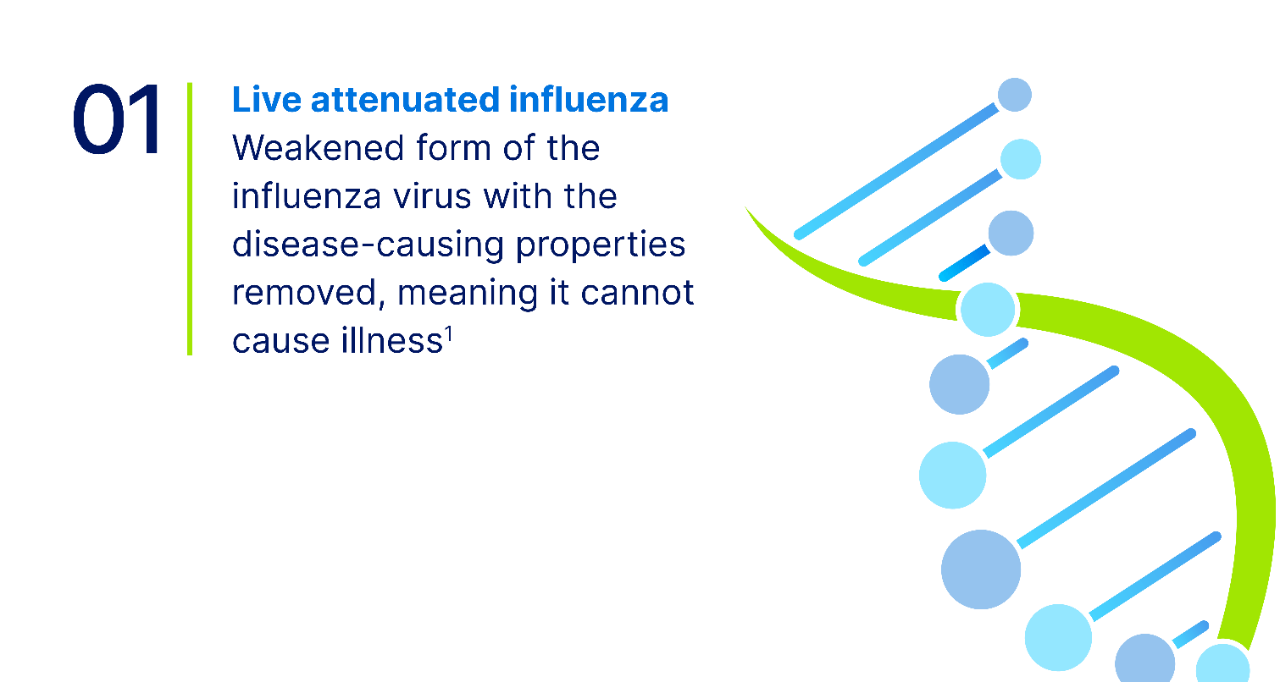
Fluenz nasal spray flu vaccine contains live attenuated influenza Fluenz nasal spray flu vaccine contains live attenuated influenza
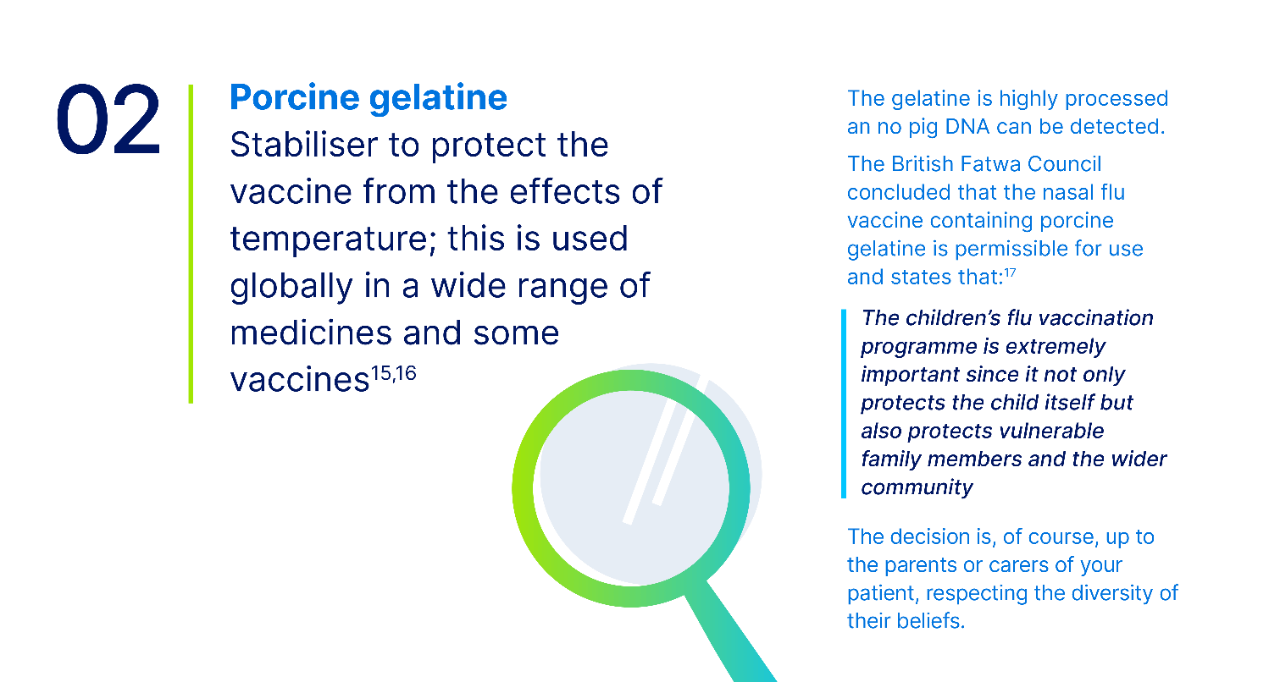
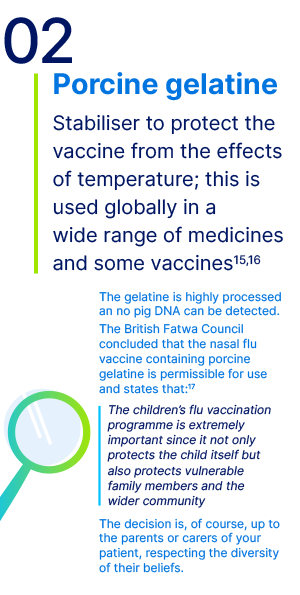
Fluenz nasal spray flu vaccine contains porcine gelatine Fluenz nasal spray flu vaccine contains porcine gelatine
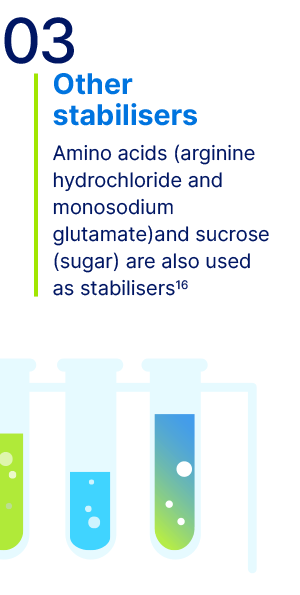
Fluenz nasal spray flu vaccine contains other stabilisers Fluenz nasal spray flu vaccine contains other stabilisers
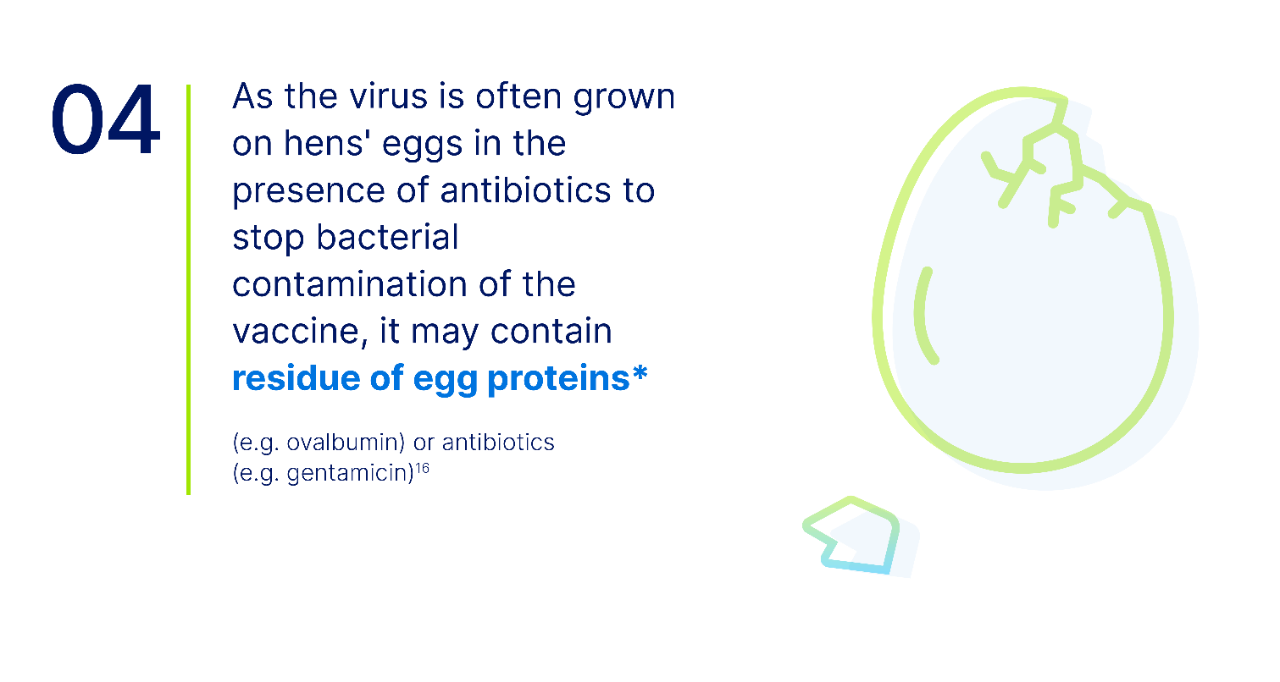
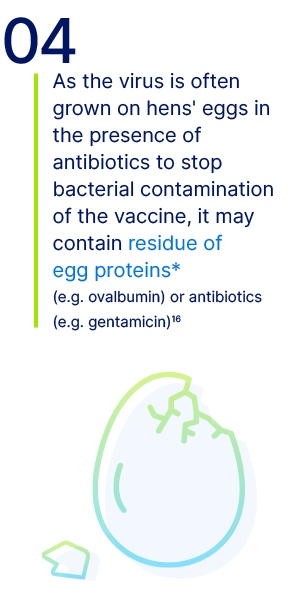
Fluenz nasal spray flu vaccine contains residue of egg protein Fluenz nasal spray flu vaccine contains residue of egg protein

*Contraindicated for children with severe allergic reaction (e.g. anaphylaxis) to eggs or egg protein† and any of the excipients listed in the Summary of Product Characteristics1


† This is not a comprehensive list. For more detailed information on contraindications, warnings and precautions, and drug interactions, please refer to the Summary of Product Characteristics.

  1. 1
  2. 2
  3. 3
  4. 4

Back to top

For a full list of ingredients, please refer to the Fluenz Summary of Product Characteristics.

FAQs

This section contains answers to some common questions that you may have.

You can also find additional information in the supportive resources section of the website.


Please refer to the Summary of Product Characteristics for full details on Fluenz nasal spray. 

The most common adverse events, occurring in at least 1 in 10 recipients, are:

  • Nasal congestion/rhinorrhoea
  • Decreased appetite
  • Malaise

Other common adverse events, which occur in between 1 in 10 and 1 in 100 recipients, are:

  • Pyrexia
  • Myalgia
  • Headache

Uncommon adverse events, which occur in between 1 in 100 and 1 in 1,000 recipients, are:

  • Epistaxis
  • Rash
  • Hypersensitivity reactions (including facial oedema, urticaria and very rare anaphylactic reactions)


Adverse events for which the frequency is not known (cannot be estimated from available data) include:

Guillain-Barré syndrome, exacerbation of symptoms of Leigh syndrome (mitochondrial encephalomyopathy).1 As with most vaccines, appropriate medical treatment and supervision should always be readily available to manage an anaphylactic event or serious hypersensitivity event following the administration of Fluenz.Additional safety information can be found in the Summary of Product Characteristics of Fluenz.

Adverse events should be reported. Reporting forms and information can be found at www.mhra.gov.uk/yellowcard or search for MHRA Yellow Card in the Google Play or Apple App Store. Adverse events should also be reported to AstraZeneca by visiting https://contactazmedical.astrazeneca.com/ or by calling ‌‌‌0‌‌‌8‌‌‌‌‌0‌‌‌‌0‌‌‌ ‌‌7‌‌‌‌‌‌8‌‌‌3‌‌‌ ‌‌0‌‌‌‌‌0‌‌‌‌3‌‌‌‌3‌‌‌.

The cohort of children eligible for the free nasal spray flu vaccine is determined each year by the UK government and that of each devolved nation.

Learn more about eligible cohorts

Contraindications for Fluenz are as follows:1

  • Hypersensitivity to the active substances or, to any of the excipients listed in section 6.1 of Fluenz SmPC or to gentamicin (a possible trace residue).
  • Severe allergic reaction (e.g. anaphylaxis) to eggs or to egg proteins (e.g. ovalbumin).
  • Children and adolescents with clinical immunodeficiency due to conditions or immunosuppressive therapy such as acute and chronic leukaemias, lymphoma, symptomatic HIV infection, cellular immune deficiencies, and high‑dose corticosteroids. Fluenz is not contraindicated for use in individuals with asymptomatic HIV infection, or individuals who are receiving topical/inhaled corticosteroids or low‑dose systemic corticosteroids, or those receiving corticosteroids as replacement therapy, e.g. for adrenal insufficiency.
  • Children and adolescents younger than 18 years of age receiving salicylate therapy because of the association of Reye's syndrome with salicylates and wild‑type influenza infection (see section 4.5 of SmPC). 

Other warnings and precautions for the use of Fluenz:1

Traceability

In order to improve the traceability of biological medicinal products, the name and the batch number of the administered product should be clearly recorded.

Hypersensitivity and anaphylaxis

As with most vaccines, appropriate medical treatment and supervision should always be readily available to manage an anaphylactic event or serious hypersensitivity event following the administration of Fluenz.

Concurrent illness and chronic conditions.

Fluenz should not be administered to children and adolescents with severe asthma or who are currently wheezing, because these individuals have not been adequately studied in clinical studies (see section 4.8 of SmPC).

Administration of Fluenz should be postponed in individuals suffering from severe acute febrile illness or acute infection. The presence of a minor infection and/or low-grade fever should not result in the deferral of vaccination.

Vaccination should also be postponed in individuals with nasal blockage, due to the potential for reduced vaccine uptake and the absence of efficacy data in this population. The presence of mild symptoms of a common cold without nasal blockage should not result in the deferral of vaccination.

Immunocompromised individuals

Vaccine recipients should be informed that Fluenz is an attenuated live virus vaccine and has the potential for transmission to immunocompromised contacts. Vaccine recipients should attempt to avoid, whenever possible, close association with severely immunocompromised individuals (e.g. bone marrow transplant recipients requiring isolation) for 1‑2 weeks following vaccination. Peak incidence of vaccine virus recovery occurred 2‑3 days post‑vaccination in clinical studies. In circumstances where contact with severely immunocompromised individuals is unavoidable, the potential risk of transmission of the influenza vaccine virus should be weighed against the risk of acquiring and transmitting wild‑type influenza virus. The effectiveness of Fluenz preventing influenza disease in immunocompromised individuals has not been evaluated (see section 4.8 of SmPC).

  • Gelatine: this nasal spray flu vaccine uses porcine gelatine (derived from pigs) as a stabiliser to temperature protect the vaccine; this is used globally in a wide range of medicines and some vaccines15,16
    • This information is taken from the NHS regarding the views of faith communities:15
      • The UK Health Security Agency (UKHSA) has consulted with the Kashrut and Medicines Information Service, who said: ‘It should be noted that according to Jewish laws, there is no problem with porcine or other animal derived ingredients in non-oral products. This includes vaccines, including those administered via the nose, injections, suppositories, creams and ointments’
  • The Oxford Vaccine Group states:16 
    • Members of Muslim or Jewish religious communities may be concerned about using vaccines that contain gelatine from pigs (porcine gelatine). According to Jewish laws, there is no problem with gelatine or any other animal substance if it is used in a product that does not go into the mouth. Some Muslim leaders have also ruled that the use of gelatine in vaccines does not break religious dietary laws, because it is highly purified and it is also injected or inhaled rather than ingested (eaten)
  • For further information about porcine gelatine and the nasal spray influenza vaccine, see the government information: 
https://assets.publishing.service.gov.uk/government/uploads/system/uploads/attachment_data/file/751199/Vaccines_porcine_gelatine.pdf.
  • The decision is, of course, up to the parents or carers of your patient, respecting the diversity of their beliefs 

Pregnancy and breast-feeding

Fluenz is not recommended during pregnancy. It should not be used during breast-feeding.

Fluenz should be kept in a refrigerator (2-8°C). Do not freeze.

  • The nasal applicator should be kept in the carton to protect it from light
  • Before use, the vaccine may be taken out of the refrigerator once for a maximum period of 12 hours at a temperature not above 25°C. It should not be returned to the refrigerator
  • Stability data indicate that the vaccine components are stable for 12 hours when stored at temperatures from 8°C to 25°C. At the end of this period, Fluenz should be used immediately or discarded

For further information on storage and administration guidance, see the supportive resources page.

Explore supportive resources 

Children and adolescents from 2 years to <18 years of age

The recommended dose is 0.2 ml, administered as 0.1 ml in each nostril.For children 2 to 8 years of age who have not previously been vaccinated against seasonal influenza, a second dose should be given after an interval of at least 4 weeks.


Infants and toddlers <2 years of age

Fluenz should not be used in infants and toddlers below 2 years of age because of safety concerns regarding increased rates of hospitalisation and wheezing in this population (see section 4.8 of SmPC).

Fluenz must not be administered to children and adolescents receiving salicylate therapy (see section 4.3 of SmPC). Salicylates should not be used in children and adolescents for 4 weeks after vaccination unless medically indicated as Reye's syndrome has been reported following the use of salicylates during wild‑type influenza infection.


Fluenz can be administered concomitantly with the live attenuated vaccines: measles, mumps, rubella, varicella, and orally-administered poliovirus.

The co-administration of Fluenz with inactivated vaccines has not been studied.

The concurrent use of Fluenz with antiviral agents that are active against influenza A and/or B viruses has not been evaluated. However, based upon the potential for influenza antiviral agents to reduce the effectiveness of Fluenz, it is recommended not to administer the vaccine until 48 hours after the cessation of influenza antiviral therapy. Administration of influenza antiviral agents within two weeks of vaccination may affect the response of the vaccine.


If influenza antiviral agents and Fluenz are administered concomitantly, revaccination should be considered based on clinical judgement.

Sign up now

Would you like to opt in to promotional and non-promotional service and product information?

Find out more

'Resources for you and those you care for'

Explore the resources available to you in our Resource Hub

View Resources

Get in touch

For additional administration support, request a call back

from the AZExchange team.

Contact us

LAIV, live attenuated influenza vaccine; JCVI, Joint Committee on Vaccination and Immunisation; IgG, immunoglobulin G; IgA, immunoglobulin A; AE, adverse event; UKHSA, UK Health Security Agency; DNA, deoxyribonucleic acid; SmPC, summary of product characteristics.


  1. Fluenz Trivalent nasal spray suspension Influenza vaccine (live, nasal). Summary of Product Characteristics.
  2. DHSC. (2013) JCVI statement on the routine annual influenza vaccination programme Accessed: Available at: https://www.gov.uk/government/publications/jcvi-statement-on-the-routine-annual-influenza-vaccination-programme (Accessed: August 2025)
  3. Joint Committee on Vaccination and Immunisation (2022) Advice on influenza vaccines for 2023/24. Available at: https://www.nitag-resource.org/sites/default/files/2022-11/Draft%20JCVI%20Statement%20on%20Influenza%20Vaccines%202023-24_final%20version.pdf (Accessed: August 2025)
  4. Public Health England. (2016) Extension of the Influenza immunisation programme to children in England: Experiences of using live attenuated influenza vaccine (LAIV) in school age children 2013–16. London: Public Health England. Available at: https://www.gov.uk/government/publications/extension-of-the-influenza-programme-to-children-in-england (Accessed: August 2025)
  5. Waite, Ramsey & Russell (2024). National flu immunisation programme 2024 to 2025 letter. Available at https://www.gov.uk/government/publications/national-flu-immunisation-programme-plan-2024-to-2025/national-flu-immunisation-programme-2024-to-2025-letter (Accessed: March 2025)
  6. Ambrose CS, et al. Vaccine 2012;30(48):6794–801.
  7. Cox RJ, et al. Scand J Immunol 2004;59:1–15.
  8. Mohn KG, et al. Hum Vaccin lmmunother 2018;14(3):571–8.
  9. Hoft DF, et al. J Infect Dis 2011;204(6):845–53.
  10. Mohn KG, et al. J Infect Dis 2015;211:1541–9.
  11. McLennon J, Rogers MA. J Adv Nurs. 2019 Jan; 75(1): 30-42.
  12. Taddio A, et al. Vaccine. 2022; 40(52): 7526-7537.
  13. McMurtry MC, et al. Clin J Pain. 2015; 31(Suppl 10): S3-S11.
  14. NHS (2025) Protecting your child against flu. Flu immunisation in England. Available at: https://www.gov.uk/government/publications/flu-vaccination-leaflets-and-posters (Accessed: August 2025)
  15. UKHSA (2022) Vaccines and porcine gelatine. Available at: https://www.gov.uk/government/publications/vaccines-and-porcine-gelatine (Accessed: August 2025)
  16. Centre for Clinical Vaccinology and Tropical Medicine, Oxford Vaccine Group (2022) Vaccine Knowledge Project. Vaccine ingredients. Available at: https://vk.ovg.ox.ac.uk/vaccine-ingredients#Added-ingredients (Accessed: August 2025)
  17. NHS England (2022) Fatwa on flu vaccine containing porcine gelatine. Available at: https://www.england.nhs.uk/south/wp-content/uploads/sites/6/2022/10/Fatwa_FluVaccine_BritishFatwaCouncil_20220923.pdf (Accessed: September 2025)


GB-69532 | DOP: November 2025

Adverse events should be reported. Reporting forms and information can be found at www.mhra.gov.uk/yellowcard or search for MHRA Yellow Card in the Google Play or Apple App Store. Adverse events should also be reported to AstraZeneca by visiting https://contactazmedical.astrazeneca.com/ or by calling ‌‌‌0‌‌‌8‌‌‌‌‌0‌‌‌‌0‌‌‌ ‌‌7‌‌‌‌‌‌8‌‌‌3‌‌‌ ‌‌0‌‌‌‌‌0‌‌‌‌3‌‌‌‌3‌‌‌.

Connessiallasalute.it

This website was created for UK HCPs and has been designed to provide information to educate, empower and enable them in the great work they are doing for patients across a range of therapy areas. This website is intended for doctors, nurses, and pharmacists in the UK. Other UK residents please visit astrazeneca.co.uk.

Terms of use

Privacy Policy

Cookie Policy

Contact Us

LinkedIn

Twitter

©2024 AstraZeneca. GB-75991 | April 2026