Welcome to this UK AstraZeneca produced and funded website

This website is intended for UK Healthcare Professionals only.


The website contains both promotional and non-promotional content.


If you are a patient or a carer of a patient prescribed an AstraZeneca product, please visit myazmed.co.uk


For any other UK residents please visit astrazeneca.co.uk

I am not a Healthcare Professional
Prescribing information Symbicort®(budesonide/formoterol) asthma
Prescribing information Bricanyl®Turbohaler®(terbutaline sulfate)
Prescribing information Symbicort®(budesonide/formoterol) COPD
Prescribing information Pulmicort®Turbohaler®(budesonide)
Prescribing information OXIS®Turbohaler®(formoterol) asthma
Adverse Event Reporting

This website is intended for UK Healthcare Professionals only. Other UK residents please visit astrazeneca.co.uk

AstraZeneca-logo
  • Our Medicines
    • Cardiovascular, Renal & Metabolism
      • ATTR Amyloidosis
        • WAINZUA®▼(eplontersen)
      • Chronic Kidney Disease (CKD)
        • FORXIGA® (dapagliflozin)
      • Heart Failure
        • FORXIGA® (dapagliflozin)
      • Hyperkalaemia
        • LOKELMA® (sodium zirconium cyclosilicate)
      • Type 2 Diabetes (T2D)
        • FORXIGA® (dapagliflozin)
    • Oncology
      • Breast Cancer
        • LYNPARZA® (olaparib)
        • TRUQAP®▼(capivasertib)
      • Bladder Cancer
        • IMFINZI® (durvalumab)
      • Endometrial Cancer
        • IMFINZI® (durvalumab)
        • LYNPARZA® (olaparib)
      • Gastrointestinal Cancer
        • IMFINZI® (durvalumab)
        • IMJUDO®▼(tremelimumab)
      • Lung Cancer
        • IMFINZI® (durvalumab)
        • TAGRISSO® (osimertinib)
      • Ovarian Cancer
        • LYNPARZA® (olaparib)
      • Prostate Cancer
        • LYNPARZA® (olaparib)
        • ZOLADEX® (goserelin)
    • Respiratory
      • Asthma
        • TEZSPIRE®▼ (tezepelumab)
        • SYMBICORT® (budesonide/formoterol)
      • Chronic Obstructive Pulmonary Disease(COPD)
        • TRIXEO AEROSPHERE® (formoterol fumarate dihydrate/glycopyrronium/budesonide)
        • BEVESPI® (glycopyrronium/formoterol fumarate dihydrate)
    • Vaccines
      • Flu
        • FLUENZ® nasal spray suspension (influenza vaccine, live attenuated, nasal)
  • Therapy Areas
    • Cardiovascular, Renal & Metabolism
      • ATTR Amyloidosis
      • Chronic Kidney Disease (CKD)
      • Heart Failure
      • Hyperkalaemia
      • Type 2 Diabetes (T2D)
    • Oncology
      • Breast Cancer
      • Bladder Cancer
      • Endometrial Cancer
      • Gastrointestinal Cancer
      • Lung Cancer
      • Ovarian Cancer
      • Prostate Cancer
    • Respiratory
      • Asthma
      • Chronic Obstructive Pulmonary Disease(COPD)
    • Vaccines
      • Flu
  • About us
    • AZ Commitment
  • Contact us
  • AstraZeneca UK
  • Symbicort
  • Symbicort Dosing and safety profile
  • Symbicort® and its Indication
  • Unmet need in asthma
    • SABA over-use in the UK
  • About Symbicort®
    • Why Symbicort®?
    • Symbicort® Reliever Therapy (age 12+)
    • Symbicort® MART (age 12+)
    • Dosing and safety profile
  • Education and patient resources
    • Patient & HCP resources
    • Patient Identification Resource
  • FAQs
SYMBICORT® (budesonide/formoterol) Dosage & Side Effects
hero_banner.jpg
hero_banner.jpg

Symbicort® Dosing and safety profile

Please do not share this webpage with patients.

Prescribing information can be found at the top of the page. Adverse Event reporting links can be found at the bottom of the page.
Indication statement can be found here.

Symbicort® Turbohaler® doses & inhalers content

Symbicort® dosage is individual for each patient.
Find out more about the range of Symbicort® Turbohalers® available for your patients.

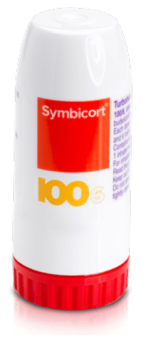
Symbicort® Turbohaler® 100/6

Each metered dose contains: 
100 mcg of budesonide per use and 6 mcg of formoterol per inhalation.1

Symbicort® Turbohaler® 200/6

Each metered dose contains: 
200 mcg of budesonide and 6 mcg of formoterol per inhalation.2

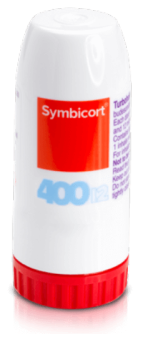
Symbicort® Turbohaler® 400/12

Each metered dose contains: 
400 mcg of budesonide and 12 mcg of formoterol per inhalation.3

Learn more about Symbicort® Turbohaler®.

dose_indicator_image.png

The Symbicort® Turbohalers® displayed above contain a dose indicator so that patients can see how much is left.

A full inhaler has either 60 or 120 doses, counting 
down in intervals of 10.

A red mark appears when there are just 20 doses remaining.
The background colour changes to red when there are only 10 doses left.

When a 0 is visible, patients need to switch to a new device.

When the Symbicort® Turbohaler® is shaken, the sound it makes is produced by a drying agent and not the medicine that’s left in the Symbicort® Turbohaler®.

It’s important to make sure patients know how to use Symbicort® before they leave the consultation.4-6

Here you’ll find more detailed information about the selection of Symbicort® Turbohalers® available to your asthma patients, when to prescribe them and who to prescribe them to.

  1. Symbicort® Turbohaler® 100/6
  2. Symbicort® Turbohaler® 200/6
  3. Symbicort® Turbohaler® 400/12

For Symbicort® Turbohaler® 100/6 - by inhalation of powder

Maintenance And Reliever Therapy (MART)
  • For children (6 - 11 years)
    Maintenance dose is 1 inhalation per day, given either as 1 inhalation in the morning or as 1 inhalation in the evening. For some patients, a maintenance dose of 1 inhalation twice daily may be appropriate. Patients should take 1 additional inhalation as needed in response to symptoms. If symptoms persist after a few minutes, an additional inhalation should be taken. Not more than 4 inhalations should be taken on any single occasion.

    A total daily dose of more than 4 inhalations is not normally needed; however, a total daily dose of up to 8 inhalations could be used for a limited period. Patients using more than 4 inhalations daily should be strongly recommended to seek medical advice. They should be reassessed and their maintenance therapy should be reconsidered.

    If necessary, dosage should be reassessed for patients who will shortly turn 12 years or have recently turned 12 years to follow dosage regimen of adults and adolescents (12 years and older).

    Children under 6 years: There are limited efficacy and safety data of Symbicort maintenance and reliever therapy in children younger than 6 years.

  • For adults and adolescents (12 years and older)
    Maintenance dose is 2 inhalations per day, given either as one inhalation in the morning and evening or as 2 inhalations in either the morning or evening. Patients should take 1 additional inhalation as needed in response to symptoms. If symptoms persist after a few minutes, an additional inhalation should be taken. Not more than 6 inhalations should be taken on any single occasion.

    A total daily dose of more than 8 inhalations is not normally needed; however, a total daily dose of up to 12 inhalations could be used for a limited period. Patients using more than 8 inhalations daily should be strongly recommended to seek medical advice. They should be reassessed and their maintenance therapy should be reconsidered.

Close monitoring for dose-related adverse effects is needed in patients who frequently take high numbers of Symbicort® as-needed inhalations.

reliever_asthma_inhaler
Maintenance Therapy
  • For children (6 years and older)
    1-2 puffs twice daily.
    Children under 6 years: As only limited data are available, Symbicort is not recommended for children younger than 6 years.
  • For adolescents (12 - 17 years)
    1-2 puffs twice daily.
  • For adults (18 years and older)
    1-2 puffs twice daily. Some patients may require up to a maximum of 4 puffs twice daily.

In usual practice when control of symptoms is achieved with the twice daily regimen, titration to the lowest effective dose could include Symbicort® given once daily, when in the opinion of the prescriber, a long-acting bronchodilator in combination with an inhaled corticosteroid would be required to maintain control.

For Symbicort® Turbohaler® 200/6 - by inhalation of powder

Reliever Therapy (mild asthma)

  • For adults and adolescents (12 years and older)
    Patients should take 1 inhalation as needed in response to symptoms. If symptoms persist after a few minutes, an additional inhalation should be taken. Not more than 6 inhalations should be taken on any single occasion

    If a patient finds the treatment less effective or experiences progressive deterioration of symptoms despite taking Symbicort as needed the patient should seek medical attention as soon as possible (see section 4.4 of the Symbicort® Turbohaler® 200/6 SmPC for further information).

    A total daily dose of more than 8 inhalations is not normally needed; however, a total daily dose of up to 12 inhalations could be used for a limited period. Patients using more than 8 inhalations daily should be reassessed for alternative explanations of persisting symptoms.

    Patients should be assessed at regular intervals according to local practice to determine whether their as-needed treatment with Symbicort® remains optimal or whether regular scheduled treatment with inhaled corticosteroid-containing maintenance medication should be initiated.
MART_asthma_inhaler

Maintenance And Reliever Therapy (MART)

  • For adults and adolescents (12 years and older)
    Maintenance dose is 2 inhalations per day, given either as one inhalation in the morning and evening or as 2 inhalations in either the morning or evening. For some patients a maintenance dose of 2 inhalations twice daily may be appropriate. Patients should take 1 additional inhalation as needed in response to symptoms. If symptoms persist after a few minutes, an additional inhalation should be taken. Not more than 6 inhalations should be taken on any single occasion.

    A total daily dose of more than 8 inhalations is not normally needed; however, a total daily dose of up to 12 inhalations could be used for a limited period. Patients using more than 8 inhalations daily should be strongly recommended to seek medical advice. They should be reassessed and their maintenance therapy should be reconsidered.

    Close monitoring for dose-related adverse effects is needed in patients who frequently take high numbers of Symbicort as-needed inhalations.

    MART is not recommended for children under 12 years

Maintenance Therapy

  • For adolescents (12 - 17 years)
    1-2 puffs twice daily.
  • For adults (18 years and older)
    1-2 puffs twice daily. Some patients may require up to a maximum of 4 puffs twice daily.

In usual practice when control of symptoms is achieved with the twice daily regimen, titration to the lowest effective dose could include Symbicort® given once daily, when in the opinion of the prescriber, a long-acting bronchodilator in combination with an inhaled corticosteroid would be required to maintain control.

For Symbicort® Turbohaler® 400/12 - by inhalation of powder

The 400/12 Turbohaler is not licensed for younger children or Maintenance And Reliever Therapy (MART)

Asthma, Maintenance Therapy

By inhalation of powder

  • For adolescents (12–17 years)
    1 puff twice daily.
  • For adults (18 years and older)
    1 puff twice daily.
    Some patients may require up to a maximum of 2 puffs twice daily.

Not intended for the initial management of asthma

In usual practice when control of symptoms is achieved with the twice daily regimen, titration to the lowest effective dose could include Symbicort® given once daily, when in the opinion of the prescriber, a long-acting bronchodilator in combination with an inhaled corticosteroid would be required to maintain control.

maintenance_asthma inhaler

Symbicort® dosing considerations

preventer_reliever_inhaler.png

Once patients have been assessed for eligibility, the dosage of Symbicort will vary, depending on each individual case and should be assessed based on the severity and presentation of a patient’s illness. Any Symbicort® Reliever Therapy (Turbohaler® 200/6) asthma action plan OR Symbicort® Maintenance And Reliever Therapy (MART) (age 12+) asthma action plan should be considered at the start of treatment as well as modifications to a patient’s maintenance dose.


If a combination dose beyond Symbicort’s® components is required, appropriate doses of β2 adrenoceptor agonists and/or corticosteroids by individual inhalers should be prescribed. It is important to regularly review and assess the dose of Symbicort® to treat patients effectively. Moreover, you should aim to prescribe the lowest dose of Symbicort® that is required and effectively controls the patient’s asthma.1-3


To explore more of our Symbicort® resources for both you and your asthma patients, visit our

Asthma Educational and Patient Resources

How to use Symbicort® Turbohaler®

Please do not share this webpage with your patients.

Watch the video for instructions on how patients should use the Symbicort® Turbohaler®.

Prescribing information and Adverse Event Reporting can be found at the top and bottom of this page

Ask your patients to follow these steps when starting treatment with Symbicort® Turbohaler®:

  1. Read the Symbicort patient information. This is provided alongside every Turbohaler® prescription.
  2. When using the device, take a deep and forceful breath to ensure that an optimal dose is delivered to the lungs.*
  3. Never breathe out through the mouthpiece.
  4. Always replace the cover tightly of the Symbicort® Turbohaler® after use.
  5. To avoid oropharyngeal thrush, a patient should rinse their mouth with water after inhaling a dose. If thrush occurs, rinse after every use.
     

*As the drug is dispensed in small amounts, patients may not feel or taste the medication.

Symbicort® drug interactions

If patients are taking other medicines in conjunction with Symbicort®, it is important that they consult with their healthcare professional (HCP) to avoid side effects. This should be considered when producing a patient’s Symbicort® Reliever Therapy (Turbohaler® 200/6) asthma action plan OR Symbicort® Maintenance And Reliever Therapy (MART) (age 12+) asthma action plan.

Physicians should be aware of the following medicines and drug classes that may interact with Symbicort®:
 

Please note, this is not an exhaustive list and the SmPC should be consulted before prescribing.
 
  • CYP3A4 inhibitors
    It is not advised that patients use Symbicort® alongside itraconazole, clarithromycin, ritonavir or other potent CYP3A4 inhibitors (e.g. ketoconazole, itraconazole, voriconazole, posaconazole, clarithromycin, telithromycin, nefazodone and HIV protease inhibitors) are likely to markedly increase plasma levels of budesonide and concomitant use should be avoided.. If this is unavoidable, the time interval between administration should be as long as possible. Symbicort® maintenance and reliever therapy is not recommended for patients using CYP3A4 inhibitors.
  • Beta-blockers
    Taking beta-blockers (including eye drops) with Symbicort® can increase the risk of severe bronchospasm in asthma patients. Beta-blockers can also block the pulmonary effect of the beta-agonist (formoterol) component of Symbicort® which may result in breathing problems. It’s advised that beta-blockers should be avoided in people with asthma.7
  • Monoamine oxidase inhibitors & tricyclic antidepressants
    For patients currently treated with monoamine oxidase inhibitors or tricyclic antidepressants, Symbicort® should be taken with care: The action of one of the components, formoterol, on the vascular system may be potentiated by these treatments.1-3
  • Diuretics
    Although the clinical significance of the side effects is unclear, it’s important to exercise caution when prescribing patients with Symbicort® and non-potassium-sparing diuretics (such as loop or thiazide diuretics). ECG changes and/or hypokalaemia resulting from these types of diuretics can be potentiated by beta-agonists, especially in unstable asthma with variable use of rescue bronchodilators.1-3

Side effects of the Symbicort® inhaler

It is also important to consider side effects when prescribing Symbicort.

Common side effects of Symbicort®1-3


  • Mild irritation in the throat
  • Coughing
  • Dysphonia including hoarseness
  • Oral thrush (white patches in the mouth and throat)
  • Headaches
  • Tremor
  • Palpitations


Please note, this is not an exhaustive list of side effects, please consult the respective SmPCs before prescribing.

Precautions for use of Symbicort®

Additionally, there are further precautions to consider when prescribing Symbicort®:

Constant access to rescue inhaler

Patients should have their rescue inhaler available at all times, either if prescribed Symbicort® Reliever Therapy (Turbohaler® 200/6) or Symbicort® Turbohaler® MART (100/6 or 200/6 doses only), or a separate rapid-acting bronchodilator (for Symbicort® maintenance only patients)


Proper maintenance of Symbicort®

Patients should take the prescribed dose of Symbicort® even when they are asymptomatic. It’s advised that patients rinse their mouth with water after inhaling a maintenance dose to minimise the risk of oropharyngeal candida infections. If patients experience oropharyngeal thrush, this is advised after all inhalations.


Tapering Symbicort® dose & treatment

An immediate stop to using the medication is not recommended: inhalations should be reduced before stopping altogether. A complete stop of inhaled corticosteroids should only happen in order to diagnose asthma or confirm an asthma diagnosis. It is advised to always educate patients thoroughly to make sure they know how Symbicort® works and how long it takes for Symbicort® to start working.1-3


media

MART, Maintenance And Reliever Therapy, SABA, Short-acting β2 agonists, HCP, healthcare professional

  1. Symbicort® Turbohaler® 100/6, Inhalation powder. Summary of Product Characteristics. Available at: https://www.medicines.org.uk/emc/product/1326/smpc (Accessed September 2025)
  2. Symbicort® Turbohaler® 200/6, Inhalation powder. Summary of Product Characteristics. Available at: https://www.medicines.org.uk/emc/product/1327/smpc (Accessed September 2025)
  3. Symbicort® Turbohaler® 400/12, Inhalation powder. Summary of Product Characteristics. Available at: https://www.medicines.org.uk/emc/product/6775/smpc (Accessed September 2025)
  4. Symbicort® Turbohaler® 100/6 Patient Information Leaflet (PIL). https://www.medicines.org.uk/emc/product/1326/pil (Accessed May 2025).
  5. Symbicort® Turbohaler® 200/6 Patient Information Leaflet (PIL). https://www.medicines.org.uk/emc/product/1327/pil (Accessed September 2025).
  6. Symbicort® Turbohaler® 400/12 Patient Information Leaflet (PIL). https://www.medicines.org.uk/emc/product/6775/pil (Accessed September 2025).
  7. NICE CSK. Heart failure - chronic: Beta-blockers. https://cks.nice.org.uk/topics/angina/prescribing-information/beta-blockers/ (Accessed: September 2025).

GB-66304 | DOP: September 2025


Adverse events should be reported. Reporting forms and information can be found at www.mhra.gov.uk/yellowcard or search for MHRA Yellow Card in the Google Play or Apple App Store. Adverse events should also be reported to AstraZeneca by visiting https://contactazmedical.astrazeneca.com/ or by calling ‌‌‌0‌‌‌8‌‌‌‌‌0‌‌‌‌0‌‌‌ ‌‌7‌‌‌‌‌‌8‌‌‌3‌‌‌ ‌‌0‌‌‌‌‌0‌‌‌‌3‌‌‌‌3‌‌‌.

Connessiallasalute.it

This website was created for UK HCPs and has been designed to provide information to educate, empower and enable them in the great work they are doing for patients across a range of therapy areas. This website is intended for doctors, nurses, and pharmacists in the UK. Other UK residents please visit astrazeneca.co.uk.

Terms of use

Privacy Policy

Cookie Policy

Contact Us

LinkedIn

Twitter

©2024 AstraZeneca. GB-70488 | DOP: September 2025