Welcome to this UK AstraZeneca produced and funded website

This website is intended for UK Healthcare Professionals only.


The website contains both promotional and non-promotional content.


If you are a patient or a carer of a patient prescribed an AstraZeneca product, please visit myazmed.co.uk


For any other UK residents please visit astrazeneca.co.uk

I am not a Healthcare Professional
Prescribing information Symbicort®(budesonide/formoterol) asthma
Prescribing information Bricanyl®Turbohaler®(terbutaline sulfate)
Prescribing information Symbicort®(budesonide/formoterol) COPD
Prescribing information Pulmicort®Turbohaler®(budesonide)
Prescribing information OXIS®Turbohaler®(formoterol) asthma
Adverse Event Reporting

This website is intended for UK Healthcare Professionals only. Other UK residents please visit astrazeneca.co.uk

AstraZeneca-logo
  • Our Medicines
    • Cardiovascular, Renal & Metabolism
      • ATTR Amyloidosis
        • WAINZUA®▼(eplontersen)
      • Chronic Kidney Disease (CKD)
        • FORXIGA® (dapagliflozin)
      • Heart Failure
        • FORXIGA® (dapagliflozin)
      • Hyperkalaemia
        • LOKELMA® (sodium zirconium cyclosilicate)
      • Type 2 Diabetes (T2D)
        • FORXIGA® (dapagliflozin)
    • Oncology
      • Breast Cancer
        • LYNPARZA® (olaparib)
        • TRUQAP®▼(capivasertib)
      • Bladder Cancer
        • IMFINZI® (durvalumab)
      • Endometrial Cancer
        • IMFINZI® (durvalumab)
        • LYNPARZA® (olaparib)
      • Gastrointestinal Cancer
        • IMFINZI® (durvalumab)
        • IMJUDO®▼(tremelimumab)
      • Lung Cancer
        • IMFINZI® (durvalumab)
        • TAGRISSO® (osimertinib)
      • Ovarian Cancer
        • LYNPARZA® (olaparib)
      • Prostate Cancer
        • LYNPARZA® (olaparib)
        • ZOLADEX® (goserelin)
    • Respiratory
      • Asthma
        • TEZSPIRE®▼ (tezepelumab)
        • SYMBICORT® (budesonide/formoterol)
      • Chronic Obstructive Pulmonary Disease(COPD)
        • TRIXEO AEROSPHERE® (formoterol fumarate dihydrate/glycopyrronium/budesonide)
        • BEVESPI® (glycopyrronium/formoterol fumarate dihydrate)
    • Vaccines
      • Flu
        • FLUENZ® nasal spray suspension (influenza vaccine, live attenuated, nasal)
  • Therapy Areas
    • Cardiovascular, Renal & Metabolism
      • ATTR Amyloidosis
      • Chronic Kidney Disease (CKD)
      • Heart Failure
      • Hyperkalaemia
      • Type 2 Diabetes (T2D)
    • Oncology
      • Breast Cancer
      • Bladder Cancer
      • Endometrial Cancer
      • Gastrointestinal Cancer
      • Lung Cancer
      • Ovarian Cancer
      • Prostate Cancer
    • Respiratory
      • Asthma
      • Chronic Obstructive Pulmonary Disease(COPD)
    • Vaccines
      • Flu
  • About us
    • AZ Commitment
  • Contact us
  • AstraZeneca UK
  • Symbicort
  • FAQs
  • Symbicort® and its Indication
  • Unmet need in asthma
    • SABA over-use in the UK
  • About Symbicort®
    • Why Symbicort®?
    • Symbicort® Reliever Therapy (age 12+)
    • Symbicort® MART (age 12+)
    • Dosing and safety profile
  • Education and patient resources
    • Patient & HCP resources
    • Patient Identification Resource
  • FAQs
Symbicort® (budesonide/formoterol) | FAQs

SYMBICORT®
FAQs

Want to speak to a member of our team?

Request a Symbicort representative via our Contact Us page to assist you further.

Visit Contact Us

Find the answers to the most commonly asked questions about Symbicort below.

Symbicort is a fixed-dose combination of budesonide and formoterol.1-2


The bronchodilating effect of formoterol is dose-dependent, with an onset of effect within 1-3 minutes. The duration of effect is at least 12 hours after a single dose.1-2

Symbicort 100/6 can be used to relieve symptoms in patients prescribed as a Maintenance and Reliever therapy (MART) age 6 years and over.


Symbicort 200/6 can be used to relieve symptoms in patients prescribed as a MART or as needed Anti-Inflammatory Reliever aged 12 years and over.


For patients prescribed Symbicort Turbohaler 100/6, 200/6 and 400/12 as a Maintenance only therapy, Patients should be advised to have their separate rapid-acting bronchodilator available for rescue use at all times.


See below for the treatment regimen and age related dosing of each strength, or click here to visit the dosing page.

Symbicort Turbohaler (100/6) MART (ages 6-11)

  • 1 inhalation per day, either as 1 inhalation in the morning or evening.  For some patients, a maintenance dose of 1 inhalation twice daily may be appropriate. 
  • Take 1 additional inhalation as needed in response to symptoms. If symptoms persist after a few minutes, 1 additional inhalation should be taken.  
  • Not more than 4 inhalations should be taken on any single occasion. Patients using more than 4 inhalations daily should be reassessed.  
  • The maximum daily dose is 8 inhalations for a limited period.

Dosage should be reassessed for patients shortly turning 12, in order to follow dosing regimen of adults and adolescents (12 years and older).1

Symbicort Turbohaler (100/6 and 200/6) MART (ages 12+)

  • 2 inhalations per day, either as 1 inhalation in the morning and evening or as 2 inhalations once daily, either morning or evening. 
  • Take 1 additional inhalation as needed in response to symptoms.  If symptoms persist after a few minutes, 1 additional inhalation should be taken. 
  • Not more than 6 inhalations should be taken on any single occasion.  Patients using more than 8 inhalations daily should be reassessed. 
  • The maximum daily dose is 12 inhalations for a limited period.

Symbicort Turbohaler (200/6) Reliever Therapy

  • 1 inhalation as needed in response to symptoms.  If symptoms persist after a few minutes, an additional inhalation should be taken. 
  • Not more than 6 inhalations should be taken on any single occasion. Patients using more than 8 inhalations daily should be reassessed. 
  • The maximum daily dose is 12 inhalations for a limited period.

If a patient finds the treatment less effective or experiences progressive deterioration of symptoms despite taking Symbicort as needed the patient should seek medical attention as soon as possible.


For patients taking Symbicort as reliever, preventative use of Symbicort for allergen-or exercise-induced bronchoconstriction should be discussed between physician and patient; the recommended use should take into consideration the frequency of need. In case of frequent need of bronchodilation without corresponding need for an increased dose of inhaled corticosteroids, an alternative reliever should be used.2

Watch the video below to hear Respiratory Nurse Specialist at Hull University Teaching Hospitals Trust, explain how to use Symbicort Turbohaler 200/6 during an asthma attack or in an emergency.


Symbicort 200/6 can be prescribed in patients aged 12+ with mild asthma as a Reliever therapy. It can also be presribed as a Maintenance and Reliever therapy in patients aged 12+.

Yes, dry powder inhalers (DPI) have been shown in clinical trials to be as effective when asthma symptoms increase and in acute attacks. The administration of β2-agonist bronchodilators via DPI are as effective as via a pressurised metered-dose inhaler (pMDI) with or without a spacer, or nebulisation.3

Symbicort Turbohaler 200/6 is indicated as reliever therapy for adults and adolescents ≥12 years with mild asthma and was the first ICS/LABA inhaler licensed as a reliever in the UK.2,10


Mild asthma patients take Symbicort as needed in response to symptoms. This will provide relief by the rapid acting bronchodilation and also reduce inflammation. Patients should be advised to always have this inhaler available for rescue use.2
 

  • Patients should take 1 inhalation as needed in response to symptoms. If symptoms persist after a few minutes, 1 additional inhalation should be taken.2
  • Not more than 6 inhalations should be taken on any single occasion.2
  • If a patient finds the treatment less effective or experiences progressive deterioration of symptoms despite taking Symbicort as needed the patient should seek medical attention as soon as possible (see section 4.4 of the Symbicort Turbohaler 200/6 SmPC for further information).2
  • A total daily dose of more than 8 inhalations is not normally needed; however, a total daily dose of up to 12 inhalations could be used for a limited period. Patients using more than 8 inhalations daily should be reassessed for alternative explanations of persisting symptoms.2
  • Patients should be assessed at regular intervals according to local practice to determine whether their as-needed treatment with Symbicort remains optimal or whether regular scheduled treatment with inhaled corticosteroid-containing maintenance medication should be initiated.2
     

For patients taking Symbicort as reliever, preventative use of Symbicort for allergen-or exercise-induced bronchoconstriction should be discussed between physician and patient; the recommended use should take into consideration the frequency of need. In case of frequent need of bronchodilation without corresponding need for an increased dose of inhaled corticosteroids, an alternative reliever should be used.2
 

For further information on Symbicort Turbohaler 200/6 dosage and method of administration, please visit Symbicort Dosing Guide and Safety Profile or see the SmPC.2

Click here for Symbicort reliever therapy (Turbohaler 200/6) patient support resources

Symbicort Turbohaler 100/6 is indicated for adults, adoloscents and children 6 years and older and Symbicort Turbohaler 200/6 is indicated for adults and adolescents 12 years and older for Maintenance And Reliever Therapy (MART).1,2
 

Patients take a daily maintenance dose of Symbicort and in addition take Symbicort as needed in response to symptoms. Patients should be advised to always have Symbicort available for rescue use.1,2
 

Symbicort MART should especially be considered for patients with:


  • inadequate asthma control and in frequent need of reliever medication.
  • asthma exacerbations in the past requiring medical intervention.1,2
     

Close monitoring for dose-related adverse effects is needed in patients who frequently take high numbers of Symbicort as-needed inhalations.1,2
 

Regimen for adults and adolescents (12 years and older) who have been prescribed Symbicort Turbohaler 100/6 or 200/6 MART:


  • Maintenance dose is 2 inhalations per day, given either as 1 inhalation in the morning and evening or as 2 inhalations in either the morning or evening1,2
    • For some patients that have been prescribed Symbicort Turbohaler 200/6 dose only, a maintenance dose of 2 inhalations twice daily may be appropriate2
  • Patients should take 1 additional inhalation as needed in response to symptoms. If symptoms persist after a few minutes, an additional inhalation should be taken. Not more than 6 inhalations should be taken on any single occasion1,2
  •  A total daily dose of more than 8 inhalations is not normally needed; however, a total daily dose of up to 12 inhalations could be used for a limited period. Patients using more than 8 inhalations daily should be strongly recommended to seek medical advice. They should be reassessed and their maintenance therapy should be reconsidered1,2
       

For further information on maximum dosage and method of administration for Symbicort Turbohaler 100/6 and/or 200/6, please visit Symbicort Dosing Guide and Safety Profile or see the respective SmPCs.1,2


Regimen for children (6-11 years) who have been prescribed Symbicort   Turbohaler   100/6 MART:


  • Maintenance dose is 1 inhalation per day, given either as 1 inhalation in the morning or as 1 inhalation in the evening. 
    • For some patients, a maintenance dose of 1 inhalation twice daily may be appropriate.
  • Patients should take 1 additional inhalation as needed in response to symptoms. If symptoms persist after a few minutes, an additional inhalation should be taken. Not more than 4 inhalations should be taken on any single occasion.


A total daily dose of more than 4 inhalations is not normally needed; however, a total daily dose of up to 8 inhalations could be used for a limited period. Patients using more than 4 inhalations daily should be strongly recommended to seek medical advice. They should be reassessed and their maintenance therapy should be reconsidered.1 


If necessary, dosage should be reassessed for patients who will shortly turn 12 years or have recently turned 12 years to follow dosage regimen of adults and adolescents (12 years and older).


Children under 6 years: There are limited efficacy and safety data of Symbicort maintenance and reliever therapy in children younger than 6 years.


Yes, Symbicort contains an inhaled corticosteroid used as a long-term maintenance medicine for asthma.

Symbicort contains two medicines:
 

  • Budesonide: an inhaled glucocorticosteroids which reduces lung inflammation.4 When inhaled, it has a dose-dependent anti-inflammatory action in the airways, resulting in reduced symptoms and fewer asthma exacerbations. Inhaled budesonide has less severe adverse effects than systemic corticosteroids. The exact mechanism responsible for the anti-inflammatory effect of glucocorticosteroids is unknown.1,2


  • Formoterol: a long-acting inhaled bronchodilator that when inhaled results in rapid and long-acting relaxation of bronchial smooth muscle in patients with reversible airways obstruction.1,2,5

Listen to Helena Cummings, Respiratory Nurse Specialist at Hull University Teaching Hospitals Trust, address the question on whether patients will be exposed to too much inhaled corticosteroid when using an anti-inflammatory reliever regime.

Yes. Symbicort Turbohaler 200/6 is indicated as an anti-inflammatory reliever (AIR) for adults and adolescents ≥12 years with mild asthma.2
 

If your patient is highly symptomatic or there are severe exacerbations,  offer low-dose Maintenance and Reliever Therapy (MART).12 Offer Symbicort Turbohaler 100/6 or 200/6 as low-dose MART where clinically appropriate.


For further information on maximum dosage and method of administration for Symbicort Turbohaler 200/6 visit Symbicort Dosing Guide and Safety Profile or see the SmPC.2
 

For more information visit Symbicort Reliever Therapy (Turbohaler 200/6) and Asthma Educational and Patient Resources.

Symbicort Reliever Therapy (Turbohaler 200/6) is licensed for use in Adults and adolescents ages 12 years and over.


For more information visit Symbicort Reliever Therapy (Turbohaler 200/6) and Asthma Educational and Patient Resources.

Symbicort Turbohaler 200/6 is licensed for use as a reliever in mild asthma patients.2,10

Symbicort Turbohaler 200/6 can be used as MART in adults and adolescents aged 12 years and older.2


Symbicort  Turbohaler 100/6 can be used as MART in adults adolescents and children aged 6 years and older.1


For more information visit Symbicort Dosing Guide and Safety Profile and MART clinical evidence page (ages 12 and over).

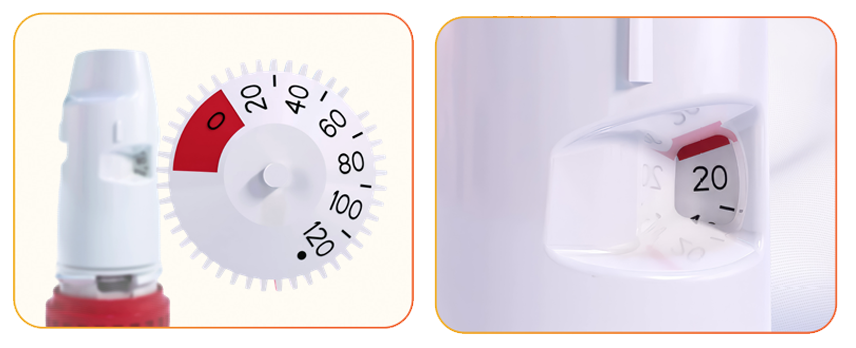
The dose indicator at the top of the inhaler helps patients monitor the number of doses remaining and know when they need to request a new prescription. Every tenth dose is displayed in the dose indicator window:


When there are 20 doses left, a red mark appears in the dose indicator window, which means it is time to get a new prescription.

When the “0” on the red background reaches the bottom of the window, all doses have been used and the Turbohaler should be replaced.

It is not possible to shake the Symbicort Turbohaler to assess how much medicine is left. The sound it makes when shaken is produced by a drying agent and not the medicine that is left in the Symbicort Turbohaler .

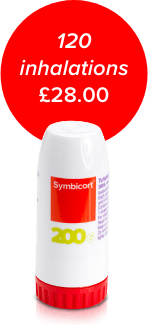
Symbicort Turbohaler 100/6 Inhalation powder (120 doses), Symbicort Turbohaler 200/6 Inhalation powder (120 doses) and Symbicort Turbohaler 400/12 Inhalation powder (60 doses) are all priced at £28.0011. The real world cost of Symbicort Turbohaler 200/6 when taken as Maintenance and Reliever Therapy is £13.98 for 28 days.*7
 

For full indication click here.
 

*A total of 4,581 patients were included in the study. 119 patients received 1 puff 100/6 BID plus as needed, with 2.11 median inhalations per day. 3,106 patients received 1 puff 200/6 BID plus as needed, with 2.14 median inhalations per day. 1,355 patients received 2 puffs 200/6 BID plus as needed, with 4.05 median inhalations per day.7
 

Calculation based on Basic NHS Cost stated in Symbicort Turbohaler 200/6 Prescribing Information; 1 pack x 120 doses: £28.00.6

The formoterol in Symbicort has a duration of effect of at least 12 hours.1,2 The half-lives of the budesonide and formoterol components are 4 and 17 hours respectively.1,2
 

If a patient misses a dose they should be directed to take it as soon as they remember, unless it is nearly time for their next dose, in which case patients should skip the missed dose.8,9 Patients are not to take a double dose to make up for a forgotten dose.8,9

Common side effects with Symbicort Turbohaler may include, palpitations, trembling or shaking, oral thrush, mild sore throat, coughing and a hoarse voice and headache.1,2  Patients should speak to their doctor, nurse or pharmacist if they experience any of these symptoms or any other side effects.

SYSTEM ORGAN CLASSFREQUENCY*ADVERSE DRUG REACTION
Infections and infestationsCommonCandida infections in the oropharynx
Psychiatric disordersUncommonAggression, psychomotor hyperactivity, anxiety, sleep
disorders
Nervous system disordersCommonHeadache, tremor
UncommonDizziness
Cardiac disordersCommonPalpitations
UncommonTachycardia
Respiratory, thoracic and mediastinal disordersCommonMild irritation in the throat, coughing, dysphonia including
hoarseness
Gastrointestinal disordersUncommonNausea
Skin and subcutaneous tissue disordersUncommonBruises
Musculoskeletal and connective tissue disorders

Uncommon

Muscle cramps
Eye disordersUncommonVision blurred

If an individual patient should require a combination of doses other than those available in the combination inhaler, appropriate doses of beta agonists and/or corticosteroids by individual inhalers should be prescribed.1,2 Symbicort (budesonide/formoterol) side effects including wheezing or bronchospasms need immediate intervention and may need Symbicort treatment to be stopped.1,2 Other more serious systemic side effects can occur, usually only at high dose and if Symbicort is taken for a long time. These can include infections, decreased bone density, glaucoma or cataracts.1,2
 

A full list of side effects and drug interactions can be seen in the Symbicort Turbohaler 100/6 SmPC, the Symbicort Turbohaler 200/6 SmPC and the Symbicort Turbohaler 400/12 SmPC.

BID, twice daily; FAQ, Frequently Asked Questions, MART, Maintenance And Reliever Therapy, SABA, Short-acting β2 agonists, DPI, Dry Powder Inhaler, pMDI, pressurised metered-dose inhaler, SmPC, Summary of Product Characteristics, ICS, inhaled corticosteroids, UK, United Kingdom, LABA, long-acting β2-agonist.


  1. Symbicort Turbohaler 100/6, Inhalation powder. Summary of Product Characteristics. Accessed January 2026.
  2. Symbicort Turbohaler 200/6, Inhalation powder. Summary of Product Characteristics. Accessed January 2026.
  3. Selroos 2014 Therapeutic Delivery VOL. 5, NO. 1 https://doi.org/10.4155/tde.13.132.
  4. Barnes PJ. Pharmaceuticals 2010;3:514–540.
  5. Global Initiative for Asthma. Global Strategy for Asthma Management and Prevention, 2022. Accessed January 2026.
  6. Symbicort 200/6 Turbohaler (AstraZeneca UK Ltd) 120 dose. RightBreathe. Available at: https://www.rightbreathe.com/medicines/symbicort-2006-turbohaler-astrazeneca-uk-ltd-120-dose/. Accessed January 2026.
  7. Stallberg B et al. Int J Clin Pharmacol Ther 2015;53:447–455.
  8. Symbicort Turbohaler 100/6 Patient Information Leaflet. Accessed January 2026.
  9. Symbicort Turbohaler 200/6 Patient Information Leaflet. Accessed January 2026.
  10. AstraZeneca UK Ltd. Data on File. ID: REF-217029 February 2024.
  11. Symbicort Turbohaler 100/6, 200/6, 400/12 and pMDI 100/3, 200/6 prices 2022. MIMS.
  12. ©BTS, NICE and SIGN 2024. Asthma: diagnosis, monitoring and chronic asthma management [NG245]. Available at: https://www.nice.org.uk/guidance/ng245

GB-70138 I DOP: April 2026


Adverse events should be reported. Reporting forms and information can be found at www.mhra.gov.uk/yellowcard or search for MHRA Yellow Card in the Google Play or Apple App Store. Adverse events should also be reported to AstraZeneca by visiting https://contactazmedical.astrazeneca.com/ or by calling ‌‌‌0‌‌‌8‌‌‌‌‌0‌‌‌‌0‌‌‌ ‌‌7‌‌‌‌‌‌8‌‌‌3‌‌‌ ‌‌0‌‌‌‌‌0‌‌‌‌3‌‌‌‌3‌‌‌.

Connessiallasalute.it

This website was created for UK HCPs and has been designed to provide information to educate, empower and enable them in the great work they are doing for patients across a range of therapy areas. This website is intended for doctors, nurses, and pharmacists in the UK. Other UK residents please visit astrazeneca.co.uk.

Terms of use

Privacy Policy

Cookie Policy

Contact Us

LinkedIn

Twitter

©2024 AstraZeneca. GB-70488 | DOP: September 2025