Welcome to this UK AstraZeneca produced and funded website

This website is intended for UK Healthcare Professionals only.


The website contains both promotional and non-promotional content.


If you are a patient or a carer of a patient prescribed an AstraZeneca product, please visit myazmed.co.uk


For any other UK residents please visit astrazeneca.co.uk

I am not a Healthcare Professional
Prescribing Information TRIXEO®
(formoterol fumarate dihydrate/ glycopyrronium/budesonide)
Prescribing Information SYMBICORT®
(budesonide/formoterol) COPD 200/6 and 400/12
Prescribing Information BEVESPI®
(glycopyrronium/formoterol fumarate dihydrate)
Adverse Event
Reporting

This website is intended for UK Healthcare Professionals only. Other UK residents please visit astrazeneca.co.uk

AstraZeneca-logo
  • Our Medicines
    • Cardiovascular, Renal & Metabolism
      • ATTR Amyloidosis
        • WAINZUA®▼(eplontersen)
      • Chronic Kidney Disease (CKD)
        • FORXIGA® (dapagliflozin)
      • Heart Failure
        • FORXIGA® (dapagliflozin)
      • Hyperkalaemia
        • LOKELMA® (sodium zirconium cyclosilicate)
      • Type 2 Diabetes (T2D)
        • FORXIGA® (dapagliflozin)
    • Oncology
      • Breast Cancer
        • LYNPARZA® (olaparib)
        • TRUQAP®▼(capivasertib)
      • Bladder Cancer
        • IMFINZI® (durvalumab)
      • Endometrial Cancer
        • IMFINZI® (durvalumab)
        • LYNPARZA® (olaparib)
      • Gastrointestinal Cancer
        • IMFINZI® (durvalumab)
        • IMJUDO®▼(tremelimumab)
      • Lung Cancer
        • IMFINZI® (durvalumab)
        • TAGRISSO® (osimertinib)
      • Ovarian Cancer
        • LYNPARZA® (olaparib)
      • Prostate Cancer
        • LYNPARZA® (olaparib)
        • ZOLADEX® (goserelin)
    • Respiratory
      • Asthma
        • TEZSPIRE®▼ (tezepelumab)
        • SYMBICORT® (budesonide/formoterol)
      • Chronic Obstructive Pulmonary Disease(COPD)
        • TRIXEO AEROSPHERE® (formoterol fumarate dihydrate/glycopyrronium/budesonide)
        • BEVESPI® (glycopyrronium/formoterol fumarate dihydrate)
    • Vaccines
      • Flu
        • FLUENZ® nasal spray suspension (influenza vaccine, live attenuated, nasal)
  • Therapy Areas
    • Cardiovascular, Renal & Metabolism
      • ATTR Amyloidosis
      • Chronic Kidney Disease (CKD)
      • Heart Failure
      • Hyperkalaemia
      • Type 2 Diabetes (T2D)
    • Oncology
      • Breast Cancer
      • Bladder Cancer
      • Endometrial Cancer
      • Gastrointestinal Cancer
      • Lung Cancer
      • Ovarian Cancer
      • Prostate Cancer
    • Respiratory
      • Asthma
      • Chronic Obstructive Pulmonary Disease(COPD)
    • Vaccines
      • Flu
  • About us
    • AZ Commitment
  • Contact us
  • AstraZeneca UK
  • TRIXEO
  • COPD exacerbations
  • TRIXEO AEROSPHERE
    • About TRIXEO AEROSPHERE
    • Efficacy
    • Safety
    • Next generation propellant
    • How to use
  • About COPD
    • COPD exacerbations
  • AEROSPHERE technology
  • For you and your patient
The impact of COPD exacerbations

The impact of COPD exacerbations

COPD exacerbations accelerate disease progression and mortality, as well as affect patient quality of life. Preventing and managing them effectively is crucial for COPD care.1-6

The impact of COPD exacerbations on patients

A COPD exacerbation is an acute-onset, sustained worsening of patient’s symptoms from their usual stable state, going beyond normal day-to-day variations.1

COPD exacerbations, characterized by sudden worsening of symptoms such as increased breathlessness, cough, and sputum production, lead to significant deterioration in lung function.1,2 Following an exacerbation, lung function may not recover to pre-exacerbation levels.2

Hospital

COPD patients rank exacerbations and related hospital admissions as the outcomes which affect their quality of life the most.3


The impact of COPD exacerbations on COPD outcomes

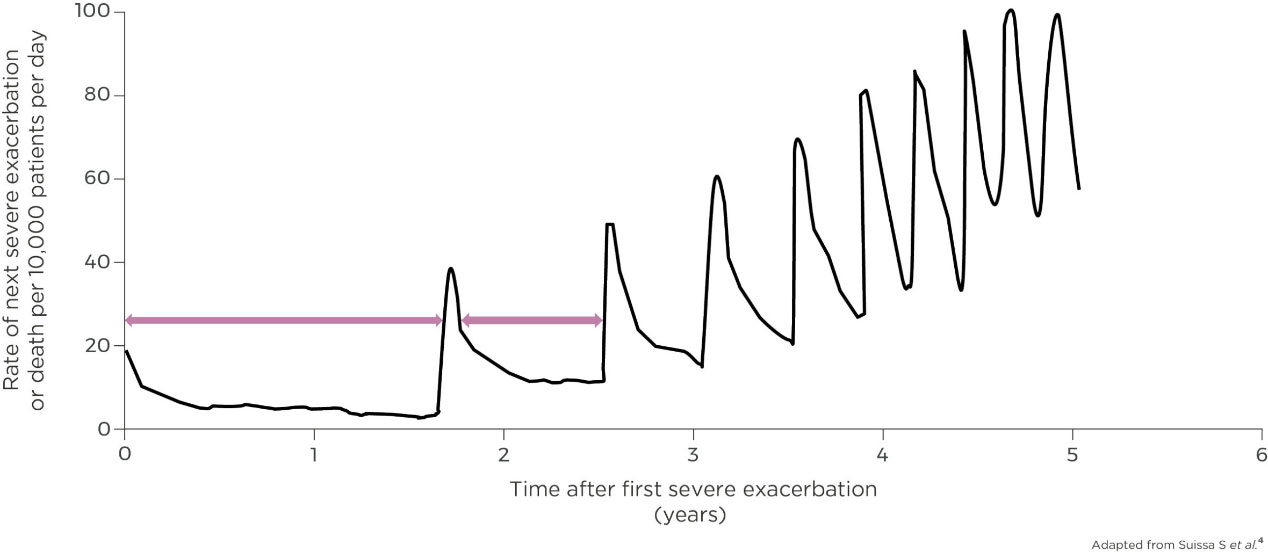
With each exacerbation, studies have shown decreased time between the first exacerbation, and subsequent exacerbations or an increased risk of premature mortality.4,5

Research indicates a vicious cycle where one exacerbation increases the likelihood of further exacerbations. This is supported by findings showing that exacerbations reduce lung function over time, making patients more susceptible to additional episodes.4,5


The impact of COPD exacerbations on COPD outcomes

Rate of next severe exacerbation or death

Patients at greatest risk of future exacerbations were those who had a previous history of exacerbations5

Hospital

Risk of future hospitalisation was increased by 21% with having just 1 moderate exacerbation compared with no exacerbations [adjusted HR=1.21 (95% CI: 1.14, 1.27)].6,a,b

Hospital

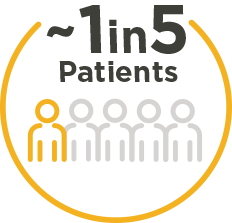
~1 in 5 patients may die within 1 year of their first exacerbation requiring hospitalisation N=4204.7

a. A total of 99,574 patients with COPD were identified from the UK Clinical Practice Research Datalink to investigate the natural history of COPD exacerbations over 10 years of follow-up6

b. Based on adjusted HRs for comparison of a future severe exacerbation in patients with one previous moderate exacerbation versus those without an exacerbation during a case-control study6


The impact of COPD exacerbations on future cardiopulmonary events

Hospital

The lung and heart are linked: exacerbations of COPD not only affect the respiratory system but also create cardiopulmonary risk, which can complicate the overall health and treatment of patients.8

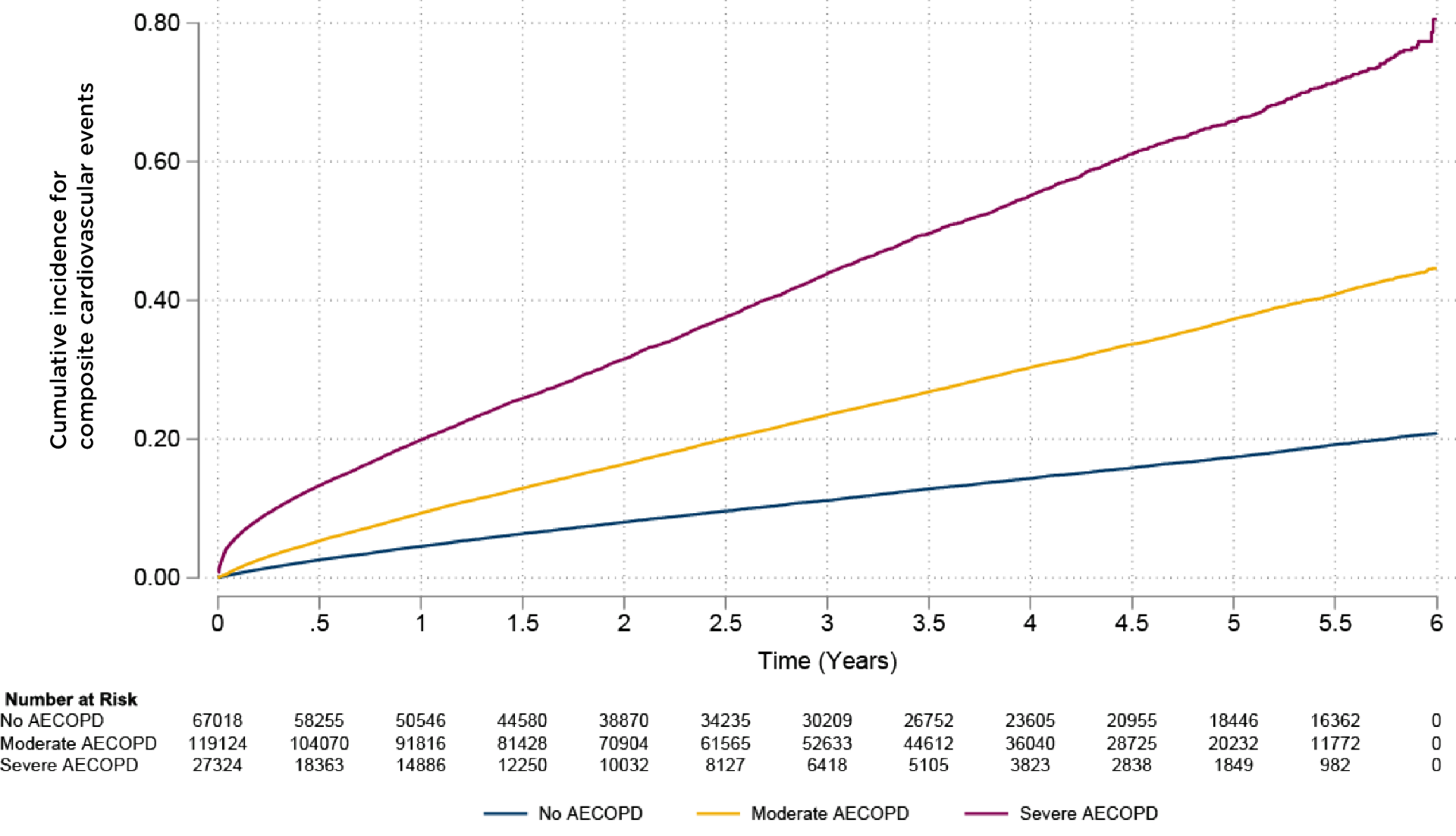
The risk of COPD exacerbations, cardiovascular events or premature death in patients with COPD.8

Rate of next severe exacerbation or death Rate of next severe exacerbation or death

COPD-associated cardiopulmonary risk. Figure adapted from Singh, D., & Gale, C. P. et al Adv Ther (2024) with permission from Springer Nature.8

Exacerbations of COPD not only reduce lung function but also increase the risk of cardiovascular events, with this risk remaining elevated for up to a year. The period immediately following a COPD exacerbation is critical for clinical intervention to prevent future cardiovascular events.9


The pathophysiological links between COPD and cardiovascular disease are believed to be related to:


Inflammation10-13

  • COPD lung inflammation drives systemic inflammation, promoting atherosclerotic damage in the heart and vasculature

Hyperinflation11,14-16

  • Hyperinflation compresses the heart, reducing cardiac output

Hypoxemia17

  • Hypoxemia can lead to pulmonary hypertension and right-heart failure

Rate of next severe exacerbation or death

Moderate exacerbation: unadjusted HR, 2.11 (95% CI, 2.06–2.17); adjusted HR, 1.67 (95% CI, 1.62–1.72). Severe exacerbation: unadjusted HR, 4.07 (95% CI, 3.94–4.21); adjusted HR, 3.18 (95% CI, 3.06–3.29).

Hospital

Approximately 28 people experienced at least one cardiovascular event out of every 100 hospitalised exacerbations (7,564/27,324).9

Hospital

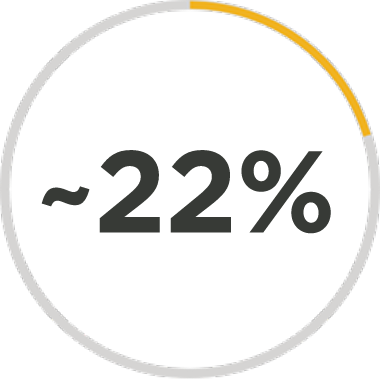
Approximately 22 people experienced a cardiovascular event out of every 100 managed for an exacerbation in primary care (25,831/119,124).9

AECOPD, acute exacerbations of chronic obstructive pulmonary disease; CI, confidence interval; COPD, chronic obstructive pulmonary disease; CV, cardiovascular; HR, hazard ratio; N, number of patients.

  1. NICE. Chronic obstructive pulmonary disease in over 16s: diagnosis and management. (NG115), Last updated July 2019.
  2. Watz H, et al. Respir Res. 2018;19:251.
  3. Zhang et al. ERJ 2018; 52(1).
  4. Suissa S, et al. Thorax. 2012;67:957–963.
  5. Whittaker, Int J Chron Obstruct Pulmon Dis. 2022.
  6. Rothnie KJ, et al. Am Jour of Resp Crit Care Med. 2018; 198 (4): 464-471.
  7. Ho T-W, et al. PLoS One 2014;9:e114866.
  8. Singh D, et al. Adv Ther. 2024.
  9. Graul EL, et al. Am J Respir Crit Care Med. 2024;209(8):960–72.
  10. Barnes PJ. PLoS Med. 2010;7(3):e10002201:1–4.
  11. Aisanov Z, et al. J Thorac Dis. 2020;12:2791‌–2802‌.
  12. Barnes PJ, et al. Nat Rev Dis Primers. 2015;1:15076.
  13. Van Eeden S, et al. Am I Respir Crit Med. 2010;186(1):11–16.
  14. O’Donnell D, et al. COPD Res Pract. 2015;1(4):1–12.
  15. García-Río F. BRN Rev. 2020;6(1):67–86.
  16. Solidoro P. Front Med. 2022;9:816843:1–9.
  17. Kent BD, et al. Int J Chron Obstruct Pulmon Dis. 2011;6:199–208.

GB-60847 | November 2024

TRIXEO and AEROSPHERE are registered trademarks of the AstraZeneca group of companies.

Adverse events should be reported. Reporting forms and information can be found at www.mhra.gov.uk/yellowcard or search for MHRA Yellow Card in the Google Play or Apple App Store. Adverse events should also be reported to AstraZeneca by visiting https://contactazmedical.astrazeneca.com/ or by calling ‌‌‌0‌‌‌8‌‌‌‌‌0‌‌‌‌0‌‌‌ ‌‌7‌‌‌‌‌‌8‌‌‌3‌‌‌ ‌‌0‌‌‌‌‌0‌‌‌‌3‌‌‌‌3‌‌‌.

Connessiallasalute.it

This website was created for UK HCPs and has been designed to provide information to educate, empower and enable them in the great work they are doing for patients across a range of therapy areas. This website is intended for doctors, nurses, and pharmacists in the UK. Other UK residents please visit astrazeneca.co.uk.

Terms of use

Privacy Policy

Cookie Policy

Contact Us

LinkedIn

Twitter

©2024 AstraZeneca. GB-67866 | DOP: June 2025