Welcome to this UK AstraZeneca produced and funded website

This website is intended for UK Healthcare Professionals only.


The website contains both promotional and non-promotional content.


If you are a patient or a carer of a patient prescribed an AstraZeneca product, please visit myazmed.co.uk


For any other UK residents please visit astrazeneca.co.uk

I am not a Healthcare Professional
Prescribing Information ZOLADEX (goserelin) United Kingdom
Adverse Event Reporting

This website is intended for UK Healthcare Professionals only. Other UK residents please visit astrazeneca.co.uk.

Logo test product
  • Our Medicines
    • Cardiovascular, Renal & Metabolism
      • ATTR Amyloidosis
        • WAINZUA®▼(eplontersen)
      • Chronic Kidney Disease (CKD)
        • FORXIGA® (dapagliflozin)
      • Heart Failure
        • FORXIGA® (dapagliflozin)
      • Hyperkalaemia
        • LOKELMA® (sodium zirconium cyclosilicate)
      • Type 2 Diabetes (T2D)
        • FORXIGA® (dapagliflozin)
    • Oncology
      • Breast Cancer
        • LYNPARZA® (olaparib)
        • TRUQAP®▼(capivasertib)
      • Bladder Cancer
        • IMFINZI® (durvalumab)
      • Endometrial Cancer
        • IMFINZI® (durvalumab)
        • LYNPARZA® (olaparib)
      • Gastrointestinal Cancer
        • IMFINZI® (durvalumab)
        • IMJUDO®▼(tremelimumab)
      • Lung Cancer
        • IMFINZI® (durvalumab)
        • TAGRISSO® (osimertinib)
      • Ovarian Cancer
        • LYNPARZA® (olaparib)
      • Prostate Cancer
        • LYNPARZA® (olaparib)
        • ZOLADEX® (goserelin)
    • Respiratory
      • Asthma
        • TEZSPIRE®▼ (tezepelumab)
        • SYMBICORT® (budesonide/formoterol)
      • Chronic Obstructive Pulmonary Disease(COPD)
        • TRIXEO AEROSPHERE® (formoterol fumarate dihydrate/glycopyrronium/budesonide)
        • BEVESPI® (glycopyrronium/formoterol fumarate dihydrate)
    • Vaccines
      • Flu
        • FLUENZ® nasal spray suspension (influenza vaccine, live attenuated, nasal)
  • Therapy Areas
    • Cardiovascular, Renal & Metabolism
      • ATTR Amyloidosis
      • Chronic Kidney Disease (CKD)
      • Heart Failure
      • Hyperkalaemia
      • Type 2 Diabetes (T2D)
    • Oncology
      • Breast Cancer
      • Bladder Cancer
      • Endometrial Cancer
      • Gastrointestinal Cancer
      • Lung Cancer
      • Ovarian Cancer
      • Prostate Cancer
    • Respiratory
      • Asthma
      • Chronic Obstructive Pulmonary Disease(COPD)
    • Vaccines
      • Flu
  • About us
    • AZ Commitment
  • Contact us
Login
  • AstraZeneca UK
  • Zoladex HOME PAGE
  • Zoladex trials data
  • Overview
  • About Zoladex
  • Efficacy and safety
  • Administration
  • Patient Resources
  • How to Purchase
Zoladex trials data

Zoladex logo


Efficacy and safety

High-risk localised

prostate cancer

Click here

Locally advanced prostate

cancer

Click here

Metastatic prostate

cancer

Click here

Key points about Zoladex

High risk localised and locally advanced prostate cancer

ZOLADEX 3.6 mg and 10.8 mg implant therapeutic indications in prostate cancer: 


Zoladex is indicated:


  • In the treatment of locally advanced prostate cancer, as an alternative to surgical castration where Zoladex has demonstrated comparable survival benefits to an anti-androgen
  • As adjuvant treatment to radiotherapy in patients with high-risk localised or locally advanced prostate cancer where Zoladex has demonstrated improved disease-free survival and overall survival
  • As neo-adjuvant treatment prior to radiotherapy in patients with high-risk localised or locally advanced prostate cancer where Zoladex has demonstrated improved disease-free survival
  • As adjuvant treatment to radical prostatectomy in patients with locally advanced prostate cancer at high risk of disease progression where Zoladex has demonstrated improved disease-free survival

Adjuvant therapy for high-risk localised and locally advanced prostate cancer

Treatment of prostate cancer with high metastatic risk with Zoladex as adjuvant treatment is supported by the clinical trial EORTC 22863 (Bolla M et al 2010)1

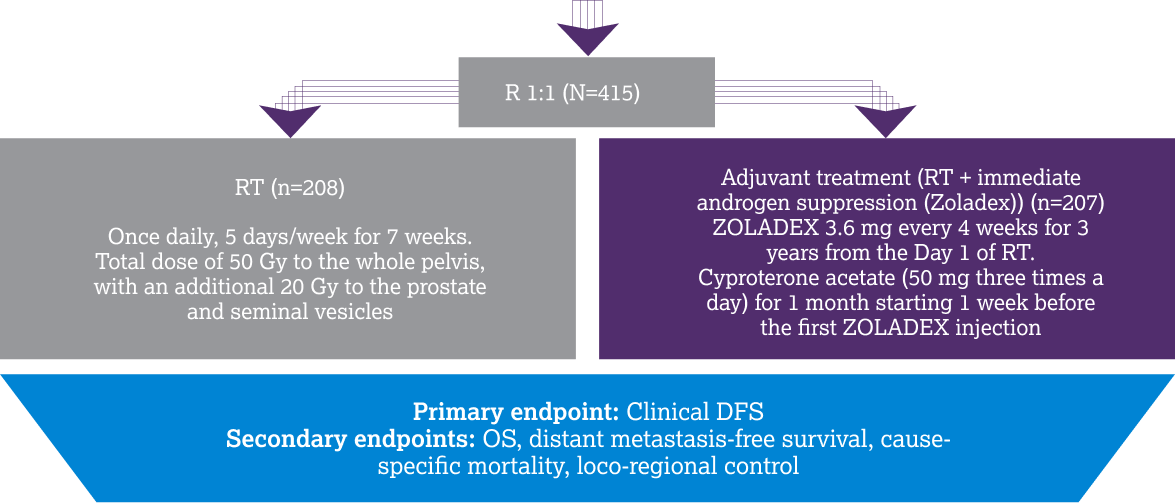
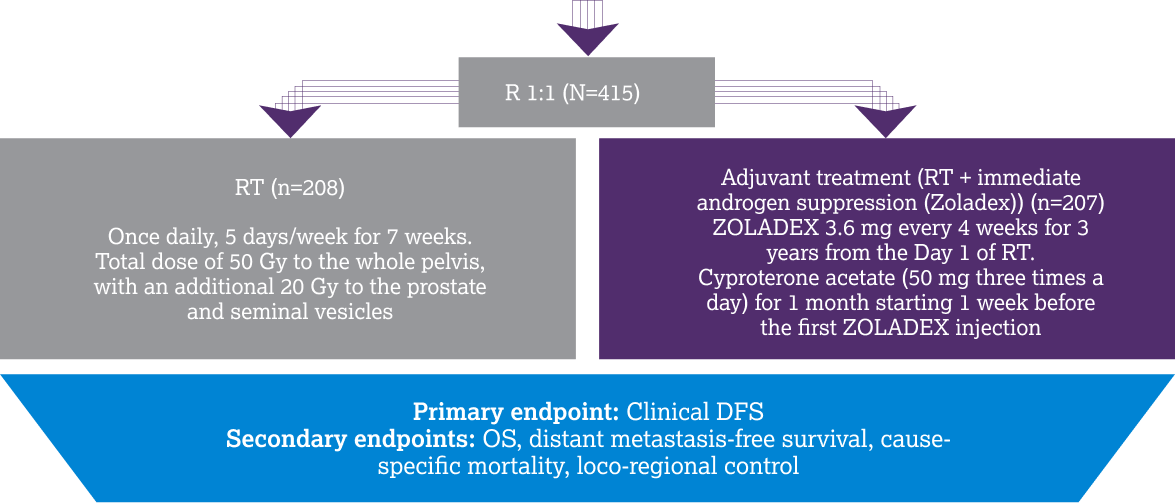
EORTC 22863 (Bolla M et al 2010)1: study design

Patients <80 years with newly diagnosed T1–2 prostatic

adenocarcinoma, WHO histological Grade 3 or T3–4 prostatic

adenocarcinoma of any histological grade, and a WHO

performance status of 0–2

study design of EORTC 22863 (Bolla et al. 2010) study design of EORTC 22863 (Bolla et al. 2010)
  • Open-label, Phase III randomised controlled trial investigating patients with prostate cancer with high metastatic risk
  • Patients were randomised to receive adjuvant treatment (RT with immediate androgen suppression (ZOLADEX) and cyproterone acetate
treatment vs RT alone
  • Median follow-up of 9.1 years
DFS=disease-free survival; EORTC=European Organisation for Research and Treatment of Cancer; OS=overall survival; RT=radiotherapy; WHO=World Health Organization.

EORTC 22863 (Bolla M et al 2010)1: efficacy data

Currently the only LHRH agonist to demonstrate a survival benefit vs. radiotherapy alone at 10 YEARS in randomised phase 3 trials in high-risk localised and locally advanced prostate cancer.1,4,13

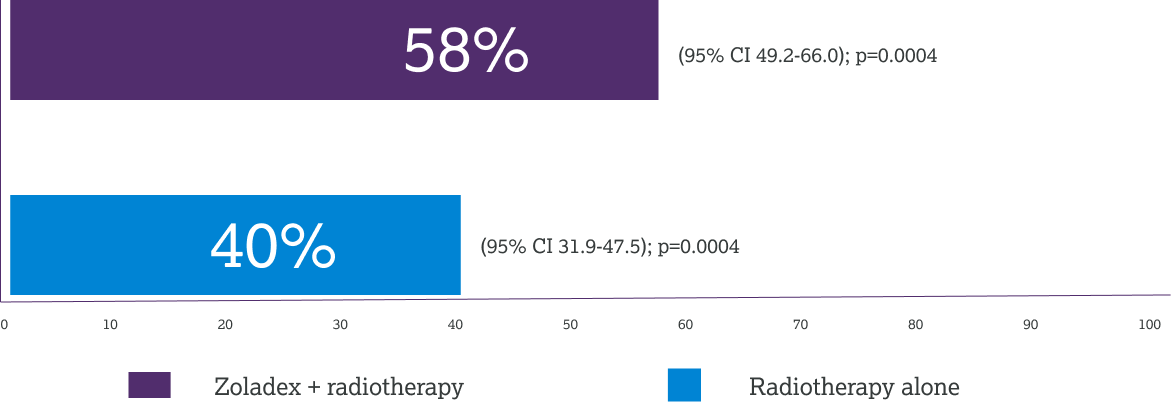
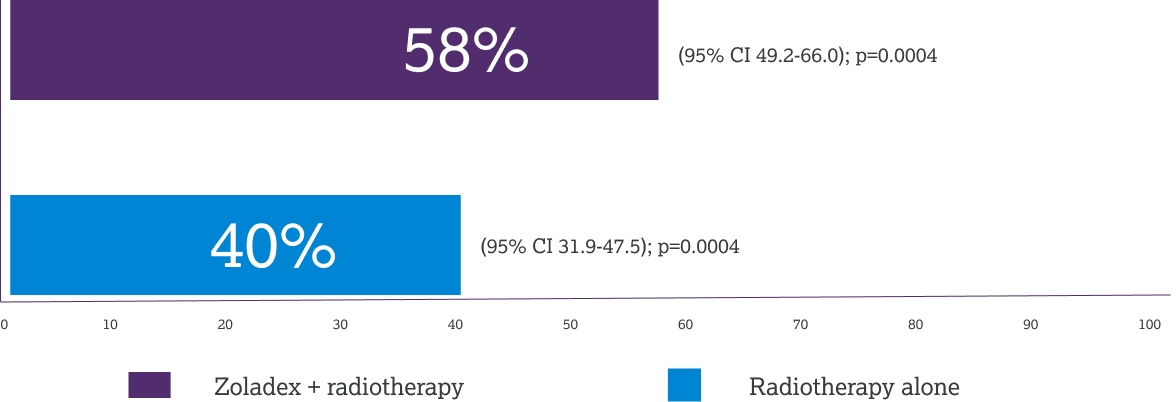
OVERALL SURVIVAL WITH ADJUVANT ZOLADEX AT 10 YEARS:1


Illustration uses data from Bolla. Lancet Onc. 2010 Oct; 11 (11):1066-73

  • 48% disease-free survival vs. 23% with RT alone (HR 0.42, 95% CI 0.33–0.55, p<0.0001)
  • 10% disease-specific mortality vs. 30% with RT alone (HR 0.38, 95% CI 0.24–0.60; p<0.0001)
Overall survival improved after combined treatment than after radiotherapy alone (HR 0.60, 95% CI 0.45–0.80, p=0.0004); (Radiotherapy + Zoladex: n=80 deaths; Radiotherapy alone: n=112 deaths)

CI=confidence interval; HR=hazard ratio; LHRHa=luteinising hormone-releasing hormone agonist; RT=radiotherapy.

Metastatic prostate cancer

ZOLADEX 3.6 mg and 10.8 mg implant therapeutic indications in prostate cancer: 
Zoladex is indicated:
 
  • In the treatment of metastatic prostate cancer where Zoladex has demonstrated comparable survival benefits to surgical castration


Treatment of metastatic prostate cancer patients with Zoladex is supported by two clinical trials investigating Zoladex vs surgical castration (orchidectomy):7-8

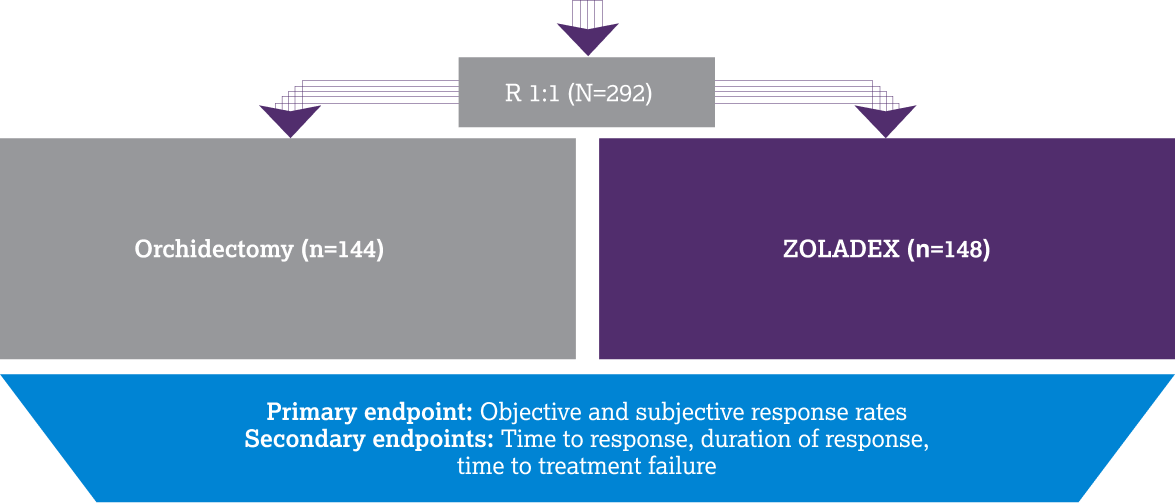
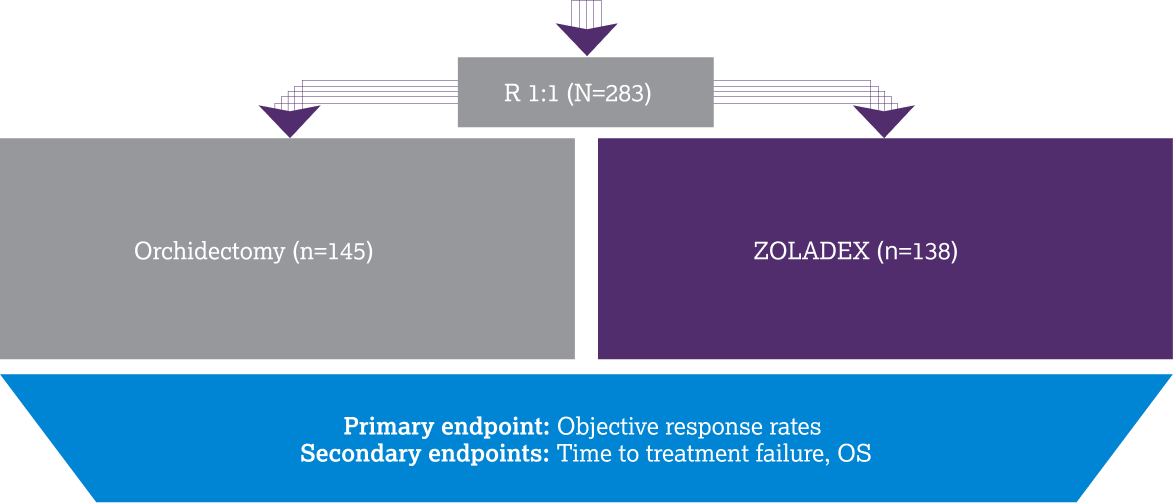
Kaisary AV et al. 1991 and Vogelzang NJ et al. 19957-8: study design

  1. ZOLADEX in metastatic prostate cancer (Kaisary AV et al. 1991)7
  2. ZOLADEX in metastatic prostate cancer (Vogelzang NJ et al. 1995)8

Histologically proven previously untreated metastatic prostate cancer with radiological and/or isotope evidence of bone metastases (or evidence of soft tissue metastases) Majority T3/T4 and had Grade 2 or 3 tumours

Kaisary AV et al. metastatic prostate cancer study design Kaisary AV et al. metastatic prostate cancer study design
  • Randomised, multicentre trial
  • Patients had histologically proven previously untreated metastatic prostate cancer
  • 62 patients randomised to ZOLADEX and 57 randomised to orchidectomy were symptomatic at entry
  • The mean duration of on-study follow-up has been 65.8 weeks in the Zoladex group and 59.6 weeks in those who underwent orchidectomy.
  • The median duration of follow-up for survival was ~100 weeks

Histologically proven metastatic D2 prostate cancer Majority of patients in the ZOLADEX and orchidectomy groups were PS0 –1 (87% and 88%, respectively), and had bone as the primary site of metastases (59% and 53%, respectively)

Vogelzang NJ et al. metastatic prostate cancer study design Vogelzang NJ et al. metastatic prostate cancer study design
  • Randomised, open, multi-centre trial in patients who had:
    • No prior chemotherapy or hormonal therapy
    • No current or histological malignancy (other than skin cancer)
  • The trial was of identical design to the Kaisary trial and so recruitment to this trial was closed earlier than planned as the two studies allowed analysis of 575 patients
  • There was a minimum duration of follow-up of 4 years

Kaisary AV et al. 1991 and Vogelzang NJ et al. 19957-8: efficacy data

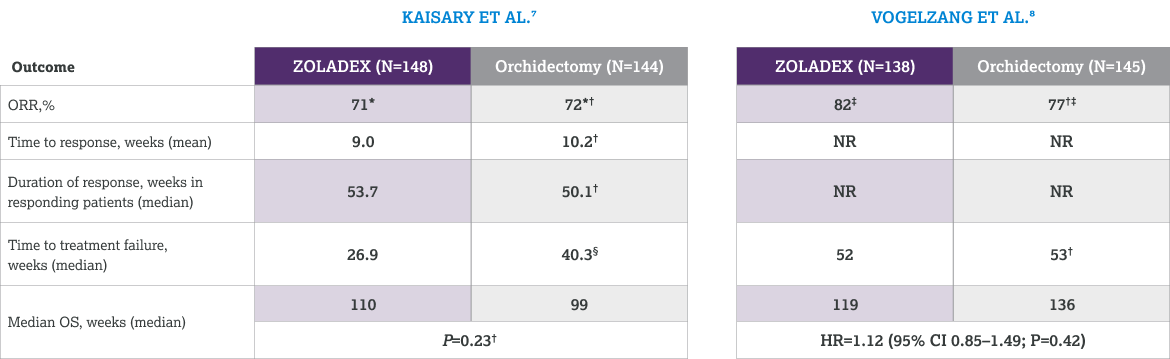
ZOLADEX provides survival benefits similar to surgical castration, as demonstrated in two clinical trials7,8

Kaisary AV et al. 1991 and Vogelzang NJ et al. 1995: efficacy data Kaisary AV et al. 1991 and Vogelzang NJ et al. 1995: efficacy data


Not intended for direct comparison. Baseline characteristics, endpoints and study designs vary.


*Partial response + complete response.


†Not statistically significant.


‡Complete response, partial response, stable disease or absence of disease progression.


§Significance per Cox analysis.


CI=confidence interval; HR=hazard ratio; NR=not reached; ORR=objective response rate; OS=overall survival.

Safety

A well-characterised safety profile established over 30 years of clinical use15

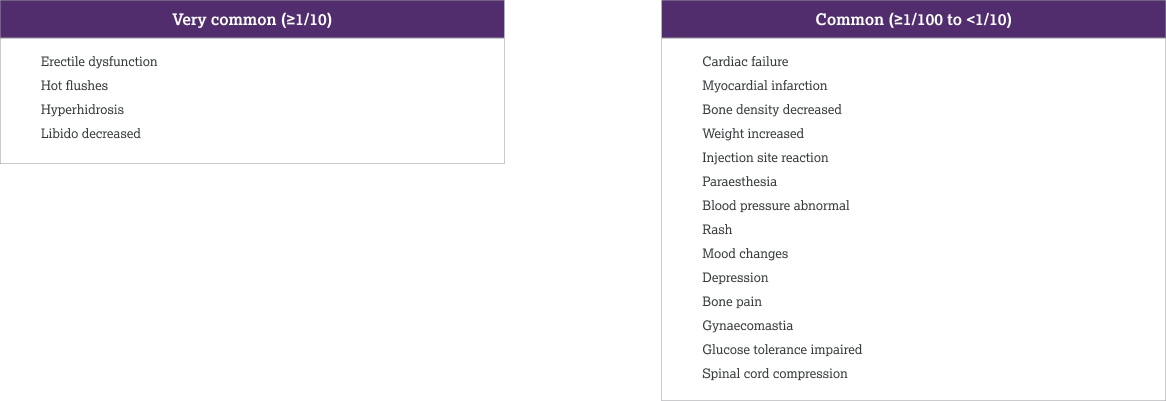
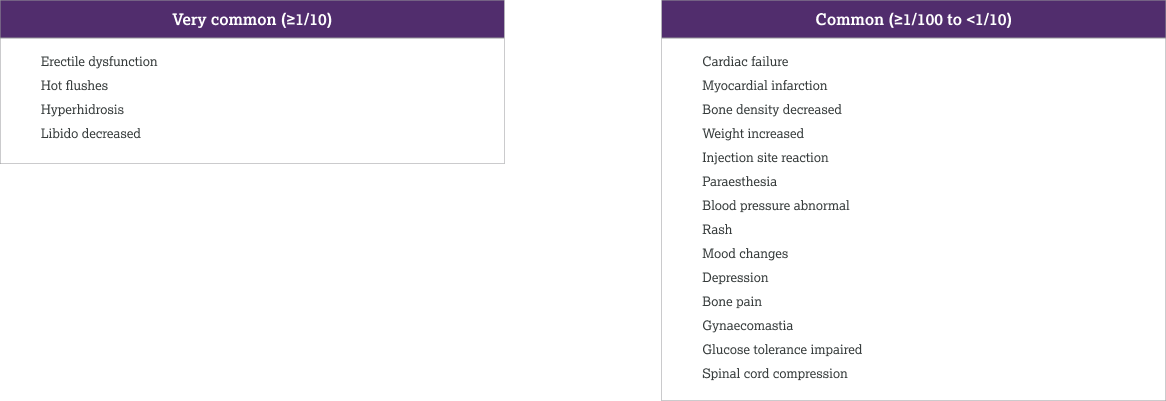
The most commonly observed adverse reactions include hot flushes, sweating and injection site reactions(15,16)


Adverse events associated with zoladex in men15,16

Very common and common adverse events associated with zoladex in men Very common and common adverse events associated with zoladex in men

Please refer to the full SmPC for further information.

The adverse events of ZOLADEX are well-characterised at both 3.6 mg and 10.8 mg doses15,16

CONTRAINDICATIONS*15,16:


Hypersensitivity to the active substance or to any of the excipients listed below:


  • A blend of high and low molecular weight lactide/glycolide copolymers


Zoladex should not be used during pregnancy since concurrent use of LHRH agonists is associated with a theoretical risk of abortion or foetal abnormality. Non-hormonal methods of contraception should be employed during therapy until menses resume.


The use of Zoladex during breast-feeding is contraindicated.


WARNINGS AND PRECAUTIONS FOR USE* 15,16:


There is an increased risk of incident depression (which may be severe) in patients undergoing treatment with gonadotropin-releasing hormone agonists, such as Goserelin. Patients should be informed accordingly and treated as appropriate if symptoms occur. Carefully monitor patients with known depression or history of depression.


Androgen deprivation therapy may prolong the QT interval.


In patients with a history of or risk factors for QT prolongation and in patients receiving concomitant medicinal products that might prolong the QT interval (please see section 4.5 in ZOLADEX Summary of Product Characteristics18,19) physicians should assess the benefit-risk ratio including the potential for Torsade de pointes prior to initiating Zoladex.


Injection site injury has been reported with Zoladex, including events of pain, haematoma, haemorrhage and vascular injury. Monitor affected patients for signs or symptoms of abdominal haemorrhage. In very rare cases, administration error resulted in vascular injury and haemorrhagic shock requiring blood transfusions and surgical intervention. Extra care should be taken when administering Zoladex to patients with a low body mass index and/or receiving full anticoagulation medications.


The use of Zoladex in men at particular risk of developing ureteric obstruction or spinal cord compression should be considered carefully, and the patients monitored closely during the first month of therapy. If spinal cord compression or renal impairment due to ureteric obstruction are present or develop, specific standard treatment of these complications should be instituted.


Consideration should be given to the initial use of an anti-androgen (e.g. cyproterone acetate 300 mg daily for 3 days before and 3 weeks after commencement of Zoladex) at the start of luteinising hormone-releasing hormone analogue therapy since this has been reported to prevent the possible sequelae of the initial rise in serum testosterone.


The use of luteinising hormone-releasing hormone agonists may cause reduction in bone mineral density. In men, preliminary data suggest that the use of a bisphosphonate in combination with an luteinising hormone-releasing hormone agonist may reduce bone mineral loss. Particular caution is necessary in patients with additional risk factors for osteoporosis (e.g. chronic alcohol abusers, smokers, long-term therapy with anticonvulsants or corticosteroids, family history of osteoporosis).


Patients with known depression and patients with hypertension should be monitored carefully.


Reduction in glucose tolerance has been observed in men receiving luteinising hormone-releasing hormone agonists. This may manifest as diabetes or loss of glycaemic control in patients with pre-existing diabetes mellitus. Thus, monitoring of blood glucose levels should be considered.


Myocardial infarction and cardiac failure were observed in a pharmaco-epidemiology study of luteinising hormone-releasing hormone agonists used in the treatment of prostate cancer. The risk appears to be increased when used in combination with anti-androgens.


There are no data on removal or dissolution of the implant.16


Treatment with Zoladex may lead to positive reactions in anti-doping tests.

 

  1. Bolla M, Van Tienhoven G, Warde P, et al. External irradiation with or without long-term androgen suppression for prostate cancer with high metastatic risk: 10-year results of an EORTC randomised study. Lancet Oncol. 2010;11(11):1066–1073.
  2. Zapatero A, Guerrero A, Maldonado X, et al. High dose radiotherapy with short-term or long-term androgen deprivation in localised prostate cancer (DART01/05 GICOR): a randomised, controlled, phase 3 trial. Lancet Oncol. 2015;16:320–327.
  3. Messing EM, Manola J, Yao J, et al. Immediate versus deferred androgen deprivation treatment in patients with node-positive prostate cancer after radical prostatectomy and pelvic lymphadenectomy. Lancet Oncol. 2006;7:472–479.
  4. Horwitz EM, Bae K, Hanks GE, et al. Ten-year follow-up of radiation therapy oncology group protocol 92-02: a phase III trial of the duration of elective androgen deprivation in locally advanced prostate cancer. J Clin Oncol. 2008;26:2497–504.
  5. Roach M, Bae K, Speight J, et al. Short-term neoadjuvant androgen deprivation therapy and external-beam radiotherapy for locally advanced prostate cancer: long-term results of RTOG 8610. J Clin Oncol. 2008;26:585–591.
  6. Denham J, Steigler A, Lamb DS, et al. Short-term neoadjuvant androgen deprivation and radiotherapy for locally advanced prostate cancer: 10-year data from the TROG 96.01 randomised trial. Lancet Oncol. 2011;12:451–459.
  7. Kaisary AV, Tyrrell CJ, Peeling WB, Griffiths K. Comparison of LHRH analogue (Zoladex) with orchiectomy in patients with metastatic prostatic carcinoma. Br J Urol. 1991;67:502–508.
  8. Vogelzang NJ, Chodak GW, Soloway MS, et al. Goserelin versus orchiectomy in the treatment of advanced prostate cancer: final results of a randomized trial. Zoladex Prostate Study Group. Urology. 1995;46:220–226.
  9. Waymont B, Lynch TH, Dunn JA, et al. Phase III randomised study of zoladex versus stilboestrol in the treatment of advanced prostate cancer. Br J Urol. 1992;69(6):614-620.
  10. Citrin DL, Re´snick MI, Guinan P, et al. A comparison of Zoladex and DES in the treatment of advanced prostate cancer: results of a randomized, multicenter trial. Prostate. 1991;18:139–146.
  11. Osborne DR, Moffat LEF, Kaisary A, Rees DLP, Weaver JP. A comparison of Zoladex, cyproterone acetate and stilboestrol in the treatment of patients with advanced prostatic cancer. Recent Adv Urol Ca Diag Treat. 1990:53–55.
  12. Pilepich MV, Winter K, Lawton CA, et al. Androgen suppression adjuvant to definitive radiotherapy in prostate carcinoma--long-term results of phase III RTOG 85-31. Int J Radiat Oncol Bio Phys. 2005;61:1285-1290.
  13. Payne H, Mason M. Androgen deprivation therapy as adjuvant/neoadjuvant to radiotherapy for high-risk localised and locally advanced prostate cancer: recent developments. Br J Cancer. 2011;105(11):1628-34.
  14. AstraZeneca. Data on File. Veeva Approval ID: REF-111809.
  15. ZOLADEX 3.6 mg implant. Summary of Product Characteristics. March 2024. Available at: https://www.medicines.org.uk/emc/product/1543
  16. ZOLADEX LA 10.8 mg. Summary of Product Characteristics. March 2024. Available at: https://www.medicines.org.uk/emc/product/1567

Adverse events should be reported. Reporting forms and information can be found at www.mhra.gov.uk/yellowcard or search for MHRA Yellow Card in the Google Play or Apple App Store. Adverse events should also be reported to AstraZeneca by visiting https://contactazmedical.astrazeneca.com/ or by calling ‌‌‌0‌‌‌8‌‌‌‌‌0‌‌‌‌0‌‌‌ ‌‌7‌‌‌‌‌‌8‌‌‌3‌‌‌ ‌‌0‌‌‌‌‌0‌‌‌‌3‌‌‌‌3‌‌‌.

GB-72078 | March 2026

Connessiallasalute.it

This website was created for UK HCPs and has been designed to provide information to educate, empower and enable them in the great work they are doing for patients across a range of therapy areas. This website is intended for doctors, nurses, and pharmacists in the UK. Other UK residents please visit astrazeneca.co.uk.

Terms of use

Privacy Policy

Cookie Policy

Contact Us

LinkedIn

Twitter

©2026 AstraZeneca. GB-72602 | May 2026