Welcome to this UK AstraZeneca produced and funded website

This website is intended for UK Healthcare Professionals only.


The website contains both promotional and non-promotional content.


If you are a patient or a carer of a patient prescribed an AstraZeneca product, please visit myazmed.co.uk


For any other UK residents please visit astrazeneca.co.uk

I am not a Healthcare Professional
Prescribing Information LYNPARZA (olaparib) United Kingdom
Adverse Event Reporting

This is a promotional website developed by AstraZeneca and intended for UK Healthcare Professionals only. Other UK residents please visit astrazeneca.co.uk

AstraZeneca-logo
  • Our Medicines
    • Cardiovascular, Renal & Metabolism
      • ATTR Amyloidosis
        • WAINZUA®▼(eplontersen)
      • Chronic Kidney Disease (CKD)
        • FORXIGA® (dapagliflozin)
      • Heart Failure
        • FORXIGA® (dapagliflozin)
      • Hyperkalaemia
        • LOKELMA® (sodium zirconium cyclosilicate)
      • Type 2 Diabetes (T2D)
        • FORXIGA® (dapagliflozin)
    • Oncology
      • Breast Cancer
        • LYNPARZA® (olaparib)
        • TRUQAP®▼(capivasertib)
      • Bladder Cancer
        • IMFINZI® (durvalumab)
      • Endometrial Cancer
        • IMFINZI® (durvalumab)
        • LYNPARZA® (olaparib)
      • Gastrointestinal Cancer
        • IMFINZI® (durvalumab)
        • IMJUDO®▼(tremelimumab)
      • Lung Cancer
        • IMFINZI® (durvalumab)
        • TAGRISSO® (osimertinib)
      • Ovarian Cancer
        • LYNPARZA® (olaparib)
      • Prostate Cancer
        • LYNPARZA® (olaparib)
        • ZOLADEX® (goserelin)
    • Respiratory
      • Asthma
        • TEZSPIRE®▼ (tezepelumab)
        • SYMBICORT® (budesonide/formoterol)
      • Chronic Obstructive Pulmonary Disease(COPD)
        • TRIXEO AEROSPHERE® (formoterol fumarate dihydrate/glycopyrronium/budesonide)
        • BEVESPI® (glycopyrronium/formoterol fumarate dihydrate)
    • Vaccines
      • Flu
        • FLUENZ® nasal spray suspension (influenza vaccine, live attenuated, nasal)
  • Therapy Areas
    • Cardiovascular, Renal & Metabolism
      • ATTR Amyloidosis
      • Chronic Kidney Disease (CKD)
      • Heart Failure
      • Hyperkalaemia
      • Type 2 Diabetes (T2D)
    • Oncology
      • Breast Cancer
      • Bladder Cancer
      • Endometrial Cancer
      • Gastrointestinal Cancer
      • Lung Cancer
      • Ovarian Cancer
      • Prostate Cancer
    • Respiratory
      • Asthma
      • Chronic Obstructive Pulmonary Disease(COPD)
    • Vaccines
      • Flu
  • About us
    • AZ Commitment
  • Contact us
  • AstraZeneca UK
  • Lynparza
  • Home
  • Lynparza (Olaparib): OlympiA clinical trial
  • Home
  • BRCA testing
  • OlympiA: eBC
  • OlympiAD: mBC
  • Resources
Lynparza (Olaparib): OlympiA clinical trial
A woman with a rucksack on looking upwards

OlympiA clinical trial


The first positive Phase III trial of a PARPi in early breast cancer1,2

  • Study design
  • Efficacy
  • Safety profile


LYNPARZA is the only targeted treatment option specifically licensed and reimbursed for eligible patients with gBRCAm, HER2-negative, high-risk eBC3–5

Study design

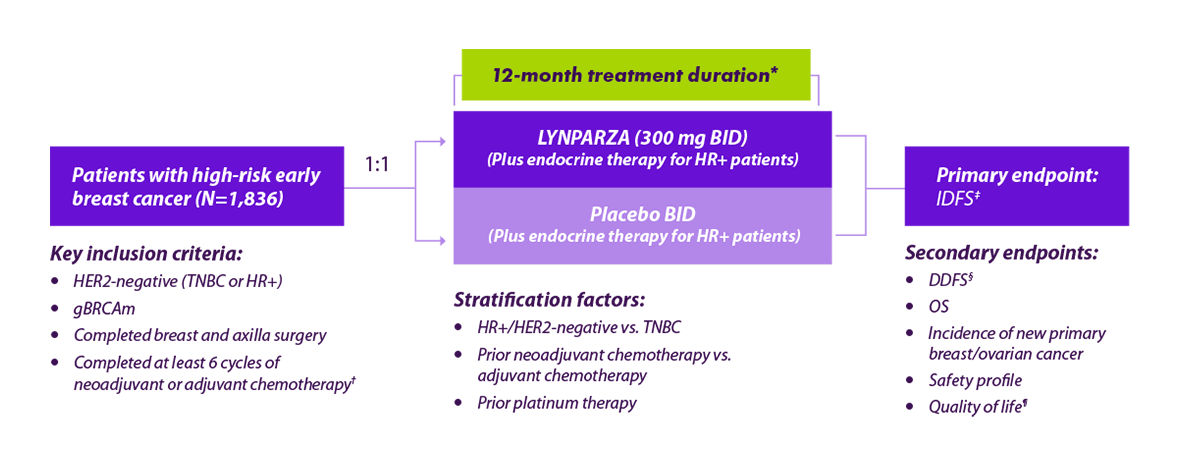
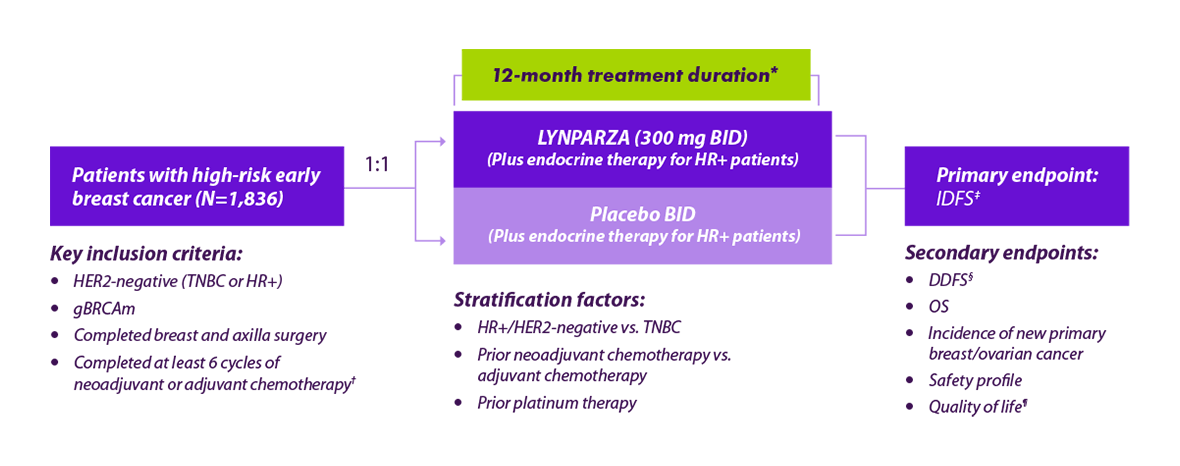
OlympiA was designed to investigate IDFS as its primary endpoint1

OlympiA was a Phase III, randomised, double-blind trial designed to investigate the efficacy and safety of adjuvant LYNPARZA vs. placebo in gBRCAm, HER2-negative, high-risk eBC.1,6

An infographic to show the structure of the OlympiA clinical trial and it's duration An infographic to show the structure of the OlympiA clinical trial and it's duration

*Administered for a total of 12 months or until disease recurrence or unacceptable toxicity.1
†An anthracycline, taxane, or a combination of both. Prior platinum chemotherapy was allowed. For neoadjuvant patients, post-surgery chemotherapy was not allowed.1
‡IDFS was defined as the time from randomisation until the date of first occurrence of one of the following events: ipsilateral invasive breast tumour, locoregional invasive disease, distant recurrence, contralateral invasive breast cancer, second primary invasive cancer, or death from any cause.1
§DDFS was defined as the time from randomisation until the date of first occurrence of one of the following events: distant recurrence, second primary non-breast invasive cancer, or death from any cause.6
¶QoL was measured using the FACIT-F and EORTC QLQ-C30 questionnaires.6

her2-negative her2-negative

Adapted from Tutt ANJ, et al. 2021.1

Back to top

Efficacy results

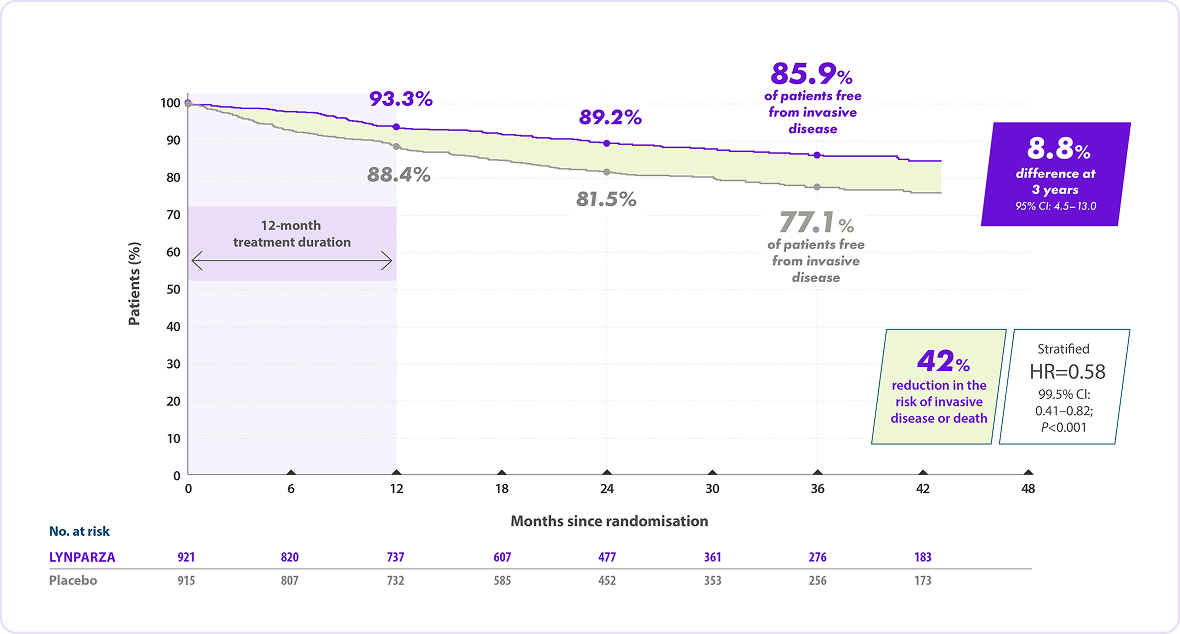
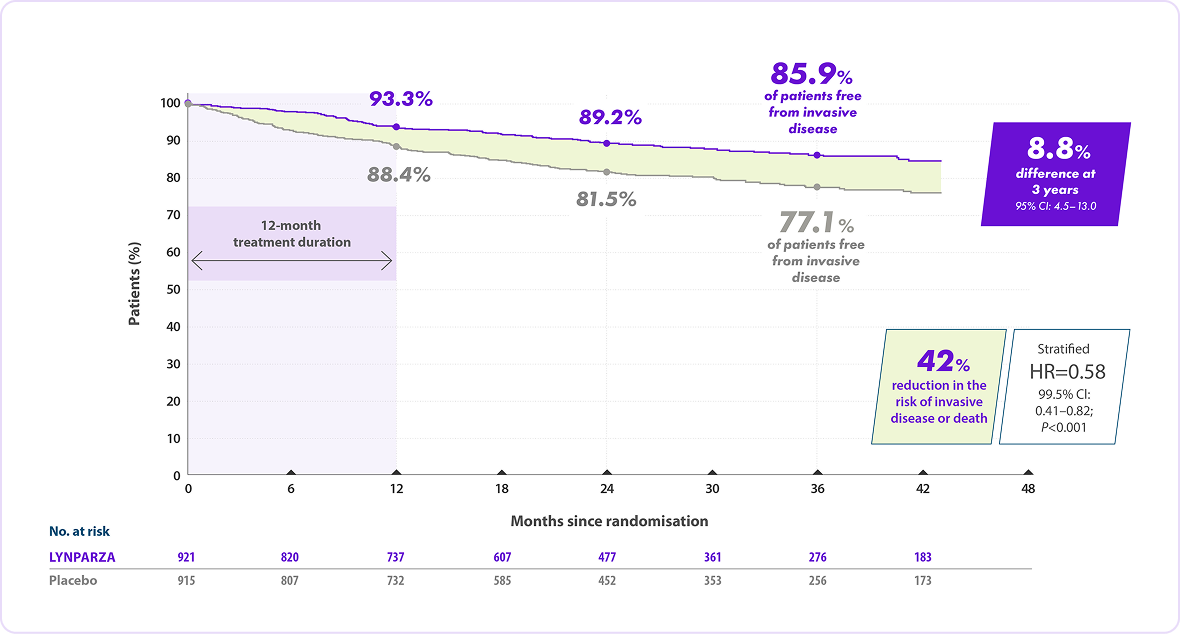
Primary endpoint: patients receiving LYNPARZA had a 42% reduction in the risk of invasive disease or death vs. placebo at 3 years1

IDFS* in the overall population:1†

A line graph to show reduction in the risk of invasive disease or death vs placebo A line graph to show reduction in the risk of invasive disease or death vs placebo

Adapted from Tutt ANJ, et al. 2021. Data cut-off: 27 March 2020.1
*IDFS was defined as the time from randomisation until the date of first occurrence of one of the following events: ipsilateral invasive breast tumour, locoregional invasive disease, distant recurrence, contralateral invasive breast cancer, second primary invasive cancer, or death from any cause.1
†Based on a pre-specified event driven interim analysis with a median follow-up of 2.5 years.1

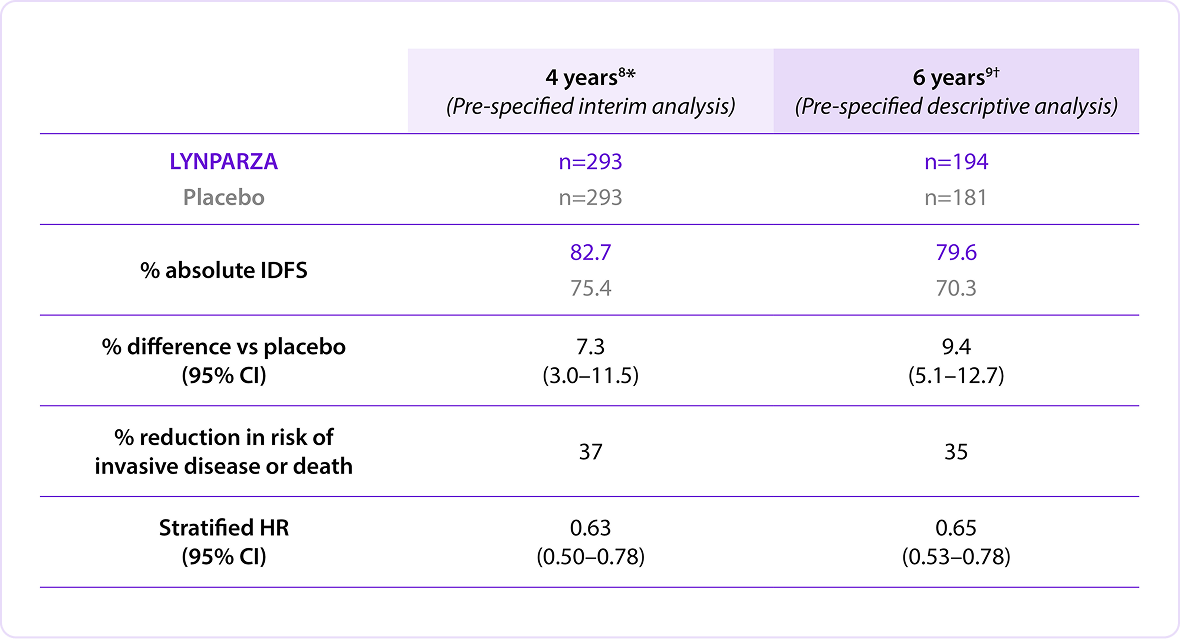
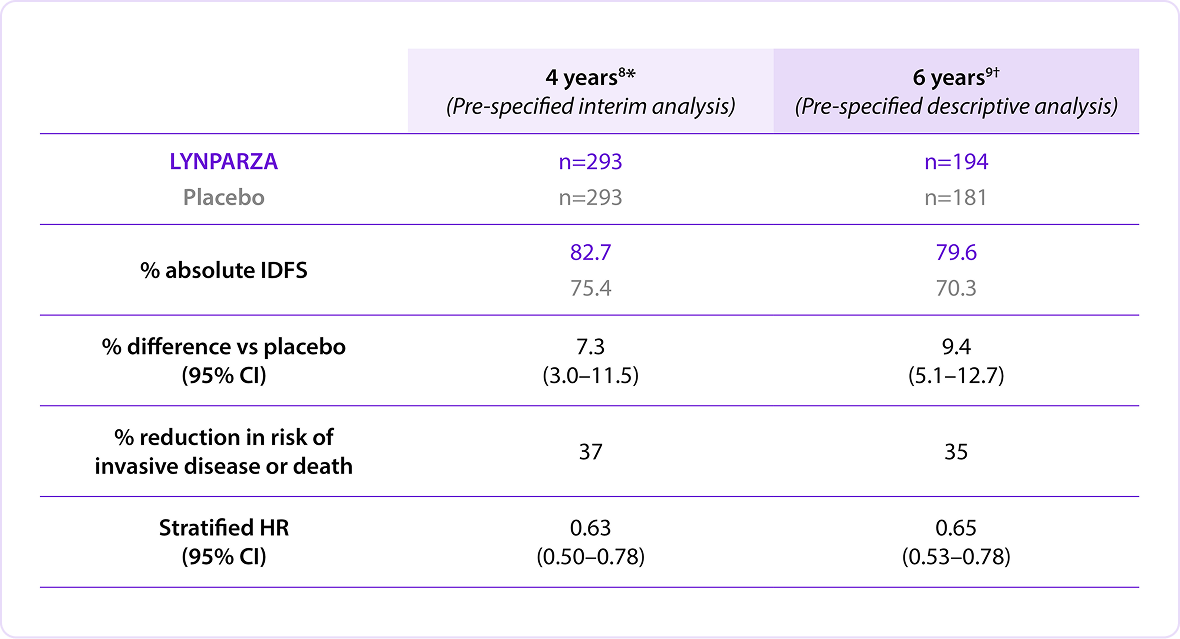
A table showing IDFS benefit A table showing IDFS benefit

Significance boundaries were crossed for IDFS at the prior planned DCO1. No further significance testing was performed.
*IDFS results from DCO2 (17 December 2021), a pre-specified interim analysis with a median follow-up of 3.5 years.8
†IDFS results from DCO3 (5 June 2024), a descriptive analysis with a median follow-up of ~6.1 years.9

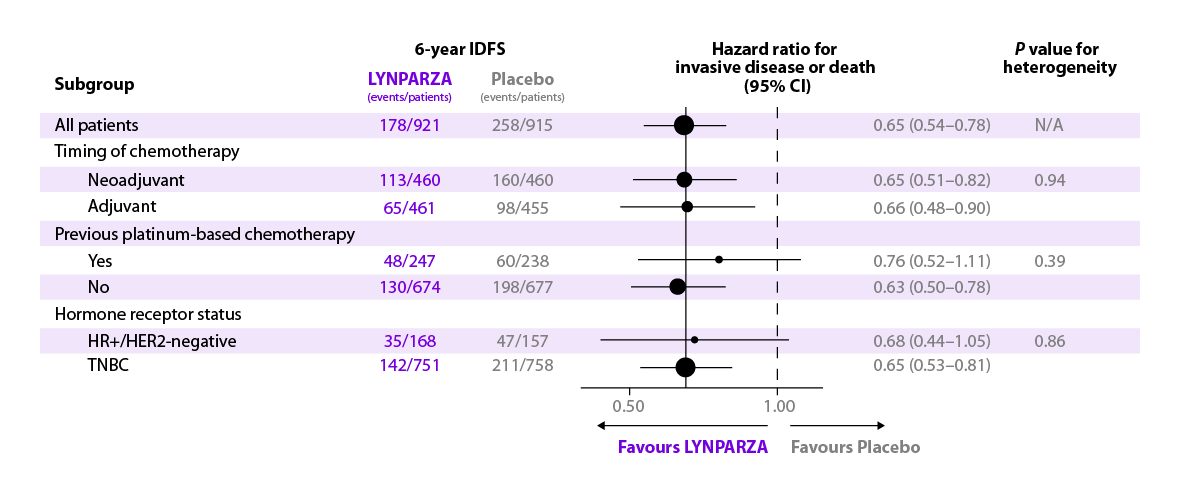
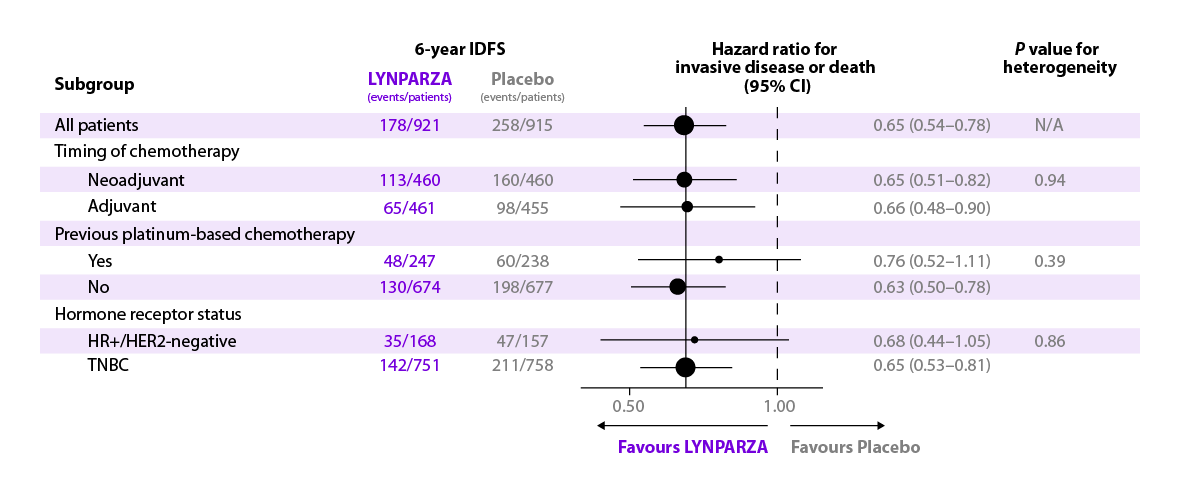
A chart to show 6-year IDFS hazard ratio for invasive disease or death A chart to show 6-year IDFS hazard ratio for invasive disease or death

Adapted from Garber JE, et al. Oral presentation at SABCS, 2024.9
All subgroup hazard ratio estimates are <1 and all confidence intervals include the ITT population hazard ratio (shown by solid line).9
*DCO3 (5 June 2024), descriptive analysis at ~6.1 years median follow-up.9

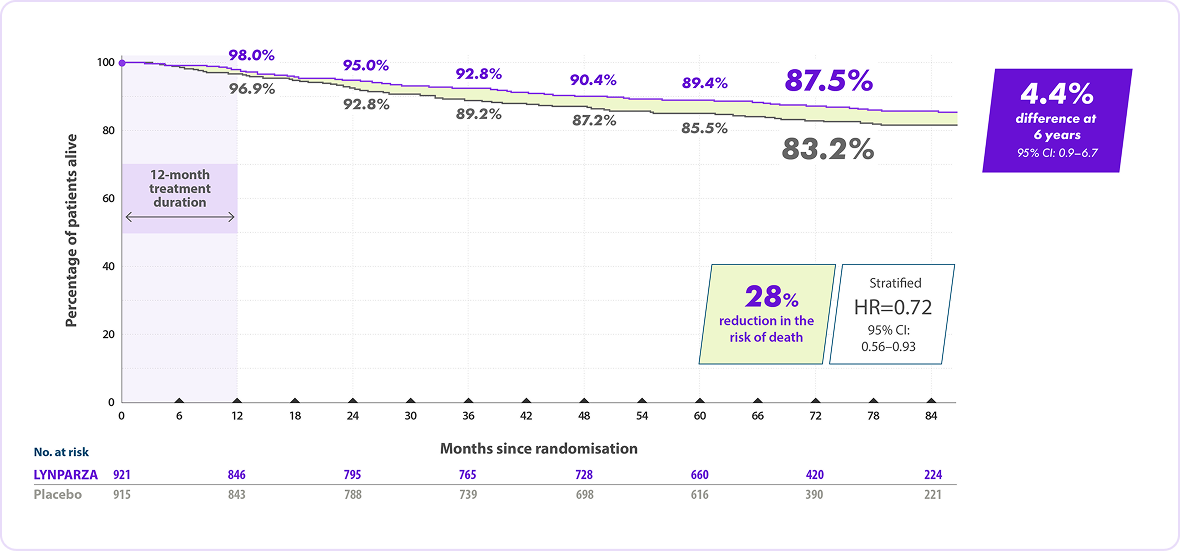
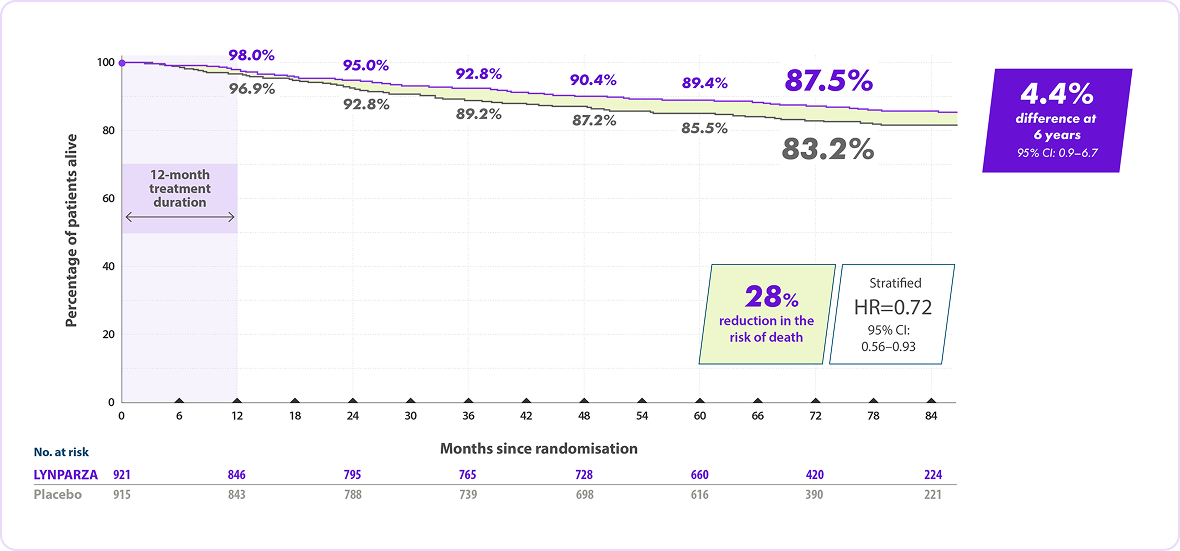
Secondary endpoint: at 6 year follow-up, adjuvant LYNPARZA demonstrated a 28% reduction in the risk of death vs. placebo9

OS at 6 years* in the overall population (descriptive analysis):9

Significance boundaries were crossed for IDFS and DDFS at the prior planned DCO1 and for OS at DCO2. No further significance testing was performed.


Line graph showing the reduction in the risk of death over 12 month treatment duration Line graph showing the reduction in the risk of death over 12 month treatment duration

Adapted from Garber JE, et al. Oral presentation at SABCS, 2024.9
*6-year OS data are from DCO3 (5 June 2024), a descriptive analysis with a median follow-up of ~6 years in the ITT population.9

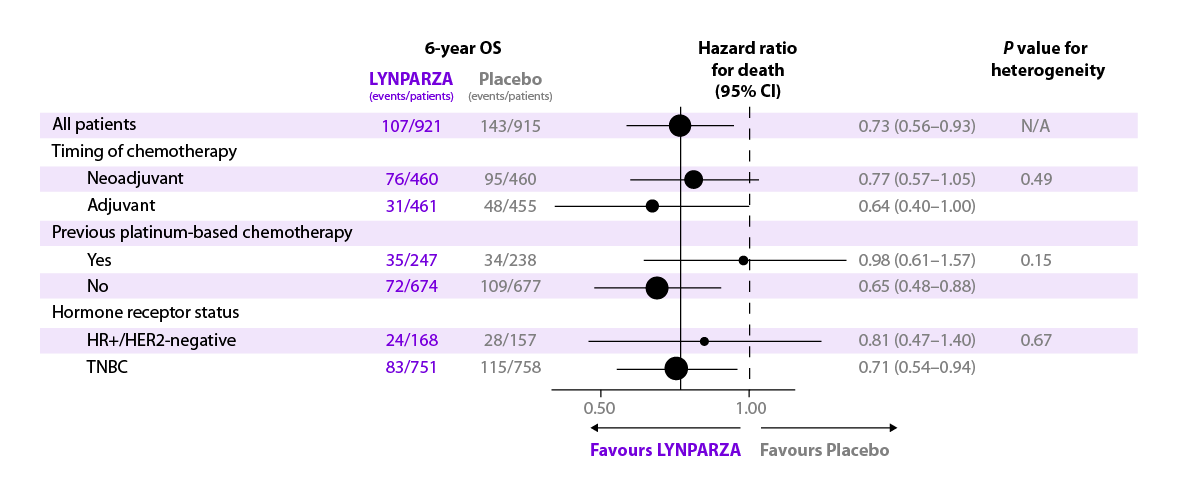
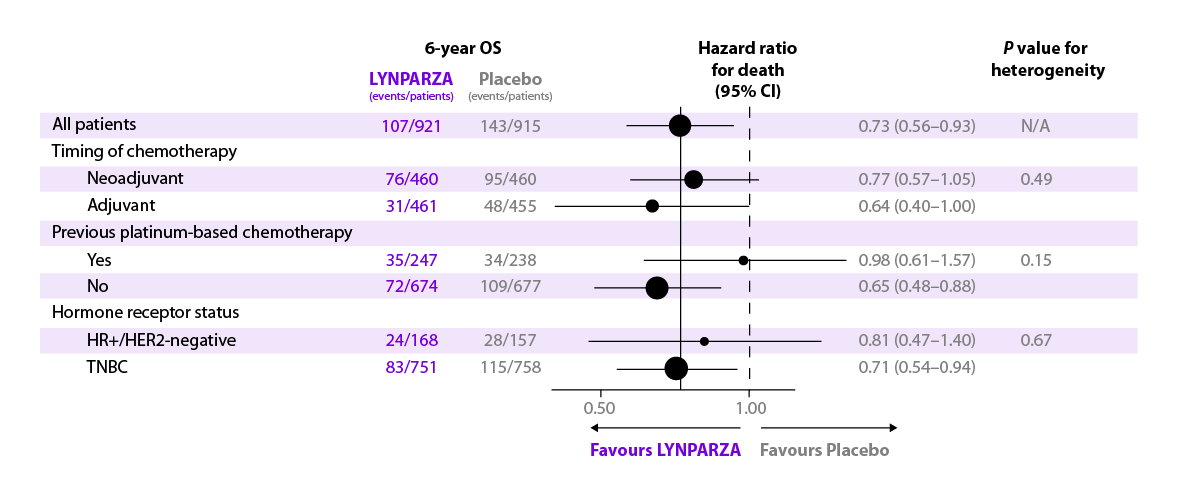
Subgroup analysis of OS (stratified subgroups):9

Significance boundaries were crossed for IDFS and DDFS at the prior planned DCO1 and for OS at DCO2. No further significance testing was performed.


Subgroup analysis of stratified subgroups Subgroup analysis of stratified subgroups

Adapted from Garber JE, et al. Oral presentation at SABCS, 2024.9
All subgroup hazard ratio estimates are <1 and all confidence intervals include the ITT population hazard ratio (shown by solid black line).9
*6-year OS data are from DCO3 (5 June 2024), a descriptive analysis with a median follow-up of ~6 years in the ITT population.9

Back to top

Safety profile

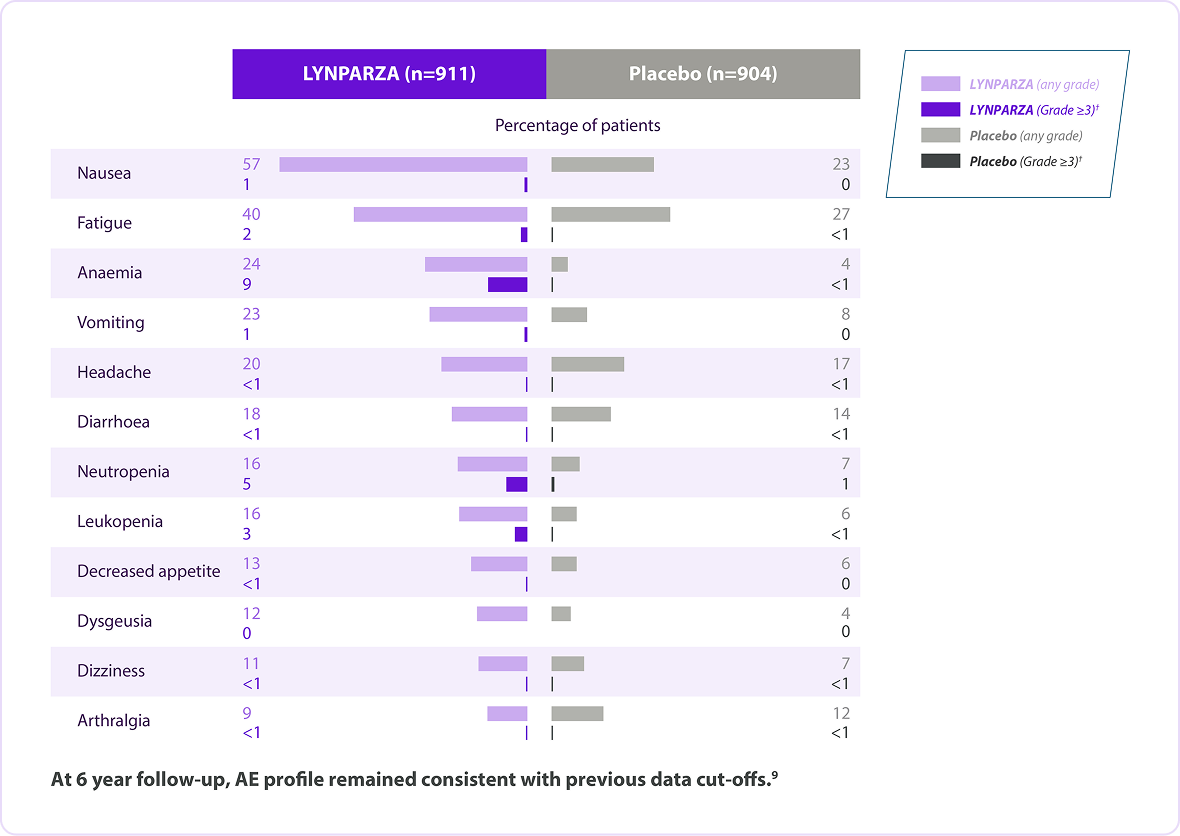
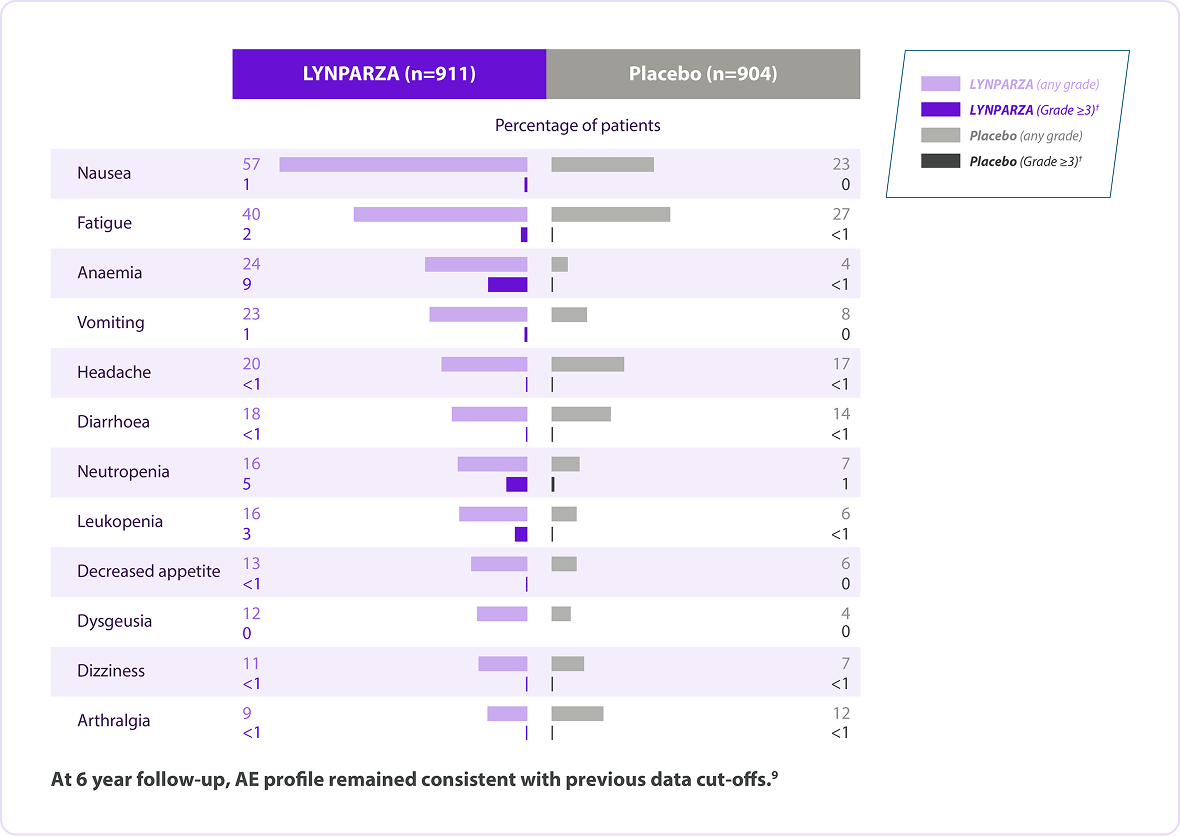
AEs in OlympiA were consistent with the known safety profile of LYNPARZA, studied across 5 tumour types1,3

~75% of AEs experienced in patients receiving LYNPARZA were Grade 1 or 2 in severity.1

AEs occurring in ≥10% of patients on LYNPARZA or placebo at 3 years:1*

Safety profile table Safety profile table

Adapted from Tutt ANJ, et al. 20211
*Based on a pre-specified event driven interim analysis with a median follow-up of 2.5 years.1
†All listed are Grade 3 except for 10 Grade 4 events in the LYNPARZA group: five events involving decreased neutrophil count, four involving anaemia and one involving fatigue.1

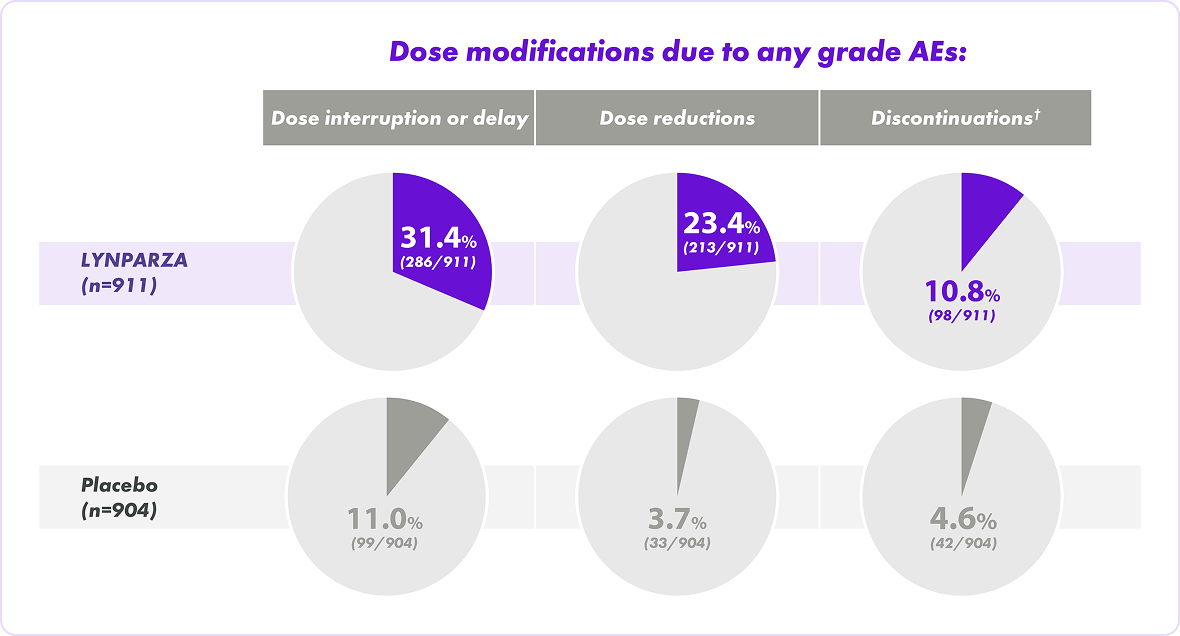
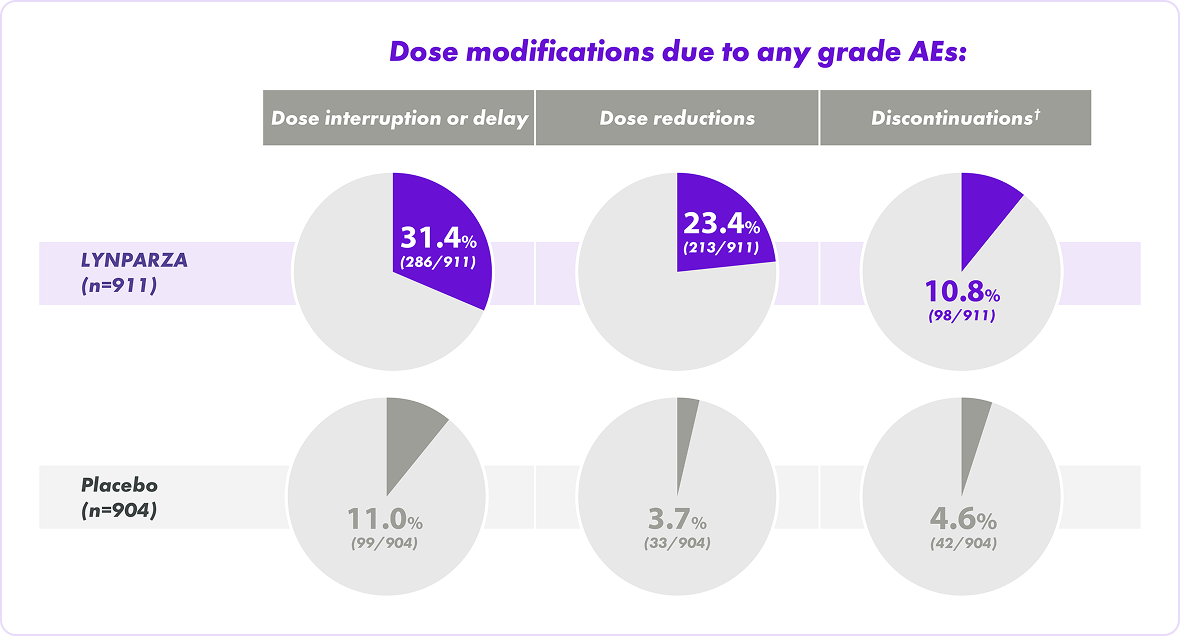
Safety profile of Lynparza vs placebo Safety profile of Lynparza vs placebo

*Safety data from DCO2, a pre-specified interim analysis with a median follow-up of 3 years.8
†Nausea (2.1%), anaemia (1.8%), fatigue (1.5%) and decreased neutrophil count (1.0%) were the most common reasons for discontinuation of LYNPARZA.8

Patients treated with LYNPARZA had similar QoL functional scores to those receiving placebo11

OlympiA included cancer-specific HRQoL outcomes to assess the patient experience during treatment with LYNPARZA. QoL was measured using the
FACIT-F and EORTC QLQ-C30 questionnaires.11


There were no clinically meaningful differences between LYNPARZA and placebo over time for GHQ, Physical, or


Emotional scales


There were clinically meaningful improvements in Role Functioning (neoadjuvant chemotherapy group) at 2 years from baseline, independent of treatment arms 


Fatigue severity was statistically significantly greater for LYNPARZA vs. placebo, but not clinically meaningfully different by
pre-specified criteria (≥3 points) at 6 months; (neoadjuvant, P=0.022, adjuvant, P=0.017). There were no significant
differences in fatigue severity between treatment groups at 18 and 24 months; only nausea and vomiting were mildly increased by LYNPARZA

Woman smiling in the sea


Consider LYNPARZA for your eligible

patients with high-risk eBC – an effective, generally well-tolerated treatment option that may help maintain patients’ QoL1,9,11

The importance of

BRCA testing

Find out more

OlympiAD: clinical

trial in mBC

Find out more

Educational and


patient resources

Find out more

Sign up to our mailing list

Click here

Back to top

AE, adverse event; BID, twice daily; BRCA, breast cancer gene; CI, confidence interval; DCO, data cut-off; DDFS, distant disease-free survival; eBC, early breast cancer; EORTC QLQ-C30, European Organisation for Research and Treatment of Cancer Quality of Life Questionnaire Core 30; FACIT-F, Functional Assessment of Chronic Illness Therapy – Fatigue; gBRCAm, germline BRCA mutated; GHQ, general health questionnaire; HER2, human epidermal growth factor receptor 2; HR+, hormone receptor-positive; HR, hazard ratio; HRQoL, health-related quality of life; IDFS, invasive disease-free survival; ITT, intention-to-treat; mBC, metastatic breast cancer; OS, overall survival; PARPi, poly (ADP-ribose) polymerase inhibitor; QoL, quality of life; SABCS, San Antonio Breast Cancer Symposium; TNBC, triple-negative breast cancer.


  1. Tutt ANJ, et al. N Engl J Med. 2021;384(25):2394–2405.
  2. AstraZeneca Press Release. June 2021.
  3. LYNPARZA (olaparib). Summary of Product Characteristics.
  4. NICE TA886. Available at: https://www.nice.org.uk/guidance/ta886. Accessed March 2026.
  5. SMC 2518. Available at: https://scottishmedicines.org.uk/media/7876/olaparib-lynparza-final-sept-2023-amended-210923-for-website.pdf. Accessed March 2026.
  6. Tutt ANJ, et al. N Engl J Med. 2021;384(25):2394–2405. Protocol.
  7. Tutt ANJ, et al. N Engl J Med. 2021;384(25):2394–2405. Supplementary appendix.
  8. Geyer CE, et al. Ann Oncol. 2022;33(12):1250–1268.
  9. Garber JE, et al. Oral presentation. Presented at San Antonio Breast Cancer Symposium, 10–13 December 2024.
  10. Geyer CE, et al. Ann Oncol. 2022;33(12):1250–1268. Supplementary appendix. 
  11. Ganz PA, et al. J Clin Oncol. 2024;42:1288–1300.

GB-71736 | March 2026

Adverse events should be reported. Reporting forms and information can be found at www.mhra.gov.uk/yellowcard or search for MHRA Yellow Card in the Google Play or Apple App Store. Adverse events should also be reported to AstraZeneca by visiting https://contactazmedical.astrazeneca.com/ or by calling ‌‌‌0‌‌‌8‌‌‌‌‌0‌‌‌‌0‌‌‌ ‌‌7‌‌‌‌‌‌8‌‌‌3‌‌‌ ‌‌0‌‌‌‌‌0‌‌‌‌3‌‌‌‌3‌‌‌.

Connessiallasalute.it

This website was created for UK HCPs and has been designed to provide information to educate, empower and enable them in the great work they are doing for patients across a range of therapy areas. This website is intended for doctors, nurses, and pharmacists in the UK. Other UK residents please visit astrazeneca.co.uk.

Terms of use

Privacy Policy

Cookie Policy

Contact Us

LinkedIn

Twitter

©2026 AstraZeneca. GB-71732 | March 2026