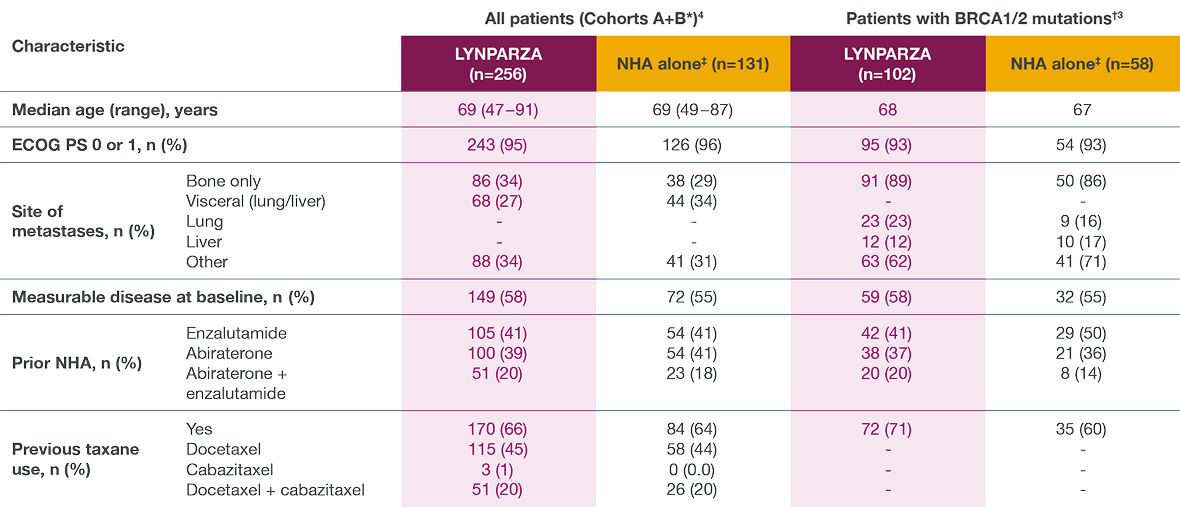
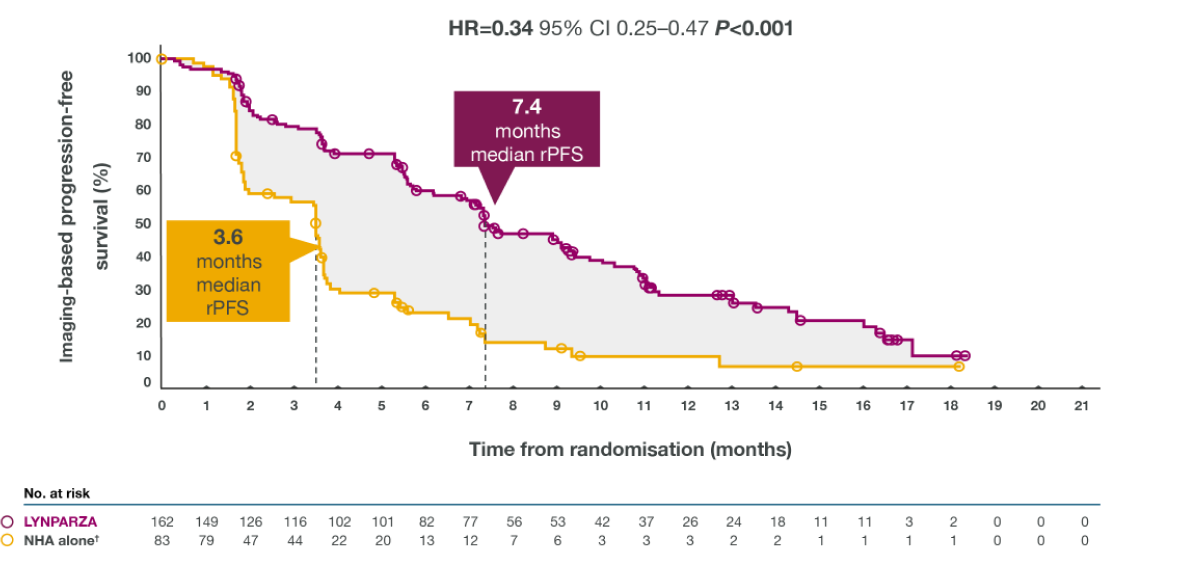
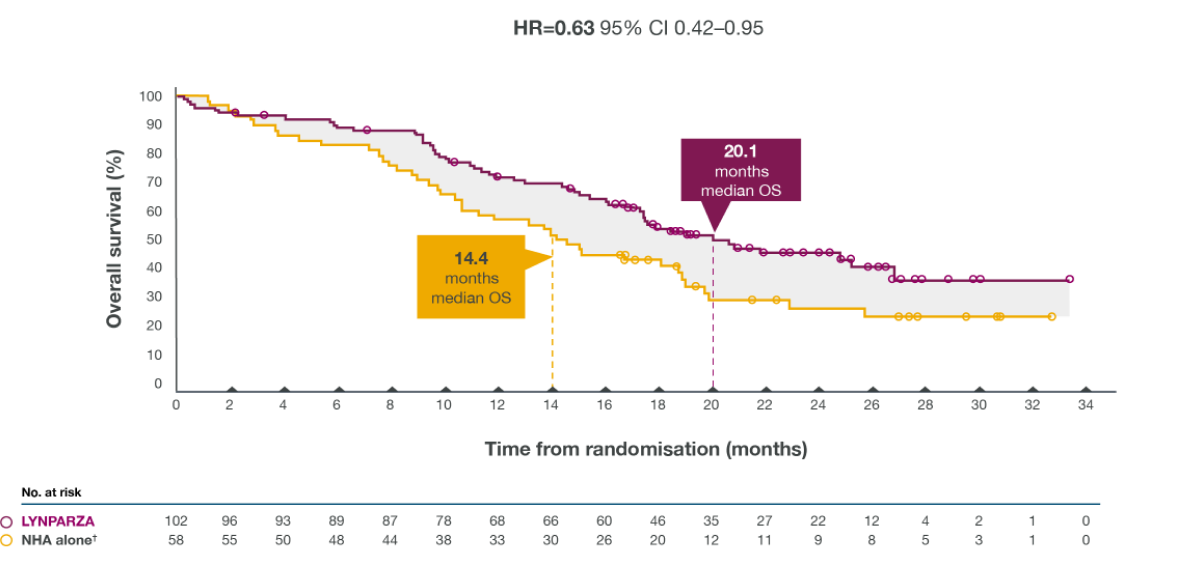
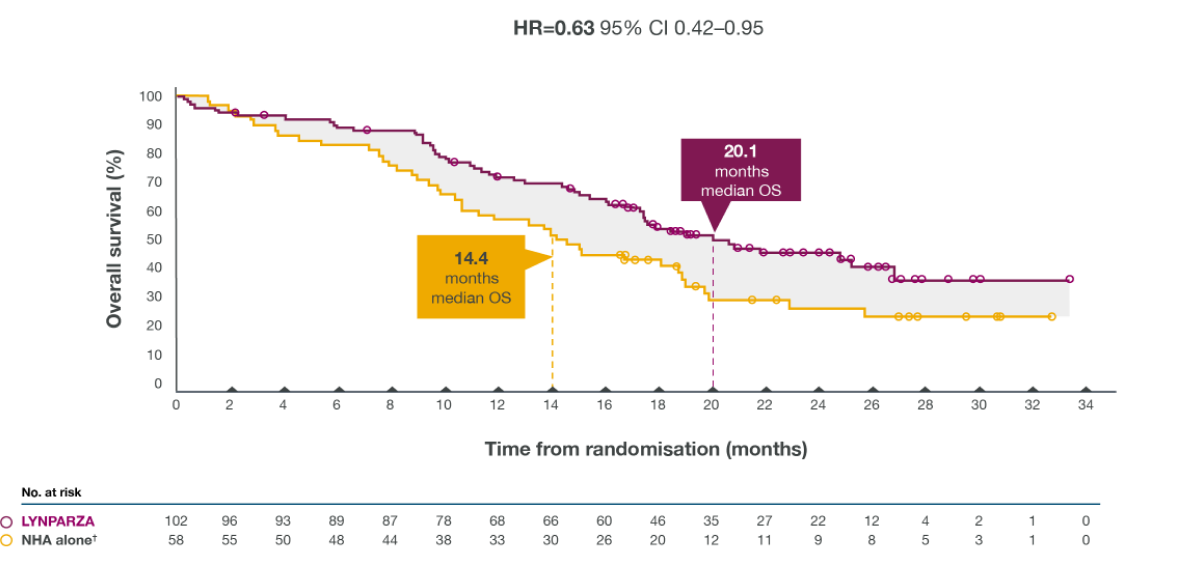
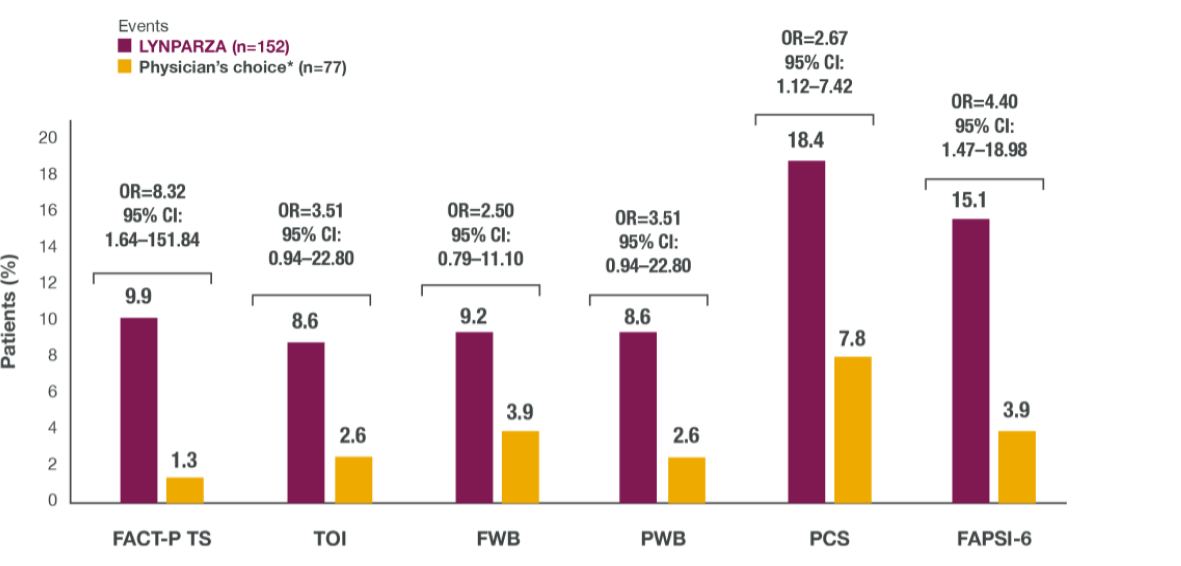
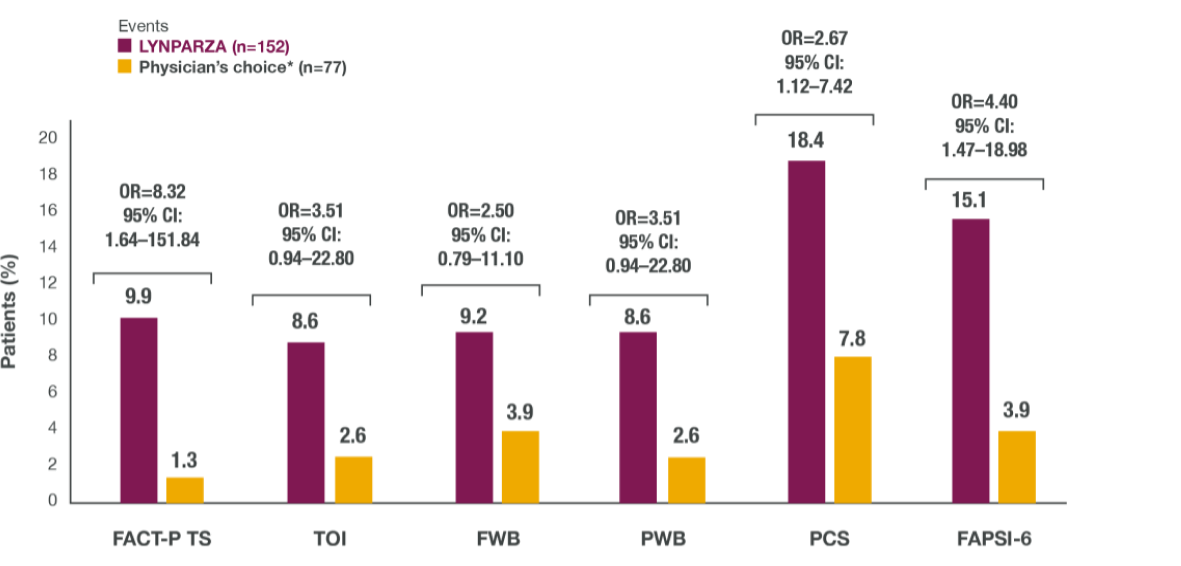
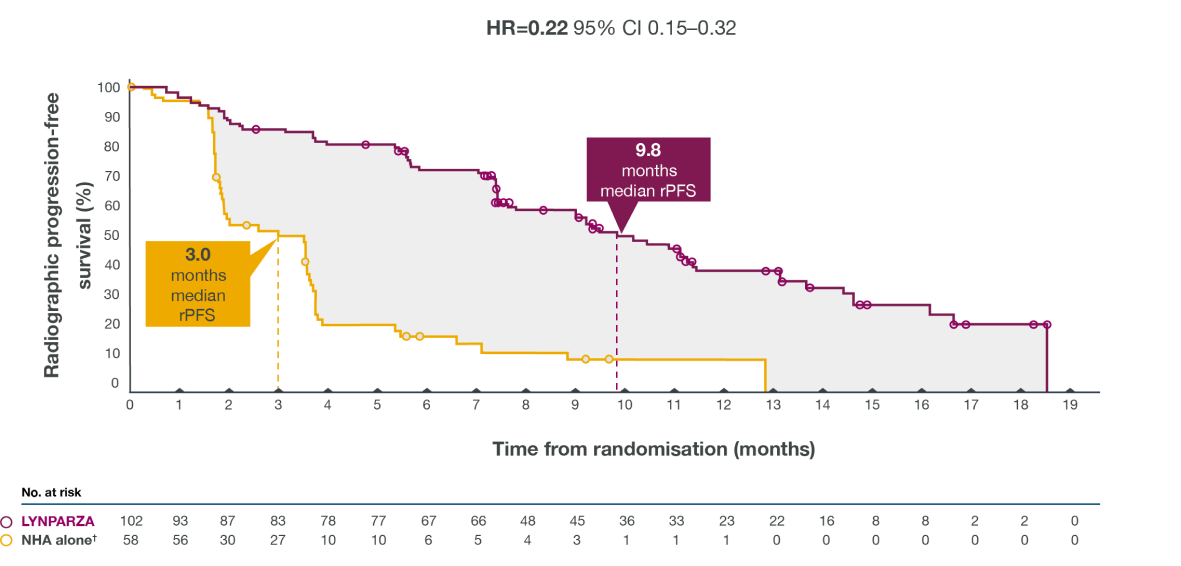
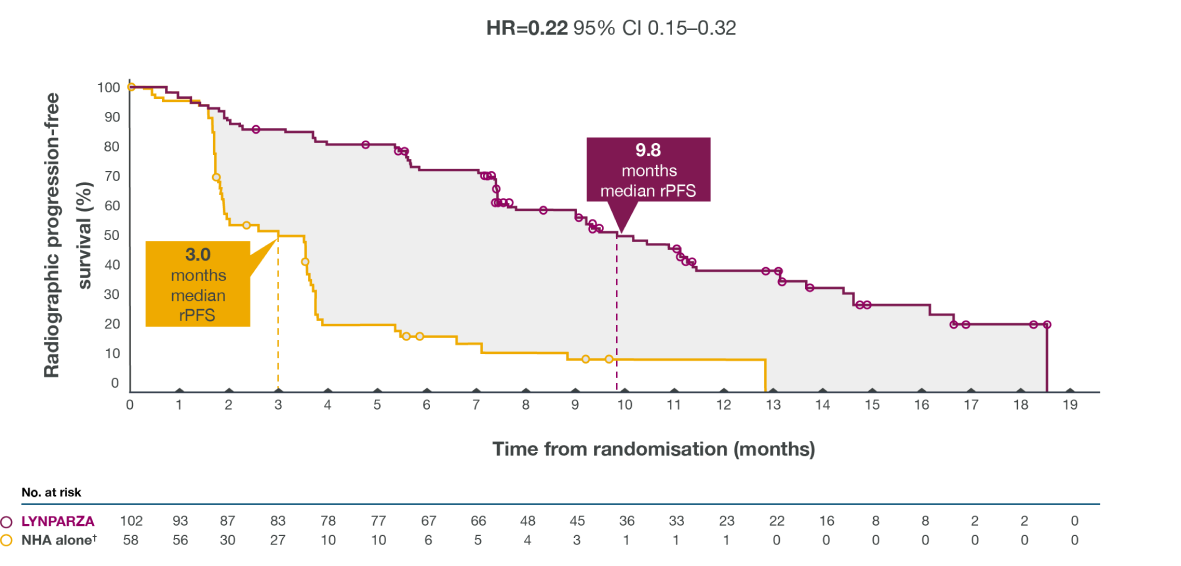
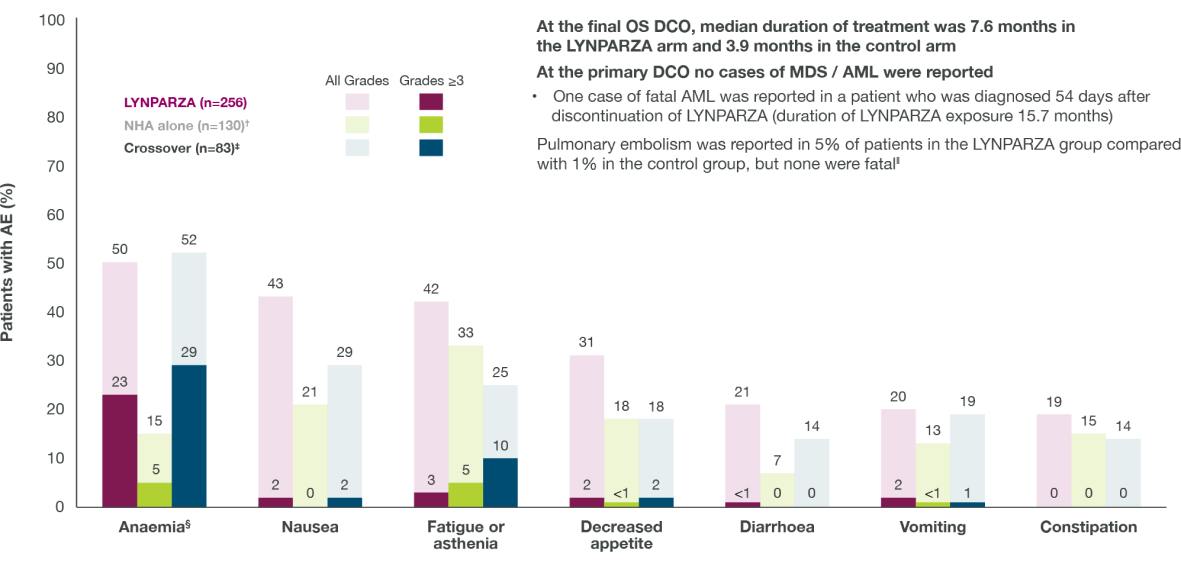
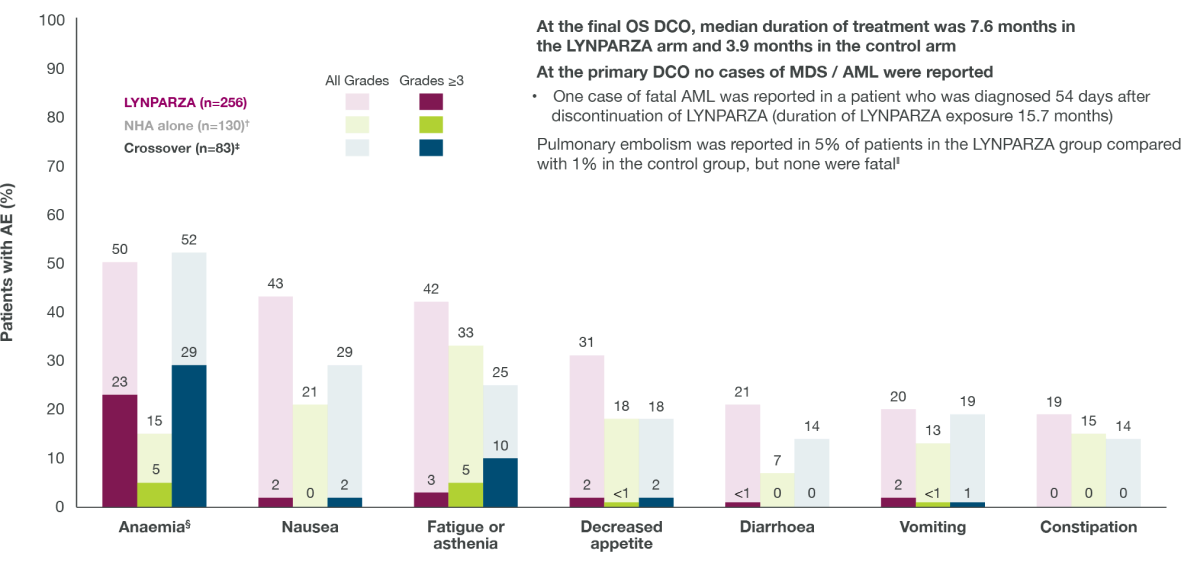
Adapted from Hussain et al. 2020.7
Data cut-off: 20 March 2020.
*Patients had alterations in BRCA1, BRCA2, ATM, BARD1, BRIP1, CDK12, CHEK1, CHEK2, FANCL, PALB2, PPP2R2A, RAD51B, RAD51C, RAD51D and/ or RAD54L.
†Physician’s choice of either abiraterone or enzalutamide.
‡Patients in the physician’s choice group were allowed to cross over to receive LYNPARZA after disease progression in accordance with the protocol.
§Grouped term includes anaemia, decreased haemoglobin level, decreased red-cell count, decreased haematocrit level, erythropenia, macrocytic anaemia, normochromic anaemia, normochromic normocytic anaemia, and normocytic anaemia.
‖MDS/AML and VTE are listed as special warnings in the SmPC. Please refer to the SmPC for further details on these and other listed special warnings.
¶The safety analyses conducted at the time of the primary analysis revealed an imbalance between the two treatment arms in the incidence of pulmonary embolism (4% with LYNPARZA vs. 1% with control therapy). There has since been one additional case of pulmonary embolism in the LYNPARZA treatment arm; the rate of pulmonary embolism with LYNPARZA after this longer follow-up was thus similar to that reported in the primary analysis (5% vs. 1%). Patients receiving LYNPARZA should be monitored for clinical signs and symptoms of VTE and PE and treated as medically appropriate. Patients with a prior history of VTE may be more at risk of a further occurrence and should be monitored appropriately.