Centres can organise their ordering of NSCLC biomarker testing in different ways:
Bespoke testing: when an oncologist orders tests for each individual patient.13
Reflex testing: when a standard group of pre-approved biomarker tests is ordered at the time of initial cancer diagnosis.13
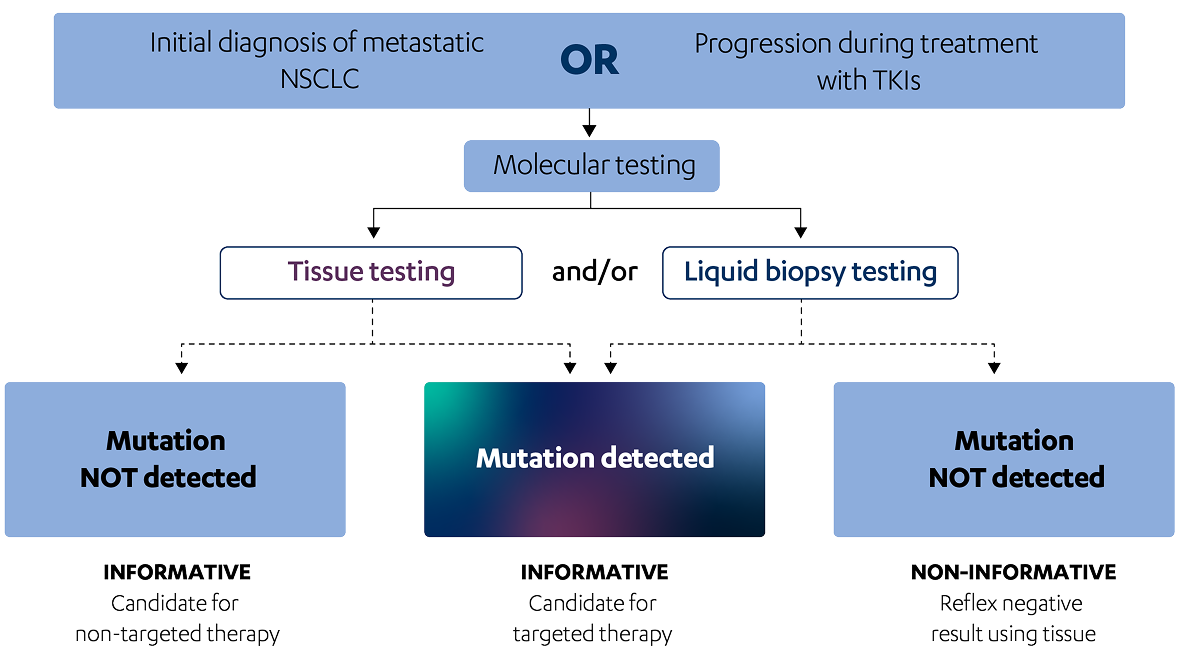
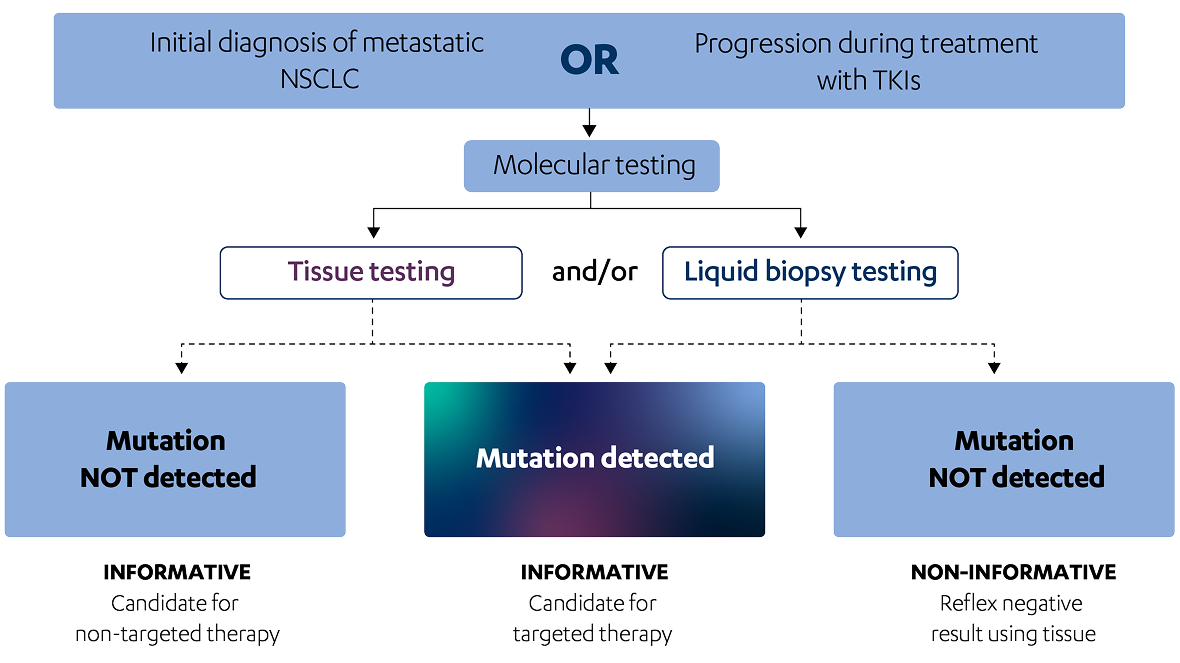
There are a number of benefits of reflex testing compared to bespoke testing, including reduced turnaround time, and streamlining pathology workloads.13-15 Learn more about reflex testing in NSCLC below.
ctDNA can be utilised in first and second-line advanced (Stage III and IV) NSCLC settings and is now fully funded by NHS England; tissue biopsy in these cases can be used where ctDNA results are uninformative. This first-line ctDNA approach is particularly useful in the ≤30% of patients who do not receive a timely tissue biopsy result (which can be due to lack of available tissue, low-quality samples or poor health that prevents them from undergoing biopsy procedures), and to prevent multiple invasive biopsy procedures to re-test patients who have progressed on EGFR-TKIs.16