This is a promotional website developed by AstraZeneca and intended for UK Healthcare Professionals only. Other UK residents please visit astrazeneca.co.uk.




TRUQAP plus fulvestrant is a targeted therapy that uses AKT inhibition to address treatment resistance in patients with HR+/HER2-negative aBC, offering significantly longer progression-free survival than fulvestrant alone.4*
*mPFS of TRUQAP plus fulvestrant vs placebo plus fulvestrant in the AKT pathway-altered CAPItello-291 trial population: 7.3 vs 3.1 respectively (HR 0.50, 95% CI: 0.38–0.65, P<0.001).4
Information on the safety profile of TRUQAP plus fulvestrant can be found here.
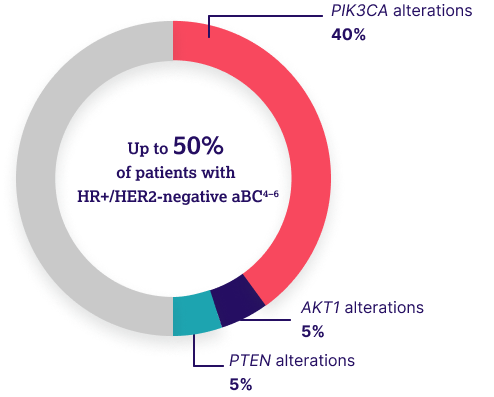
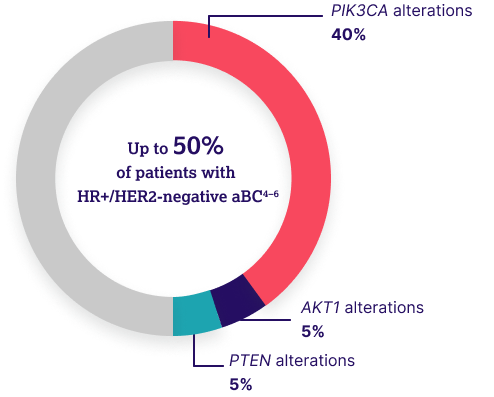
The PI3K/AKT pathway comprises the PI3K, AKT and PTEN proteins where AKT is the pivotal and central node.7 The PI3K/AKT signalling pathway regulates metabolism, cell growth and cell survival.7 This pathway plays an important role in both normal and malignant cells and is therefore an attractive target for molecular therapy. This presents an important inhibition target that is able to mediate and block oncogenic signalling in PIK3CA/AKT1/PTEN-altered tumours.7
For HR+/HER2-negative aBC, disruption of these signalling proteins leads to progression of tumours and cancer cell growth.8–10
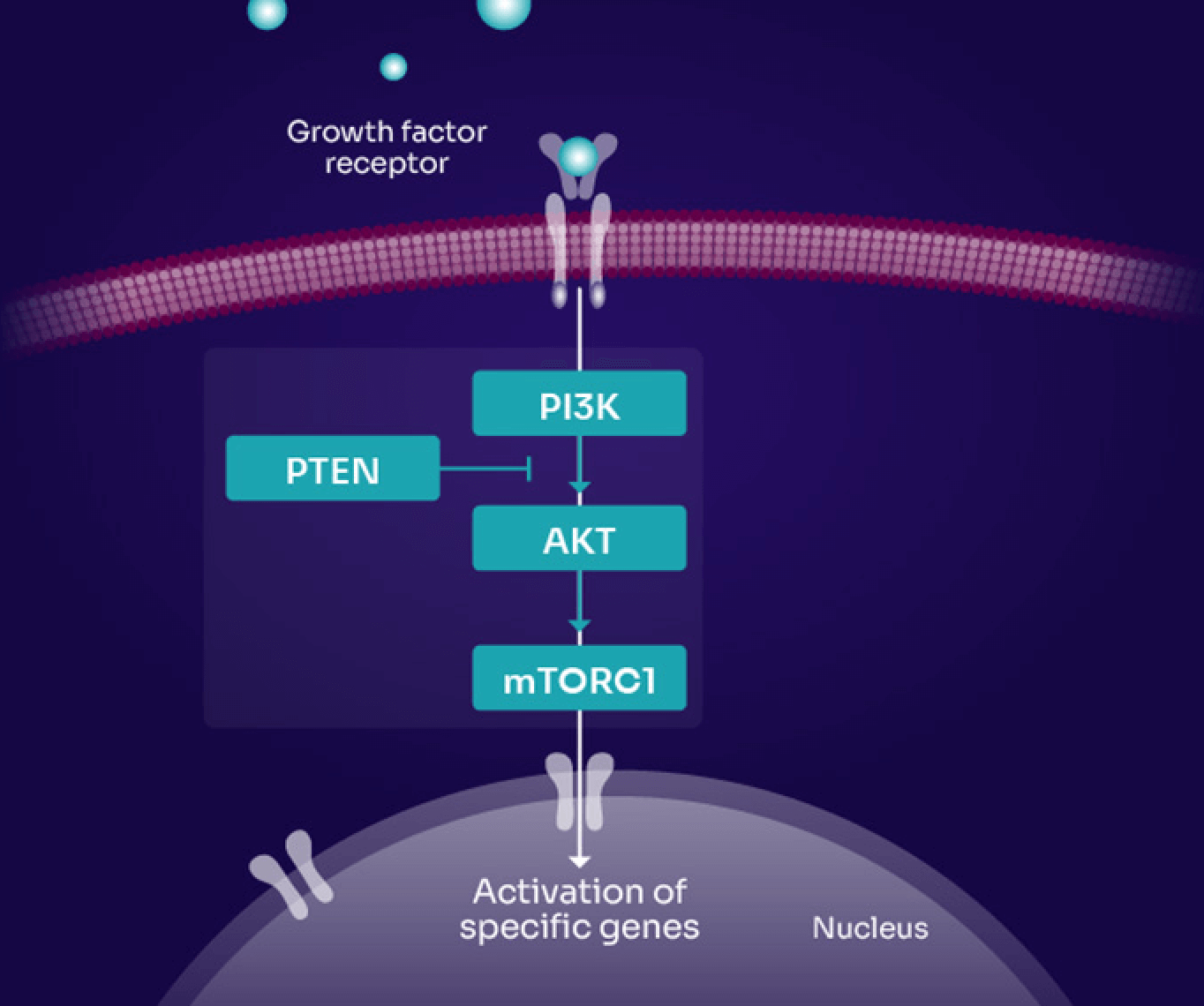
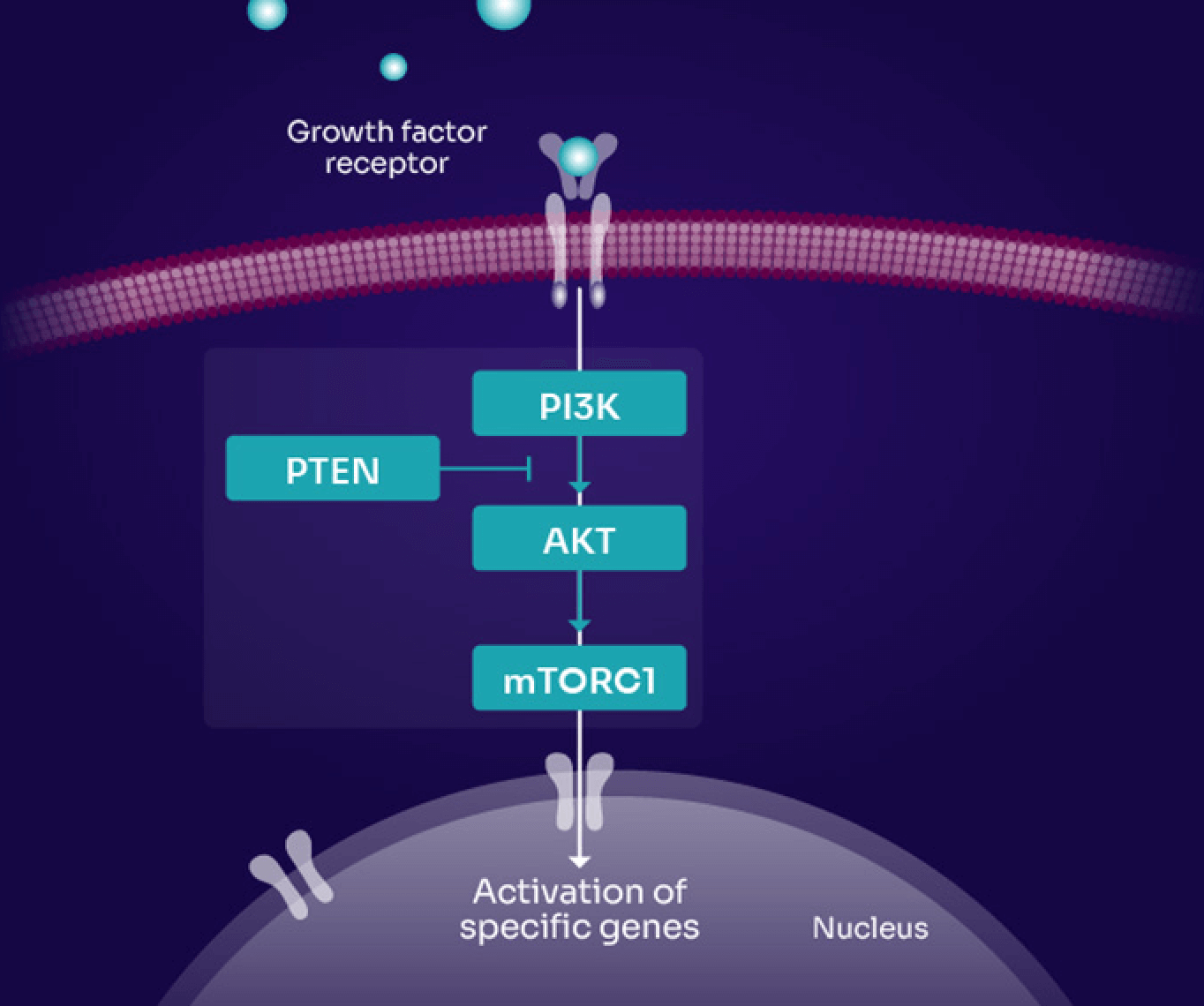
Effective targeting with small pharmacological inhibitors could result in efficacious treatment of cancer.9,10
Test all your patients diagnosed with HR+/HER2-negative aBC for PIK3CA/AKT1/PTEN alterations.
Choose a dual action treatment with TRUQAP plus fulvestrant
After exposure to 1L ET ± CDK4/6i, adaptive changes along the PI3K/AKT pathway may lead to treatment resistance and disease progression.7,11
Inhibiting the mechanisms of treatment resistance, which can result from PI3K/AKT pathway activation, can extend the duration of ET and delay
disease progression.7,11
TRUQAP plus fulvestrant has the dual effect of PI3K/AKT pathway inhibition combined with ER downregulation, delaying disease progression through inhibition of two pivotal pathways driving proliferation in breast cancer.7,11
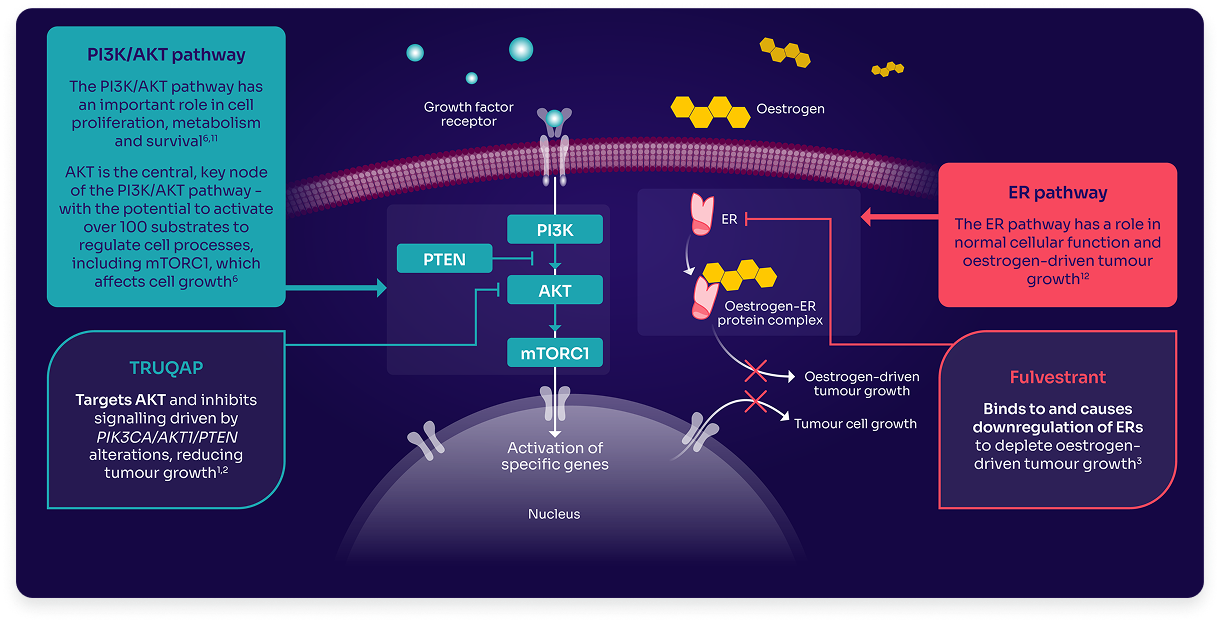
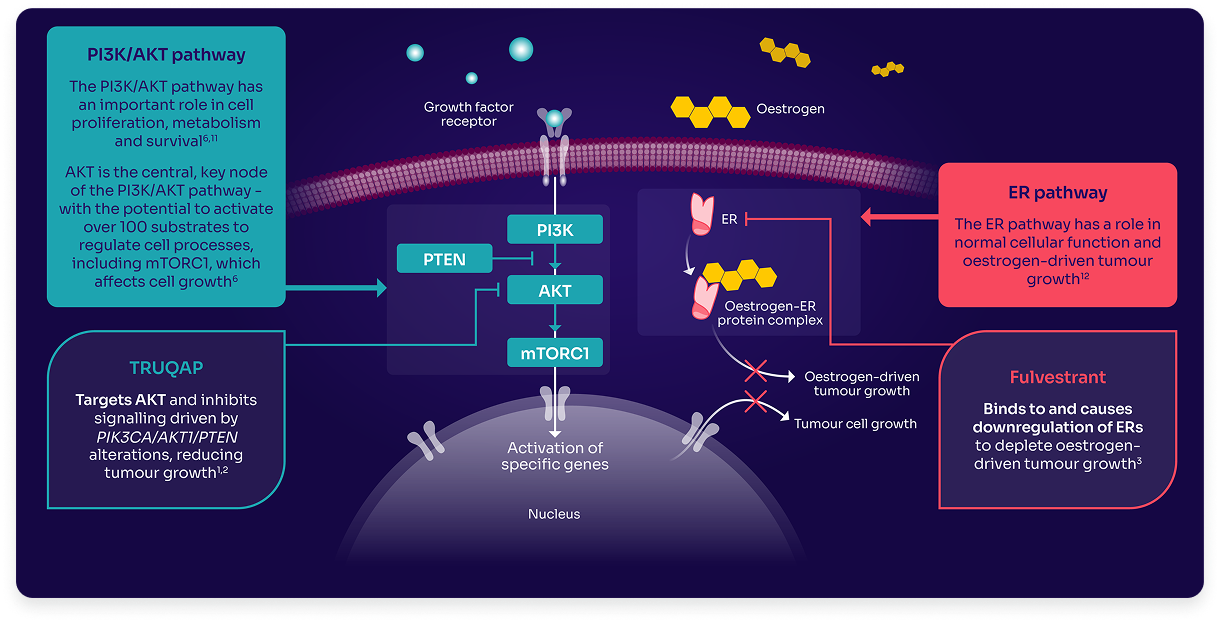
Adapted from TRUQAP SmPC;1 Fulvestrant SmPC;3 Miricescu D, et al. 2020;6 and Osborne CK, et al. 2011.12
Resources for you and your patients
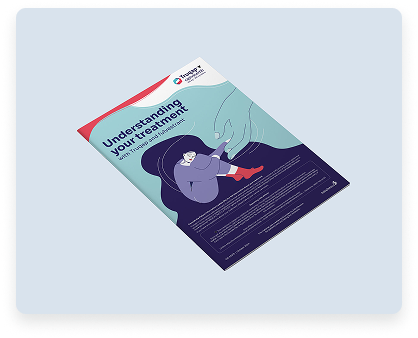
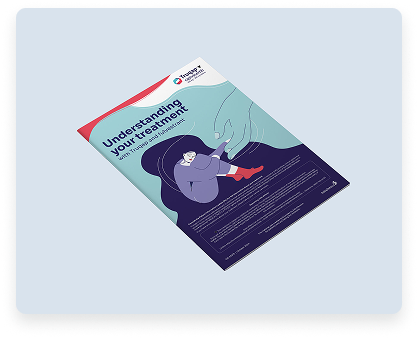
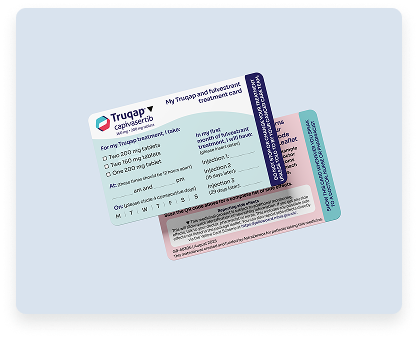
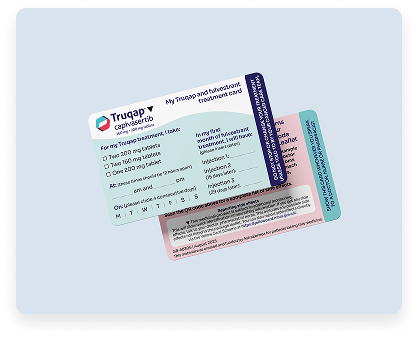
Our comprehensive resources help support you in prescribing TRUQAP plus fulvestrant. We also have dedicated patient materials to help reassure your patients throughout their treatment journey.


GB-68396 | April 2026
Adverse events should be reported. Reporting forms and information can be found at www.mhra.gov.uk/yellowcard or search for MHRA Yellow Card in the Google Play or Apple App Store. Adverse events should also be reported to AstraZeneca by visiting https://contactazmedical.astrazeneca.com/ or by calling 0800 783 0033.

This website was created for UK HCPs and has been designed to provide information to educate, empower and enable them in the great work they are doing for patients across a range of therapy areas. This website is intended for doctors, nurses, and pharmacists in the UK. Other UK residents please visit astrazeneca.co.uk.