This is a promotional website developed by AstraZeneca and intended for UK Healthcare Professionals only. Other UK residents please visit astrazeneca.co.uk.




TRUQAP plus fulvestrant is indicated for the treatment of adult patients with HR+/HER2-negative (defined as IHC 0 or 1+, or IHC 2+/ISH-) aBC or mBC with one or more PIK3CA/AKT1/PTEN alterations following recurrence or progression on or after an ET.1
The intermittent administration schedule of TRUQAP was designed to optimise AKT inhibition, whilst also aiming to minimise the toxicity profile.2
The overall safety population in the CAPItello-291 clinical trial included 355 patients who received TRUQAP plus fulvestrant and 350 patients who received placebo plus fulvestrant.1,2
The study showed that the safety profile of TRUQAP plus fulvestrant in patients with PIK3CA/AKT1/PTEN alterations (n=289) was similar to that in the overall population (N=705).1,2
The majority of AEs were grade 1 or 2.1
The most common any-grade observed AEs (reported at a frequency of ≥20%) were diarrhoea, cutaneous adverse drug reactions, nausea,
fatigue and vomiting.1
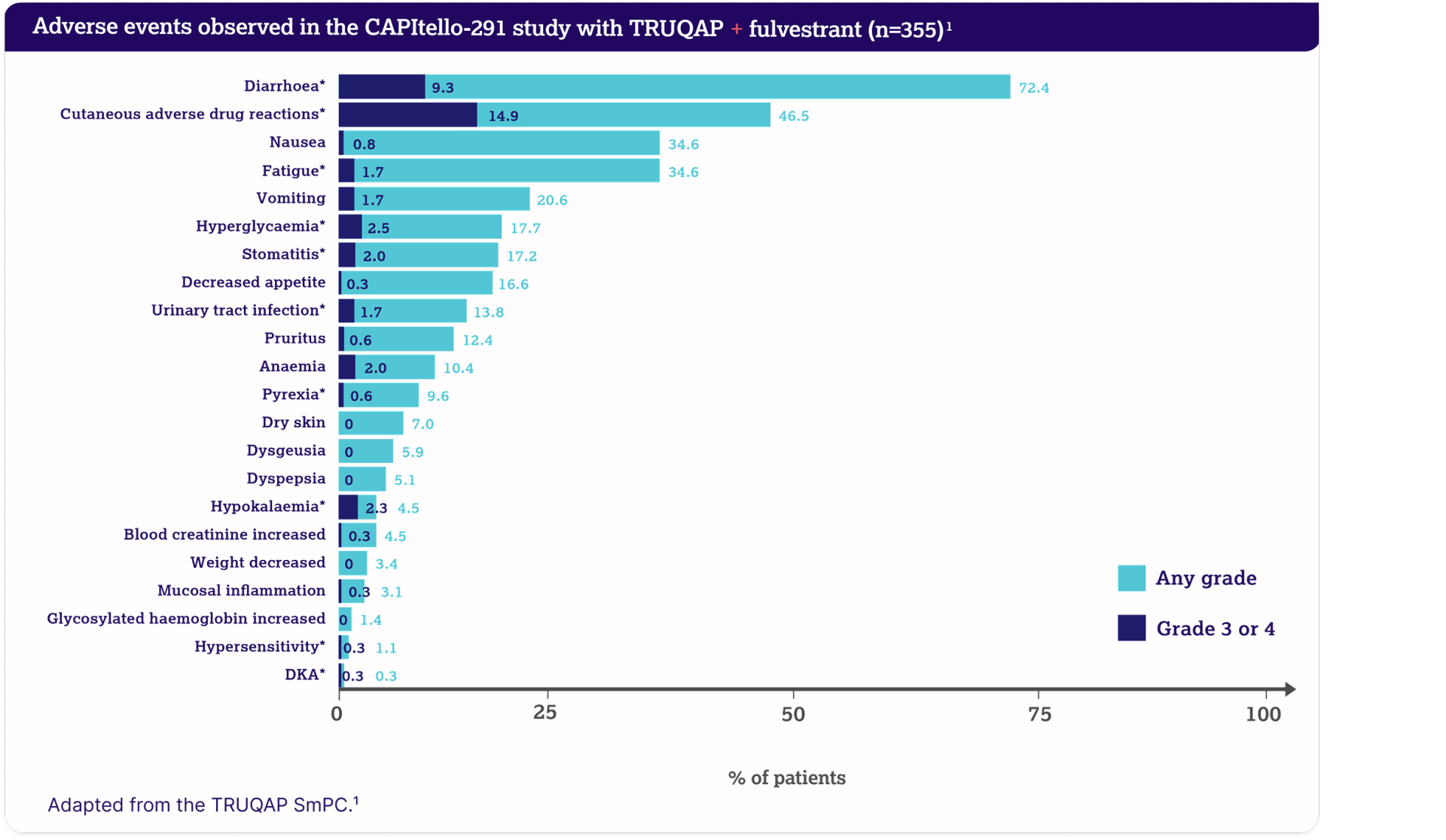
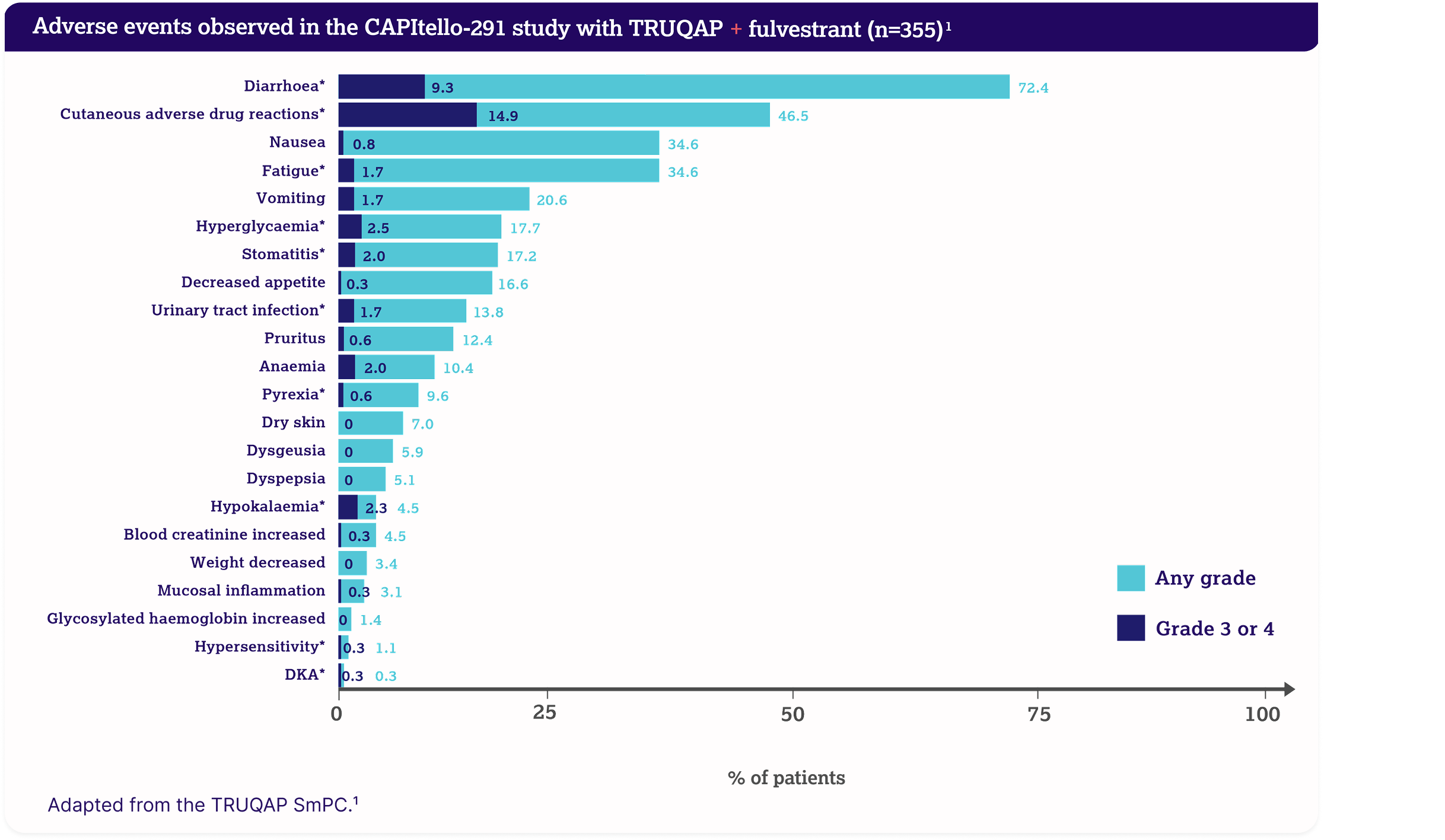
*The TRUQAP SmPC classifies these AEs using grouped terms that include multiple underlying events, whereas the primary analysis paper reports them as individual/single terms (excluding rash). Thus, reported values may differ.1
The dose of TRUQAP may be interrupted, reduced or discontinued to manage AEs.1
Hyperglycaemia, diarrhoea, cutaneous adverse drug reactions (including rash) and use in patients receiving bisphosphonates or RANK-ligand inhibitors are listed as special warnings in the TRUQAP SmPC. Please refer to the SmPC for a full list of AEs, as well as information about special warnings and their management prior to prescribing.1
18% (n=63/355) of patients experienced any-grade hyperglycaemia with TRUQAP plus fulvestrant in CAPItello-291 (overall population):1

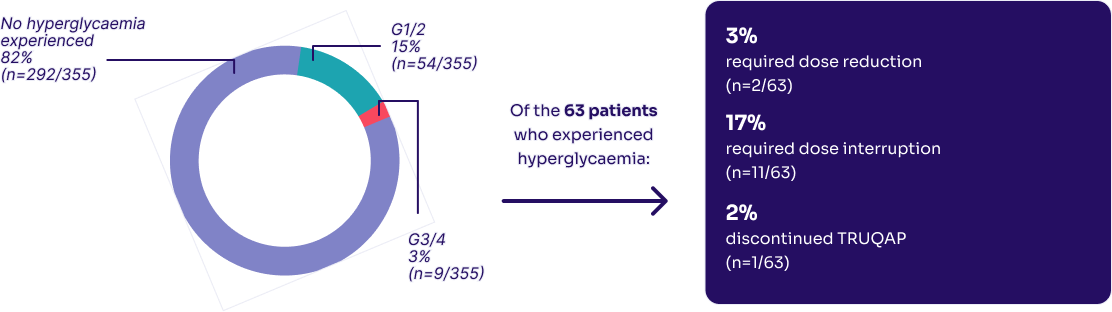
Percentages are rounded to the nearest whole number.
72% (n=257/355) of patients experienced any-grade diarrhoea with TRUQAP plus fulvestrant in CAPItello-291 (overall population):1
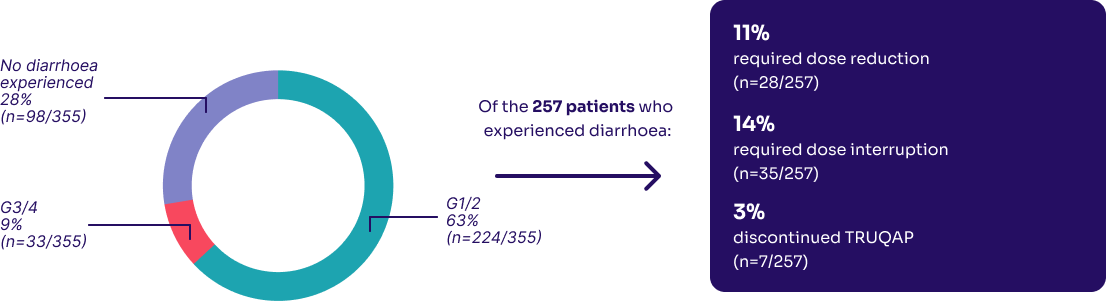
Percentages are rounded to the nearest whole number.
47% (n=165/355) of patients experienced any-grade cutaneous adverse drug reactions with TRUQAP plus fulvestrant in CAPItello-291 (overall population):1
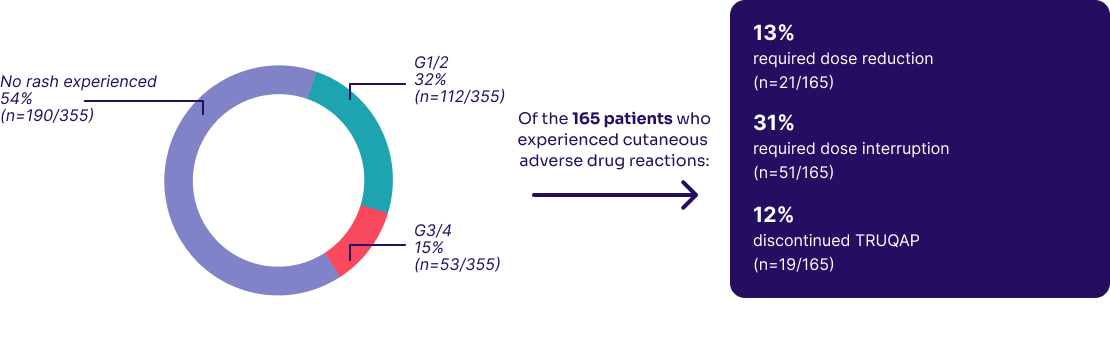
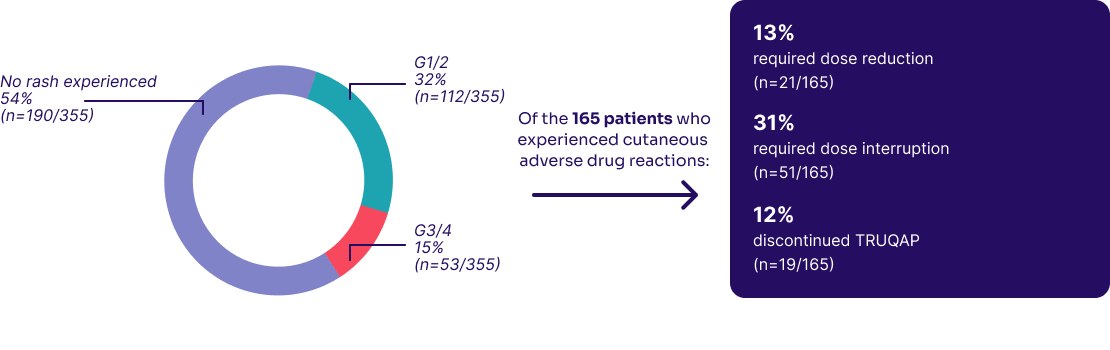
Percentages are rounded to the nearest whole number.
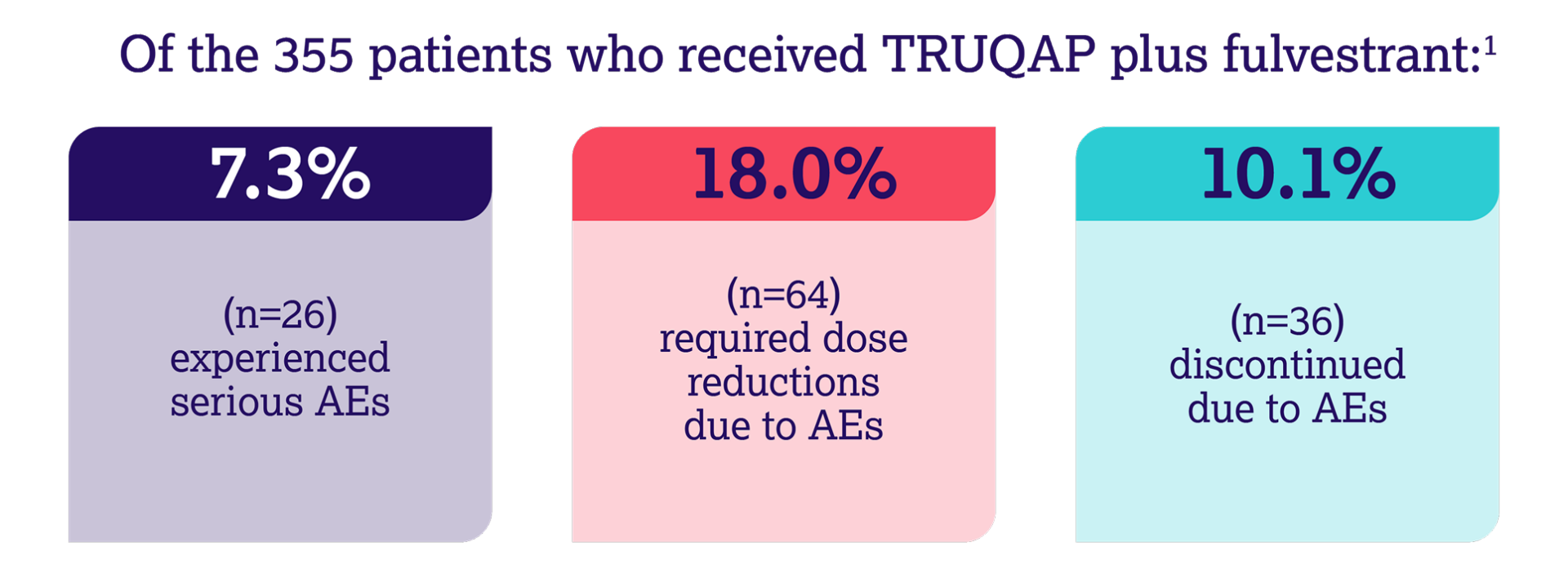
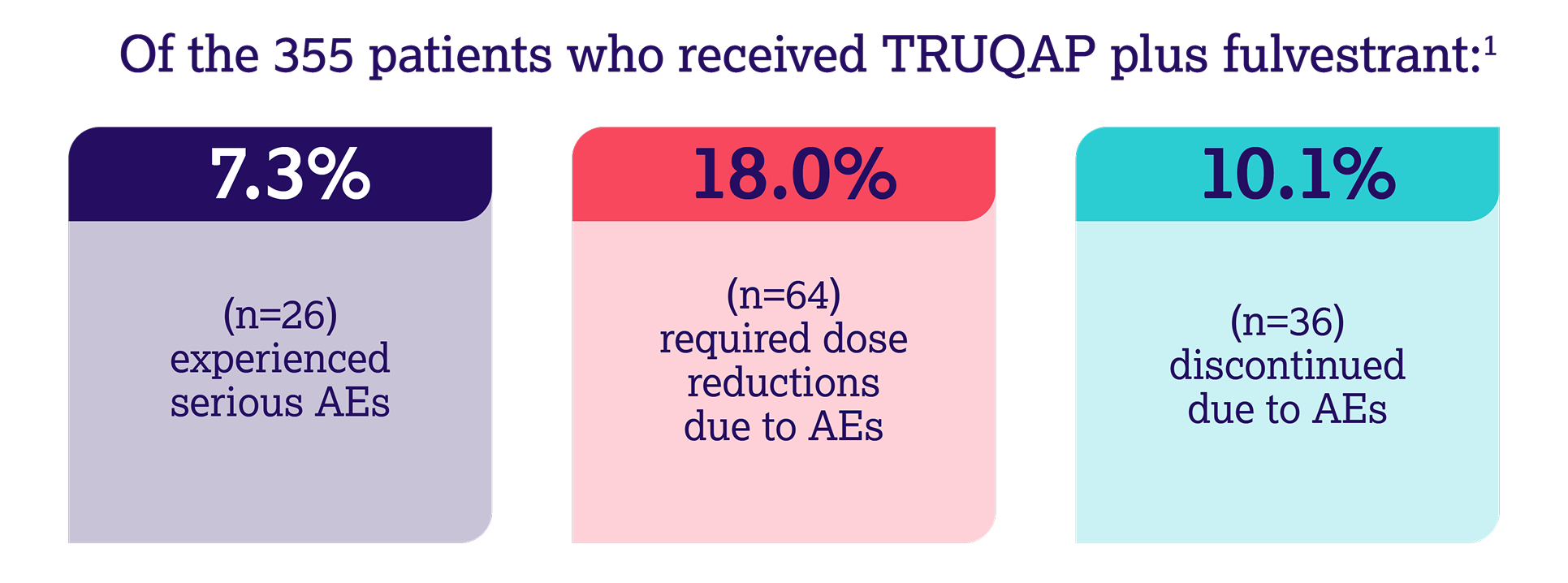
In the CAPItello-291 clinical trial, only ~10% of patients discontinued
treatment with TRUQAP plus fulvestrant due to AEs.1
Resources for you
and your patients
Learn more about the safety profile of TRUQAP
plus fulvestrant in our comprehensive resources and
explore materials designed to support your patients
throughout the treatment journey.
aBC=advanced breast cancer; AE=adverse event; AKT=serine/threonine protein kinase; AKT1=serine/threonine protein kinase 1; DKA=diabetic ketoacidosis; ET=endocrine therapy;
G1/2/3/4=grade 1/2/3/4; HER2=human epidermal growth factor receptor 2; HR+=hormone receptor positive; IHC=immunohistochemistry; ISH=in situ hybridisation; mBC=metastatic breast cancer; PIK3CA=phosphatidylinositol-4,5-bisphosphate 3-kinase catalytic subunit alpha; PTEN=phosphatase and tensin homologue; RANK=receptor activator of nuclear factor-κB; SmPC=Summary of
Product Characteristics.
- TRUQAP (capivasertib) 160 mg and 200 mg. Summary of Product Characteristics.
- Turner NC, et al. N Engl J Med. 2023;388(22):2058–2070.
GB-68395 | April 2026
Adverse events should be reported. Reporting forms and information can be found at www.mhra.gov.uk/yellowcard or search for MHRA Yellow Card in the Google Play or Apple App Store. Adverse events should also be reported to AstraZeneca by visiting https://contactazmedical.astrazeneca.com/ or by calling 0800 783 0033.

This website was created for UK HCPs and has been designed to provide information to educate, empower and enable them in the great work they are doing for patients across a range of therapy areas. This website is intended for doctors, nurses, and pharmacists in the UK. Other UK residents please visit astrazeneca.co.uk.