Welcome to this UK AstraZeneca produced and funded website

This website is intended for UK Healthcare Professionals only.


The website contains both promotional and non-promotional content.


If you are a patient or a carer of a patient prescribed an AstraZeneca product, please visit myazmed.co.uk


For any other UK residents please visit astrazeneca.co.uk

I am not a Healthcare Professional
Prescribing Information LOKELMA® (sodium zirconium cyclosilicate)
Adverse Event Reporting

This website is intended for UK Healthcare Professionals only. Other UK residents please visit astrazeneca.co.uk

LOKELMA® (sodium zirconium cyclosilicate) is indicated for the treatment of hyperkalaemia in adult patients.

AstraZeneca-logo
  • Our Medicines
    • Cardiovascular, Renal & Metabolism
      • ATTR Amyloidosis
        • WAINZUA®▼(eplontersen)
      • Chronic Kidney Disease (CKD)
        • FORXIGA® (dapagliflozin)
      • Heart Failure
        • FORXIGA® (dapagliflozin)
      • Hyperkalaemia
        • LOKELMA® (sodium zirconium cyclosilicate)
      • Type 2 Diabetes (T2D)
        • FORXIGA® (dapagliflozin)
    • Oncology
      • Breast Cancer
        • LYNPARZA® (olaparib)
        • TRUQAP®▼(capivasertib)
      • Bladder Cancer
        • IMFINZI® (durvalumab)
      • Endometrial Cancer
        • IMFINZI® (durvalumab)
        • LYNPARZA® (olaparib)
      • Gastrointestinal Cancer
        • IMFINZI® (durvalumab)
        • IMJUDO®▼(tremelimumab)
      • Lung Cancer
        • IMFINZI® (durvalumab)
        • TAGRISSO® (osimertinib)
      • Ovarian Cancer
        • LYNPARZA® (olaparib)
      • Prostate Cancer
        • LYNPARZA® (olaparib)
        • ZOLADEX® (goserelin)
    • Respiratory
      • Asthma
        • TEZSPIRE®▼ (tezepelumab)
        • SYMBICORT® (budesonide/formoterol)
      • Chronic Obstructive Pulmonary Disease(COPD)
        • TRIXEO AEROSPHERE® (formoterol fumarate dihydrate/glycopyrronium/budesonide)
        • BEVESPI® (glycopyrronium/formoterol fumarate dihydrate)
    • Vaccines
      • Flu
        • FLUENZ® nasal spray suspension (influenza vaccine, live attenuated, nasal)
  • Therapy Areas
    • Cardiovascular, Renal & Metabolism
      • ATTR Amyloidosis
      • Chronic Kidney Disease (CKD)
      • Heart Failure
      • Hyperkalaemia
      • Type 2 Diabetes (T2D)
    • Oncology
      • Breast Cancer
      • Bladder Cancer
      • Endometrial Cancer
      • Gastrointestinal Cancer
      • Lung Cancer
      • Ovarian Cancer
      • Prostate Cancer
    • Respiratory
      • Asthma
      • Chronic Obstructive Pulmonary Disease(COPD)
    • Vaccines
      • Flu
  • About us
    • AZ Commitment
  • Contact us
  • AstraZeneca UK
  • LOKELMA
  • About hyperkalaemia
  • Hyperkalaemia and chronic kidney disease (CKD)
  • About LOKELMA
  • Hyperkalaemia
    • About hyperkalaemia
    • Hyperkalaemia management and treatment guidelines
    • Hyperkalaemia and chronic kidney disease
    • ACEi, ARBs and hyperkalaemia
  • Unmet needs
  • NICE recommendation
  • Why LOKELMA
    • Mode of action
    • Efficacy
    • Safety profile
  • Dosing and administration
  • Resources
    • Resources
    • Videos and webinars
    • Quality Improvement Project tools
Hyperkalaemia and chronic kidney disease (CKD)

lokelma-logo

Hyperkalaemia and Chronic Kidney Disease

Hyperkalaemia– defined as an elevated blood potassium level, typically ≥5.0 mmol/L is a common and potentially life-threatening electrolyte disorder that commonly occurs in patients with chronic kidney disease (CKD) and end-stage renal disease.1,2


Beyond its direct risks, hyperkalaemia often leads to down-titration or discontinuation of cardiorenal-protective renin-angiotensin-aldosterone system inhibitors (RAASi) therapy in CKD patients, which is associated with a two-fold increase in mortality.3,4 Effective management of hyperkalaemia is therefore essential to ensure patients can continue receiving optimal cardiorenal protection.2,5

How does CKD cause hyperkalaemia?

In CKD, the kidneys progressively lose the ability to excrete potassium efficiently, disrupting potassium homeostasis and increasing serum potassium levels. This impaired excretion places CKD patients at heightened risk of developing hyperkalaemia.6


Some studies of patients with CKD have shown hyperkalaemia is particularly common, with over 50% of patients experiencing one or more episodes each year.7


This link occurs because potassium balance depends on regulation between what is stored inside cells and what is excreted from the body. While about 98% of potassium is stored within cells, the small amount in the bloodstream is tightly controlled, mainly through the kidneys.6,8


In healthy kidneys, around 90% of potassium is excreted via the nephrons, with the remaining 10% cleared through the gastrointestinal tract.9 In CKD, this excretory capacity is reduced, making it harder to clear potassium and easier for levels to rise in the blood – directly leading to hyperkalaemia.10,11 The risk is compounded by the adverse effects of medications, such as RAASi therapies, as well as comorbidities such as type 2 diabetes (T2D) and heart failure (HF).12,13

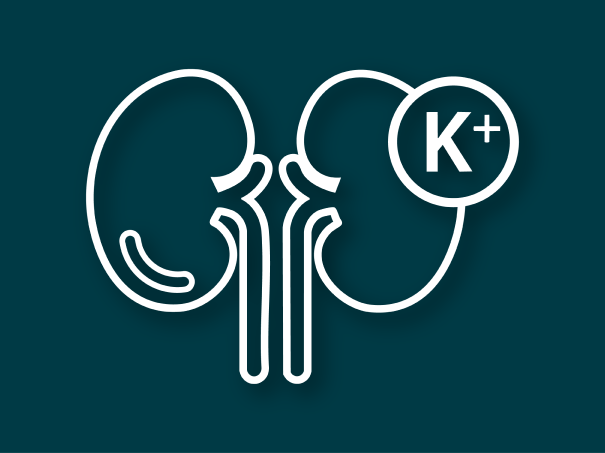
In CKD, a decline in glomerular filtration rate and damage to aldosterone-sensitive principal cells in the distal nephron impair the kidney’s ability to regulate and excrete potassium.10,14 At this point, serum potassium rises increasing risk of hyperkalaemia.15


Progressive hyperkalaemia in CKD patients reflects the breakdown of compensatory processes, including the effects of acidosis and tissue catabolism, which further increase potassium levels.16

As CKD advances from renal insufficiency to renal failure, the body’s compensatory mechanisms begin to fail.


Initially, the remaining nephrons adapt by increasing potassium excretion, with hyperkalaemia amplifying the response. These changes promote increased potassium secretion per nephron to match intake. The colon also contributes by enhancing potassium elimination. 17,18


However, as kidney damage progresses and nephron mass declines further, sustained hyperkalemia is often required to maintain this adaptive response. Eventually, these mechanisms become insufficient to maintain normokalemia, leading to persistent hyperkalemia in chronic renal failure.17,18

Although dietary potassium can contribute to raised potassium levels, it is not usually the primary cause of hyperkalaemia in CKD.11,19


In people with CKD, the kidneys become less effective at filtering and excreting potassium. As kidney function declines and faecal excretion slows – particularly in end-stage renal disease – patients become more vulnerable to developing hyperkalaemia, even without high dietary intake.20,21


Dietary restriction alone is often insufficient for controlling potassium levels in advanced CKD. Other factors such as medications, like RAASi therapy, usually contribute more significantly to hyperkalaemia risk.

RAASi therapies – such as ACE inhibitors and ARBs – are commonly used in CKD to slow progression and reduce cardiovascular risk.22 However, they can exacerbate hyperkalaemia by reducing aldosterone activity, which impairs potassium excretion in the kidneys.22


Studies show that hyperkalaemia may develop after initiating or up-titrating RAASi therapy, with around 10% of outpatients affected within the first year.23 In CKD patients, where renal potassium excretion is already impaired, or individuals with comorbidities (e.g. T2D or HF), this risk may be further amplified.15,23

Hyperkalaemia and CKD mortality

In patients with CKD, both hyperkalaemia and hypokalaemia are associated with increased mortality, producing the characteristic U-shaped relationship.24 This indicates that both elevated and low potassium levels contribute to increased mortality risk, highlighting the importance of maintaining normokalaemia in CKD management.24


Management of hyperkalaemia using treatment options like potassium binders is focused on maintaining normokalaemia, allowing patients to continue RAASi therapy, which provides vital cardiorenal protection for CKD patients.


In some cases, patients are down titrated or discontinued from RAASi therapy, however this should be a last resort as it can lead to a x2 increase in mortality risk.4


Learn more about the consequences of RAASi therapy down-titration or discontinuation here

Treatment and management of hyperkalaemia in CKD and renal failure

The treatment and management of hyperkalaemia in CKD can differ across clinical guidelines, leading to variation in practice.23 However, all guidelines share a common goal :


Enabling patients to stay on RAASi therapy so that they receive the long-term cardiorenal protective benefits.5


The Kidney Disease: Improving Global Outcomes (KDIGO) guidelines recommend continuing RAASi therapy at the highest tolerated and licensed dose, suggesting down-titration or discontinuation only as a last resort when other potassium-lowering strategies have proven ineffective.5


Find out more about the guideline recommendations here


LOKELMA (sodium zirconium cyclosilicate) is licensed for use in both mild/moderate (potassium >5.5mmol/l) in adults and urgent severe hyperkalaemia due to its fast-acting, highly selective potassium binding action, even in the presence of divalent cations like calcium and magnesium.25 LOKELMA offers a safe and effective way to lower serum potassium levels, enabling patients to stay on the maximal tolerated dose of RAAS inhibitors without risking dangerous hyperkalaemia.25

Managing hyperkalaemia in comorbid CKD patients

CKD patients often face multiple comorbidities, including T2D mellitus and HF which can contribute to hyperkalaemia through various pathological mechanisms.23 Managing these patients effectively requires addressing both their kidney health and cardiovascular needs.


For example, in patients with CKD and/or HF, RAASi therapies – including ACEi/ARBs – are commonly prescribed but discontinued to prevent severe hyperkalaemia.3 For these patient populations, potassium binders like LOKELMA offer an effective solution enabling them to stay on the maximal tolerated dose of RAASi therapy without the risk of dangerously high serum potassium levels.25


LOKELMA can be co-administered with other medications that do not have gastric pH-dependent bioavailability, making it a versatile option for treating cardiorenal patients while controlling hyperkalaemia. However, to avoid possible gastric pH drug-drug interactions, LOKELMA should be administered at least 2 hours before or 2 hours after oral medications with clinically meaningful gastric pH-dependent bioavailability.25

Discover more

Access All Resources

Explore informative videos and guides to help you understand more about LOKELMA and support your patients

View all resources

View the data

Find out how LOKELMA can allow patients maintain RAASi therapy

Learn more

Contact Us

If you have any questions about LOKELMA or would like to speak to an
AstraZeneca representative, please contact us

Contact options
  1. Hougen I, et al. Kidney International. 2021;100, (3): 647–657
  2. McDonagh T.A, et al. Eur Heart J. 2021;42:3599–3726
  3. Svensson MK, et al. In press, pre-proof. Kidney360. 2024
  4. Epstein M, et al. Am J Manag Care. 2015;21(suppl 11):S212–S220
  5. Kidney Disease: Improving Global Outcomes (KDIGO) CKD Work Group. Kidney Int. 2024;105(4S):S117–S314
  6. Sarnowski A, et al. Int J Nephrol Renovasc Dis. 2022 Aug 2;15:215-228
  7. Al Sahow A, et al. J Clin Hypertens (Greenwich). 2023 Mar;25(3):251-258
  8. Palmer BF. Clin J Am Soc Nephrol. 2015 Jun 5;10(6):1050-60
  9. Sumida, K, et al. Journal of Renal Nutrition. 2023; 33:S6-S12
  10. Vaidya, Satyanarayana R., and Narothama R. Aeddula. Chronic Kidney Disease. StatPearls Publishing, 2025, Treasure Island, FL
  11. National Kidney Foundation. High Potassium (hyperkalemia). Available at: https://www.kidney.org/kidney-topics/hyperkalemia-high-potassium. Accessed: Oct 2025
  12. Burton JO, et al. Eur J Heart Fail. 2022;24(9):1467-1477
  13. Momoniat T, Ilyas D, Bhandari S. Cleveland Clinic Journal of Medicine. 2019;86(9):601607
  14. Verma A, et al. Eur Heart J. 2022 Oct 11;43(38):3781-3791
  15. Kovesdy CP. Nat Rev Nephrol. 2014 May;10(5):274-82
  16. Fernández-Prado R, Villalvazo P, Avello A, et al. Biomed Pharmacother. 2023;158:114197
  17. Chowdhury SR, McLure HA. BJA Educ. 2022 Aug;22(8):321-328
  18. Gennari FJ, and Segal AS. Kidney International. 2002; 62(6):1901-1909
  19. Pavletic AJ. Psychosomatics. 2011 Sep-Oct;52(5):494-5
  20. Bansal S, Pergola PE. Kidney International Reports. 2020; 5(6);779-789
  21. Cupisti A, et al. Nutrients. 2018; 25;10(3):261
  22. Raebel MA. Cardiovasc Ther. 2012 Jun;30(3):e156-66
  23. Renal Association Clinical Practice Guidelines. Available at: https://www.ukkidney.org/sites/default/files/RENAL%20ASSOCIATION%20HYPERKALAEMIA%20GUIDELINE%20-%20JULY%202022%20V2_0.pdf. Accessed: Oct 2025
  24. Collins AJ, et al. Am J Nephrol. 2017;46(3):213-221
  25. AstraZeneca. LOKELMA (sodium zirconium cyclosilicate) Summary of Product Characteristics, United Kingdom

GB-71148 | March 2026

Adverse events should be reported. Reporting forms and information can be found at www.mhra.gov.uk/yellowcard or search for MHRA Yellow Card in the Google Play or Apple App Store. Adverse events should also be reported to AstraZeneca by visiting https://contactazmedical.astrazeneca.com/ or by calling ‌‌‌0‌‌‌8‌‌‌‌‌0‌‌‌‌0‌‌‌ ‌‌7‌‌‌‌‌‌8‌‌‌3‌‌‌ ‌‌0‌‌‌‌‌0‌‌‌‌3‌‌‌‌3‌‌‌.

Connessiallasalute.it

This website was created for UK HCPs and has been designed to provide information to educate, empower and enable them in the great work they are doing for patients across a range of therapy areas. This website is intended for doctors, nurses, and pharmacists in the UK. Other UK residents please visit astrazeneca.co.uk.

Terms of use

Privacy Policy

Cookie Policy

Contact Us

LinkedIn

Twitter

©2026 AstraZeneca. GB-76964 | DOP: May 2026