Welcome to this UK AstraZeneca produced and funded website

This website is intended for UK Healthcare Professionals only.


The website contains both promotional and non-promotional content.


If you are a patient or a carer of a patient prescribed an AstraZeneca product, please visit myazmed.co.uk


For any other UK residents please visit astrazeneca.co.uk

I am not a Healthcare Professional
Prescribing Information LOKELMA® (sodium zirconium cyclosilicate)
Adverse Event Reporting

This website is intended for UK Healthcare Professionals only. Other UK residents please visit astrazeneca.co.uk

LOKELMA® (sodium zirconium cyclosilicate) is indicated for the treatment of hyperkalaemia in adult patients.

AstraZeneca-logo
  • Our Medicines
    • Cardiovascular, Renal & Metabolism
      • ATTR Amyloidosis
        • WAINZUA®▼(eplontersen)
      • Chronic Kidney Disease (CKD)
        • FORXIGA® (dapagliflozin)
      • Heart Failure
        • FORXIGA® (dapagliflozin)
      • Hyperkalaemia
        • LOKELMA® (sodium zirconium cyclosilicate)
      • Type 2 Diabetes (T2D)
        • FORXIGA® (dapagliflozin)
    • Oncology
      • Breast Cancer
        • LYNPARZA® (olaparib)
        • TRUQAP®▼(capivasertib)
      • Bladder Cancer
        • IMFINZI® (durvalumab)
      • Endometrial Cancer
        • IMFINZI® (durvalumab)
        • LYNPARZA® (olaparib)
      • Gastrointestinal Cancer
        • IMFINZI® (durvalumab)
        • IMJUDO®▼(tremelimumab)
      • Lung Cancer
        • IMFINZI® (durvalumab)
        • TAGRISSO® (osimertinib)
      • Ovarian Cancer
        • LYNPARZA® (olaparib)
      • Prostate Cancer
        • LYNPARZA® (olaparib)
        • ZOLADEX® (goserelin)
    • Respiratory
      • Asthma
        • TEZSPIRE®▼ (tezepelumab)
        • SYMBICORT® (budesonide/formoterol)
      • Chronic Obstructive Pulmonary Disease(COPD)
        • TRIXEO AEROSPHERE® (formoterol fumarate dihydrate/glycopyrronium/budesonide)
        • BEVESPI® (glycopyrronium/formoterol fumarate dihydrate)
    • Vaccines
      • Flu
        • FLUENZ® nasal spray suspension (influenza vaccine, live attenuated, nasal)
  • Therapy Areas
    • Cardiovascular, Renal & Metabolism
      • ATTR Amyloidosis
      • Chronic Kidney Disease (CKD)
      • Heart Failure
      • Hyperkalaemia
      • Type 2 Diabetes (T2D)
    • Oncology
      • Breast Cancer
      • Bladder Cancer
      • Endometrial Cancer
      • Gastrointestinal Cancer
      • Lung Cancer
      • Ovarian Cancer
      • Prostate Cancer
    • Respiratory
      • Asthma
      • Chronic Obstructive Pulmonary Disease(COPD)
    • Vaccines
      • Flu
  • About us
    • AZ Commitment
  • Contact us
  • AstraZeneca UK
  • LOKELMA
  • Efficacy
  • About LOKELMA
  • Hyperkalaemia
    • About hyperkalaemia
    • Hyperkalaemia management and treatment guidelines
    • Hyperkalaemia and chronic kidney disease
    • ACEi, ARBs and hyperkalaemia
  • Unmet needs
  • NICE recommendation
  • Why LOKELMA
    • Mode of action
    • Efficacy
    • Safety profile
  • Dosing and administration
  • Resources
    • Resources
    • Videos and webinars
    • Quality Improvement Project tools
Efficacy and Clinical Trials

lokelma-logo

LOKELMA®

(sodium zirconium cyclosilicate): Efficacy

Dosing information for non-dialysis patients1

The recommended starting dose of LOKELMA for the correction phase is 10g three times daily within 24 to 48 hours. The recommended starting dose for maintenance therapy is 5g once daily, which may be titrated up to 10g daily or down to 5g once every other day, as needed. No more than 10g once daily should be used for maintenance therapy.

Dosing information for patients on chronic haemodialysis1

LOKELMA should only be administered on non-dialysis days. The recommended starting dose is 5g once daily. To establish normokalaemia, the dose may be titrated up or down weekly based on the pre-dialysis serum potassium value after the long-term dialytic interval (LIDI). The dose could be adjusted at intervals of one week in increments of 5g up to 15g once daily on non-dialysis days.


More information on dosing of LOKELMA

LOKELMA rapidly reduced serum K+ levels as early as one hour after one dose vs baseline2

In the 48-hour, open-label correction phase of the HARMONIZE study1,2:

  • One 10g dose of LOKELMA significantly reduced the mean serum potassium level after 1 hour (-0.2 mmol/L compared to baseline; 95% CI: -0.3 to -0.2; p<0.001)
  • Median time to normokalaemia was 2.2 hours (IQR 1.0 - 22.3)
  • 88% of patients achieved normokalaemia at 48 hours
  • 66% of patients achieved normokalaemia at 24 hours

*In an emergency situation, standard of care should be used in line with local or national hyperkalaemia management guidelines2

See the study design

Mean serum potassium levels with LOKELMA 10 g three times daily for 48 hours1,2

Chart showing mean serum potassium level with Lokelma three times daily for 48 hours against time

Adapted from Kosiborod, et al (2014)2

Error bars indicate 95% confidence intervals2

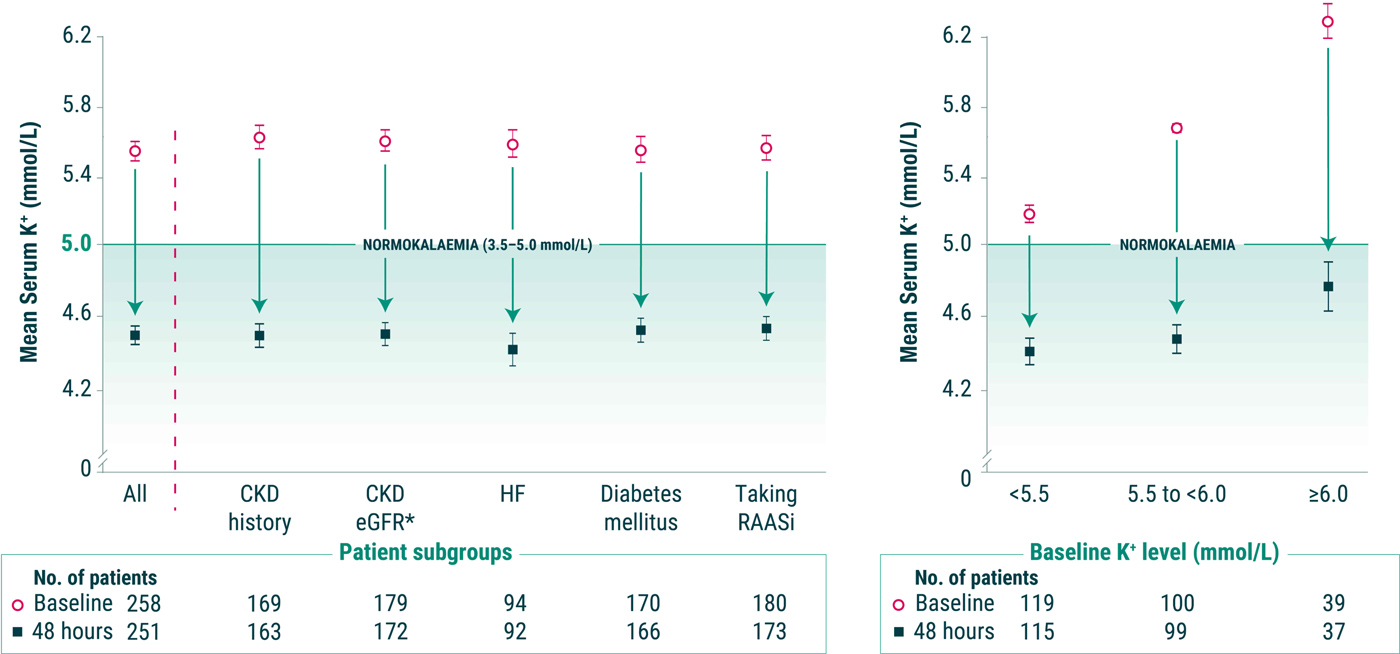
LOKELMA demonstrated consistent potassium reduction across patient types up to 28 days post baseline2

LOKELMA consistently reduced serum potassium from baseline, regardless of2:

  • Comorbidities
  • RAASi use
  • Baseline potassium level

Additionally, patients with higher potassium levels at baseline experienced greater reductions in serum potassium2

Mean serum potassium level with LOKELMA 10g three times daily at 0 and 48 hours across prespecified subgroups2

Chart showing mean serum potassium level with Lokelma across prespecified subgroups

Adapted from Kosiborod et al (2014)2

*<60 mL/min/1.73 m2.

Error bars indicate 95% confidence intervals

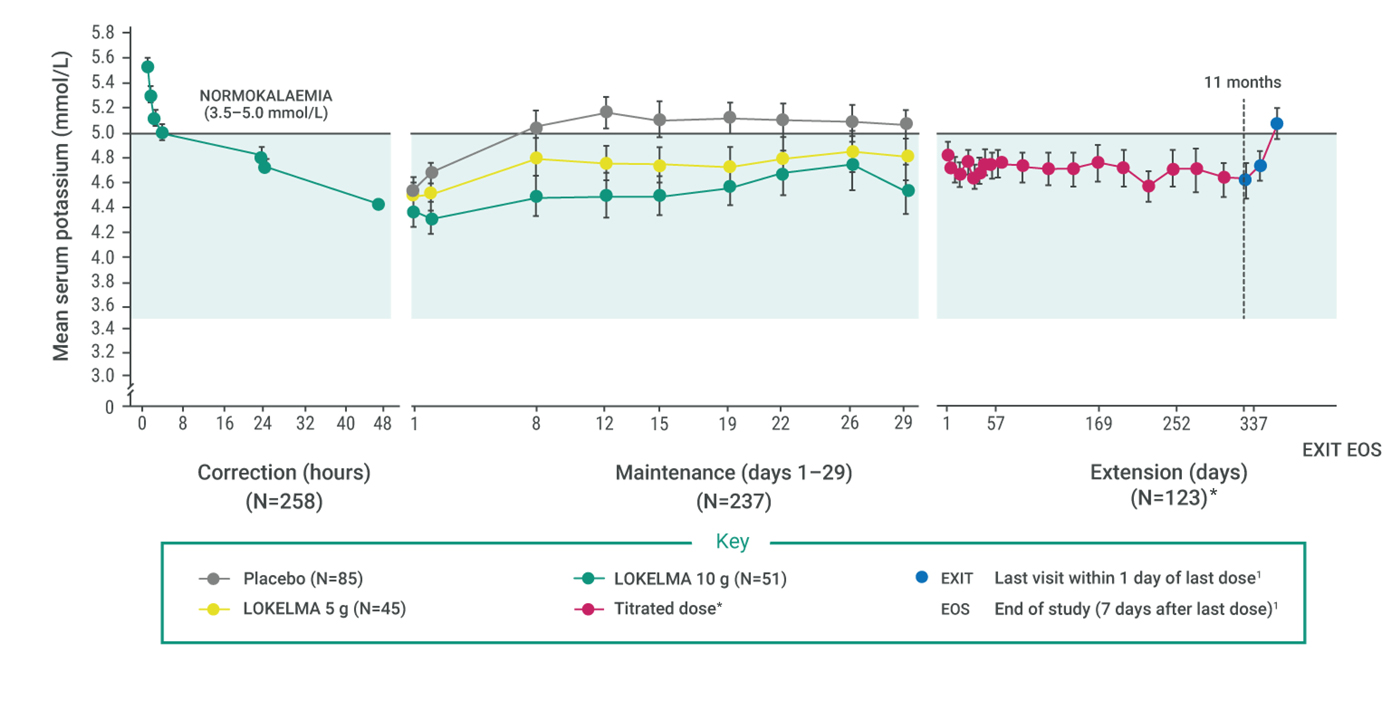
LOKELMA provided sustained potassium control in a 12 month study when used as maintenance therapy1-3

In the 11-month open-label extension phase of the HARMONIZE study, 88% of the patients who were receiving LOKELMA maintained an average potassium of <5.1 mmol/L1,3

Mean serum potassium levels across correction, maintenance and extension phases1,2

Chart showing mean serum potassium level with Lokelma across correction, maintenance and extension phases

Adapted from LOKELMA Summary of Product Characteristics1

Error bars indicate 95% confidence intervals2


*Please note that the recommended starting dose for maintenance therapy for non-dialysis patients with LOKELMA is 5 g once daily, which may be titrated to 10 g once daily as needed. No more than 10 g once daily should be used for maintenance therapy for non- dialysis patients. The 5 g once-daily dose can be down-titrated to 5 g every other day1.

LOKELMA: continued RAASi use

Icon showing 87 percent of patients

In a prespecified exploratory analysis of a 12-month study, 87% of patients continued or had their RAASi dose increased while taking LOKELMA4

11% of patients receiving RAASi therapy at baseline (n=483) discontinued RAASi during the 12-month open-label trial4

Among patients on RAASi therapy (n=483) during the maintenance phase of ZS-005, a 12-month, open-label study evaluating LOKELMA in patients not on dialysis with hyperkalaemia4:

  • 74% of patients had no change in RAASi therapy
  • 13% of patients had an increase in their RAASi dose
  • 14% of patients had a decrease in their RAASi dose

Of the 263 RAAS-naïve patients at baseline, 14% initiated RAASi therapy during the study4


See the study design

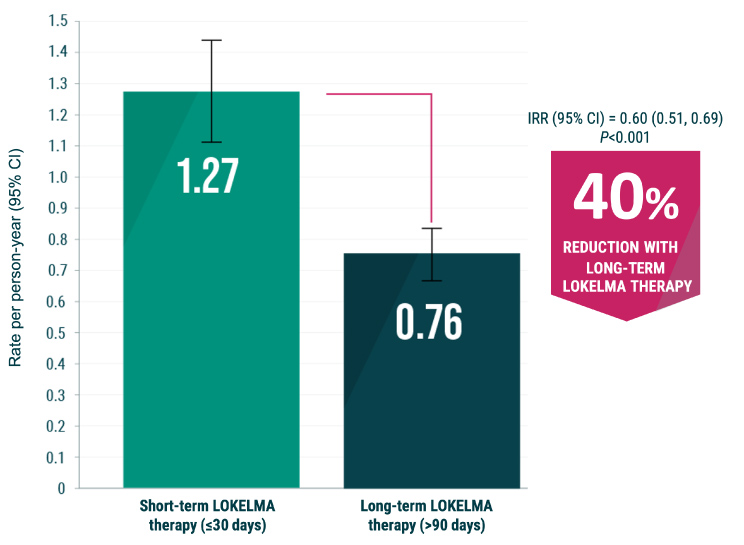
GALVANIZE: Long-term LOKELMA use was associated with lower rates of hyperkalaemia-related hospitalisations or emergency department visits vs. those on short-term LOKELMA therapy8,9

GALVINISE was a retrospective, propensity matched cohort study of closed US medical and pharmacy claims evaluating HK-related hospitalisations or ED visits in adult outpatients who initiated SZC (index date) between January 2019 and December 2022^8,9a

Rates of HK-related inpatient admissions or ED visits by LOKELMA duration in CKD or ESKDa population (N=2,854 matchedb pairs)8,9

Rates-of-Hk

Mean (SD) duration of8,9:

  • Study follow - up: 134 (57.3) days vs 172 (23.8) days (P<0.001)
  • LOKELMA usec: 21 (11.4) days vs 167 (52.4) days (P<0.001)

In the short-term and long-term LOKELMA cohorts, respectively.

HK-related hospitalisations or ED visits do not necessarily imply that HK is the primary reason for all hospitalisation or ED visits in this study.

Note: a CKD defined by diagnosis code and ESKD by any diagnosis code for ESKD or by a diagnosis code for ESKD, stage 5 CKD or unspecified ESKD;18,9b Patients were propensity score matched based on the duration of SZC therapy and were followed for 6 months after index date or until they were censored (re-initiated SZC after ≥30 day gap of discontinuation, initiated another K+ binder, at the end of data availability, or death);8,9 cDuration of SZC use was the sum of the days of supply for all SZC prescriptions during the follow-up period starting from index date to censoring date or date of SZC discontinuation8,9.

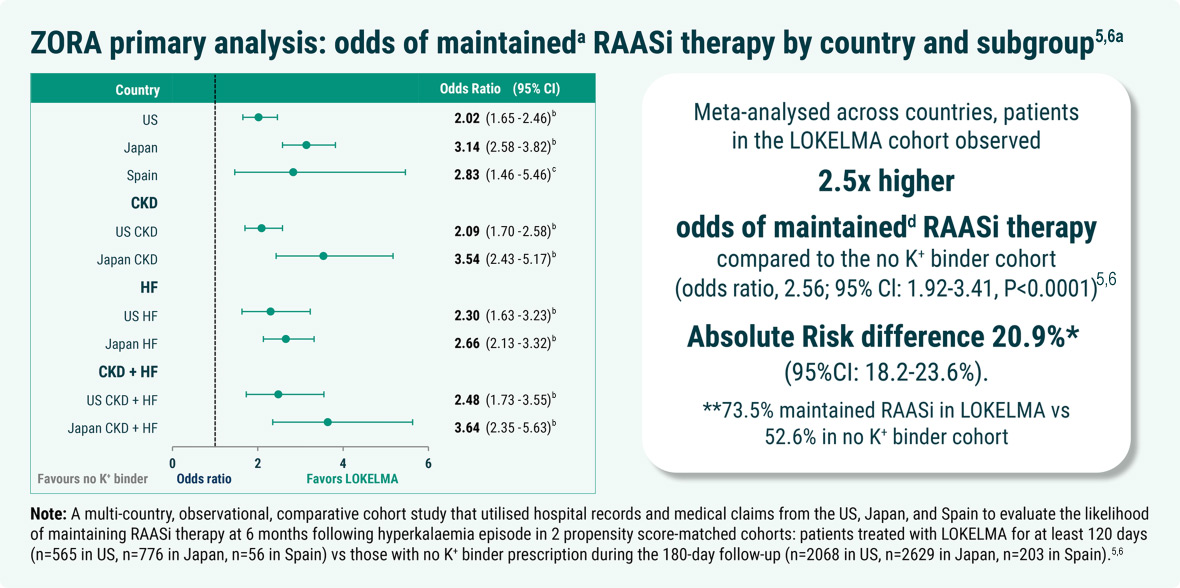
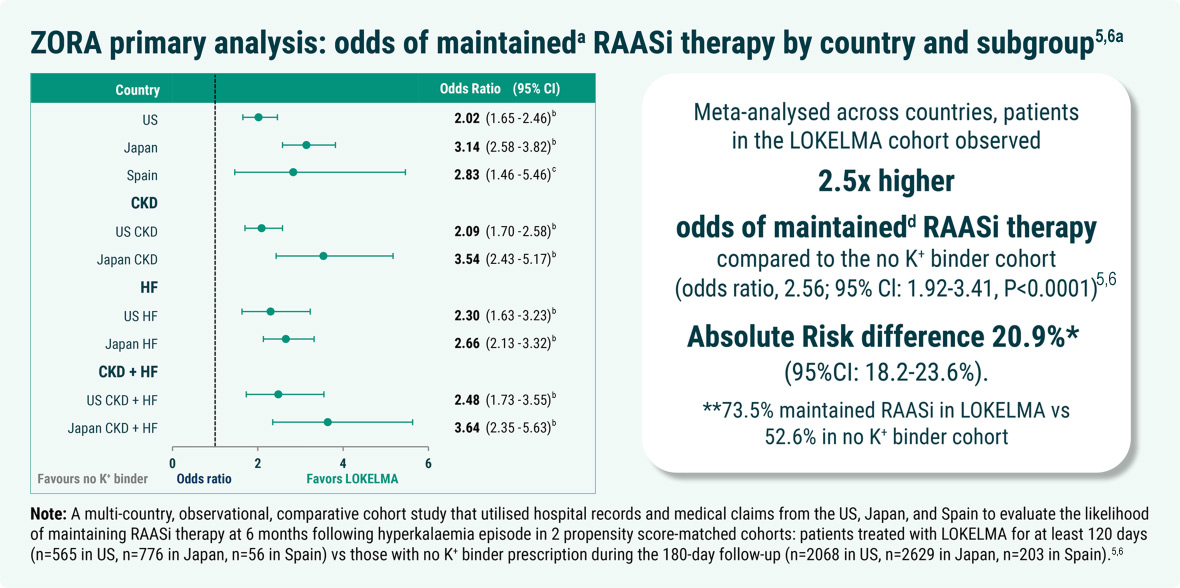
ZORA RWE study: Patients on LOKELMA had double the odds of maintaining RAASi therapy vs patients not on a K^+ binder, regardless of geography/comorbidity5,6

Observational studies are associated with limitations*. Real world evidence should be interpreted in the context of randomised control trials.

primary-outcome primary-outcome

dMaintained RAASi was defined as stabilised or up-titrated RAASi5,6

aSubgroup analysis by CKD and/or HF was not evaluated in Spain due to limited sample size5,6

bP<0.00015,6

cP=0.00205,6

*Despite balancing cohorts on potential baseline confounders using propensity score matching,some risk of residual confounding may remain even after adjustment6,7.

Click here to see the study design for the ZORA study

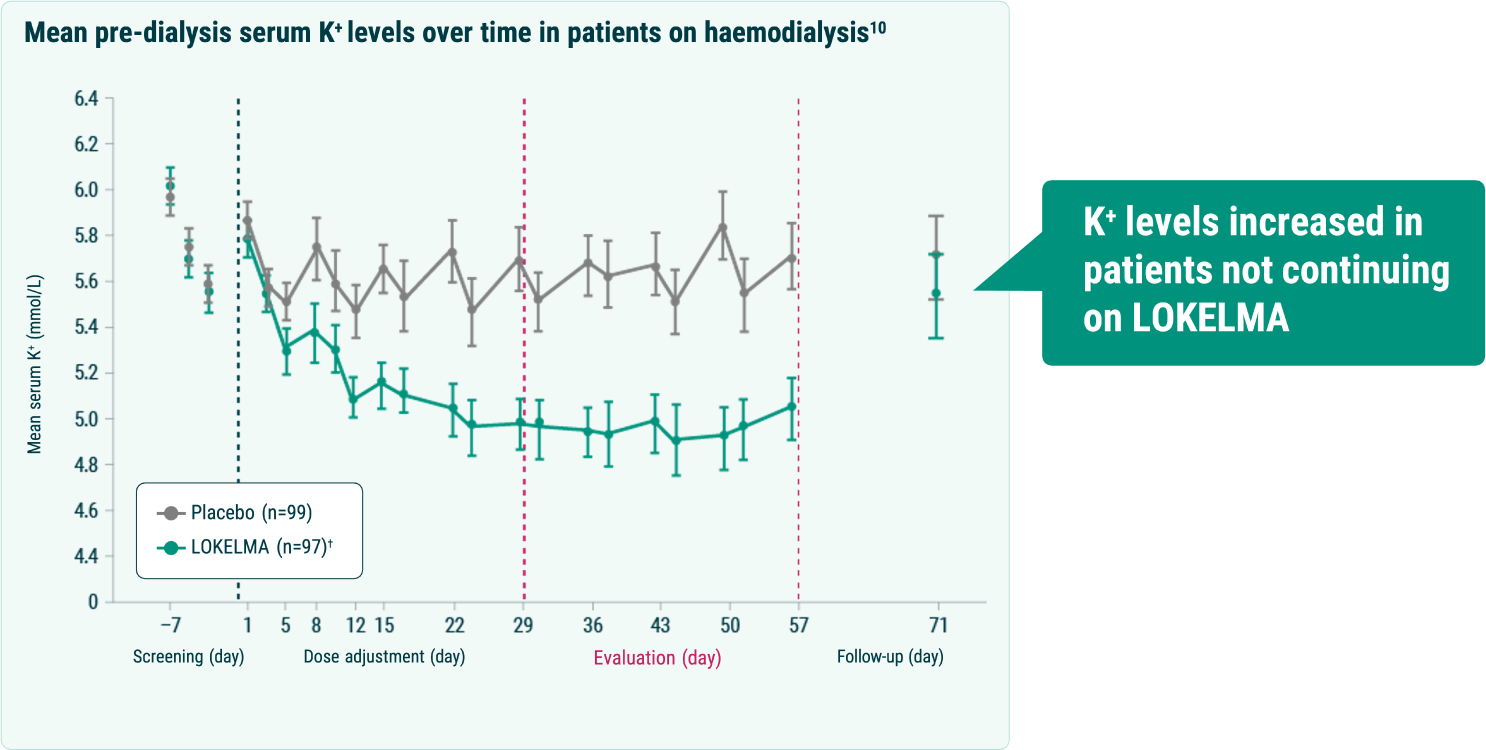
LOKELMA reduced K+ levels and provided controlled K+ levels in haemodialysis patients vs placebo10

In the DIALIZE study, 41% of patients receiving LOKELMA achieved K+ 4.0-5.0 mmol/L in at least 3 of 4 haemodialysis sessions following the LIDI, without need for rescue therapy vs 1% for Placebo (p<0.001)10.

Mean pre-dialysis serum K+ levels over time in patients on haemodialysis10

pre-dialysis

Adapted from Fishbane, et al (2019)10

Error bars represent 95% confidence intervals10

Click here to see the study design for the DIALIZE trial

HARMONIZE (ZS-004) was a Phase III, multicentre, randomized, double-blind, multiphase, placebo-controlled study evaluating the safety and efficacy of LOKELMA in 258 patients with hyperkalaemia2

Rapid* reduction of K+ levels2

  • One dose (10g) of LOKELMA significantly reduced the mean serum K+ level after one hour (-0.2 mmol/L compared to baseline; 95% CI: -0.3 to -0.2; P<0.001)
  • Median time to normokalaemia was 2.2 hours (IQR 1.0 - 22.3)
  • 88% of patients receiving LOKELMA achieved normalised serum K+ levels during the 48-hour correction phase1.
  • 66% of patients achieved normokalaemia at 24 hours1    
  • Regardless of baseline K+ levels, Lokelma reduced serum K+ levels within 48 hours of the initial dose2
  • Reductions at 48 hours were greatest in patients with the most severe hyperkalaemia: serum K+ levels fell 0.8, 1.2 and 1.5 mmol/L in patients with baseline K+ levels <5.5, 5.5-5.9, and ≥ 6 mmol/L, respectively1

Sustained K+ control3

  • 88% of patients receiving LOKELMA maintained an average serum K+ of <5.1 mmol/L over 11 months1,3
  • During the maintenance phase of the study (days 8-29), 80% of patients receiving LOKELMA 5 g and 90% of patients receiving LOKELMA 10g maintained normokalaemia (average serum K+ level <5.1 mmol/L) compared with 46% of patients treated with placebo1
  • LOKELMA prevented recurrence of hyperkalaemia over 11 months, with 77% of serum K+ level measurements between 3.5 and 5.1 mmol/L. 93% of measurements were between 3.5 and 5.5 mmol/L1

*In an emergency situation, standard of care should be used in line with local or national guidelines2

Study design

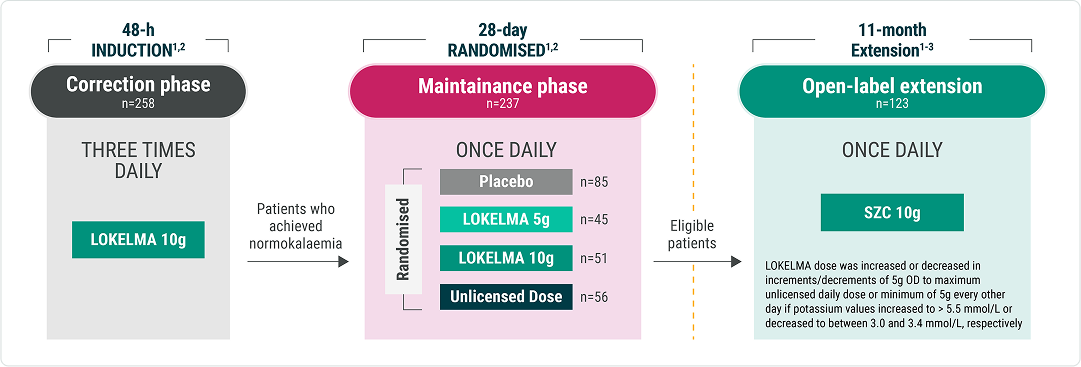
Correction phase2: participants received LOKELMA 10g three times daily, administered for 48 hours 

Maintenance phase2: patients who achieved normokalaemia (3.5-5.0 mmol/L) by the morning of study Day 3 (n=237) then proceeded to the randomized phase, where they were randomized to receive LOKELMA 5g, 10g, an unlicensed dose, or placebo, once daily for 28 days. 

Open-label extension study (HARMONIZE OLE, ZS-004E)3: patients were eligible for the extension phase if they completed the randomized dosing phase (study Day 29 visit) or discontinued due to hypo- or hyperkalaemia and were able to start ZS-004E dosing within 2 days after their last ZS-004 dose. Patients were required to have potassium values ranging from 3.5-6.2 mmol/L at ZS-004 study Day 29 visit, or a mean value ranging from 3.5-6.2 mmol/L for two consecutive measurements at 0 and 60 minutes on acute phase Day 1/maintenance phase Day 1 if they discontinued ZS-004 study due to hypo- or hyperkalaemia.

Eligible patients continued with LOKELMA 10g once daily, which could be titrated to 5g or an unlicensed dose, in the 11-month, open-label extension study.3

Treatment was discontinued on study exit (Day 365).1

Image of study design of HARMONIZE trial Image of study design of HARMONIZE trial

Primary endpoints

Initial study (correction and maintenance phases): mean serum potassium level in each LOKELMA group vs placebo on days 8-29.2

Extension phase: proportion of subjects with mean serum potassium values ≤5.1 mmol/L during Extended Dosing Study Days 8-337.3

Secondary endpoints

Initial study (correction and maintenance phases)2:

  • Absolute and percentage change from baseline in serum potassium levels at all measured time intervals after initiation of treatment
  • Proportion of patients who achieved normokalaemia by 24 and 48 hours
  • Time to normalisation
  • Exponential rate of change in serum potassium

Extension phase:

  • The proportion of subjects with average serum potassium values ≤5.5 mmol/L during Extended Dosing Study Days 8-337.3

Study ZS-005 was a 12-month, multicentre, open-label, single-arm, phase 3 trial to investigate the long-term safety and efficacy of LOKELMA in patients with hyperkalaemia.4

LOKELMA provided sustained K+ control in a 12 month study4

sustained-control

Adapted from Spinowitz et al. (2019)4

Error bars indicate 95% confidence intervals

*Off-drug values collected 7 (±1) days after the last administration of LOKELMA; the extended maintenance group contained a small proportion (12%) of patients who were treated with an unlicensed dose once daily4

**The recommended starting dose for maintenance therapy for non-dialysis patients with LOKELMA is 5 g once daily, which may be titrated to 10 g once daily as needed. No more than 10 g once daily should be used for maintenance therapy for non- dialysis patients. The 5 g once-daily dose can be down-titrated to 5 g every other day1

  • 87% of patients maintained a serum potassium value of ≤5.1mmol/L over the 12-month study period with LOKELMA4
  • 99% of patients achieved normokalaemia within the 72-hour open-label correction phase (mean serum potassium 4.8mmol/L; 95% CI, 4.7-4.8)4
  • Normokalaemia was maintained while patients remained on drug and the mean serum potassium increased following discontinuation1    
  • Among those patients using RAAS inhibitors at baseline:1
    • 89% did not discontinue RAAS inhibitor therapy
    • 74% were able to maintain the same dose during the maintenance phase
    • During maintenance phase, 75.6% of subjects maintained normokalaemia, despite use of RAAS inhibitors
  • Among those patients not on RAAS inhibitors at baseline:1
    • 14% were able to initiate this therapy

Study design

Correction phase4: hyperkalaemic patients (n=751) with serum potassium levels of ≥5.1 mmol/L received a 10g dose of LOKELMA three times daily for 24-72 hours. 

Maintenance phase4: patients (n=746) who achieved normokalaemia (3.5-5.0 mmol/L) during the open-label phase were enrolled in the extended dosing phase and received 5g of LOKELMA once daily. Potassium levels were assessed throughout the first month and every 4 weeks thereafter until month 12. During the extension phase the dosages were adjusted based on potassium, with patients taking either 5g, 10g or an unlicensed dose once daily or 5g every other day to maintain normokalaemia without dietary or medication restrictions.

Image of study design of ZS-005 trial

Adapted from Spinowitz et al. (2019)4

*Patients who achieved normokalaemia (K+ 3.5–5.0 mmol/L) as measured by the point-of-care i-STAT device at any point during the acute phase were immediately eligible to enter the 12-month extended dosing phase and received OD treatment with LOKELMA4

Endpoints

Primary endpoints4

  • Restoration of normokalaemia (3.5–5.0 mmol/L) during the correction
  • phaseMaintenance of serum potassium ≤5.1 and ≤5.5 mmol/L during the maintenance phase over months 3–12

Secondary endpoints4

  • Proportion of subjects with normokalaemia (3.5–5.5 mmol/L) between months 3–12
  • Mean serum potassium values during months 3–12, 6–9 and 9–12
  • Change from baseline in serum potassium and bicarbonate (all participants and those with baseline bicarbonate <22 mmol/L and normal bicarbonate levels [19-34 mmol/L])

The DIALIZE study is the first, double-blind, randomized, placebo-controlled, phase 3b multicentre trial to determine the efficacy and safety of LOKELMA in haemodialysis patients with hyperkalaemia.10

LOKELMA reduced K+ levels and provided controlled K+ levels in haemodialysis patients vs placebo10

During the evaluation period, 41% of LOKELMA-treated patients achieved K+ 4.0-5.0 mmol/L in at least 3 of 4 haemodialysis sessions following the LIDI, without need for rescue therapy vs 1% for placebo (OR, 68.8; 95% CI, 10.9-2810.9; p<0.001)10

dialize-graph

The post-hoc analysis showed the proportion of patients who maintained serum potassium level between 3.5 and 5.5 mmol/L on at least 3 out of 4 dialysis treatments after LIDI during the evaluation period was 70% in the LOKELMA group and 21% in the placebo group.1


Overall, 40 patients (41.7%) had an AE in the LOKLEMA group, and 46 patients (46.5%) had an AE in the placebo group. Most AEs reported were mild or moderate intensity. The most common AEs by system organ class were gastrointestinal disorders, with 19 patients (19.8%) in the LOKELMA group and 17 patients (17.2%) in the placebo group. Infections were reported in 12 patients (12.5%) in the LOKELMA group and 9 patients (9.1%) in the placebo group.10

Please refer to the LOKELMA SmPC for more information on adverse events

Study design

The study included a 1-week screening period, an 8-week treatment period (4 weeks for dose titration and 4 weeks for evaluation on stable dose), and a 2 week (±3 days) follow-up period, ending with a final visit.10

196 patients with ESRD managed for ≥3 months before randomization by haemodialysis three times weekly, and who had persistent hyperkalaemia despite adequate haemodialysis during the 1-week screening period, were included.10

Image of study design of DIALIZE trial

Screening period: screening began on the day of haemodialysis after the long interdialytic interval (day -7), included the haemodialysis treatments after the two short interdialytic intervals on days -5 and -3, and was completed on the day before randomization.10

Treatment period: patients were randomized 1:1 to receive orally a starting dose of LOKELMA 5g or placebo once daily on non-dialysis days. During dose titration, the doses of LOKELMA and placebo were adjusted weekly over 4 weeks to attain normokalaemia, defined as achieving and maintaining a pre-dialysis serum potassium concentration of 4.0-5.0 mmol/L after the long interdialytic interval. Doses were titrated in 5 g increments to a maximum dose of 15 g once daily on non-dialysis days. Treatment was maintained at a stable dose during the 4-week evaluation period.10

Endpoints

Primary endpoint: the proportion of patients who, during the 4-week evaluation phase, maintained a pre-dialysis serum potassium concentration of 4.0-5.0 mmol/L during at least 3 of 4 haemodialysis treatments following the long interdialytic interval and who did not require urgent rescue therapy.10

Secondary endpoint: the proportion of patients requiring any urgent rescue intervention to reduce serum potassium in the setting of severe hyperkalaemia (>6.0 mmol/L).10

Safety outcomes: included assessment of AEs, laboratory parameters/vital signs, ECG and IDWG10

  • ZORA Study Design: A multi-country, observational, comparative cohort study that utilized hospital records/medical claims from US, Japan and Spain to evaluate the likelihood of maintaining (stabilized or up-titrated) RAASi therapy (outpatient prescription within 120 days pre-index) at 6 months following a hyperkalaemia episode (ICD-10 code) among patients with non-HD CKD and/or HF prescribed5,6.
  • LOKELMA (index date) for at least 120 days of continuous treatment compared to those with no K+ binder prescribed during the 180 days of follow-up. Observational period was based on LOKELMA availability in each country: July 2019-December 2022 (US), May 2020-December 2022 (Japan) and June 2021-December 2022 (Spain). Propensity score matching was applied to balance the LOKELMA cohort (n=565 US, n=776 Japan, n=56 Spain) to the no K+ binder cohort (n=2068 US, n=2629 Japan, n=203 Spain)5,6.
  • Limitations: Visibility and adherence was limited in the insurance claims data     and there was no confirmation of the actual amount of medications taken. Some of the baseline clinical characteristics (ex: Hyperkalemia severity at index and CKD stage) were not available and may contribute to the risk of residual confounding even after adjustment. Lab data was unavailable. Reason for treatment discontinuation were unknown. Causality cannot be inferred. Due to limited sample size, Spain was not included in the subgroup analyses of CKD, HF, CKD + HF populations by country5,6.

An observational study using health registers and hospital medical records data, including patients with5,6:

An episode of hyperkalaemia

History of heart failure and/or chronic kidney disease

≥1 RAASi prescription (LOKELMA cohort: ≥120 days of LOKELMA treatment)

The LOKELMA and No K+ binder groups were similar in terms of demographics, comorbidities, concomitant medications, history of hyperkalaemia, and eGFRa

aThe LOKLEMA and No K+ binder groups were similar in terms of baseline demographics (age and sex), comorbidities (CKD, arrhythmia, HF, coronary heart disease, diabetes, and proteinuria), comedications (RAASi, α-blockers, β-blockers, β-agonists, cardiac glycosides, calcium channel blockers, calcium gluconate, diuretics (any), loop diuretics, thiazide diuretics, insulin, sodium bicarbonate, nonsteroidal anti-inflammatory drugs, and sodium-glucose cotransporter-2 inhibitors), hyperkalaemia (index severity and recurrent/new onset), history of K+ binder use, and estimated glomerular filtration rate5,6:

Discover more

Safety profile

Explore LOKELMA's safety profile and drug-drug interactions

Learn more

Dosing and administration

Familiarise yourself with the dosing and administration for LOKELMA

Learn more

Videos & webinars

Learn more from experts about the importance of RAASi optimisation in cardiorenal (HF or CKD) patients with hyperkalaemia

Learn more

Get support

Book a meeting with one of our experts to find out how to implement LOKELMA in your clinical practice

Learn more

AE=adverse event; CI=confidence interval; CKD=chronic kidney disease; ECG=electrocardiography; eGFR=estimated glomerular filtration rate; ESRD=end stage renal disease; HF=heart failure; IDWG=interdialytic weight gain; IQR=interquartile range; LIDI=long interdialytic interval; OD=once daily; OR=odds ratio; R=ratio; RAASi=renin-angiotensin-aldosterone inhibitor; RWE=real-world evidence; TDS=three times a day.

  1. Lokelma (sodium zirconium cyclosilicate) Summary of Product Characteristics.
  2. Kosiborod M, et al. JAMA. 2014;312(21):2223-2233.
  3. Roger SD, et al. Am J Nephrol. 2019;50(6):473-480.
  4. Spinowitz BS, et al. Clin J Am Soc Nephrol. 2019;14(6):798-809 (with Supplementary Appendix).
  5. Rastogi A, et al. ZORA: Maintained RAASi Therapy with Sodium Zirconium Cyclosilicate Following a Hyperkalaemia Episode: A Multi-Country Cohort Study, presented at American Society of Nephrology Kidney Week, 1-5th November 2023, Philadelphia, PA, USA.
  6. Rastogi A, et al. Clin Kidney J. 2024;17(5):sfae083.
  7. Rastogi A, et al. ZORA: Association between reduced RAASi therapy and progression to ESKD in hyperkalaemic CKD patients, presented at American Society of Nephrology Kidney Week, 1-5th November 2023, Philadelphia, PA, USA.
  8. Data on File, REF-217791. AstraZeneca Pharmaceuticals LP.
  9. Rhee C, et al. Hyperkalemia-Related Hospitalization Associated with Short-Term vs. Long-Term Outpatient SZC Therapy Poster presented NKF Spring Clinical Meetings; 14-18th May2 024, Long Beach, CA. Poster 341.
  10. Fishbane S, et al. J Am Soc Nephrol. 2019;30(9):1723-1733 (with Supplementary Appendix).

GB-70043 September 2025

Adverse events should be reported. Reporting forms and information can be found at www.mhra.gov.uk/yellowcard or search for MHRA Yellow Card in the Google Play or Apple App Store. Adverse events should also be reported to AstraZeneca by visiting https://contactazmedical.astrazeneca.com/ or by calling ‌‌‌0‌‌‌8‌‌‌‌‌0‌‌‌‌0‌‌‌ ‌‌7‌‌‌‌‌‌8‌‌‌3‌‌‌ ‌‌0‌‌‌‌‌0‌‌‌‌3‌‌‌‌3‌‌‌.

Connessiallasalute.it

This website was created for UK HCPs and has been designed to provide information to educate, empower and enable them in the great work they are doing for patients across a range of therapy areas. This website is intended for doctors, nurses, and pharmacists in the UK. Other UK residents please visit astrazeneca.co.uk.

Terms of use

Privacy Policy

Cookie Policy

Contact Us

LinkedIn

Twitter

©2026 AstraZeneca. GB-76964 | DOP: May 2026