Welcome to this UK AstraZeneca produced and funded website

This website is intended for UK Healthcare Professionals only.


The website contains both promotional and non-promotional content.


If you are a patient or a carer of a patient prescribed an AstraZeneca product, please visit myazmed.co.uk


For any other UK residents please visit astrazeneca.co.uk

I am not a Healthcare Professional
Prescribing Information LOKELMA® (sodium zirconium cyclosilicate)
Adverse Event Reporting

This website is intended for UK Healthcare Professionals only. Other UK residents please visit astrazeneca.co.uk

LOKELMA® (sodium zirconium cyclosilicate) is indicated for the treatment of hyperkalaemia in adult patients.

AstraZeneca-logo
  • Our Medicines
    • Cardiovascular, Renal & Metabolism
      • ATTR Amyloidosis
        • WAINZUA®▼(eplontersen)
      • Chronic Kidney Disease (CKD)
        • FORXIGA® (dapagliflozin)
      • Heart Failure
        • FORXIGA® (dapagliflozin)
      • Hyperkalaemia
        • LOKELMA® (sodium zirconium cyclosilicate)
      • Type 2 Diabetes (T2D)
        • FORXIGA® (dapagliflozin)
    • Oncology
      • Breast Cancer
        • LYNPARZA® (olaparib)
        • TRUQAP®▼(capivasertib)
      • Bladder Cancer
        • IMFINZI® (durvalumab)
      • Endometrial Cancer
        • IMFINZI® (durvalumab)
        • LYNPARZA® (olaparib)
      • Gastrointestinal Cancer
        • IMFINZI® (durvalumab)
        • IMJUDO®▼(tremelimumab)
      • Lung Cancer
        • IMFINZI® (durvalumab)
        • TAGRISSO® (osimertinib)
      • Ovarian Cancer
        • LYNPARZA® (olaparib)
      • Prostate Cancer
        • LYNPARZA® (olaparib)
        • ZOLADEX® (goserelin)
    • Respiratory
      • Asthma
        • TEZSPIRE®▼ (tezepelumab)
        • SYMBICORT® (budesonide/formoterol)
      • Chronic Obstructive Pulmonary Disease(COPD)
        • TRIXEO AEROSPHERE® (formoterol fumarate dihydrate/glycopyrronium/budesonide)
        • BEVESPI® (glycopyrronium/formoterol fumarate dihydrate)
    • Vaccines
      • Flu
        • FLUENZ® nasal spray suspension (influenza vaccine, live attenuated, nasal)
  • Therapy Areas
    • Cardiovascular, Renal & Metabolism
      • ATTR Amyloidosis
      • Chronic Kidney Disease (CKD)
      • Heart Failure
      • Hyperkalaemia
      • Type 2 Diabetes (T2D)
    • Oncology
      • Breast Cancer
      • Bladder Cancer
      • Endometrial Cancer
      • Gastrointestinal Cancer
      • Lung Cancer
      • Ovarian Cancer
      • Prostate Cancer
    • Respiratory
      • Asthma
      • Chronic Obstructive Pulmonary Disease(COPD)
    • Vaccines
      • Flu
  • About us
    • AZ Commitment
  • Contact us
  • AstraZeneca UK
  • LOKELMA
  • Unmet Needs | LOKELMA (sodium zirconium cyclosilicate) | AstraZeneca UK
  • About LOKELMA
  • Hyperkalaemia
    • About hyperkalaemia
    • Hyperkalaemia management and treatment guidelines
    • Hyperkalaemia and chronic kidney disease
    • ACEi, ARBs and hyperkalaemia
  • Unmet needs
  • NICE recommendation
  • Why LOKELMA
    • Mode of action
    • Efficacy
    • Safety profile
  • Dosing and administration
  • Resources
    • Resources
    • Videos and webinars
    • Quality Improvement Project tools
Unmet Needs | LOKELMA (sodium zirconium cyclosilicate) | AstraZeneca UK

lokelma-logo

Unmet need for cardiorenal patients

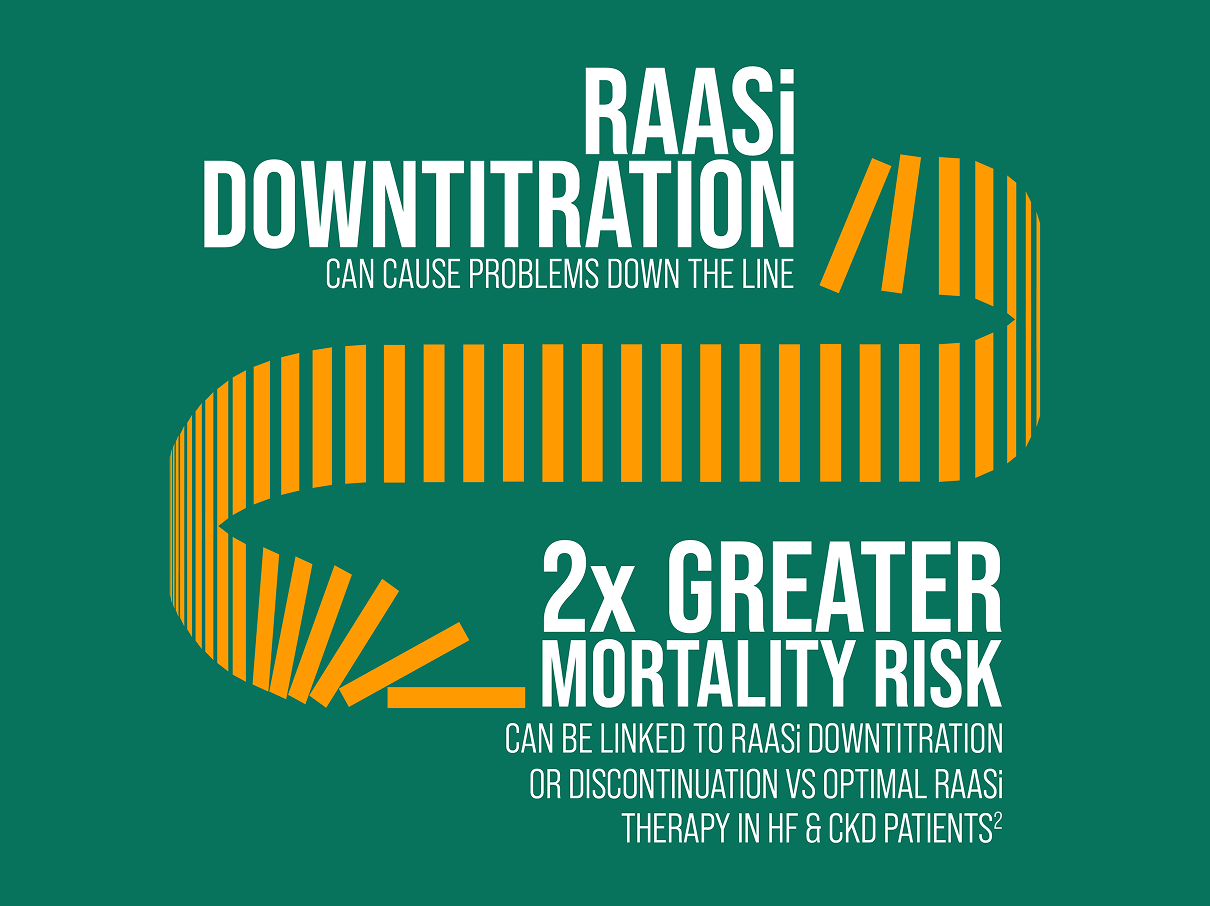
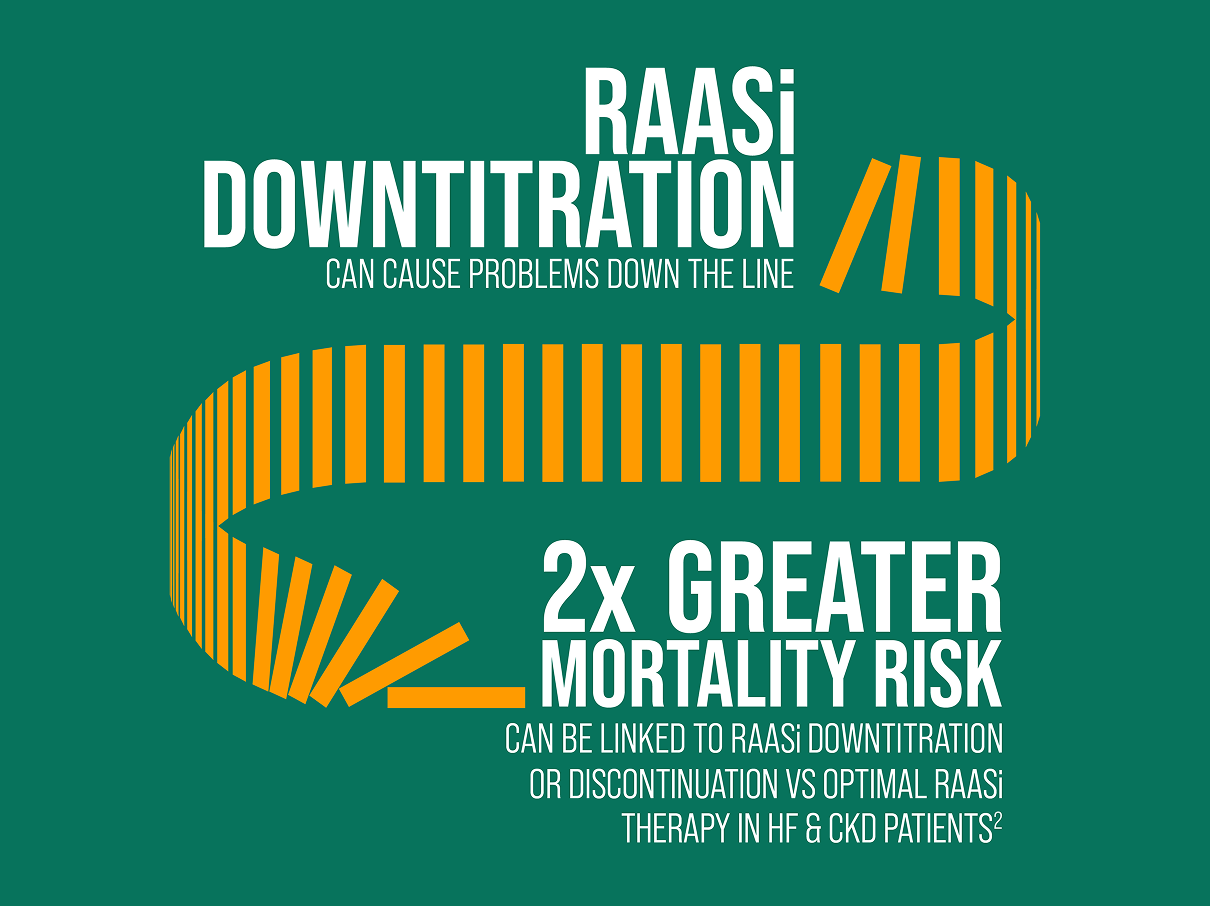
RAASi downtitration or discontinuation of RAASi therapy doubles mortality risk vs optional RAASi therapy in cardiorenal patients2

See the data Interactive case study
  • Interactive case study
  • Mortality Data
  • ESKD progression
  • HF-hospitalisation

Are your HF and CKD patients at risk?

Test how different treatment approaches can have different outcomes for your patients.

Back to top

Downtitration or discontinuation of RAASi therapy is associated with doubling of mortality across patient subtypes2

>2x higher mortality rates were observed with submaximal doses or discontinuation versus a maximal dose of RAASi.2

Mortality by prior RAASi dose2

Adapted from Epstein et al. (2015)2


Retrospective analysis of a US database of electronic health records (Humedica; N>200,000) of patients ≥5 years of age with various comorbidities, with ≥2 serum potassium readings, with ≥1 out-patient RAASi prescription from 2007 to 2012 and who were receiving maximum doses of RAASi therapy.2 Inclusion criteria required 12 months of data prior to index date.2 RAASi includes ACEi, ARB, direct renin inhibitor and select MRA.2

Back to top

Downtitration or discontinuation of RAASi therapy increases risk of progression to ESKD: ZORA RWE3

Down-titrating RAASi therapy results in a risk of progressoin to ESKD similar to discontinuing RAASi entirely


Risk of Progression to ESKD (US data)3,a

lokelma-logo

increased risk with RAASi
discontinuation
(n=138/2460)
compared to the risk with RAASi
maintenanceb (n=138/4586)

Risk of Progression to ESKD (US data)3,a

lokelma-logo

increased risk with RAASi
down-titration
(n=23/460)
compared to the risk with RAASi
maintenanceb (n=138/4586)

"Initiation of hemodialysis or a diagnosis of ESKD or CKD Stage 5 in any position recorded in hospital, emergency, or outpatient setting:3 bp<0.05 for each comparison and adjusted for age, sex, history of hyperkalaemia, T2 diabetes, HF, CKD including stage, and baseline use of ACEi, ARB, ARNi, and MRA;3


Note: An observational study that utilised the US claims and EHR data from July 2019 and September 2021 in 15,488 adult patients with CKD Stage 3 or 4 and/or HF who experienced an index HK event (ICD-10 or ICD-9 diagnosis codes) and had ≥1 filled RAASi prescription within 6 months before the index HK event,3 RAASi included ACEi, ARB. ARNi, and MRA.3,4 Subgroups of patients with CKD (n=11,873; identified using diagnosis codes or eGFR) and patients with HF (n=9086: identified using diagnosis codes) were also evaluated after index HK event.3

Back to top

Downtitration or discontinutaion of RAASi therapy increases hospitalisation rates in HF 

Down-titrating RAASi results in a mortality risk similar to discontinuing RAASi entirely


Risk of HF-related Hospitalisations (US data)3,a

lokelma-logo

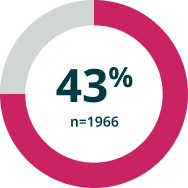
increased risk with RAASi
discontinuation
(n=392/1966)
compared to the risk with RAASi
maintenanceb (n=421/3049)

Risk of HF-related Hospitalisations (US data)3,a

lokelma-logo

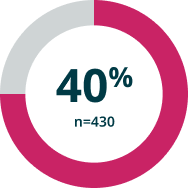
increased risk with RAASi
down-titration
(n=84/430)
compared to the risk with RAASi
maintenanceb (n=421/3049)

Note: An observational study that utilised the US claims and EHR data from July 2019 and September 2021 in 15,488 adult patients with CKD Stage 3 or 4 and/or HF who experienced an index HK event (ICD-10 or ICD-9 diagnosis codes) and had ≥1 filled RAASi prescription within 6 months before the index HK event.3

RAASi included ACEI, ARB, ARNi, and MRA.3,4 Subgroups of patients with CKD (n=11,873; identified using diagnosis codes or eGFR) and patients with HF (n=9086; identified using diagnosis codes) were also evaluated after index HK event.3


*p<0.05 for each comparison and adjusted for age, sex, history of hyperkalaemia, Type 2 diabetes, HF, CKD including stages 3 and 4, and baseline use of ACEi, ARB, ARNi, and MRA,3 hospitalisations with HF or emergency visits for HF.3

Back to top

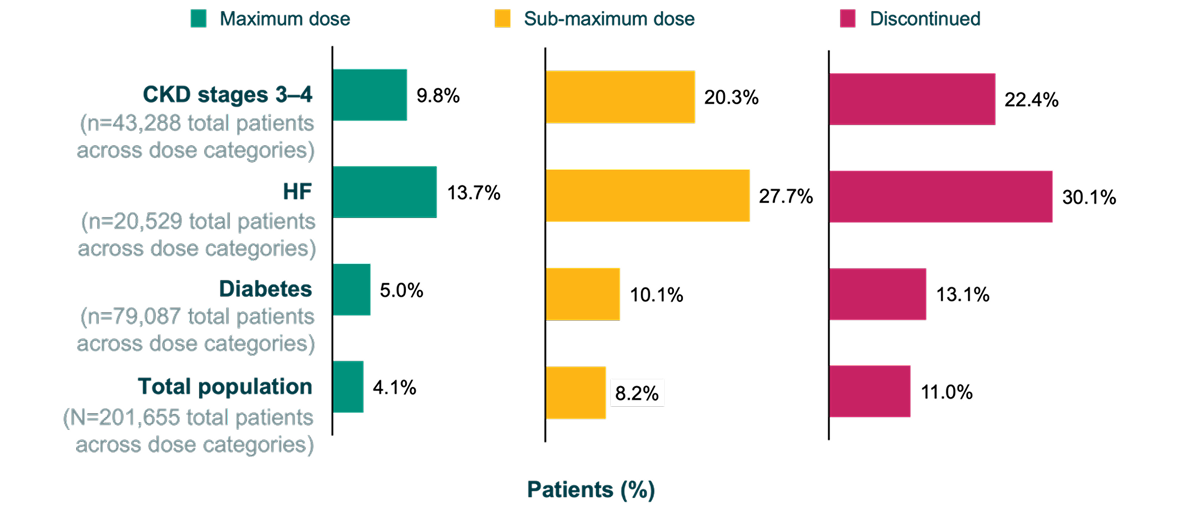
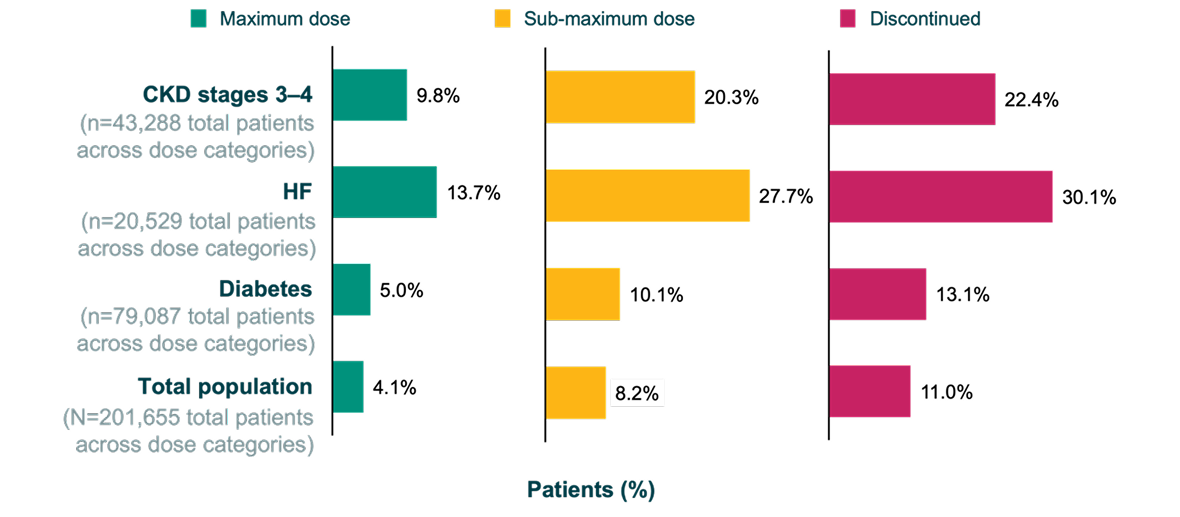
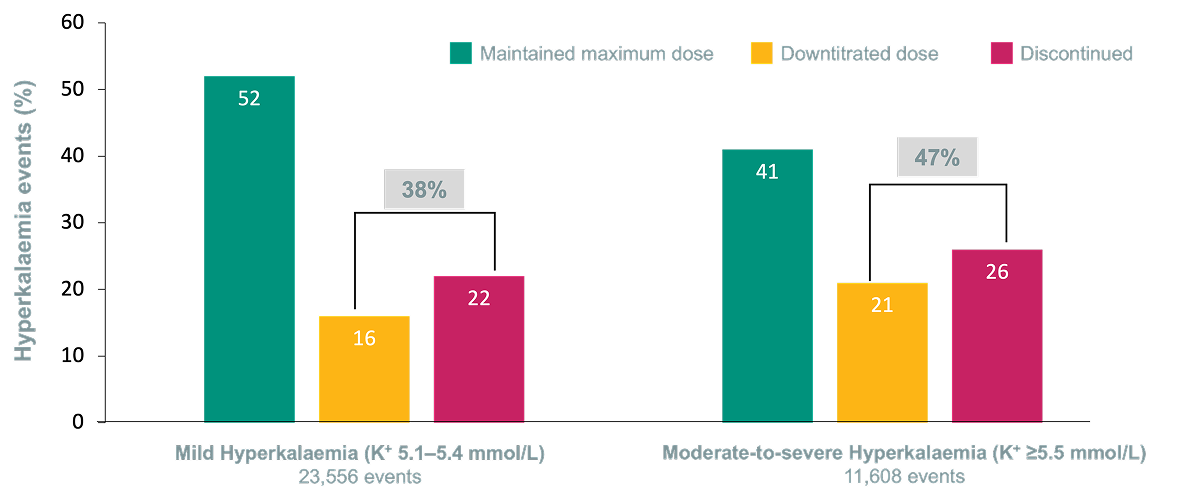
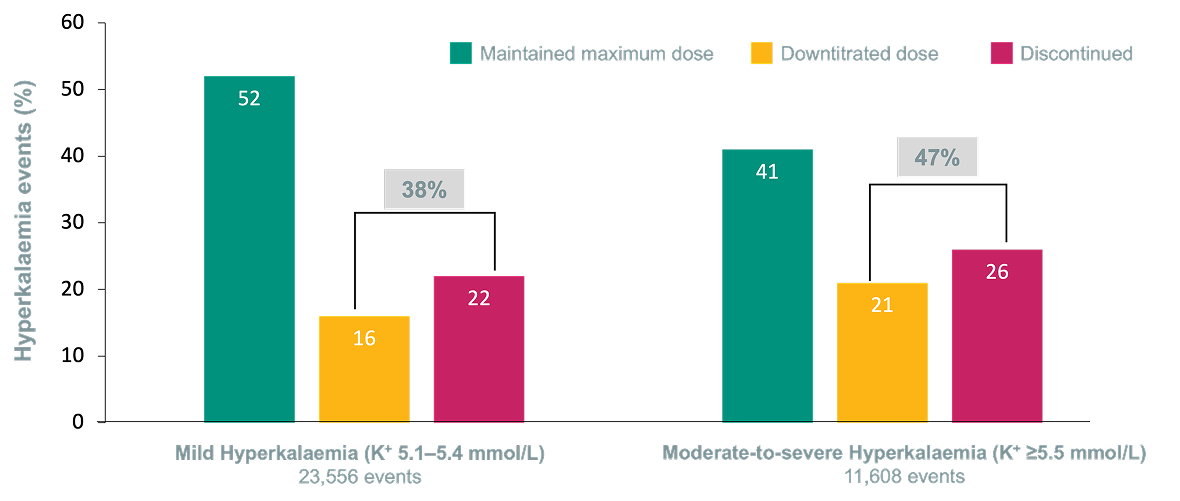
Downtitration or discontinuation of RAASi therapy is common following a hyperkalaemia event2

Following a moderate-to-severe hyperkalaemia event, almost half of patients’ RAASi therapy is either downtitrated or discontinued, as is the case for over a third of patients who have experienced a mild hyperkalaemia event.2


Proportion of patients on maximum doses of RAASi whose dose was maintained, downtitrated or discontinued following a hyperkalaemia event2

Adapted from Epstein et al. (2015)2

Retrospective analysis of electronic health records (N>200,000) of patients with various comorbidities, with at least 2 serum potassium readings, and on at least 1 RAASi treatment from Humedica (US) in 2007–2012 among patients on maximum doses of RAASi.2 For the remaining events, the data period following a hyperkalaemia event was not sufficient to determine subsequent RAASi dose level.2 RAASi includes ACEis, ARBs, direct renin inhibitors, and select MRAs.2

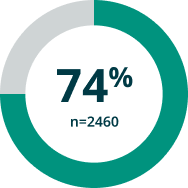
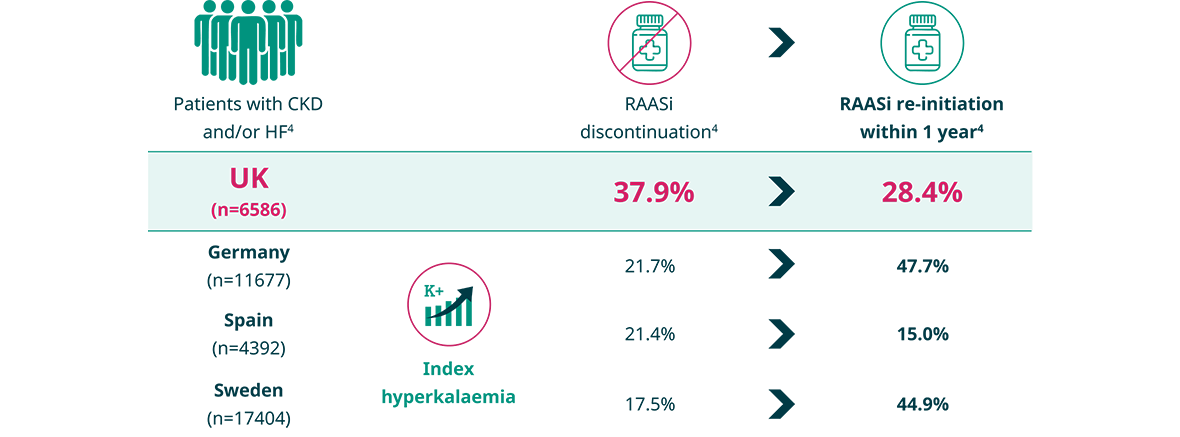
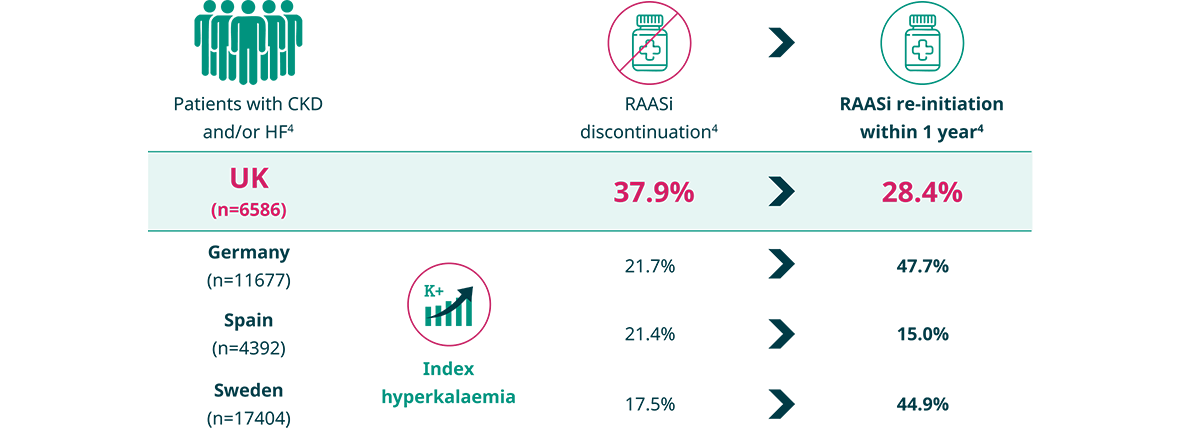
In the UK, around 3 in 4 patients are not re-introduced to their RAASi therapy within 1 year, increasing their mortality risk4. 

The UK reported the highest rates of RAASi therapy discontinuation among the European countries analysed4. 


An observational study of claims, registries and hospital medical records between January 2018 to December 20224

aA ZORA study in 40,059 adult patients with CKD not on dialysis and/or HF with an index hyperkalaemia episode (ICD-10 diagnosis code in all countries or as recorded K+ >5.0 mmol/L in Spain and Sweden) while on RAASi therapy (ACEi, ARB, ARNi, MRA)4

Hyperkalaemia is a barrier to optimal management of HF and CKD with RAASi therapy3,4

The patient groups most at risk of hyperkalaemia are those with CKD, diabetes mellitus and HF.3,4 Hyperkalaemia may also occur after initiation or uptitration of RAASi medications to treat these conditions as RAASi medications are drugs that can cause high potassium levels.4


Hyperkalaemia develops in approximately 10% of out-patients within 1 year after initiation of RAASi drugs, thereby limiting treatment in the patients who receive the greatest benefit from this therapy.5

Hyperkalaemia remains a significant barrier to achieving optimal RAAS inhibitor therapy and may prevent patients from reaching and staying on guideline-recommended therapy3–5

Learn about how LOKELMA could allow continuation of RAASi treatment in your eligible HF and CKD patients with hyperkalaemia

See the data

Discover more

Access All Resources

Explore informative videos and guides to help you understand more about LOKELMA and support your patients

View all resources

View the data

Find out how LOKELMA can allow patients maintain RAASi therapy

Learn more

Contact Us

If you have any questions about LOKELMA or would like to speak to an
AstraZeneca representative, please contact us

Contact options

ACEi=angiotensin-converting enzyme inhibitor; ARB=angiotensin receptor blocker; ARNi=angiotensin receptor-neprilysin inhibitor; CKD=chronic kidney disease;  GFR=glomerular filtration rate; HF=heart failure; MRA=mineralocorticoid receptor antagonist; RAASi=renin-angiotensin-aldosterone system inhibitor; CKD=chronic kidney disease; HK=hyperkalaemia; ESKD=end-stage kidney disease; RWE=real-world evidence.


  1. LOKELMA (sodium zirconium cyclosilicate) Summary of Product Characteristics.
  2. Epstein M, et al. Am J Manag Care. 2015;21(11 Suppl):S212-S220.
  3. Kanda E, et al. BMC Nephrol. 2023;24(1):18. Published 2023 Jan 19. doi:10.1186/s12882-022-03054-5.
  4. Svensson MK, et al. Kidney360. 2024;5(12):1813-1823. (Supplementary Appendix).
  5. UK Kidney Association. Clinical Practice Guideline: Treatment of Acute Hyperkalaemia in Adults. October 2023. UK Kidney Association. Available at: https://www.ukkidney.org/sites/default/files/FINAL%20VERSION%20-%20UKKA%20CLINICAL%20PRACTICE%20GUIDELINE%20-%20MANAGEMENT%20OF%20HYPERKALAEMIA%20IN%20ADULTS%20-%20191223_0.pdf. Accessed November 2025.


GB-69623 | DOP: November 2025

Adverse events should be reported. Reporting forms and information can be found at www.mhra.gov.uk/yellowcard or search for MHRA Yellow Card in the Google Play or Apple App Store. Adverse events should also be reported to AstraZeneca by visiting https://contactazmedical.astrazeneca.com/ or by calling ‌‌‌0‌‌‌8‌‌‌‌‌0‌‌‌‌0‌‌‌ ‌‌7‌‌‌‌‌‌8‌‌‌3‌‌‌ ‌‌0‌‌‌‌‌0‌‌‌‌3‌‌‌‌3‌‌‌.

Connessiallasalute.it

This website was created for UK HCPs and has been designed to provide information to educate, empower and enable them in the great work they are doing for patients across a range of therapy areas. This website is intended for doctors, nurses, and pharmacists in the UK. Other UK residents please visit astrazeneca.co.uk.

Terms of use

Privacy Policy

Cookie Policy

Contact Us

LinkedIn

Twitter

©2026 AstraZeneca. GB-76964 | DOP: May 2026