Welcome to this UK AstraZeneca produced and funded website

This website is intended for UK Healthcare Professionals only.


The website contains both promotional and non-promotional content.


If you are a patient or a carer of a patient prescribed an AstraZeneca product, please visit myazmed.co.uk


For any other UK residents please visit astrazeneca.co.uk

I am not a Healthcare Professional
Prescribing Information LOKELMA® (sodium zirconium cyclosilicate)
Adverse Event Reporting

This website is intended for UK Healthcare Professionals only. Other UK residents please visit astrazeneca.co.uk

LOKELMA® (sodium zirconium cyclosilicate) is indicated for the treatment of hyperkalaemia in adult patients.

AstraZeneca-logo
  • Our Medicines
    • Cardiovascular, Renal & Metabolism
      • ATTR Amyloidosis
        • WAINZUA®▼(eplontersen)
      • Chronic Kidney Disease (CKD)
        • FORXIGA® (dapagliflozin)
      • Heart Failure
        • FORXIGA® (dapagliflozin)
      • Hyperkalaemia
        • LOKELMA® (sodium zirconium cyclosilicate)
      • Type 2 Diabetes (T2D)
        • FORXIGA® (dapagliflozin)
    • Oncology
      • Breast Cancer
        • LYNPARZA® (olaparib)
        • TRUQAP®▼(capivasertib)
      • Bladder Cancer
        • IMFINZI® (durvalumab)
      • Endometrial Cancer
        • IMFINZI® (durvalumab)
        • LYNPARZA® (olaparib)
      • Gastrointestinal Cancer
        • IMFINZI® (durvalumab)
        • IMJUDO®▼(tremelimumab)
      • Lung Cancer
        • IMFINZI® (durvalumab)
        • TAGRISSO® (osimertinib)
      • Ovarian Cancer
        • LYNPARZA® (olaparib)
      • Prostate Cancer
        • LYNPARZA® (olaparib)
        • ZOLADEX® (goserelin)
    • Respiratory
      • Asthma
        • TEZSPIRE®▼ (tezepelumab)
        • SYMBICORT® (budesonide/formoterol)
      • Chronic Obstructive Pulmonary Disease(COPD)
        • TRIXEO AEROSPHERE® (formoterol fumarate dihydrate/glycopyrronium/budesonide)
        • BEVESPI® (glycopyrronium/formoterol fumarate dihydrate)
    • Vaccines
      • Flu
        • FLUENZ® nasal spray suspension (influenza vaccine, live attenuated, nasal)
  • Therapy Areas
    • Cardiovascular, Renal & Metabolism
      • ATTR Amyloidosis
      • Chronic Kidney Disease (CKD)
      • Heart Failure
      • Hyperkalaemia
      • Type 2 Diabetes (T2D)
    • Oncology
      • Breast Cancer
      • Bladder Cancer
      • Endometrial Cancer
      • Gastrointestinal Cancer
      • Lung Cancer
      • Ovarian Cancer
      • Prostate Cancer
    • Respiratory
      • Asthma
      • Chronic Obstructive Pulmonary Disease(COPD)
    • Vaccines
      • Flu
  • About us
    • AZ Commitment
  • Contact us
  • AstraZeneca UK
  • LOKELMA
  • NICE RECOMMENDATION
  • About LOKELMA
  • Hyperkalaemia
    • About hyperkalaemia
    • Hyperkalaemia management and treatment guidelines
    • Hyperkalaemia and chronic kidney disease
    • ACEi, ARBs and hyperkalaemia
  • Unmet needs
  • NICE recommendation
  • Why LOKELMA
    • Mode of action
    • Efficacy
    • Safety profile
  • Dosing and administration
  • Resources
    • Resources
    • Videos and webinars
    • Quality Improvement Project tools
NICE recommendation

lokelma-logo


Updated NICE TAG

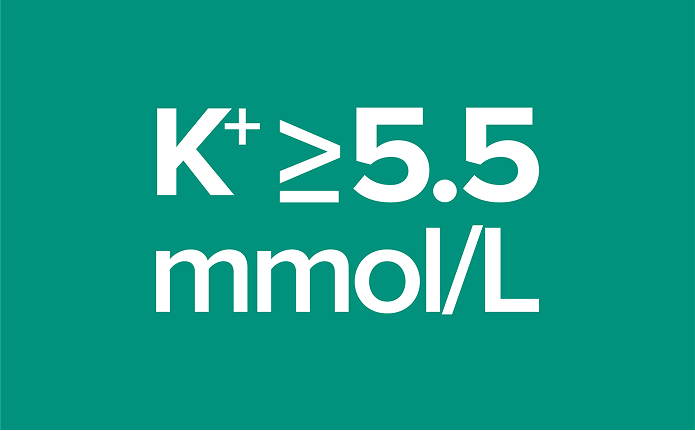
acting on persistent hyperkalaemia at serum K+ ≥5.5mmol/L

  • NICE TA1148
  • SPARK RWE data
  • ZORA RWE data

NICE TA599 has been updated (now TA1148) to expand the recommendation for LOKELMA (sodium zirconium cyclosilicate) to be used as an option to treat persistent hyperkalaemia in eligible chronic kidney disease (CKD) or heart failure (HF) patients with serum K+ ≥5.5mmol/L, while also providing greater flexibility across care settings, allowing treatment initiation in both primary and secondary care.1,2


Please see the full NICE recommendation below.*    

Access prescribing resources

NICE TA1148 update

The new NICE recommendation follows an evidence-based analysis, where LOKELMA has been determined as a cost-effective use of NHS resources.2

NICE has broadened access for LOKELMA
to be used as an option to treat persistent hyperkalaemia
from serum K+≥5.5mmol/L in eligible patients with CKD stages 3b-5 or HF.*,2 


The update provides greater flexibility across
care settings, allowing treatment initiation in
both primary and secondary care.2  

*NICE TA1148 guidance states sodium zirconium cyclosilicate is recommended as an option for treating persistent hyperkalaemia in adults if used: 


  • In emergency care for acute life-threatening hyperkalaemia alongside standard care   
  • Or for persistent hyperkalaemia in people with chronic kidney disease (CKD) stage 3b to 5 or heart failure (HF), if they: 

    - Have confirmed serum potassium level of at least 5.5mmol per litre, and 

    - Because of hyperkalaemia, are not taking an optimised dosage of renin-angiotensin aldosterone system (RAAS) inhibitor and  

    - Are not on dialysis.2 

This lowered threshold for initiating K+ binders brings NICE guidance into closer alignment with ESC and KDIGO – all of which now recommend starting treatment at serum potassium levels of ≥5.0–5.5mmol/L. This supports earlier management of hyperkalaemia and helps maintain optimised RAASi therapy.2-4


This NICE expansion has primarily been driven by real-world evidence: 


  • SPARK highlights the relationship between serum potassium 5.5mmol/L and increased risk of all-cause mortality, hospitalisation and 
major adverse cardiac outcomes (MACE)5,6 
  • ZORA shows how LOKELMA can potentially help support continuity of RAASi therapy in eligible patients with CKD and HF.7

Back to top

SPARK real-world evidence study

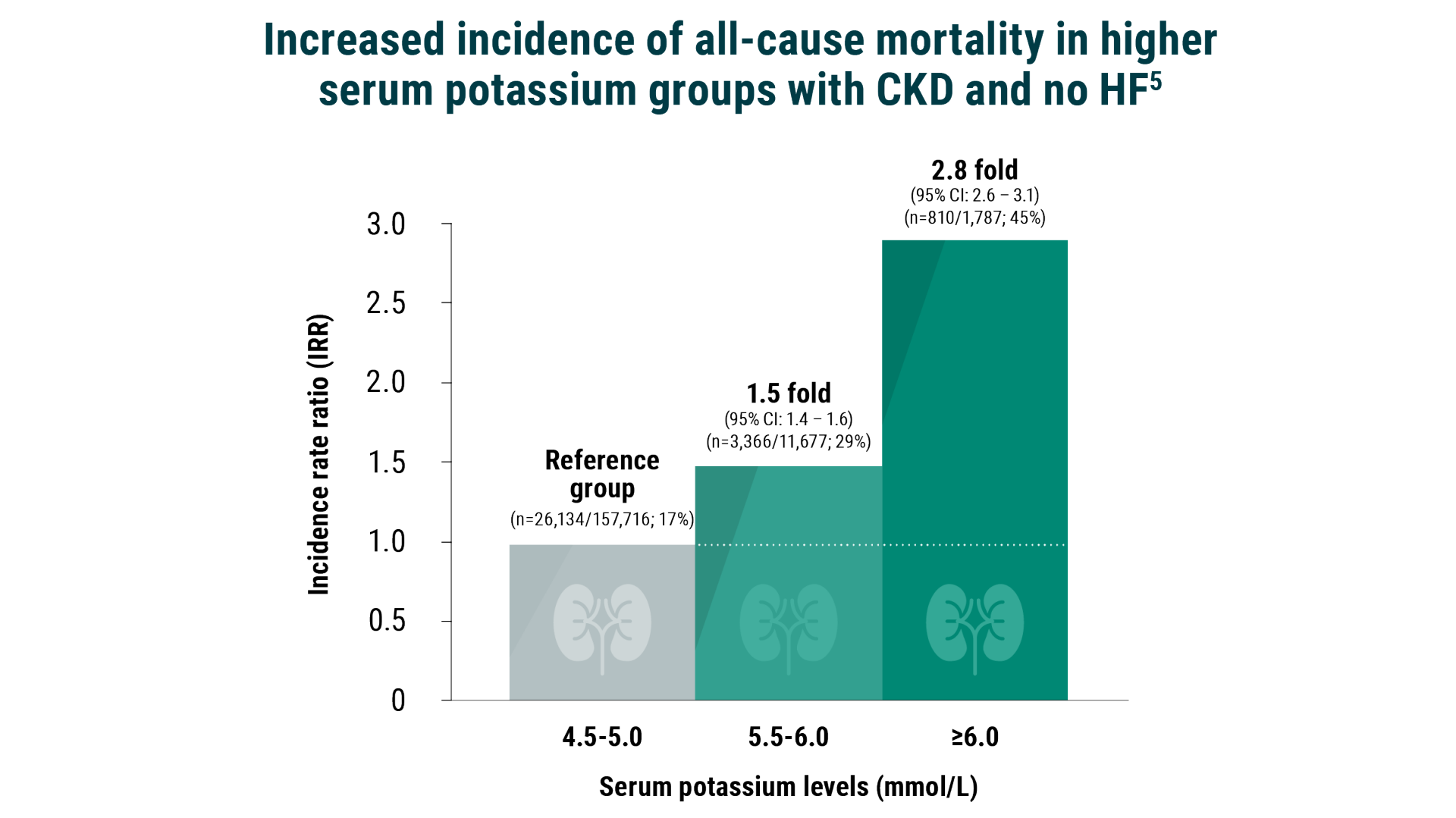
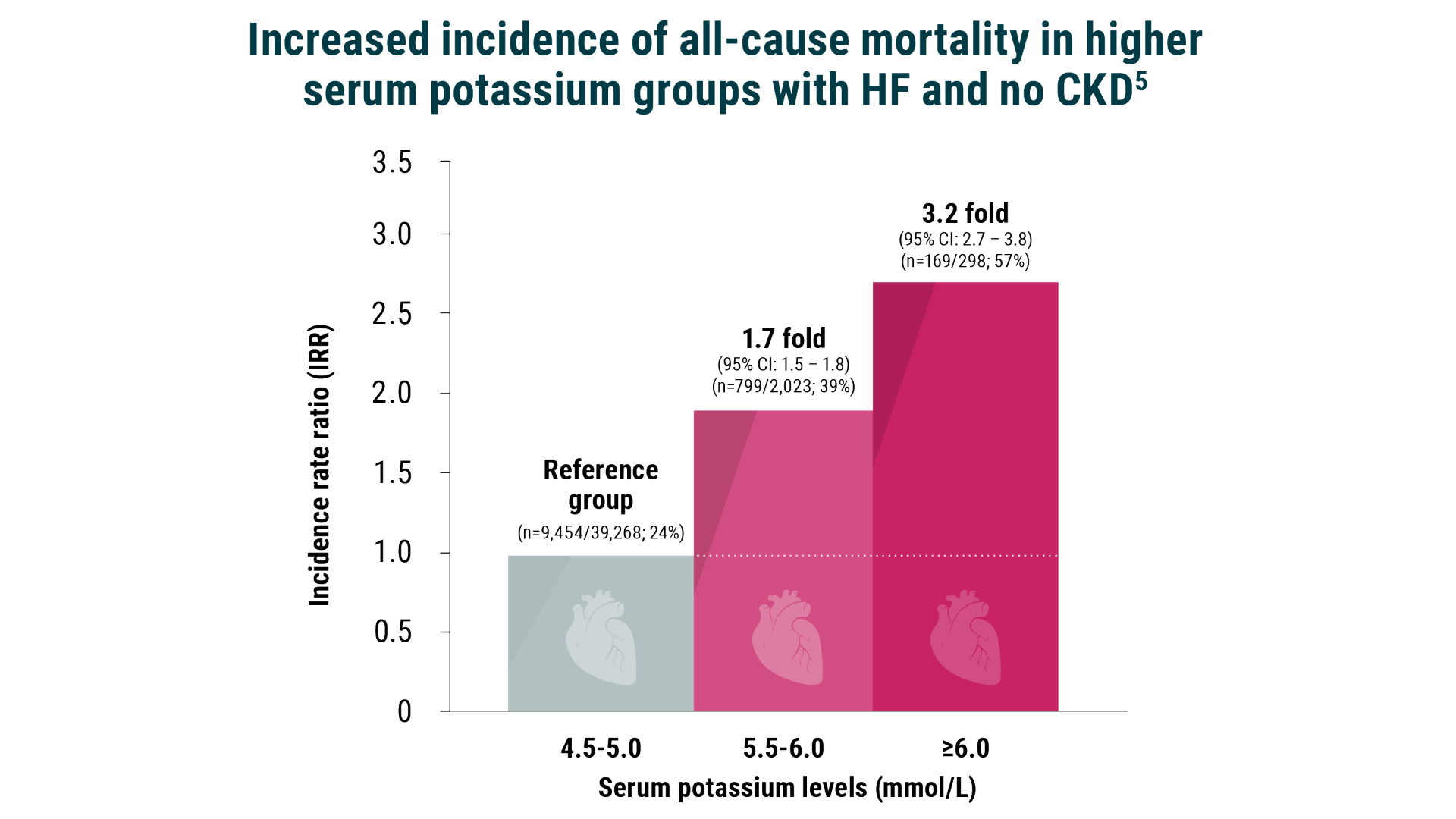
SPARK is a real-world observational study in ~630K eligible CKD or HF patients in the UK, specifically designed to directly evaluate the relationship between serum K+ and adverse outcomes. The study was designed in line with the NICE RWE framework.†,5,6

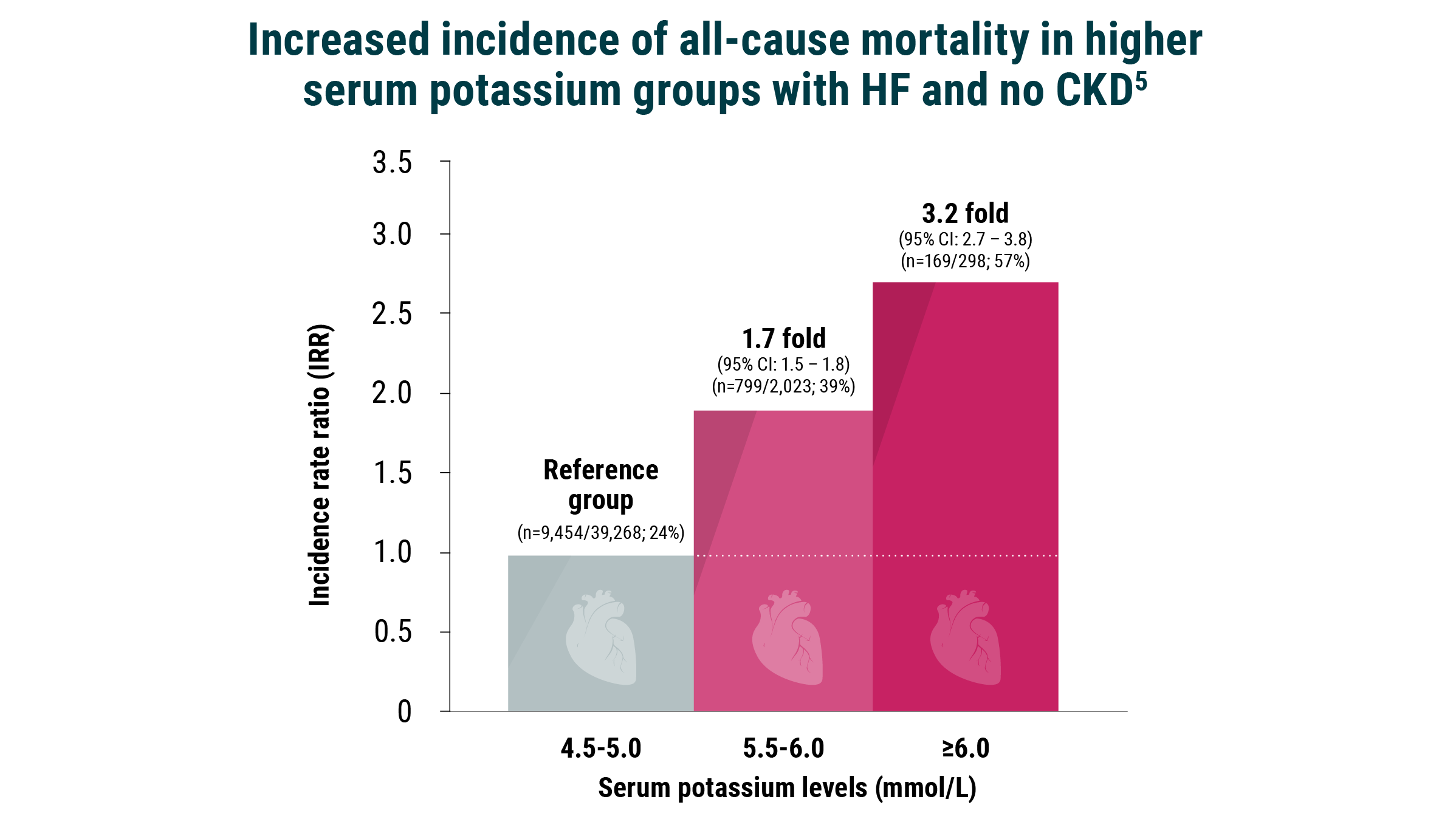
SPARK observed that in patients with CKD or HF, serum K+ ≥5.5mmol/L was associated with ~50% and ~70% higher risk of all-cause mortality respectively, versus K+ 4.5-5.0mmol/L.†,5,6

The IRR estimate was adjusted for baseline characteristics, including age, sex, comorbidities, and other covariates.5


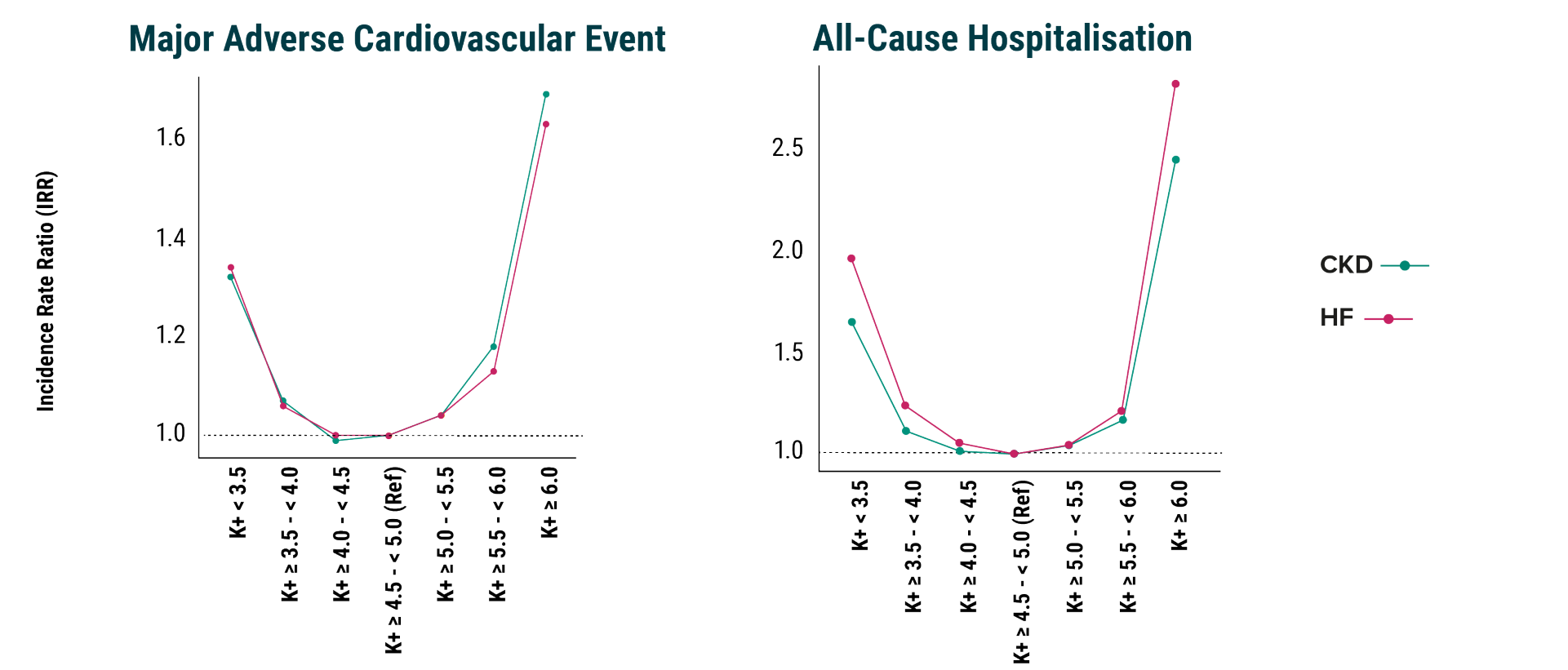
Graph adapted from AstraZeneca SPARK study. Data on file Sept 2025.

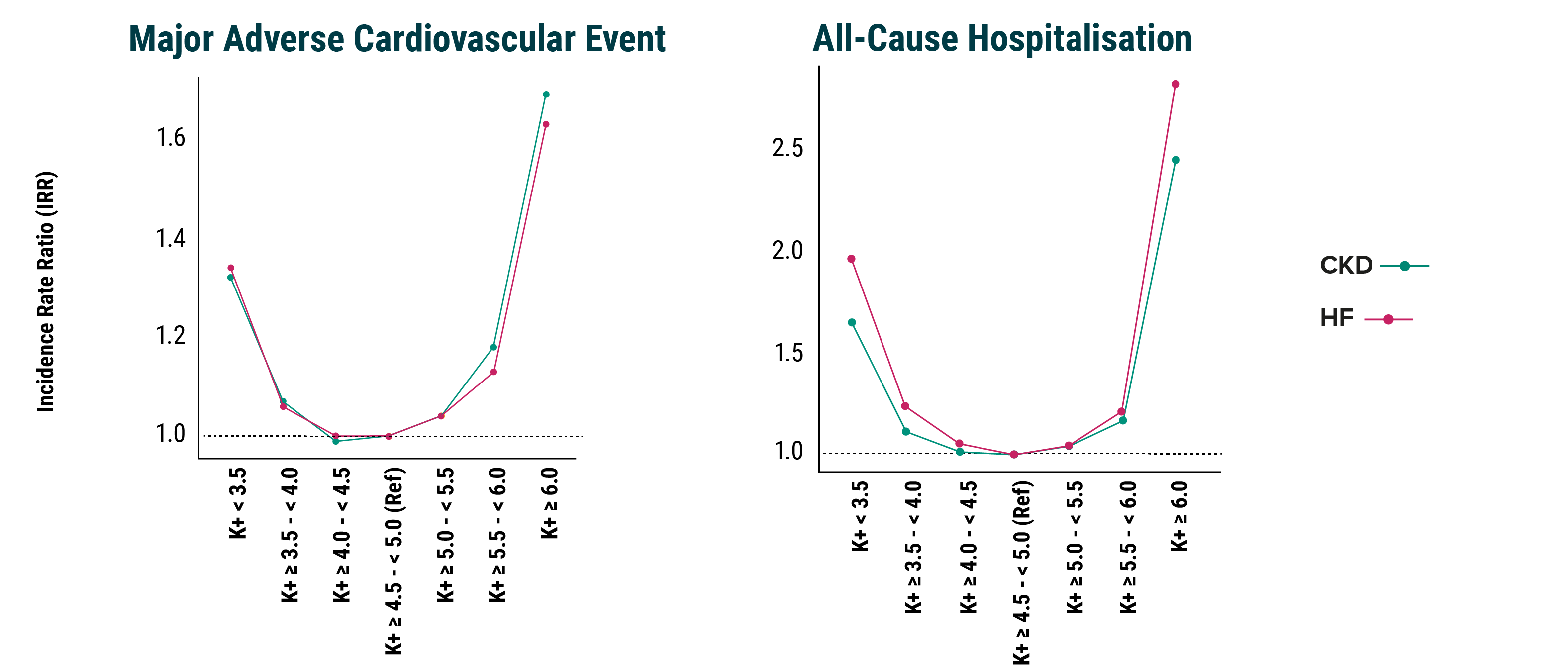
SPARK also highlights how patients with CKD or HF and serum K+ ≥5.5mmol/L also experience meaningfully higher rates of hospitalisation and MACE, compared to K+4.5-5.0mmol/L.5,6

graph graph

Serum potassium category (mmol/L) 

†SPARK was a retrospective observational study using data from the Clinical Practice Research Datalink (CPRD), linked to Hospital Episode Statistics (HES) and Office for National Statistics (ONS) mortality data (2004–2021). Patients with an index serum potassium measurement (2016–2019) and evidence of hyperkalaemia or potassium binder use in CPRD were included.5,6 

Back to top

ZORA real-world evidence study

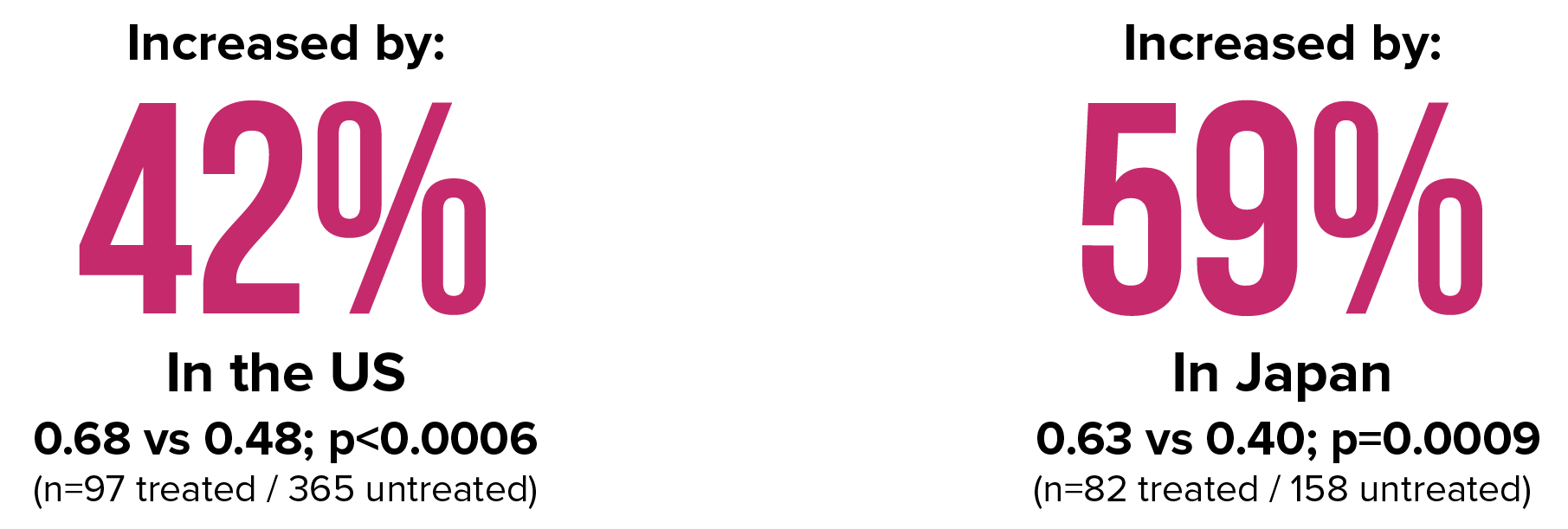
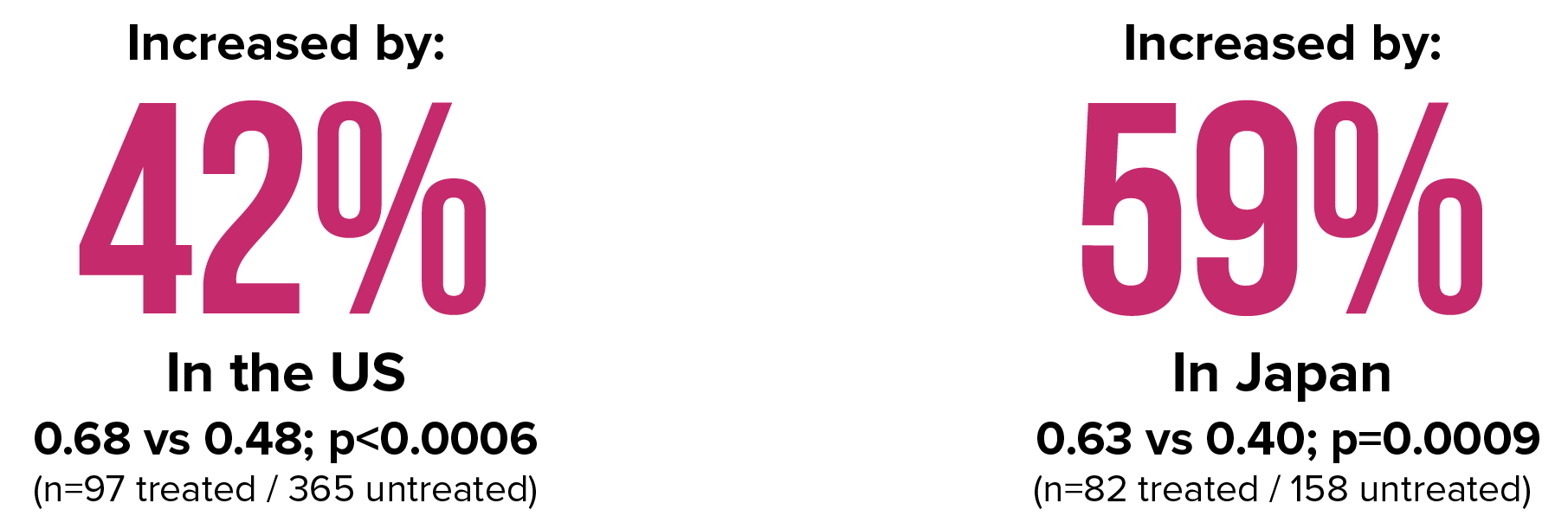
ZORA is a real-world observational cohort study that assesses the odds of continuing RAASi therapy at 6 months in patients with CKD and/or HF experiencing hyperkalaemia, comparing those treated with LOKELMA to those receiving no K+binder.‡,7


Findings from ZORA real-world evidence are consistent with the randomised controlled trials used to establish the LOKELMA Summary of Product Characteristics.1,7

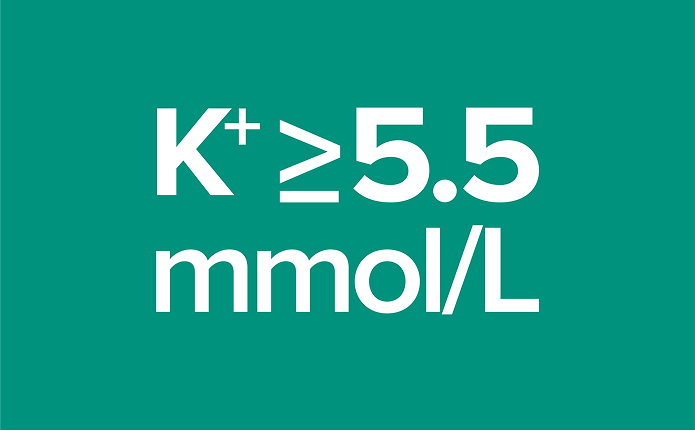
In eligible patients with serum K+ ≥5.5-<6.0mmol/L, a higher proportion maintained RAASi therapy with LOKELMA versus no K+ binder:7

‡The study, funded by AstraZeneca, was an observational, cohort study programme performed using secondary data extracted from health registers and hospital medical records from the US, Spain and Japan. The primary outcome of the ZORA analysis conducted by Rastogi et al. (2024) was the proportion of patients who maintained RAASi therapy at 180 days post-index. The objective of the additional subgroup analysis of ZORA was to determine the proportions of patients discontinuing or down-titrating RAASi therapy stratified by recorded S–K levels (≥5.0–<5.5mmol/L, ≥5.5–<6.0mmol/L, and ≥6.0mmol/L). Based on nominal significance level of p=0.05.7,8

Access prescribing resources

Worsening of pre-existing heart failure during treatment was reported as a very common adverse reaction where most cases were resolved with appropriate clinical management without withdrawing LOKELMA. The commonly reported adverse reactions were hypokalaemia, oedema-related events and constipation.1


Patients with pre-existing heart failure, particularly those in whom an increased sodium intake may lead to fluid overload and decompensation, should monitored for manifestations of worsening heart failure. These may include increased dyspnoea, oedema and rapid weight gain, and should be managed as per standard clinical practice.1


For full details of adverse events reported, interactions or pharmacodynamic effects please consult Summary of Product Characteristics.1

Back to top

CKD, Chronic Kidney Disease; CPRD, Clinical Practice Research Datalink; ESC, European Society of Cardiology; HF, Heart Failure; HES, Hospital Episode Statistics; K+, Potassium; KDIGO, Kidney Disease: Improving Global Outcomes; MACE, Major Adverse Cardiovascular Events; mmol/L, Millimoles per litre; NICE, National Institute for Health and Care Excellence; ONS, Office for National Statistics; RAASi, Renin–Angiotensin–Aldosterone System inhibitors; TAG, Technology Appraisal Guidance.


  1. LOKELMA (sodium zirconium cyclosilicate) Summary of Product Characteristics.  
  2. Sodium zirconium cyclosilicate for treating hyperkalaemia (2026) NICE Technology Appraisal Guidance 1148. 
  3. McDonagh TA, et al. Eur Heart J. 2021;42(48):4901-4901. 
  4. Kidney Disease: Improving Global Outcomes (KDIGO) CKD Work Group. Kidney Int. 2024;105(4S):S117-S314. 
  5. AstraZeneca. Data on File. Veeva Approval ID: REF-286448 September 2025. 
  6. Poster PB 260, Burton et al., UKKW 2025. Veeva Approval ID: REF-331348. February 2025.
  7. AstraZeneca. Data on File. Veeva Approval ID: REF-290354 March 2025.
  8. Rastogi et al. Clin Kidney J. 2024 Mar 25;17(5):sfae083.

GB-76091 | DOP: May 2026

Adverse events should be reported. Reporting forms and information can be found at www.mhra.gov.uk/yellowcard or search for MHRA Yellow Card in the Google Play or Apple App Store. Adverse events should also be reported to AstraZeneca by visiting https://contactazmedical.astrazeneca.com/ or by calling ‌‌‌0‌‌‌8‌‌‌‌‌0‌‌‌‌0‌‌‌ ‌‌7‌‌‌‌‌‌8‌‌‌3‌‌‌ ‌‌0‌‌‌‌‌0‌‌‌‌3‌‌‌‌3‌‌‌.

Connessiallasalute.it

This website was created for UK HCPs and has been designed to provide information to educate, empower and enable them in the great work they are doing for patients across a range of therapy areas. This website is intended for doctors, nurses, and pharmacists in the UK. Other UK residents please visit astrazeneca.co.uk.

Terms of use

Privacy Policy

Cookie Policy

Contact Us

LinkedIn

Twitter

©2026 AstraZeneca. GB-76964 | DOP: May 2026