Prescribing information UK
TAGRISSO (osimertinib)
Prescribing information UK
IRESSA (gefitinib)
Prescribing information UK
IMFINZI (durvalumab)
Adverse Event Reporting

Welcome to this UK AstraZeneca produced and funded website

This website is intended for UK Healthcare Professionals only.


The website contains both promotional and non-promotional content.


If you are a patient or a carer of a patient prescribed an AstraZeneca product, please visit myazmed.co.uk


For any other UK residents please visit astrazeneca.co.uk

I am not a Healthcare Professional

This website is intended for UK Healthcare professionals only. Other UK residents please visit astrazeneca.co.uk

Logo test product
  • Our Medicines
    • Cardiovascular, Renal & Metabolism
      • ATTR Amyloidosis
        • WAINZUA®▼(eplontersen)
      • Chronic Kidney Disease (CKD)
        • FORXIGA® (dapagliflozin)
      • Heart Failure
        • FORXIGA® (dapagliflozin)
      • Hyperkalaemia
        • LOKELMA® (sodium zirconium cyclosilicate)
      • Type 2 Diabetes (T2D)
        • FORXIGA® (dapagliflozin)
    • Oncology
      • Breast Cancer
        • LYNPARZA® (olaparib)
        • TRUQAP®▼(capivasertib)
      • Bladder Cancer
        • IMFINZI® (durvalumab)
      • Endometrial Cancer
        • IMFINZI® (durvalumab)
        • LYNPARZA® (olaparib)
      • Gastrointestinal Cancer
        • IMFINZI® (durvalumab)
        • IMJUDO®▼(tremelimumab)
      • Lung Cancer
        • IMFINZI® (durvalumab)
        • TAGRISSO® (osimertinib)
      • Ovarian Cancer
        • LYNPARZA® (olaparib)
      • Prostate Cancer
        • LYNPARZA® (olaparib)
        • ZOLADEX® (goserelin)
    • Respiratory
      • Asthma
        • TEZSPIRE®▼ (tezepelumab)
        • SYMBICORT® (budesonide/formoterol)
      • Chronic Obstructive Pulmonary Disease(COPD)
        • TRIXEO AEROSPHERE® (formoterol fumarate dihydrate/glycopyrronium/budesonide)
        • BEVESPI® (glycopyrronium/formoterol fumarate dihydrate)
    • Vaccines
      • Flu
        • FLUENZ® nasal spray suspension (influenza vaccine, live attenuated, nasal)
  • Therapy Areas
    • Cardiovascular, Renal & Metabolism
      • ATTR Amyloidosis
      • Chronic Kidney Disease (CKD)
      • Heart Failure
      • Hyperkalaemia
      • Type 2 Diabetes (T2D)
    • Oncology
      • Breast Cancer
      • Bladder Cancer
      • Endometrial Cancer
      • Gastrointestinal Cancer
      • Lung Cancer
      • Ovarian Cancer
      • Prostate Cancer
    • Respiratory
      • Asthma
      • Chronic Obstructive Pulmonary Disease(COPD)
    • Vaccines
      • Flu
  • About us
    • AZ Commitment
  • Contact us
Login
  • AstraZeneca UK
  • TAGRISSO® (osimertinib)
  • Quality of Life
  • Home
  • Clinical Trials
    & Efficacy
    • ADAURA
    • FLAURA
    • FLAURA2
    • LAURA
  • Safety profile
    • ADAURA
    • FLAURA
    • FLAURA2
    • LAURA
  • Dosing
    and administration
    • ADAURA
    • FLAURA
    • FLAURA2
    • LAURA
  • Mechanism of action
  • Quality of Life
  • Resources
  • Lung therapy
    • Lung pathway
    • Diagnostics
    • Prehabilitation
Quality of Life

Logo for Tagrisso (osimertinib) which is coloured lime teal and purple and shaped like lungs

Quality of Life


The Value

FLAURA

FLAURA2

ADAURA

LAURA

The value of Health Related Quality of Life (HRQoL) data

HRQoL data complements clinical outcomes by providing a more holistic picture of what your patients are likely to experience in their daily lives. This information can provide important clinical information that can support clinicians in making treatment decisions. HRQoL can include the impact on their physical and mental wellbeing, daily activities, and relationships. When patients are informed on both the clinical benefits and the day-to-day realities of treatment, it helps patients make informed choices and they are more likely to adhere to treatment plans.1,2


HRQoL is centered on two essential principles: subjectivity and multidimensionality; it is the patient’s perception of the impact of their disease and its treatment(s) on their daily life, looking at physical, functional, emotional and social functioning and well-being.1,3


Regulatory agencies have recommended inclusion of patient-reported outcomes (PROs) in clinical trials since 20051; and in 2024 the regulatory body in the US included HRQoL in the core set of PROs for oncology clinical trials.4 The patient’s perspective is now recognised as essential for regulatory decisions, including evaluating treatment effects, benefit–risk assessments, and supporting information in Section 5.1 of the SmPC.5,6

If you want to read more on the use of PROs in anticancer medicinal products in Europe, click HERE.1

There are a number of different QOL measures available which focus on different aspects; not all quality of life (QoL) measures are equal and each tool varies in its focus and sensitivity, capturing different aspects of patient experience depending on their design and intended use.


The pivotal Phase Ill, global FLAURA and FLAURA2 trials demonstrated the efficacy and safety profile of TAGRISSO in patients with metastatic or locally advanced EGFRm NSCLC, while capturing the lived experiences of patients using validated, cancer-specific PROMs.7,8 FLAURA and FLAURA2 collected health-related quality of life (HRQoL) data using validated, widely established measures at multiple time points throughout the treatment period.7,8


Between the two trials, the scales used are EORTC QLQ-LC13, EORTC QLQ-C30, and PRO-CTCAE:9-11

  • European Organisation for Research and Treatment of Cancer Quality of Life Questionnaire – a 30 item questionnaire with functional, symptom, quality of life scales and six single item features.
  • EORTC QLQ 13 symptoms specific to lung cancer or the side effects of treatment for lung cancer.
  • Patient-Reported Outcomes version of the Common Terminology Criteria for Adverse Events – a 124 item questionnaire where nine relevant symptoms were measured.


FLAURA

Want a recap on the FLAURA trial data? Click HERE

PRO methods: patients (N=556) completed the EORTC QLQ-LC13 weekly for 6 weeks, then every 3 weeks, and the QLQ-C30 every 6 weeks for up to 114 weeks or until treatment discontinuation. Questionnaire completion rates were on average >70%.


Some patients experienced improvements from baseline in key symptoms in both treatment arms; however, overall mean changes from baseline did not meet the threshold for clinical relevance and were not significantly different between groups.

Patients may experience improvements from baseline in key symptoms in both treatment arms.7

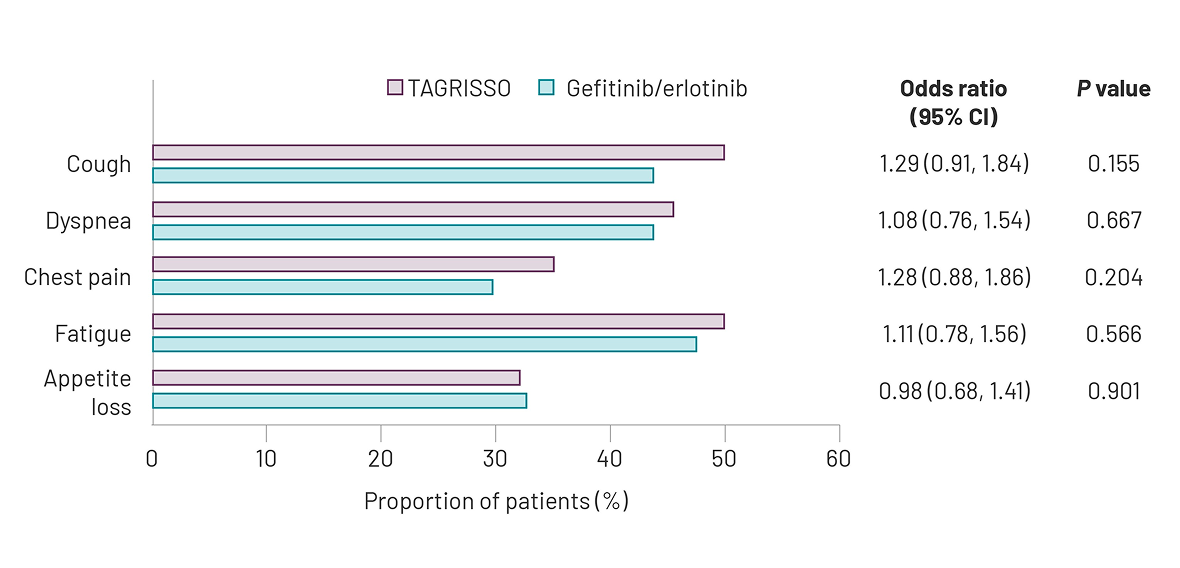
IMPROVEMENTS FROM BASELINE IN KEY SYMPTOMS IN BOTH TREATMENT ARMS DURING RANDOMISED TREATMENT7
Graph showing OS in patients with Stage IB-IIIA disease in ADAURA trial Graph showing OS in patients with Stage IB-IIIA disease in ADAURA trial

Adapted from Leighl NB, et al. 2020.7

The symptom improvement rate was based on a decrease in score from baseline ≥10 at two consecutive assessments ≥21 days apart.

No significant difference in odds of improvement of prespecified key symptoms detected.


Improvements in cough were seen as early as week 1 in both treatment arms and were maintained throughout the study period.7

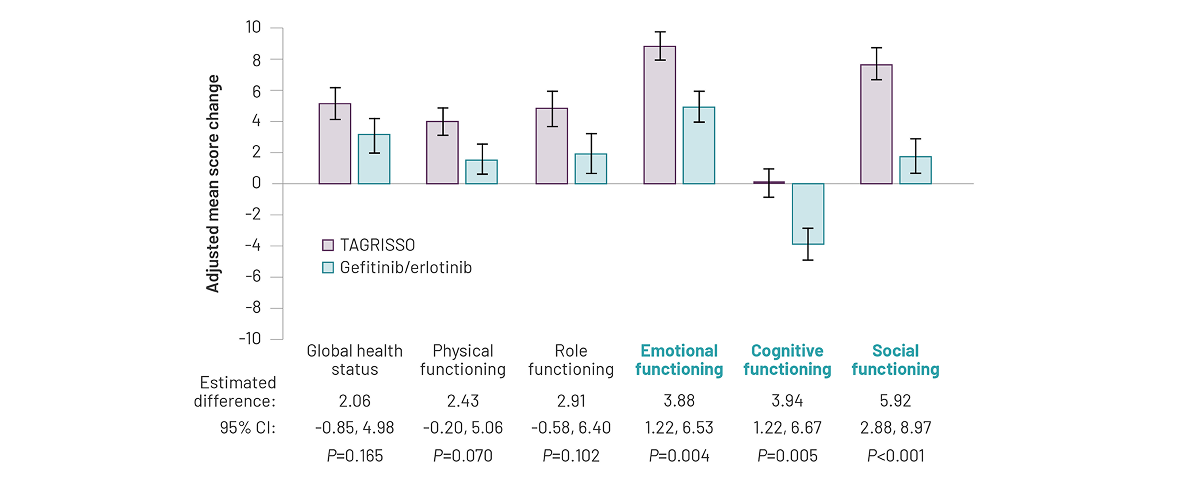
POST-HOC ANALYSIS: CHANGES IN GLOBAL HEALTH STATUS/QoL AND FUNCTIONING SCORES FROM BASELINE UNTIL DISCONTINUATION OF RANDOMISED TREATMENT7
Graph showing OS in patients with Stage II-IIIA disease in ADAURA trial Graph showing OS in patients with Stage II-IIIA disease in ADAURA trial

Adapted from Leighl NB, et al. 2020.7

Statistically significant improvement in emotional and social functioning with TAGRISSO vs gefitinib/erlotinib (8.79 vs. 4.91; P=0.004), (7.66 vs. 1.74; P<0.001), respectively.7


Stable cognitive functioning with TAGRISSO but deterioration with gefitinib / erlotinib (0.03 vs. 3.91; P=0.005).7


While the mean changes did not reach the 10-point improvement threshold for clinical relevance, patients reported HRQoL improvements, with emotional and social functioning favouring TAGRISSO treatment.7

FLAURA2

Want a recap on the FLAURA trial data? Click HERE

Understand how you may maintain or improve your patients’ HRQoL throughout treatment.

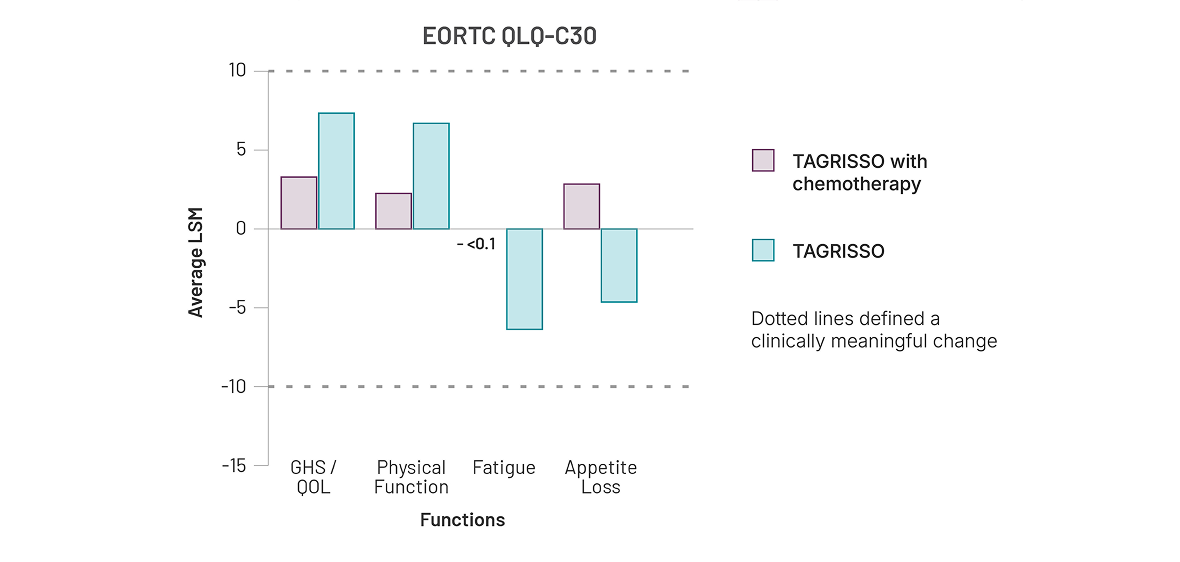
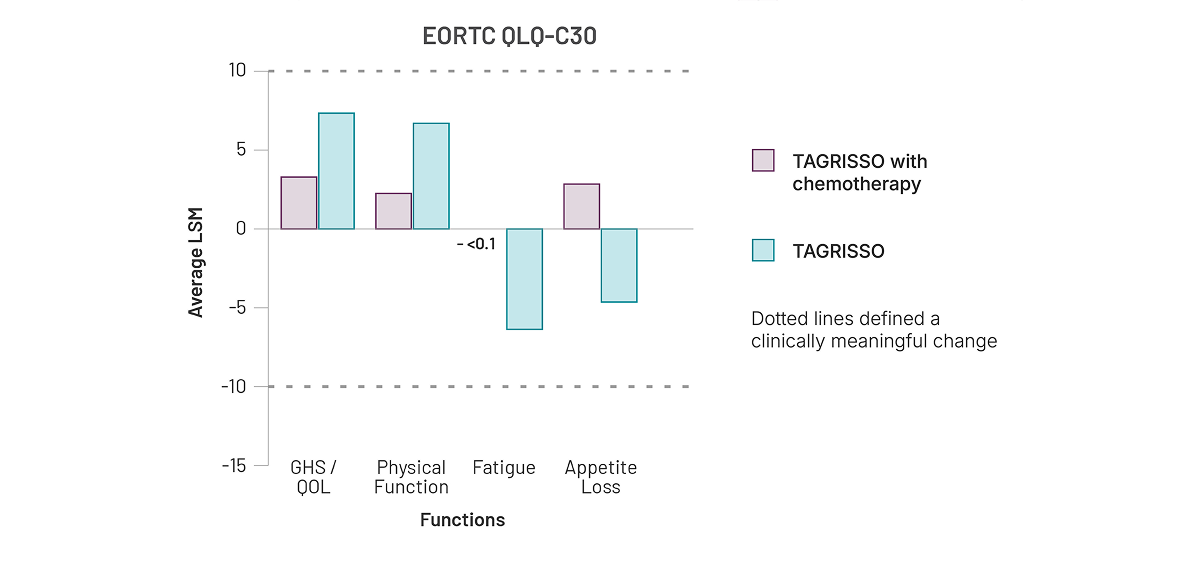
EORTC QLQ-C30 – General Health Score (GHS) data8
Graph showing OS in patients with Stage IB-IIIA disease in ADAURA trial Graph showing OS in patients with Stage IB-IIIA disease in ADAURA trial

Adapted from Lee CK, et al. 2024.8

LSM (least squared means, shown on the y-axis) change in GHS/QoL scores from baseline over all visits was 3.32 (95% CI 1.67, 4.98) with TAGRISSO with chemotherapy and 7.38 (95% CI 5.70, 9.07) with TAGRISSO monotherapy.8


There was a non-clinically meaningful worsening in appetite loss with TAGRISSO and chemotherapy.8


Overall compliance rates for completion of QLQ-C30 and QLQ-LC13 were high in both treatment arms at BL (>91%) and remained high (>80%) to week 82; overall compliance rates for PRO-CTCAE visits were relatively high in both treatment arms at BL (>85%) and remained relatively high (≥75%) to week 82.

Reassure patients that addition of chemotherapy to TAGRISSO may not diminish HRQoL.

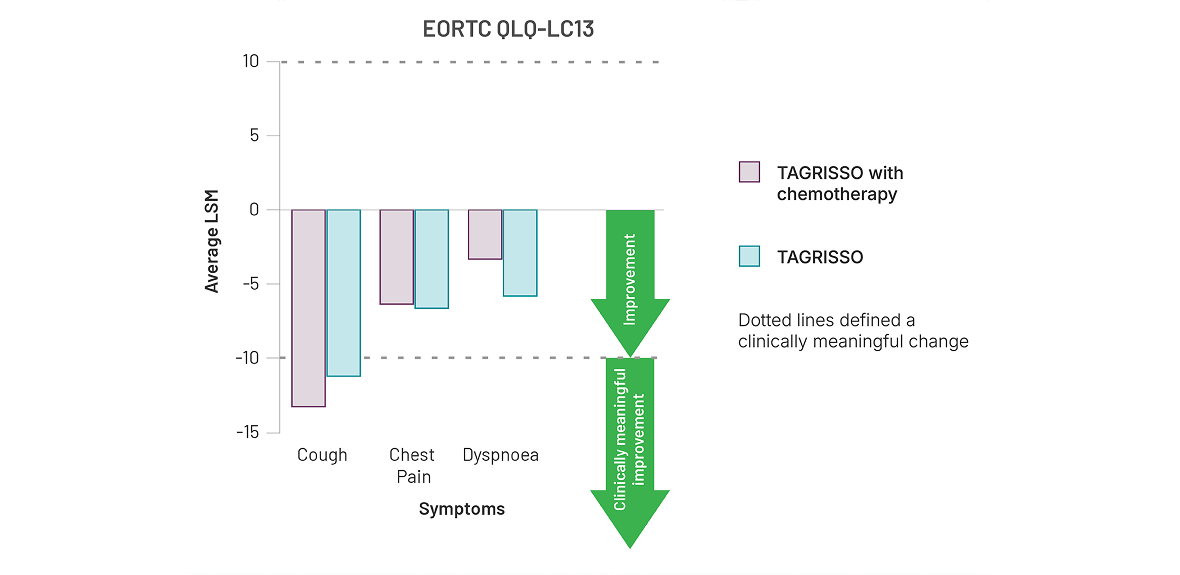
EORTC QLQ-C30 – Symptoms data8
Graph showing OS in patients with Stage II-IIIA disease in ADAURA trial Graph showing OS in patients with Stage II-IIIA disease in ADAURA trial

Adapted from Lee CK, et al. 2024.8

LSM change in cough from baseline was -13.23 (95% CI -14.85, -11.62) with TAGRISSO with chemotherapy and -11.19 (95% CI -12.83, -9.55) with TAGRISSO monotherapy.8


Overall compliance rates for completion of QLQ-C30 and QLQ-LC13 were high in both treatment arms at BL (>91%) and remained high (>80%) to week 82; overall compliance rates for PRO-CTCAE visits were relatively high in both treatment arms at BL (>85%) and remained relatively high (≥75%) to week 82.

Reassure patients that addition of chemotherapy to TAGRISSO may not diminish HRQoL.

Help optimise patients’ treatment without worsening treatment-related symptoms.

From Patient Reported Outcomes, TAGRISSO with chemotherapy was as well-tolerated in terms of frequency as TAGRISSO monotherapy for most treatment-related symptoms.8

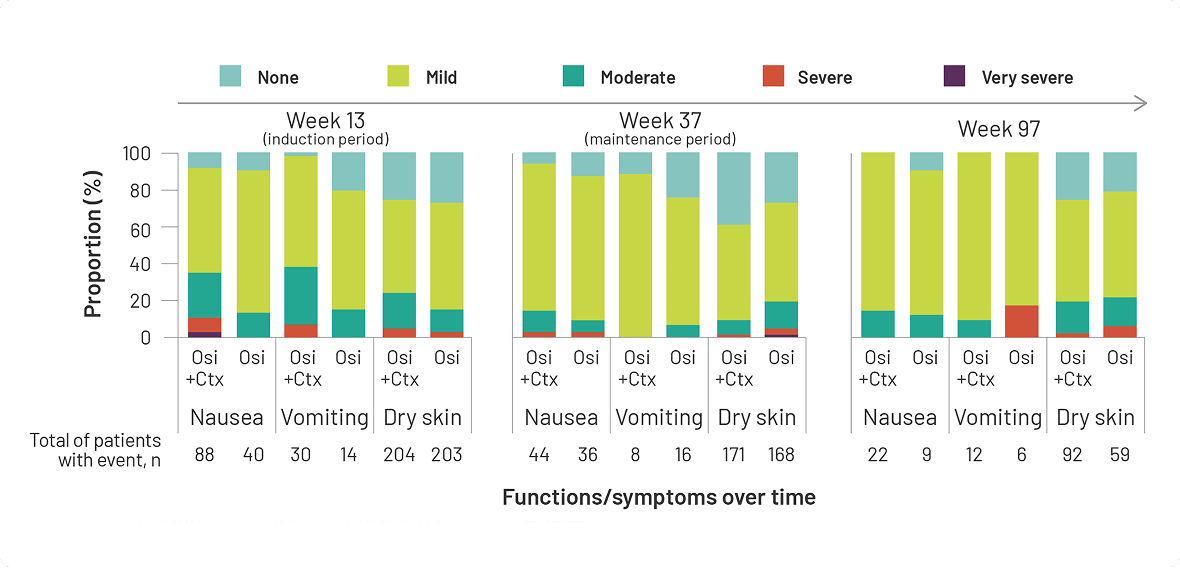
EXPLORATORY ANALYSIS: PROPORTION OF PATIENTS WITH DIFFERENT SEVERITY SCORES FOR 3 OF 9 PRO-CTCAE SYMPTOMS MEASURED8
Graph showing OS in patients with Stage IB-IIIA disease in ADAURA trial Graph showing OS in patients with Stage IB-IIIA disease in ADAURA trial

Adapted from Lee CK, et al. 2024.8

The relative proportions of severe/very severe grades of nausea, vomiting and dry skin reduced from the end of induction, through the maintenance period, for the TAGRISSO and chemotherapy arm.


The PRO-CTCAE exploratory endpoint here looked at nine symptoms relevant to this trial; these were mouth / throat sores, nausea, vomiting, diarrhoea, abdominal pain, loss of bowel movement control, dry skin, hair loss, and numbness / tingling in the hands / feet.


Overall compliance rates for completion of QLQ-C30 and QLQ-LC13 were high in both treatment arms at BL (>91%) and remained high (>80%) to week 82; overall compliance rates for PRO-CTCAE visits were relatively high in both treatment arms at BL (>85%) and remained relatively high (≥75%) to week 82.

Together with significant efficacy benefit, patient-reported outcomes support TAGRISSO with chemotherapy as a beneficial first-line treatment option in eligible patients.

ADAURA

Want a recap on the ADAURA trial data? Click HERE

Consider your patients’ HRQoL with TAGRISSO after surgery.

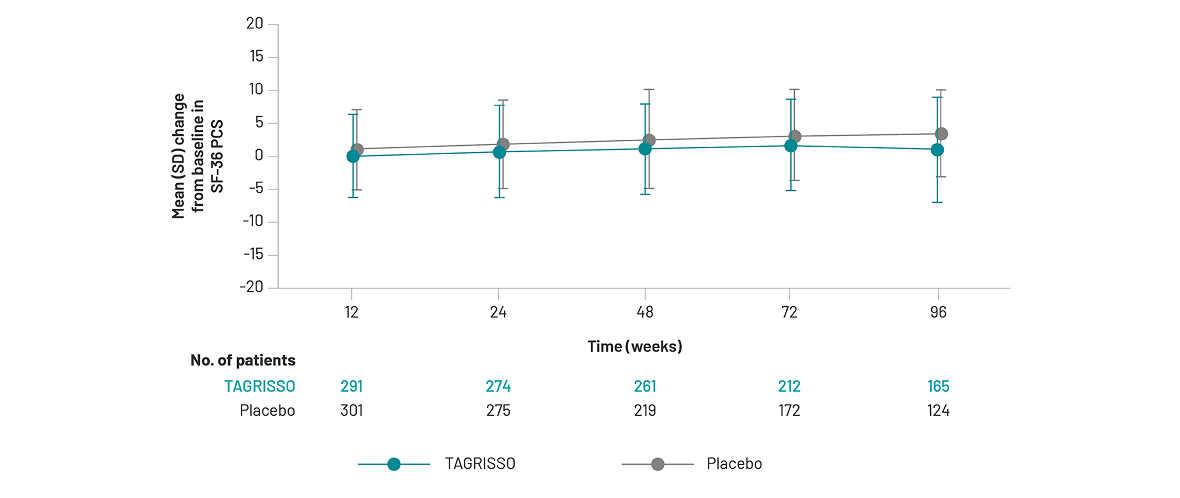
SF-36 PCS baseline to 96 weeks data12
Change in SF-36 PCS T-Scores from baseline to week 96 (overall population)
Graph showing OS in patients with Stage IB-IIIA disease in ADAURA trial Graph showing OS in patients with Stage IB-IIIA disease in ADAURA trial

PCS, physical component summary; SF-36, 36-Item Short Form Health Survey; SD, standard deviation.

Adapted from Majem M, et al. 2022.12

Maintained HRQoL with no clinically meaningful differences* vs placebo in physical health:12

-1.18 (-2.02 to -0.34) PCS TAGRISSO vs. placebo ±2
-0.86 (95% CI -1.76 to 0.04) Physical functioning ±3
-1.80 (95% CI -2.90 to -0.71) Role-physical ±3
-0.57 (95% CI -1.64 to 0.50) Bodily pain ±3
-1.50 (95% CI -2.53 to -0.47) General health ±2
-1.93 (95% CI -3.02 to -0.84) Vitality ±2

TTD of PCS and MCS was similar whether patients received TAGRISSO or placebo; HR 1.17 (95% CI, 0.82, 1.67) and HR 0.98 (95% CI, 0.70, 1.39), respectively.


*Clinically meaningful difference based on definitions from the 3rd edition of the SF-36 scoring manual. Differences in HRQoL improvements as assessed by SF-36 were not clinically meaningful.


Compliance rates for completion of SF-36 ranged from 85% to 99% for the overall population from baseline through to week 156; during this time SF-36 compliance rates were similar in both the osimertinib (87-99%) and placebo (85-99%) arms.

Help maintain your patients’ HRQoL with TAGRISSO after surgery.

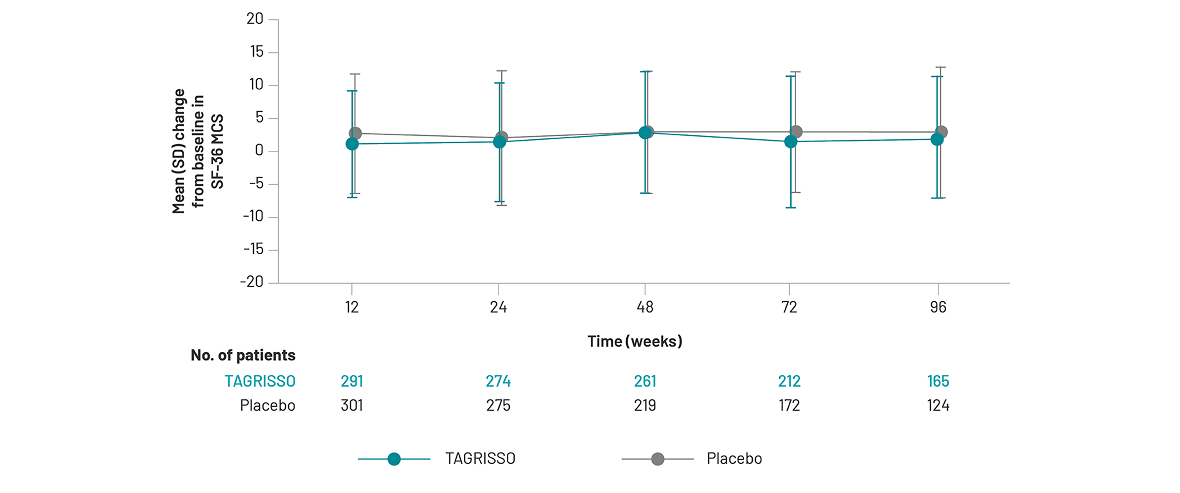
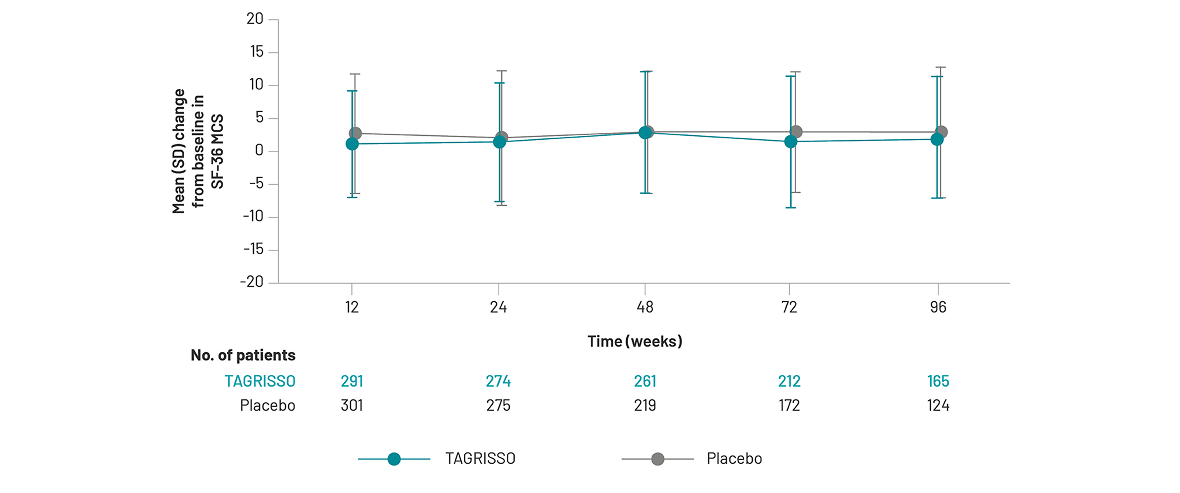
SF-36 PCS baseline to 96 weeks data12
Change in SF-36 PCS T-Scores from baseline to week 96 (overall population)
Graph showing OS in patients with Stage II-IIIA disease in ADAURA trial Graph showing OS in patients with Stage II-IIIA disease in ADAURA trial

MCS, mental component summary; SF-36, 36-Item Short Form Health Survey; SD, standard deviation.

Adapted from Majem M, et al. 2022.12

Maintained HRQoL with no clinically meaningful differences* vs placebo in physical health:12

-1.34 (-2.40 to -0.28) MCS TAGRISSO vs. placebo ±3
-1.46 (95% CI -2.65 to -0.28) Role-emotional ±4
-1.11 (95% CI -2.13 to -0.08) Social functioning ±3
-0.88 (95% CI -1.92 to 0.17) Mental health ±3

TTD of PCS and MCS was similar whether patients received TAGRISSO or placebo; HR 1.17 (95% CI, 0.82, 1.67) and HR 0.98 (95% CI, 0.70, 1.39), respectively.


*Clinically meaningful difference based on definitions from the 3rd edition of the SF-36 scoring manual. Differences in HRQoL improvements as assessed by SF-36 were not clinically meaningful.


Compliance rates for completion of SF-36 ranged from 85% to 99% for the overall population from baseline through to week 156; during this time SF-36 compliance rates were similar in both the osimertinib (87-99%) and placebo (85-99%) arms.

Help maintain your patients’ HRQoL with TAGRISSO after surgery.

LAURA

Want a recap on the LAURA trial data? Click HERE

Health-related quality of life (HRQoL) was maintained during study treatment for patients with unresectable (UR) stage III EGFRm NSCLC after definitive chemoradiotherapy (CRT).13

Health-related quality of life (HRQoL) was maintained during the study treatment for patients with unresectable (UR) stage III EGFRm NSCLC after definitive CRT as part of the LAURA trial:13,14

  • No meaningful differences in the risk of deterioration between treatment arms were observed based on the hazard ratios (HRs) of all European Organisation for Research and Treatment of Cancer (EORTC) Quality of Life Questionnaire Core 30 (QLQ-C30) and EORTC QLQ-Lung Cancer 13 (LC13) functional / symptom scales of interest.
  • In general, non-clinically meaningful changes from baseline (BL) were observed for the functional / symptom scales of interest in both treatment arms.
  • PRO-Common Terminology Criteria for Adverse Events (CTCAE) outcomes indicated that, from the patients’ perspective, osimertinib was similarly well tolerated (in terms of both frequency and severeity) compared with placebo for most treatment-related symptoms, with the expected exceptions of dry skin and loose or watery stools.

Together with a significant progression-free survival (PFS) benefit and safety results from the LAURA trial consistent with the known profiles of both TAGRISSO and chemoradiation,14 these PRO data support the use of osimertinib to treat patients with UR stage III EGFRm NSCLC following definitive CRT.

BL, baseline; CI, confidence interval; CRT, chemoradiotherapy; E/G, erlotinib/gefitinib; EORTC, European Organisation for Research and Treatment of Cancer; EORTC QLQ, European Organisation for Research and Treatment of Cancer Quality of Life Questionnaire; EMA, European Medicines Agency; FDA, United States Food and Drug Administration; GHS, General Health Score; HR, hazard ratio; HRQoL, health-related quality of life; LSM, least squared means; MCS, mental component summary; NSCLC, non-small cell lung cancer; OS, overall survival; Osi, osimertinib; Osi + ctx, osimertinib and platinum based pemetrexed chemotherapy; PCS, physical component summary; PFS, progression-free survival; PROs, patient reported outcomes; PRO-CTCAE, Patient-Reported Outcomes version of the Common Terminology Criteria for Adverse Events; QLQ, quality of life questionnaire; SD, standard deviation; SmPC, Summary of Product Characteristics; UR, unresectable.


  1. EMA/CHMP. Appendix 2 to the Guideline on the evaluation of anticancer medicinal products in man. The use of patient-reported outcome (PRO) measures in oncology studies. Available at: https://www.ema.europa.eu/en/documents/other/appendix-2-guideline-evaluation-anticancer-medicinal-products-man_en.pdf. Last accessed August 2025.
  2. Wisconsin Oncology Network. Quality of life and patient-reported outcomes. University of Wisconsin Carbone Cancer Centre. Available at: https:/ /cancer. wisc.edu/research/wp-content/up loads/2019/05/Quality-of-Life-and-Pt-Reported-Outcomes. pdf. Last accessed August 2025.
  3. FACT-L Functional Assessment of Cancer Therapy – Lung. Available at: https://www.facit.org/measures/fact-l.  Last accessed August 2025.
  4. FDA. Core Patient-Reported Outcomes in Cancer Clinical Trials. Available at: https://www.fda.gov/media/149994/download. Last accessed August 2025.
  5. Secord AA et al., 2015. Patient-reported outcomes as end points and outcome indicators in solid tumours. Nat Rev Clin Oncol. 2015 Jun;12(6):358-370.
  6. European Medicines Agency (EMA), Committee for Medicinal Products for Human Use (CHMP), 2005. Reflection paper on the regulatory guidance for the use of health-related quality of life (HRQL) measures in the evaluation of medicinal products (EMEA/CHMP/EWP/139391/2004). London: EMA.
  7. Leighl NB, et al. Patient-reported outcomes from FLAURA: Osimertinib versus erlotinib or gefitinib in patients with EGFR mutated advanced non-small-cell lung cancer. Eur J Cancer. 2020;125:49–57.
  8. Lee CK, et al. First-line osimertinib ± platinum-pemetrexed in EGFRm advanced NSCLC: FLAURA2 patient-reported outcomes. Presented at the European Lung Cancer Congress 2024 (ELCC) Prague, Czech Republic; 20–23 March. Poster 9P.
  9. EORTC Quality of Life. Scoring Manual. Available at: https://qol.eortc.org/manual/scoring-manual/. Last accessed August 2025.
  10. EORTC Quality of Life. Available at: https://qol.eortc.org/questionnaire/qlq-lc13/ . Last accessed August 2025.
  11. PRO-CTCAE. https://healthcaredelivery.cancer.gov/pro-ctcae/instruments/pro-ctcae/pro-ctcae_english.pdf.  Last accessed August 2025.
  12. Majem M, et al. Health-related quality of life outcomes in patients with resected epidermal growth factor receptor mutated non-small cell lung cancer who received adjuvant osimertinib in the Phase III ADAURA trial. Clin Cancer Res. 2022;28:2286–2296.
  13. Arriola, E. et al. Patient-reported outcomes from the LAURA study: Osimertinib in patients with unresectable stage III EGFR mutated non-small cell lung cancer without progression after definitive chemoradiotherapy.  Presented at the European Lung Cancer Congress 2025 (ELCC) Paris, France; 26–29 March. Poster 201P.
  14. Lu S, et al. Osimertinib after Chemoradiotherapy in Stage III EGFR-Mutated NSCLC.  N Engl J Med 2024;391:585–597.

GB-63995 | DOP: August 2025

Adverse events should be reported. Reporting forms and information can be found at www.mhra.gov.uk/yellowcard or search for MHRA Yellow Card in the Google Play or Apple App Store. Adverse events should also be reported to AstraZeneca by visiting https://contactazmedical.astrazeneca.com/ or by calling ‌‌‌0‌‌‌8‌‌‌‌‌0‌‌‌‌0‌‌‌ ‌‌7‌‌‌‌‌‌8‌‌‌3‌‌‌ ‌‌0‌‌‌‌‌0‌‌‌‌3‌‌‌‌3‌‌‌.

Connessiallasalute.it

This website was created for UK HCPs and has been designed to provide information to educate, empower and enable them in the great work they are doing for patients across a range of therapy areas. This website is intended for doctors, nurses, and pharmacists in the UK. Other UK residents please visit astrazeneca.co.uk.

Terms of use

Privacy Policy

Cookie Policy

Contact Us

LinkedIn

Twitter

©2025 AstraZeneca. GB-73926 | February 2026