Welcome to this UK AstraZeneca produced and funded website

This website is intended for UK Healthcare Professionals only.


The website contains both promotional and non-promotional content.


If you are a patient or a carer of a patient prescribed an AstraZeneca product, please visit myazmed.co.uk


For any other UK residents please visit astrazeneca.co.uk

I am not a Healthcare Professional
IMFINZI (durvalumab) UK Prescribing Information
Adverse Event Reporting

This website is intended for UK Healthcare professionals only. Other UK residents please visit astrazeneca.co.uk

Logo test product
  • Our Medicines
    • Cardiovascular, Renal & Metabolism
      • ATTR Amyloidosis
        • WAINZUA®▼(eplontersen)
      • Chronic Kidney Disease (CKD)
        • FORXIGA® (dapagliflozin)
      • Heart Failure
        • FORXIGA® (dapagliflozin)
      • Hyperkalaemia
        • LOKELMA® (sodium zirconium cyclosilicate)
      • Type 2 Diabetes (T2D)
        • FORXIGA® (dapagliflozin)
    • Oncology
      • Breast Cancer
        • LYNPARZA® (olaparib)
        • TRUQAP®▼(capivasertib)
      • Bladder Cancer
        • IMFINZI® (durvalumab)
      • Endometrial Cancer
        • IMFINZI® (durvalumab)
        • LYNPARZA® (olaparib)
      • Gastrointestinal Cancer
        • IMFINZI® (durvalumab)
        • IMJUDO®▼(tremelimumab)
      • Lung Cancer
        • IMFINZI® (durvalumab)
        • TAGRISSO® (osimertinib)
      • Ovarian Cancer
        • LYNPARZA® (olaparib)
      • Prostate Cancer
        • LYNPARZA® (olaparib)
        • ZOLADEX® (goserelin)
    • Respiratory
      • Asthma
        • TEZSPIRE®▼ (tezepelumab)
        • SYMBICORT® (budesonide/formoterol)
      • Chronic Obstructive Pulmonary Disease(COPD)
        • TRIXEO AEROSPHERE® (formoterol fumarate dihydrate/glycopyrronium/budesonide)
        • BEVESPI® (glycopyrronium/formoterol fumarate dihydrate)
    • Vaccines
      • Flu
        • FLUENZ® nasal spray suspension (influenza vaccine, live attenuated, nasal)
  • Therapy Areas
    • Cardiovascular, Renal & Metabolism
      • ATTR Amyloidosis
      • Chronic Kidney Disease (CKD)
      • Heart Failure
      • Hyperkalaemia
      • Type 2 Diabetes (T2D)
    • Oncology
      • Breast Cancer
      • Bladder Cancer
      • Endometrial Cancer
      • Gastrointestinal Cancer
      • Lung Cancer
      • Ovarian Cancer
      • Prostate Cancer
    • Respiratory
      • Asthma
      • Chronic Obstructive Pulmonary Disease(COPD)
    • Vaccines
      • Flu
  • About us
    • AZ Commitment
  • Contact us
Login
  • AstraZeneca UK
  • Lung Cancer
  • AEGEAN Efficacy
  • Home
  • Efficacy and clinical trials
    • PACIFIC
    • AEGEAN
    • ADRIATIC
    • CASPIAN
  • Safety profile
    • PACIFIC
    • AEGEAN
    • ADRIATIC
    • CASPIAN
  • Dosing and administration
    • PACIFIC
    • AEGEAN
    • ADRIATIC
    • CASPIAN
  • Mechanism of action
    • PACIFIC
    • AEGEAN
    • ADRIATIC
    • CASPIAN
  • Resources
  • Lung therapy
    • Lung pathway
    • Diagnostics
    • Prehabilitation
AEGEAN Efficacy

Logo for IMFINZI (durvalumab) which is coloured red and blue with brand and generic name

AEGEAN Efficacy

Indication


Study design


EFS benefit


Pathological response


Treatment summary


Surgery summary

Resectable non-small cell lung cancer (NSCLC)

IMFINZI in combination with platinum-based chemotherapy as neoadjuvant treatment, followed by IMFINZI as monotherapy after surgery, is indicated for the treatment of adults with resectable (tumours ≥4 cm and/or node positive) NSCLC and no known EGFR mutations or ALK rearrangements.2


AEGEAN was a large (n=802), randomised, double-blind, multi-centre, placebo-controlled, global, Phase III study in patients with resectable NSCLC (Stage IIA–IIIB [N2]) with no known EGFR mutations or ALK rearrangements. Patients were randomly assigned in a 1:1 ratio to receive neoadjuvant platinum-based chemotherapy plus either fixed-dose durvalumab (1500 mg) Q3W or placebo Q3W, followed by surgery. After surgery, patients continued to receive durvalumab or placebo intravenously Q4W for up to 12 cycles. The co-primary endpoints of the study were pCR and EFS (BICR).2,3


Operating through its mechanism of action as an immune checkpoint inhibitor, selectively blocks the interaction of PD-L1 with PD-1 and CD-80 to enhance antitumour immune responses and increase T-cell activation.2,3


The AEGEAN study significantly improved co-primary endpoints EFS and pCR for patients with Stage IIA–IIIB (N2) resectable NSCLC vs placebo + CT.3,4


Perioperative immune checkpoint inhibitor-based treatment may help prevent recurrence and improve outcomes for patients with resectable NSCLC3

The CheckMate 816 trial demonstrated that neoadjuvant nivolumab plus chemotherapy significantly improved EFS versus chemotherapy alone in patients with resectable stage IB–IIIA NSCLC (HR=0.63; P=0.005). Despite this advance, ~51% of patients had an EFS event (progression, recurrence, or death) by 4 years.5

Expert consensus recommendations

The International Association for the Study of Lung Cancer commissioned a diverse international expert panel (20 healthcare professionals) to evaluate the current overall landscape and therapeutic recommendations for patients with resectable NSCLC.6

Pie chart showing 94% of IASLC panel support neoadjuvant chemoimmunotherapy and adjuvant immunotherapy for NSCLC
  • Neoadjuvant chemoimmunotherapy is strongly preferred to upfront surgery for medically operable patients with resectable clinical stage IllA or IIIB NSCLC at first presentation, irrespective of PD-L1 expression level6

  • Following surgery in patients who receive neoadjuvant chemoimmunotherapy, adjuvant immunotherapy can be considered6

Perioperative IO + CT is a regimen that helps your practice align with the International Association for the Study of Lung Cancer recommendations, providing IO both before and after surgery.3,6

CT – chemotherapy; IO – immuno-oncology; NSCLC – non-small cell lung cancer; PD-L1 – programmed death ligand 1.

The AEGEAN study design3

The AEGEAN study, one of the largest perioperative IO + CT trials, evaluated the efficacy of perioperative IMFINZI-based treatment in Stage IIA–IIIB (N2) resectable NSCLC (N=802).3

AEGEAN Study design for resectable NSCLC randomising patients to perioperative durvalumab arm or placebo arm

Adapted from Heymach JV et al. N Engl J Med 2023.3

ALK – anaplastic lymphoma kinase; CT – chemotherapy; DFS – disease-free survival; EFS – event-free survival; EGFR – epidermal growth factor receptor; IV – intravenous; MPR – major pathological response; NSCLC – non-small cell lung cancer; OS – overall survival; pCR – pathological complete response; PD-L1 – programmed death ligand 1; Q3W – every 3 weeks; Q4W – every 4 weeks.

Patients were randomly assigned in a 1:1 ratio to receive neoadjuvant platinum-based chemotherapy plus either fixed-dose IMFINZI (1500 mg) Q3W or placebo Q3W, followed by surgery. After surgery, patients continued to receive IMFINZI or placebo intravenously Q4W for up to 12 cycles. Patients were enrolled in AEGEAN regardless of PD-L1 expression.3

The AEGEAN study included a broad range of patients, including those with more advanced TNM staging*3

Populations at high risk of recurrence were well-represented in AEGEAN, including Stage IIIA/B patients (>70%) and N2 patients (~50%).3

Disease stages in the AEGEAN Regimen arm (mITT population)3

Characteristic†IMFINZI group (N=366)Placebo group (N=374)
Disease stage – no. (%)‡  
II104 (28.4)
110 (29.4)
IIIA173 (47.3)
165 (44.1)
IIIB88 (24.0)98 (26.2)
TNM stage, regional lymph nodes — no. (%)  
N0110 (30.1)102 (27.3)
N175 (20.5)87 (23.3)
N2181 (49.5)185 (49.5)
Single-station141 (38.5)132 (35.3)
Multistation34 (9.3)40 (10.7)
Histologic classification — no. (%)  
Squamous169 (46.2)191 (51.1)
Non-squamous196 (53.6)179 (47.9)
Planned neoadjuvant platinum agent — no. (%)  
Cisplatin100 (27.3)96 (25.7)
Carboplatin266 (72.7)278 (74.3)

Adapted from Heymach JV et al. NEJM 2023.3

*TNM system is used to describe the amount and spread of cancer in a patient’s body; T describes the size of the tumour and any spread of cancer into nearby tissue; N describes spread of cancer to nearby lymph nodes; and M describes metastasis (spread of cancer to other body parts).7


† Characteristics for which there were missing or other responses were histologic classification (0.3% of the patients in the IMFINZI group and 1.1% of those in the placebo group had other histologic classification), disease stage (0.3% in the IMFINZI group had stage IV disease and 0.3% in the placebo group had stage III [not otherwise specified] disease, as reported on the electronic case-report form), and N2 lymph node station stage (1.6% in the IMFINZI group and 3.5% in the placebo group had N2 disease with missing data on single-station vs. multistation classification).3

‡ Patients with stage IIA disease to stage IIIB (N2 node stage) disease according to the eighth edition of the AJCC Cancer Staging Manual were enrolled.3


AJCC – American Joint Committee on Cancer; mITT – modified intent-to-treat; TNM – tumour, node, metastasis.

Event-free survival

Defined as the time from randomisation to the earliest occurrence of progressive disease that precluded surgery or prevented completion of surgery, local or distant disease recurrence (assessed in a blinded fashion by independent central review), or death from any cause

Pathological complete response

Defined as the absence of any viable tumour cells after complete evaluation of the resected lung-cancer specimen and all sampled regional lymph nodes

Major pathological response

Defined as the presence of 10% or less of viable tumour cells in the primary tumour

Disease-free survival

Defined as the time from the date of surgery until the first date of disease recurrence (local or distant), or date of death due to any cause, whichever occurs first

The AEGEAN study evaluated the efficacy of perioperative IMFINZI-based treatment in Stage IIA–IIIB (N2) resectable NSCLC (N=802)3

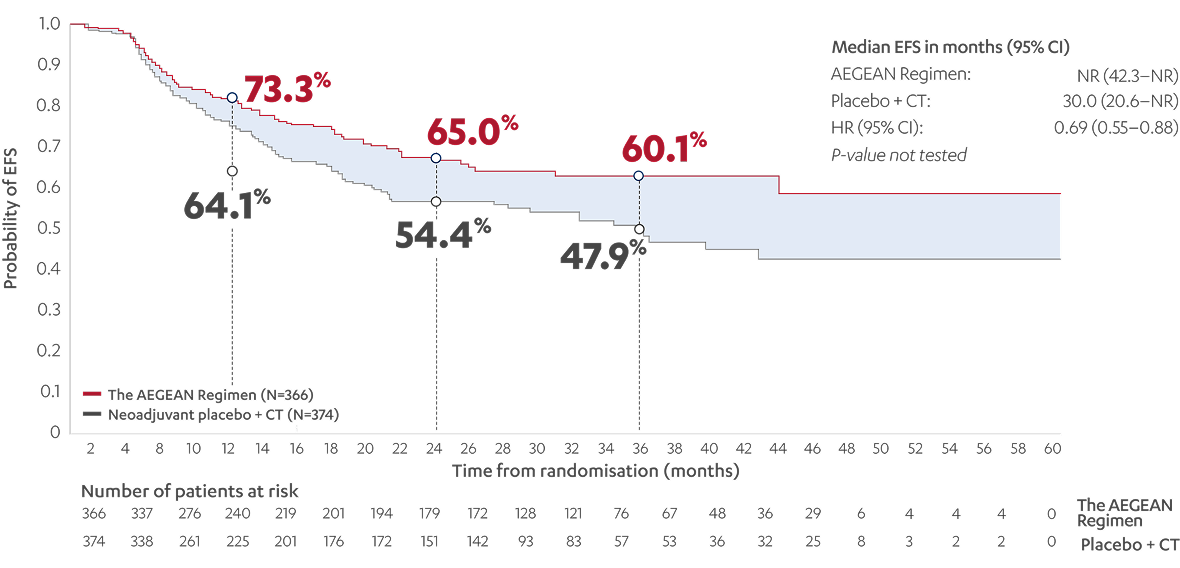
AEGEAN Regimen provided meaningful and sustained benefit in EFS vs placebo3

AEGEAN Regimen significantly improved EFS for patients with Stage IIA–IIIB (N2) resectable NSCLC vs Placebo + CT alone.3,4

  1. Interim analysis 13
  2. Interim analysis 2*9
Graph showing AEGEAN  significantly improved EFS over placebo plus chemotherapy in stage IIa–IIIb resectable NSCLC

Adapted from Heymach JV et al. N Engl J Med 2023.3


The mITT population included all patients who had undergone randomisation, excluding patients with documented EGFR or ALK alterations, who were enrolled before a protocol amendment.3


CI – confidence interval; CT ­– chemotherapy; EFS ­– event-free survival; HR – hazard ratio; NR – not reached.

Graph showing 60.1% EFS at 36 months with AEGEAN regimen versus 47.9% with placebo plus chemotherapy in resectable NSCLC

Adapted from Heymach JV et al. WCLC 2024.9


The mITT population included all patients who had undergone randomisation, excluding patients with documented EGFR or ALK alterations, who were enrolled before a protocol amendment.3 The EFS subgroup analysis was not powered to show differences between or within individual subgroups and was not formally tested for statistical significance.


*IA2 included data cutoff on 10 May 2024, with additional study follow up since IA1 data cutoff on 10 November, 2022. All patients had discontinued or completed study treatment at EFS IA2.9


CI – confidence interval; CT ­– chemotherapy; EFS ­– event-free survival; HR – hazard ratio; NR – not reached.

The AEGEAN Regimen provided meaningful and sustained benefit in EFS vs placebo, demonstrating a 31% reduction in the risk of recurrence, progression or death (ARR: 12.2% at 36 months)9

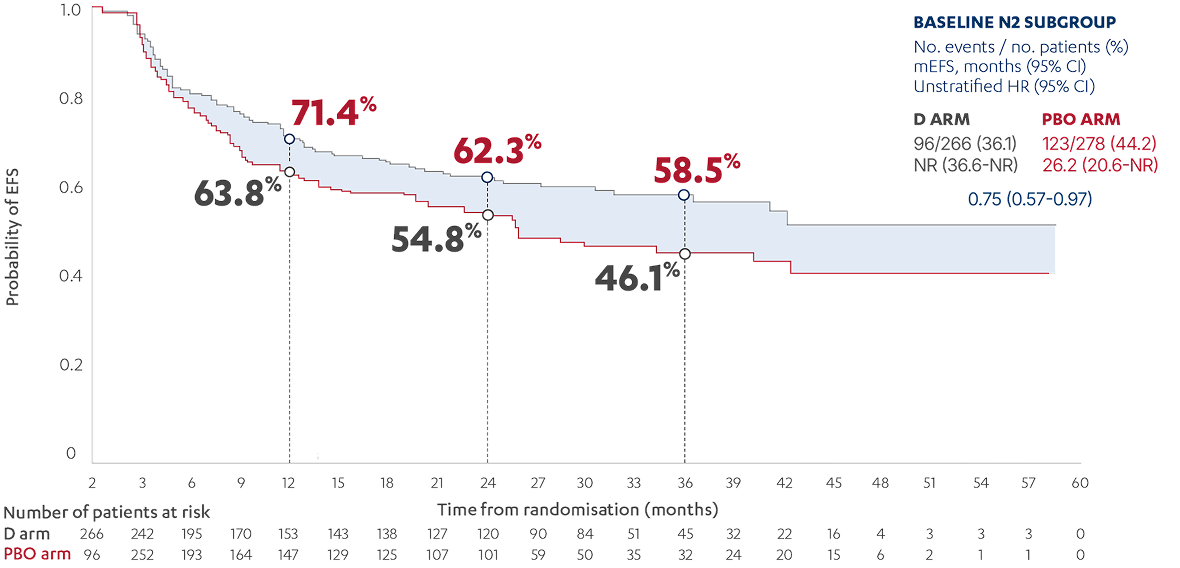
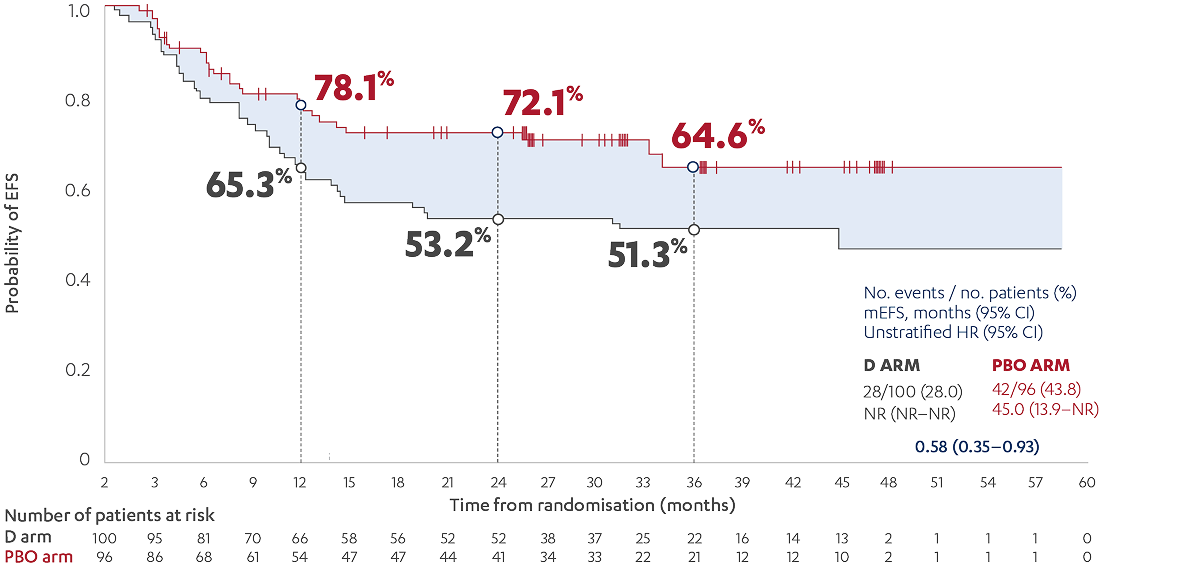
Prespecified subgroup analysis – mITT: the EFS benefit of the AEGEAN Regimen was maintained regardless of the planned neoadjuvant platinum agent (P-values not tested).9

  1. Carboplatin9
  2. Cisplatin9
Graph showing 58.5% EFS at 36 months with AEGEAN plus carboplatin vs 46.1% with placebo plus carboplatin in resectable NSCLC

Adapted from Heymach JV et al. WCLC 2024.9


The mITT population included all patients who had undergone randomisation, excluding patients with documented EGFR or ALK alterations, who were enrolled before a protocol amendment.3 Data maturity rate: 39.1%.9 The EFS subgroup analysis was not powered to show differences between or within individual subgroups and was not formally tested for statistical significance.9


CI – confidence interval; D – durvalumab; HR – hazard ratio; mEFS – median event-free survival; NR – not reached; PBO – placebo.

Graph showing 64.6% EFS at 36 months with AEGEAN plus cisplatin vs 51.3% with placebo plus cisplatin in resectable NSCLC

Adapted from Heymach JV et al. WCLC 2024.9


The mITT population included all patients who had undergone randomisation, excluding patients with documented EGFR or ALK alterations, who were enrolled before a protocol amendment.3 Data maturity rate: 39.1%.9 The EFS subgroup analysis was not powered to show differences between or within individual subgroups and was not formally tested for statistical significance.9


CI – confidence interval; D – durvalumab; EFS – event free survival; HR – hazard ratio; mEFS – median event-free survival; NR – not reached; PBO – placebo.

mITT population pre-defined subgroup analyses (P not tested): median EFS was not reached in the AEGEAN Regimen arm for both subgroups of patients with Stage II and Stage III disease.3,4

Median EFS in stage II subgroup

Not reached

(95% Cl: NR–NR) with the AEGEAN Regimen (n=104)

31.1 months

(95% Cl: 25.4–NR) with placebo + CT (n=110)

HR=0.76 (95% Cl: 0.43–1.34)

Median EFS in stage III subgroup

Not reached

(95% CI: 31.9–NR) with the AEGEAN Regimen (n=261)

19.5 months

(95% Cl: 12.2–26.2) with placebo + CT (n=264)

HR=0.66 (95% Cl: 0.49–0.88)

Data cutoff 10 November 2022; data maturity: 31.9%.3


*The mITT population included all patients who had undergone randomisation, excluding patients with documented EGFR or ALK alterations, who were enrolled before a protocol amendment.3


CI – confidence interval; CT – chemotherapy; EFS – event-free survival; NR – not reached.

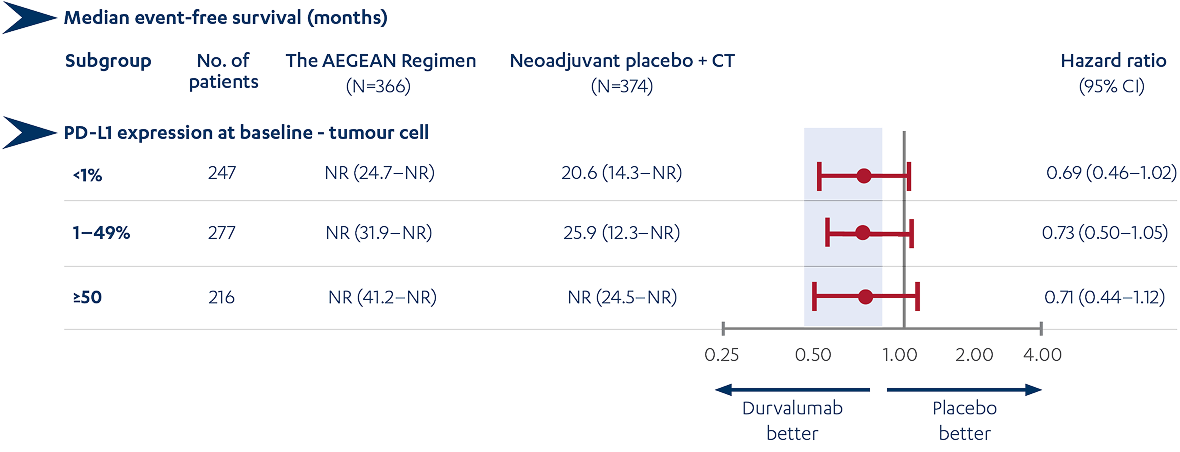
mITT population pre-defined subgroup analyses (P not tested): median EFS was not reached across all PD-L1 subgroups, including patients with PD-L1 <1%.9

Median EFS in all PD-L1 subgroups9

Forest plot showing event-free survival by PD-L1 expression subgroups in AEGEAN study of resectable NSCLC

Adapted from Heymach JV et al. WCLC 2024.9


Data cutoff: May 2024; data maturity: 39.1%.


*The mITT population included all patients who had undergone randomisation, excluding patients with documented EGFR or ALK aberrations.9


CI – confidence interval; CT – chemotherapy; EFS – event-free survival; mITT – modified intention-to-treat; NR – not reached; PD-L1 – programmed death ligand 1.

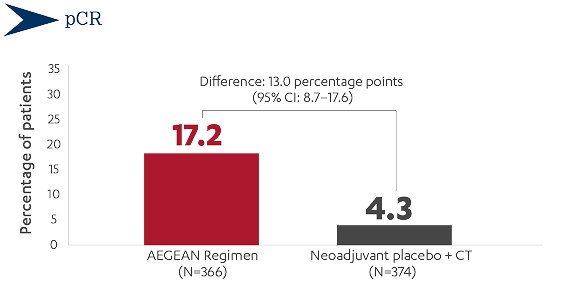
4x more patients had no viable tumour cells in resected lung and lymph node specimens with the AEGEAN Regimen vs neoadjuvant placebo + CT3

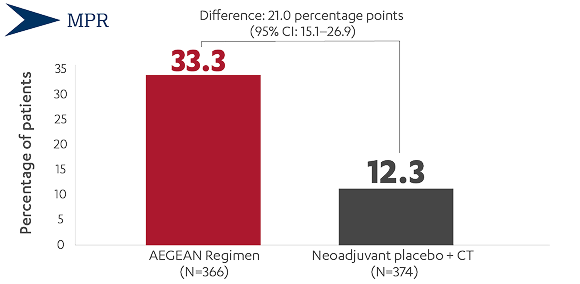
At study completion, pCR and MPR were observed in a greater percentage of patients receiving IMFINZI (17.2% and 33.2%) vs those receiving placebo (4.3% and 12.3%), respectively.3

Final analysis: pathological complete response and major pathological response, mITT population*3

Statistical analysis not performed on the final analysis; P<0.001 based on interim analysis (N=402).

4 times more patients had pathological complete response (pCR) with AEGEAN vs neoadjuvant placebo with chemotherapy
Major pathological response with AEGEAN Regimen verus neoadjuvant placebo plus chemotherapy

Adapted from Heymach JV et al. N Engl J Med 2023.3


*The mITT population included all patients who had undergone randomisation, excluding patients with documented EGFR or ALK alterations, who were enrolled before a protocol amendment.3


CI – confidence interval; CT – chemotherapy; MPR – major pathological response; pCR – pathological complete response.

One-third of patients* who received IMFINZI before resection achieved a major pathological response, including a proportion who also achieved pCR3

Data cutoff: 10 November 2022.3


*The mITT population included all patients who had undergone randomisation, excluding patients with documented EGFR or ALK alterations, who were enrolled before a protocol amendment.3

IMFINZI did not greatly impact the feasibility of completing neoadjuvant treatment, surgery or adjuvant treatment vs placebo + CT3

Among all patients who started adjuvant treatment, 68.6% and 63.7% completed all adjuvant treatment for the IMFINZI and placebo arms, respectively.9
The median (range) number of days from surgery to first adjuvant treatment dose was 50.0 (22–136) in the AEGEAN Regimen arm vs 52.0 (21–141) in the placebo + CT arm.4

Treatment summary in mITT9

Of those patients who started adjuvant IMFINZI or placebo, a similar proportion completed the adjuvant phase (68.6% vs 63.7%)9

Trial phase - no. (%)
The AEGEAN Regimen arm (N=366)
Placebo (N=374)
Neoadjuvant phase
  
Received CT plus IMFINZI or placebo
366 (100)
371 (99.2)
Completed 4 cycles of both CT agents
310 (84.7)
326 (87.2)
Completed 4 cycles of IMFINZI or placebo
318 (86.9)331 (88.5)
Surgery*
  
Underwent surgery
295 (80.6)
302 (80.7)
Completed surgery
284 (77.6)
287 (76.7)
Adjuvant phase
  
Started IMFINZI or placebo†
242 (66.1)
237 (63.4)
Completed IMFINZI or placebo
166 (68.6)
151 (63.7)
Discontinued IMFINZI or placebo
76 (31.4)86 (36.3)
Ongoing IMFINZI or placebo
00

Adapted from Heymach JV et al. WCLC 2024.9

  • At this second interim analysis of EFS, no patients remained on treatment9

  • Approximately 85% of patients completed 4 cycles of neoadjuvant IMFINZI + CT9

  • The proportions of patients who completed surgery and had R0 resections were similar in both treatment arms9

Data cutoff: 10 May 2024 (n=802).9


*Surgery status was assessed by the investigator. Patients who underwent surgery were those for whom curative intent thoracic surgery was attempted, regardless of whether it was completed. Patients who completed surgery were those for whom curative intent thoracic surgery was completed (assessed at the time of surgery).9


†For patients to have been eligible for the AEGEAN Regimen or adjuvant placebo, surgery must have been completed with R0/R1 margins and no evidence of disease on post-surgical RECIST assessment.9


CT – chemotherapy.

AEGEAN Regimen did not adversely impact the feasibility of surgery vs neoadjuvant placebo + platinum-based chemotherapy3,10

  • Among patients who completed surgery, more patients had an R0 resection with the AEGEAN Regimen vs neoadjuvant placebo + CT (269/284 [94.7%] vs 262/284 [91.3%], respectively)3

  • More Stage III patients underwent or completed surgery on the AEGEAN Regimen arm (269/284 [94.7%]) vs neoadjuvant placebo + platinum-based CT arm (262/287 [91.3%])3

  • Median duration of surgery was comparable between both arms: 3.5 hours in the AEGEAN Regimen arm vs 3.3 hours in the neoadjuvant placebo + CT arm11

  • Lobectomy was the most common procedure in both arms for patients who underwent surgery (88.1% for the AEGEAN Regimen vs 85.4% for the neoadjuvant placebo)*10

Surgery summary in mITT3,10

Trial phase - no. (%)
The AEGEAN Regimen (N=366)
Neoadjuvant placebo + CT (N=374)
Underwent surgery†
295 (80.6)
302 (80.7)
Stage II86/295 (84.3)
96/302 (88.9)
Stage III209/295 (79.2)
206/302 (77.4)
Completed surgery‡284 (77.6)
287 (76.7)
Stage II85/284 (83.3)93/287 (86.1)
Stage III199/284 (75.4)
194/287 (72.9)
R0 resection269/284 (94.7)
262/287 (91.3)
R1 resection
12/284 (4.2)22/287 (7.7)

Adapted from Heymach JV et al. N Engl J Med 2023 and Mitsudomi T et al. WCLC 2023.3,10

Data cutoff: 10 November 2022 (n=802).3,10


*Includes sleeve resection (incl. bronchial or arterial) and bilobectomy.10


†Surgery status was assessed by the investigator. Patients who underwent surgery were those for whom curative intent thoracic surgery was attempted, regardless of whether it was completed.3


‡Patients who completed surgery were those for whom curative-intent thoracic surgery was completed (assessed by the investigator at the time of surgery).3


CT – chemotherapy; mITT – modified intent-to-treat. 

Regardless of the treatment status: ~80% of patients completed surgery in both arms3,4

Reasons for not undergoing or completing surgery in ITT*4

 The AEGEAN Regimen (N=400)
Neoadjuvant placebo + CT (N=402)
Patients who did not undergo surgery† – no. (%)76 (19.0)
75 (18.7)
Disease progression
27 (6.8)
30 (7.5)
Unfit for surgery‡
15 (3.8)
10 (2.5)
Patient decision
12 (3.0)
17 (4.2)
Death§
9 (2.3)
2 (0.5)
Adverse event
7 (1.8)
5 (1.2)
Surgical resection with curative intent
performed outside of protocol
2 (0.5)
6 (1.5)
Investigator decision
2 (0.5)
2 (0.5)
Other/missing2 (0.5)3 (0.7)
Patients who completed surgery† – no. (%)310 (77.5)308 (76.6)

Adapted from Heymach JV et al. N Engl J Med 2023 (supplementary appendix).4


*The ITT population included all patients who were randomised.4


†Surgery status was assessed by the investigator. Patients who underwent surgery were those for whom curative intent thoracic surgery was attempted, regardless of whether it was completed. Patients who completed surgery were those for whom curative intent thoracic surgery was completed.4


‡Includes responses of “unfit for surgery”, “inadequate lung function” and “inadequate cardiac function”.4


§Two deaths in the AEGEAN Regimen arm were not deemed related to the AEGEAN Regimen.4


CT – chemotherapy; mITT – modified intent-to-treat.

Continue exploring the AEGEAN Regimen

Get to know the AEGEAN safety profile


Explore safety data

Learn more about the dosing details in the AEGEAN Regimen

Explore dosing and administration

Take a closer look at how IMFINZI works within the AEGEAN Regimen

Explore MOA

ALK – anaplastic lymphoma kinase; BICR – Blinded Independent Central Review; CD80 – cluster of differentiation 80; CI – confidence interval; CT – chemotherapy; DFS – disease-free survival;  EFS – event-free survival; EGFR – epidermal growth factor receptor; HR – hazard ratio; IO – immuno-oncology; ITT – intent-to-treat; IV – intravenous; mEFS – median event-free survival; mITT – modified intent-to-treat; MPR – major pathological response; NICE – National Institute for Health and Care Excellence; NSCLC – non-small cell lung cancer; NR – not reached; OS – overall survival; PBO – placebo; pCR – pathological complete response; PD-1 – programmed cell death protein 1; PD-L1 – programmed death ligand 1; Q3W – every 3 weeks; Q4W – every 4 weeks; RECIST – Response Evaluation Criteria in Solid Tumours; SoC – standard of care; TNM – tumour, node, metastasis.

  1. NICE. Durvalumab with chemotherapy before surgery (neoadjuvant) then alone after surgery (adjuvant) for treating resectable non-small-cell lung cancer. https://www.nice.org.uk/guidance/gid-ta11197/documents/674 [Accessed June 2025].
  2. IMFINZI Summary of Product Characteristics.
  3. Heymach JV et al. N Engl J Med. 2023;389(18):1672-1684.
  4. Heymach JV et al. N Engl J Med. 2023;389(18):1672-1684. (Supplementary Appendix).
  5. Spicer J et al. Abstract LBA8010. Presented at ASCO 2024.
  6. Spicer JD et al. J Thorac Oncol. 2024;19(10):1373-1414.
  7. NIH National Cancer Institute. TNM staging system. https://www.cancer.gov/publications/dictionaries/cancer-terms/def/tnm-staging-system [Accessed June 2025].
  8. Heymach JV et al. N Engl J Med. 2023;389(18):1672-1684 (Protocol).
  9. Heymach JV et al. Abstract OA13.03. Presented at WCLC 2024.
  10. Mitsudomi T et al. Abstract OA12.05. Presented at WCLC 2023.

GB-65615 | DOP: June 2025

Adverse events should be reported. Reporting forms and information can be found at www.mhra.gov.uk/yellowcard or search for MHRA Yellow Card in the Google Play or Apple App Store. Adverse events should also be reported to AstraZeneca by visiting https://contactazmedical.astrazeneca.com/ or by calling ‌‌‌0‌‌‌8‌‌‌‌‌0‌‌‌‌0‌‌‌ ‌‌7‌‌‌‌‌‌8‌‌‌3‌‌‌ ‌‌0‌‌‌‌‌0‌‌‌‌3‌‌‌‌3‌‌‌.

Connessiallasalute.it

This website was created for UK HCPs and has been designed to provide information to educate, empower and enable them in the great work they are doing for patients across a range of therapy areas. This website is intended for doctors, nurses, and pharmacists in the UK. Other UK residents please visit astrazeneca.co.uk.

Terms of use

Privacy Policy

Cookie Policy

Contact Us

LinkedIn

Twitter

©2025 AstraZeneca. GB-73925 | February 2026

Enhance your knowledge, stay informed

Be the first to know. Hear about events, products and ways to support your patients.

Thank you. We will be in touch

GB-74216| DOP : February 2026