Welcome to this UK AstraZeneca produced and funded website

This website is intended for UK Healthcare Professionals only.


The website contains both promotional and non-promotional content.


If you are a patient or a carer of a patient prescribed an AstraZeneca product, please visit myazmed.co.uk


For any other UK residents please visit astrazeneca.co.uk

I am not a Healthcare Professional
IMFINZI (durvalumab) UK Prescribing Information
Adverse Event Reporting

This website is intended for UK Healthcare professionals only. Other UK residents please visit astrazeneca.co.uk

Logo test product
  • Our Medicines
    • Cardiovascular, Renal & Metabolism
      • ATTR Amyloidosis
        • WAINZUA®▼(eplontersen)
      • Chronic Kidney Disease (CKD)
        • FORXIGA® (dapagliflozin)
      • Heart Failure
        • FORXIGA® (dapagliflozin)
      • Hyperkalaemia
        • LOKELMA® (sodium zirconium cyclosilicate)
      • Type 2 Diabetes (T2D)
        • FORXIGA® (dapagliflozin)
    • Oncology
      • Breast Cancer
        • LYNPARZA® (olaparib)
        • TRUQAP®▼(capivasertib)
      • Bladder Cancer
        • IMFINZI® (durvalumab)
      • Endometrial Cancer
        • IMFINZI® (durvalumab)
        • LYNPARZA® (olaparib)
      • Gastrointestinal Cancer
        • IMFINZI® (durvalumab)
        • IMJUDO®▼(tremelimumab)
      • Lung Cancer
        • IMFINZI® (durvalumab)
        • TAGRISSO® (osimertinib)
      • Ovarian Cancer
        • LYNPARZA® (olaparib)
      • Prostate Cancer
        • LYNPARZA® (olaparib)
        • ZOLADEX® (goserelin)
    • Respiratory
      • Asthma
        • TEZSPIRE®▼ (tezepelumab)
        • SYMBICORT® (budesonide/formoterol)
      • Chronic Obstructive Pulmonary Disease(COPD)
        • TRIXEO AEROSPHERE® (formoterol fumarate dihydrate/glycopyrronium/budesonide)
        • BEVESPI® (glycopyrronium/formoterol fumarate dihydrate)
    • Vaccines
      • Flu
        • FLUENZ® nasal spray suspension (influenza vaccine, live attenuated, nasal)
  • Therapy Areas
    • Cardiovascular, Renal & Metabolism
      • ATTR Amyloidosis
      • Chronic Kidney Disease (CKD)
      • Heart Failure
      • Hyperkalaemia
      • Type 2 Diabetes (T2D)
    • Oncology
      • Breast Cancer
      • Bladder Cancer
      • Endometrial Cancer
      • Gastrointestinal Cancer
      • Lung Cancer
      • Ovarian Cancer
      • Prostate Cancer
    • Respiratory
      • Asthma
      • Chronic Obstructive Pulmonary Disease(COPD)
    • Vaccines
      • Flu
  • About us
    • AZ Commitment
  • Contact us
Login
  • AstraZeneca UK
  • Lung Cancer
  • CASPIAN Dosing and Administration
  • Home
  • Efficacy and clinical trials
    • PACIFIC
    • AEGEAN
    • ADRIATIC
    • CASPIAN
  • Safety profile
    • PACIFIC
    • AEGEAN
    • ADRIATIC
    • CASPIAN
  • Dosing and administration
    • PACIFIC
    • AEGEAN
    • ADRIATIC
    • CASPIAN
  • Mechanism of action
    • PACIFIC
    • AEGEAN
    • ADRIATIC
    • CASPIAN
  • Resources
  • Lung therapy
    • Lung pathway
    • Diagnostics
    • Prehabilitation
CASPIAN Dosing and Administration
Imfinzi-header-doctor-patient-discussion.jpg

Logo for IMFINZI (durvalumab) which is coloured red and blue with brand and generic name


Dosing and administration: CASPIAN Regimen

IMFINZI dosage


Treatment modifications


IMFINZI administration

IMFINZI in combination with etoposide and either carboplatin or cisplatin is indicated for the first-line treatment of adults with extensive-stage small cell lung cancer (ES-SCLC).3


For full information on dosing and administration, refer to the IMFINZI Summary of Product Characteristics.3

Patients may have more time with the IMFINZI CASPIAN regimen vs EP + carboplatin or cisplatin, to enjoy what matters most3

Following induction therapy, patients should commence maintenance dosing of IMFINZI at Q4W3

See the OS data in the CASPIAN Regimen + EP here

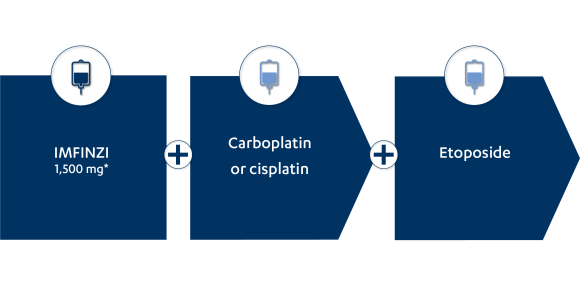
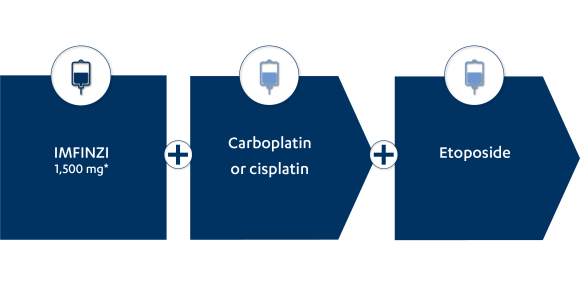
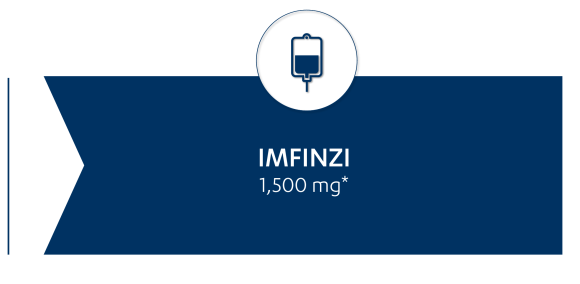
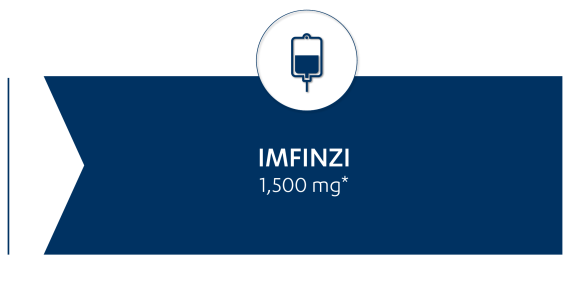
The recommended IMFINZI (durvalumab) dosage for ES-SCLC is:

Induction:1-3 Q3W for 4 cycles

Until disease progression or unacceptable toxicity

Image of the CASPIAN Regimen-  Q3W Imfinzi (durvalumab) + EP, followed by Q4W maintenance Imfinzi monotherapy for ES-SCLC Image of the CASPIAN Regimen-  Q3W Imfinzi (durvalumab) + EP, followed by Q4W maintenance Imfinzi monotherapy for ES-SCLC

Maintenance:1-3 Q4W

Until disease progression or unacceptable toxicity

Image of the CASPIAN Regimen-  Q3W Imfinzi (durvalumab) + EP, followed by Q4W maintenance Imfinzi monotherapy for ES-SCLC Image of the CASPIAN Regimen-  Q3W Imfinzi (durvalumab) + EP, followed by Q4W maintenance Imfinzi monotherapy for ES-SCLC

Routine monitoring of patients for signs and symptoms of infusion-related reactions and adverse reactions is essential.3

Adapted from IMFINZI Summary of Product Characteristics.3

  • Corticosteroids and other medicines may also be required. Most immune-mediated adverse reactions, including severe reactions, resolved following initiation of appropriate medical therapy and/or treatment modifications3
  • The use of systemic corticosteroids or immunosuppressants before starting IMFINZI, except physiological dose of systemic corticosteroids (≤10 mg/day prednisone or equivalent), is not recommended because of their potential interference with the pharmacodynamic activity and efficacy of IMFINZI. However, systemic corticosteroids or other immunosuppressants can be used after starting IMFINZI to treat immune-mediated adverse reactions3

* Patients with a body weight of 30 kg or less must receive weight-based dosing of IMFINZI at 20 mg/kg, in combination with chemotherapy dose every 3 weeks, followed by 20 mg/kg every 4 weeks as monotherapy until weight increases to greater than 30 kg4

ES-SCLC – extensive-stage small-cell lung cancer; Q3W – once every 3 weeks; Q4W – once every 4 weeks.

Dosage modification

Some situations may require dose interruption or discontinuation in response to adverse events:3


  • No dose escalation or reduction of IMFINZI is recommended, except for instances where a weight-based adjustment in dose is required3
  • Dose withholding or discontinuation may be required based on individual safety profile and tolerability3

All adverse events reported in the table are listed as special warnings in the IMFINZI SmPC. Please refer to the IMFINZI SmPC for a full list of adverse events and their management.3


For information about dose modifications in relation to immune-mediated and non-immune-mediated adverse reactions please review the IMFINZI SmPC.3

Adverse reactionSeverity*Treatment modification
Immune-mediated adverse reactions
Pneumonitis/Interstitial lung diseaseGrade 2Withhold
Grade 3–4Permanently discontinue
HepatitisALT or AST >3 – ≤5x ULN or total bilirubin >1.5 – ≤3x ULNWithhold
ALT or AST >5 – ≤10x ULNWithhold
Concurrent ALT or AST >3x ULN and total bilirubin >2x ULN†Permanently discontinue
ALT or AST >10x ULN or total bilirubin >3x ULN
Hepatitis in HCC (or secondary tumour
involvement of the liver with abnormal
baseline values)‡
ALT or AST >2.5 – ≤5x BLV and ≤20x ULNWithhold
ALT or AST >5–7x BLV and ≤20x ULN or concurrent ALT or
AST 2.5–5x BLV and ≤20x ULN and total bilirubin >1.5 – <2x ULN†
Withhold
ALT or AST >10x ULN or total bilirubin >3x ULNPermanently discontinue
Colitis or diarrhoeaGrade 2Withhold
Grade 3 (IMFINZI monotherapy)
Grade 4Permanently discontinue
Hyperthyroidism, thyroiditisGrade 2–4Withhold until clinically stable
HypothyroidismGrade 2–4No change to treatment
Adrenal insufficiency or hypophysitis/hypopituitarismGrade 2–4Withhold until clinically stable
Type 1 diabetes mellitusGrade 2–4No change to treatment
NephritisGrade 2 with serum creatinine >1.5–3x ULN (or baseline)Withhold†
Grade 3 with serum creatinine >3x baseline or >3–6x ULNPermanently discontinue
Grade 4 with serum creatinine >6x ULN
Rash or dermatitis (including pemphigoid)Grade 2 for >1 weekWithhold
Grade 3
Grade 4Permanently discontinue
MyocarditisGrade 2–4Permanently discontinue
Myositis/polymyositis/rhabdomyolysisGrade 2–3Withhold§
Grade 4Permanently discontinue
Myasthenia gravisGrade 2–4Permanently discontinue
Myelitis transverseAny gradePermanently discontinue
MeningitisGrade 2Withhold
Grade 3–4Permanently discontinue
EncephalitisGrade 2–4Permanently discontinue
Guillain-Barré syndromeGrade 2–4Permanently discontinue
Other immune-mediated adverse
reactions
Grade 2–3Withhold
Grade 4Permanently discontinue
Other adverse reactions
Intestinal perforationAny gradePermanently discontinue
Infusion-related reactionsGrade 1–2Interrupt or slow the rate of infusion
Grade 3–4Permanently discontinue
InfectionGrade 3–4Withhold until clinically stable
Pure red cell aplasia**Any gradePermanently discontinue

RESUME IMFINZI

Within 12 weeks if the adverse reactions improved to Grade ≤1 and the corticosteroid dose has been reduced to ≤10 mg prednisone or equivalent per day.

Adapted from IMFINZI Summary of Product Characteristics.3

* Common Terminology Criteria for Adverse Events, version 4.03.3
† For patients with alternative cause follow the recommendations for AST or ALT increases without concurrent bilirubin elevations.3
‡ If AST and ALT are less than or equal to ULN at baseline in patients with liver involvement, withhold or permanently discontinue IMFINZI based on recommendations for hepatitis with no liver involvement.3
§ Permanently discontinue IMFINZI if adverse reaction does not resolve to ≤Grade 1 within 30 days or if there are signs of respiratory insufficiency.3
¶ Includes immune thrombocytopenia, pancreatitis, immune-mediated arthritis, uveitis, cystitis noninfective and polymyalgia rheumatica.3
** Adverse drug reaction is only associated when olaparib maintenance treatment is used in combination with IMFINZI, following treatment with IMFINZI in combination with platinum-based chemotherapy.3
ALT – alanine aminotransferase; AST – aspartate aminotransferase; BLV – baseline value; HCC – hepatocellular carcinoma; ULN – upper limit of normal.

IMFINZI administration

For detailed instructions on preparation of solution please see below or refer to Section 6.6 of the IMFINZI Summary of Product Characteristics.3


Administer the infusion solution intravenously over 1 hour through an intravenous line containing a sterile, low-protein binding 0.2 to 0.22 μm in-line filter.3


Do not co-administer other medicinal products through the same infusion line.3


When is administered in combination with chemotherapy, administer IMFINZI prior to chemotherapy on the same day.3

 
Pre-medication may also be considered for prophylaxis of subsequent infusion reactions following grade 1 or 2 reactions.3


Any unused medicinal product or waste material should be disposed of in accordance with local requirements.3


Paediatric population

The safety and efficacy of IMFINZI in children and adolescents aged below 18 years of age has not been established regarding ES-SCLC. No data are available. For more information, please see Sections 5.1 and 5.2 of the IMFINZI Summary of Product Characteristics.3

Elderly

No dose adjustment is required for elderly patients (≥65 years of age). For more information, see Section 5.1 of the IMFINZI Summary of Product Characteristics.3

Renal impairment

No dose adjustment of IMFINZI is recommended in patients with mild or moderate renal impairment. Data from patients with severe renal impairment are too limited to draw conclusions on this population. For more information, please see Section 5.2 of the IMFINZI Summary of Product Characteristics.3

Hepatic impairment

Data from patients with severe hepatic impairment are limited. Due to minor involvement of hepatic processes in the clearance of IMFINZI no dose adjustment of IMFINZI is recommended for patients with hepatic impairment as no difference in exposure is expected. For more information, please see Section 5.2 of the IMFINZI Summary of Product Characteristics.3


For the full of special warnings and precautions, please see Section 4.4 of the IMFINZI Summary of Product Characteristics.3

Patients with pre-existing AID

In patients with pre-existing AID, data from observational studies suggest an increased risk of immune-related adverse reactions following immune-checkpoint inhibitor therapy as compared with patients without pre-existing AID. In addition, flares of the underlying AID were frequent, but the majority were mild and manageable.3

Patients excluded from clinical trials

Patients with the following were excluded from clinical trials: a baseline ECOG performance score ≥2; active or prior documented autoimmune disease within 2 years of initiation of the study; a history of immunodeficiency; a history of severe immune-mediated adverse reactions; medical conditions that required systemic immunosuppression, except physiological dose of systemic corticosteroids (≤10 mg/day prednisone or equivalent), uncontrolled intercurrent illnesses, active tuberculosis or hepatitis B or C or HIV infection or patients receiving live attenuated vaccine within 30 days before or after the start of IMFINZI. In the absence of data, IMFINZI should be used with caution in these populations after careful consideration of the potential benefit/risk on an individual basis. The safety of concurrent prophylactic cranial irradiation with IMFINZI in patients with ES-SCLC is unknown.3

Preparation

IMFINZI is supplied as a single-dose vial and does not contain any preservatives, aseptic technique must be observed.3


Visually inspect the medicinal product for particulate matter and discolouration. IMFINZI is a clear-to-opalescent, colourless-to-slightly-yellow solution. Discard the vial if the solution is cloudy, discoloured or visible particles are observed. Do not shake the vial.3


Withdraw the required volume from the vial(s) of IMFINZI and transfer into an IV bag containing sodium chloride 9 mg/mL (0.9%) solution for injection, or glucose 50 mg/mL (5%) solution for injection. Mix diluted solution by gentle inversion. The final concentration of the diluted solution should be between 1 mg/mL and 15 mg/mL. Do not freeze or shake the solution.3


Discard any unused portion left in the vial.3

IMFINZI is supplied as single-use vials, available in two dosage strengths: either 120 mg/2.4 mL (50 mg/mL) or 500 mg/10 mL (50 mg/mL).3


Inside is a clear-to-opalescent, colourless-to-slightly yellow solution in a Type 1 glass vial with an elastomeric stopper and a grey flip-off aluminium seal for 2.4 ml vials or a white flip-off aluminium seal for 10 ml vials.3


The drug product must be visually inspected, and the vial must be discarded if the solution is cloudy, discoloured, or visible particles are observed prior to administration. Do not shake the vial.3

Unopened vial

Shelf life: 3 years.3
Store in refrigerator (2 ˚C – 8 ˚C).3
Do not freeze.3
Store in the original package in order to protect from light.3

Diluted solution

Chemical and physical in-use stability has been demonstrated for up to 30 days at 2 ˚C – 8 ˚C and for up to 24 hours at room temperature (up to 25 ˚C) from the time of preparation.2 The prepared solution for infusion should be used immediately. If not used immediately, in-use storage times and conditions prior to use are the responsibility of the user and would normally not be longer than 24 hours at 2 ˚C – 8 ˚C or 12 hours at room temperature (up to 25 ˚C), unless dilution has taken place in controlled and validated aseptic conditions.3

Continue exploring the CASPIAN Regimen

Take a closer look at how IMFINZI works within the CASPIAN Regimen

Explore MOA

Discover more about the CASPIAN study design and efficacy outcomes

Explore efficacy data

Get to know the CASPIAN safety profile

Explore safety data

AID – autoimmune disease; ALT – alanine aminotransferase; AST – aspartate aminotransferase; ECOG – Eastern Cooperative Oncology Group; EP – etoposide + cisplatin or carboplatin; ES-SCLC – extensive-stage small-cell lung cancer; HCP – healthcare professional; IV – intravenous; NHS – National Health Service; OS – overall survival; Q3W – once every 3 weeks; Q4W – once every 4 weeks; SMC – Scottish Medicines Consortium; ULN – upper limit of normal.

  1. NICE. Durvalumab with etoposide and either carboplatin or cisplatin for untreated extensive-stage small-cell lung cancer. https://www.nice.org.uk/guidance/ta1041 [Accessed August 2025].
  2. SMC. Durvalumab 50 mg/mL concentrate for solution for infusion (Imfinzi®). https://scottishmedicines.org.uk/media/8945/durvalumab-imfinzi-abbreviated-final-jan-2025-for-website.pdf [Accessed August 2025].
  3. IMFINZI Summary of Product Characteristics.
  4. National Comprehensive Cancer Network. NCCN Guidelines for Patients: Small Cell Lung Cancer. https://www.nccn.org/patients/guidelines/content/PDF/SCLC-patient-guideline.pdf [Accessed August 2025].

GB-68888 | DOP: August 2025

Adverse events should be reported. Reporting forms and information can be found at www.mhra.gov.uk/yellowcard or search for MHRA Yellow Card in the Google Play or Apple App Store. Adverse events should also be reported to AstraZeneca by visiting https://contactazmedical.astrazeneca.com/ or by calling ‌‌‌0‌‌‌8‌‌‌‌‌0‌‌‌‌0‌‌‌ ‌‌7‌‌‌‌‌‌8‌‌‌3‌‌‌ ‌‌0‌‌‌‌‌0‌‌‌‌3‌‌‌‌3‌‌‌.

Connessiallasalute.it

This website was created for UK HCPs and has been designed to provide information to educate, empower and enable them in the great work they are doing for patients across a range of therapy areas. This website is intended for doctors, nurses, and pharmacists in the UK. Other UK residents please visit astrazeneca.co.uk.

Terms of use

Privacy Policy

Cookie Policy

Contact Us

LinkedIn

Twitter

©2025 AstraZeneca. GB-73925 | February 2026

Enhance your knowledge, stay informed

Be the first to know. Hear about events, products and ways to support your patients.

Thank you. We will be in touch

GB-74216| DOP : February 2026