Welcome to this UK AstraZeneca produced and funded website

This website is intended for UK Healthcare Professionals only.


The website contains both promotional and non-promotional content.


If you are a patient or a carer of a patient prescribed an AstraZeneca product, please visit myazmed.co.uk


For any other UK residents please visit astrazeneca.co.uk

I am not a Healthcare Professional
IMFINZI (durvalumab) UK Prescribing Information
Adverse Event Reporting

This website is intended for UK Healthcare professionals only. Other UK residents please visit astrazeneca.co.uk

Logo test product
  • Our Medicines
    • Cardiovascular, Renal & Metabolism
      • ATTR Amyloidosis
        • WAINZUA®▼(eplontersen)
      • Chronic Kidney Disease (CKD)
        • FORXIGA® (dapagliflozin)
      • Heart Failure
        • FORXIGA® (dapagliflozin)
      • Hyperkalaemia
        • LOKELMA® (sodium zirconium cyclosilicate)
      • Type 2 Diabetes (T2D)
        • FORXIGA® (dapagliflozin)
    • Oncology
      • Breast Cancer
        • LYNPARZA® (olaparib)
        • TRUQAP®▼(capivasertib)
      • Bladder Cancer
        • IMFINZI® (durvalumab)
      • Endometrial Cancer
        • IMFINZI® (durvalumab)
        • LYNPARZA® (olaparib)
      • Gastrointestinal Cancer
        • IMFINZI® (durvalumab)
        • IMJUDO®▼(tremelimumab)
      • Lung Cancer
        • IMFINZI® (durvalumab)
        • TAGRISSO® (osimertinib)
      • Ovarian Cancer
        • LYNPARZA® (olaparib)
      • Prostate Cancer
        • LYNPARZA® (olaparib)
        • ZOLADEX® (goserelin)
    • Respiratory
      • Asthma
        • TEZSPIRE®▼ (tezepelumab)
        • SYMBICORT® (budesonide/formoterol)
      • Chronic Obstructive Pulmonary Disease(COPD)
        • TRIXEO AEROSPHERE® (formoterol fumarate dihydrate/glycopyrronium/budesonide)
        • BEVESPI® (glycopyrronium/formoterol fumarate dihydrate)
    • Vaccines
      • Flu
        • FLUENZ® nasal spray suspension (influenza vaccine, live attenuated, nasal)
  • Therapy Areas
    • Cardiovascular, Renal & Metabolism
      • ATTR Amyloidosis
      • Chronic Kidney Disease (CKD)
      • Heart Failure
      • Hyperkalaemia
      • Type 2 Diabetes (T2D)
    • Oncology
      • Breast Cancer
      • Bladder Cancer
      • Endometrial Cancer
      • Gastrointestinal Cancer
      • Lung Cancer
      • Ovarian Cancer
      • Prostate Cancer
    • Respiratory
      • Asthma
      • Chronic Obstructive Pulmonary Disease(COPD)
    • Vaccines
      • Flu
  • About us
    • AZ Commitment
  • Contact us
Login
  • AstraZeneca UK
  • Lung Cancer
  • Efficacy and clinical trials | CASPIAN
  • Home
  • Efficacy and clinical trials
    • PACIFIC
    • AEGEAN
    • ADRIATIC
    • CASPIAN
  • Safety profile
    • PACIFIC
    • AEGEAN
    • ADRIATIC
    • CASPIAN
  • Dosing and administration
    • PACIFIC
    • AEGEAN
    • ADRIATIC
    • CASPIAN
  • Mechanism of action
    • PACIFIC
    • AEGEAN
    • ADRIATIC
    • CASPIAN
  • Resources
  • Lung therapy
    • Lung pathway
    • Diagnostics
    • Prehabilitation
Efficacy and clinical trials | CASPIAN

Logo for IMFINZI (durvalumab) which is coloured red and blue with brand and generic nameThe first and only IO NICE-recommended across both LS-SCLC and ES-SCLC


CASPIAN Efficacy

Indication


Study design


OS benefit


PFS benefit


ORR benefit summary


QoL benefit


Retrospective real-world study: Atezolizumab and IMFINZI in ES-SCLC

Extensive-stage small cell lung cancer (ES-SCLC)

IMFINZI (durvalumab) in combination with etoposide and either carboplatin or cisplatin is indicated for the first-line treatment of adults with extensive-stage small cell lung cancer.1


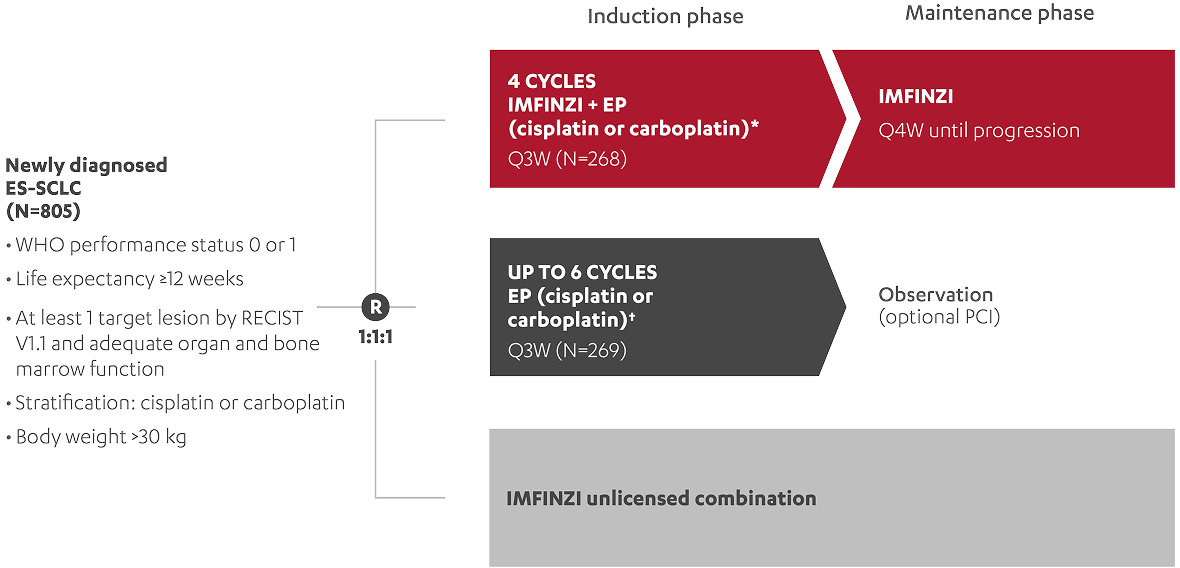
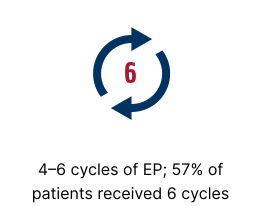
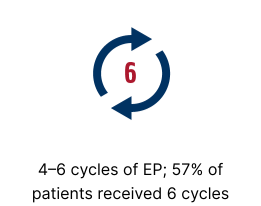
CASPIAN was a randomised, open-label, Phase III, multicentre study in 805 treatment-naïve ES-SCLC patients with WHO/ECOG Performance Status of 0 or 1, body weight >30 kg, suitable to receive a platinum-based chemotherapy regimen as first-line treatment for SCLC, with life expectancy ≥12 weeks, at least one target lesion by RECIST 1.1 and adequate organ and bone marrow function. Patients were 1:1:1 randomly assigned to: IMFINZI + EP; IMFINZI + an unlicensed drug combination + EP; or EP alone. Patients received up to four cycles of EP plus IMFINZI 1,500 mg with or without an unlicensed drug combination 75 mg every 3 weeks followed by maintenance IMFINZI 1,500 mg every 4 weeks in the immunotherapy groups and up to six cycles of EP every 3 weeks plus prophylactic cranial irradiation (investigator’s discretion) in the EP group. The primary endpoint was overall survival in the ITT population.1,4


CASPIAN study design1,4

The CASPIAN study improved OS vs EP alone in first-line ES-SCLC.1

CASPIAN trial design1,4

CASPIAN Study design for ES-SCLC randomising patients to durvalumab, placebo or in an unlicensed combination arm

Primary endpoint1,4

OS

Select secondary endpoints1,4

  • PFS‡
  • PFS at 6 months and 12 months
  • OS at 18 months
  • ORR (unconfirmed)
  • Safety profile
  • PRO

Caspian allowed for4

The control arm allowed for4

Adapted from Paz-Ares L et al. Lancet 2019.4

* IMFINZI 1,500 mg + either carboplatin (AUC 5 mg/mL/min or 6 mg/mL/min) or cisplatin (75–80 mg/m2) on Day 1 and etoposide (80–100 mg/m2) intravenously on Days 1, 2 and 3 of each 21-day cycle for 4 cycles, followed by IMFINZI 1,500 mg every 4 weeks until disease progression or unacceptable toxicity.4 Patients with a body weight of 30 kg or less must receive weight-based dosing of IMFINZI at 20 mg/kg, in combination with chemotherapy dose every 3 weeks, followed by 20 mg/kg every 4 weeks as monotherapy until weight increases to greater than 30 kg.1
† Either carboplatin (AUC 5 mg/mL/min or 6 mg/mL/min) or cisplatin (75–80 mg/m2) on Day 1 and etoposide (80–100 mg/m2) intravenously on Days 1, 2 and 3 of each 21-day cycle for 4 cycles.4
‡ Assessed using investigator assessments according to RECIST v1.1.4
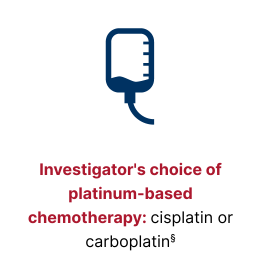
§ 78% received carboplatin and 25% received cisplatin in the IMFINZI + EP arm; 78% received carboplatin and 25% received cisplatin in the EP alone arm.4
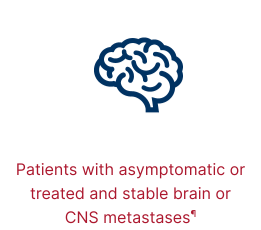
¶ Patients with confirmed brain metastases had to be treated and stable off steroids and anticonvulsants for at least 1 month prior to study treatment. Patients with suspected brain metastases at screening should have a CT/MRI of the brain prior to trial entry.4,7
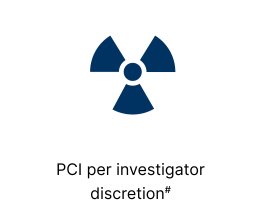
# 8% of patients who were treated with EP alone received PCI post EP.4


AUC – area under the curve; CNS – central nervous system; CT – computed tomography; EP – etoposide + cisplatin or carboplatin; ES-SCLC – extensive-stage small-cell lung cancer; MRI – magnetic resonance imaging; ORR – objective response rate; OS – overall survival; PCI – prophylactic cranial irradiation; PFS – progression-free survival; PRO – patient-reported outcome; Q3W – once every 3 weeks; Q4W – once every 4 weeks; RECIST – Response Evaluation Criteria in Solid Tumours; WHO – World Health Organization.

Patients were randomly assigned in a 1:1:1 ratio via voice- or web-response to receive IMFINZI + EP, IMFINZI with an unlicensed drug combination combination and EP, or EP alone, stratified by planned platinum type (carboplatin or cisplatin).1,4

 IMFINZI group (N=268)EP alone (n=269)
Median age, years (range)62 (58–68)63 (57–68)
Age groups, years  
<6562%
58%
≥6538%
42%
Gender  
Male71%68%
Female29%32%
Race  
White85%82%
Asian13%16%
Black or African American1%1%
Other or missing<1%1%
Disease stage  
III10%9%
IV90%91%
WHO performance status  
037%33%
163%67%
Smoking history  
Current smoker/former smoker92%94%
Never smoker8%6%
Platinum received*  
Carboplatin78% (N=265)78% (N=266)
Cisplatin25% (N=265)25% (N=266)
Brain or CNS metastases*10%10%
Liver metastases40%39%

Adapted from Paz-Ares L et al. Lancet 2019.4

* Patients were allowed to switch between carboplatin and cisplatin at the investigator’s discretion.4

CNS – central nervous system; EP – etoposide + cisplatin or carboplatin; WHO – World Health Organization.

Patients with asymptomatic or treated brain or stable CNS metastases were eligible for inclusion and could start immediate systemic treatment at least one month prior to study treatment.4

The CASPIAN study evaluated the efficacy of IMFINZI plus EP, IMFINZI unlicensed combination with EP vs EP alone in treatment-naïve patients with ES-SCLC (N=805)4

CASPIAN regimen provided improved OS observed at the planned interim (primary analysis) vs EP alone*†4

IMFINZI + EP significantly extended mOS to 13.0 months (95% CI: 11.5–14.8), compared to 10.3 months (95% CI: 9.3–11.2) in patients receiving EP alone.4

OS in ITT population4

(Median duration of follow-up 14.2 months)

Graph showing CASPIAN improved OS for ES-SCLC patients vs. EP alone

Adapted from Paz-Ares L et al. Lancet 2019.4

* The interim (primary) analysis of overall survival was planned when approximately 318 events had occurred both in the IMFINZI + EP and EP alone arms.4


† OS, the primary endpoint, met statistical significance at the interim analysis in accordance with the CASPIAN trial design (63% maturity). OS was defined as time from randomisation to death from any cause.4


CI – confidence interval; EP – etoposide + cisplatin or carboplatin; ITT – intention-to-treat; mOS – median overall survival; OS – overall survival.

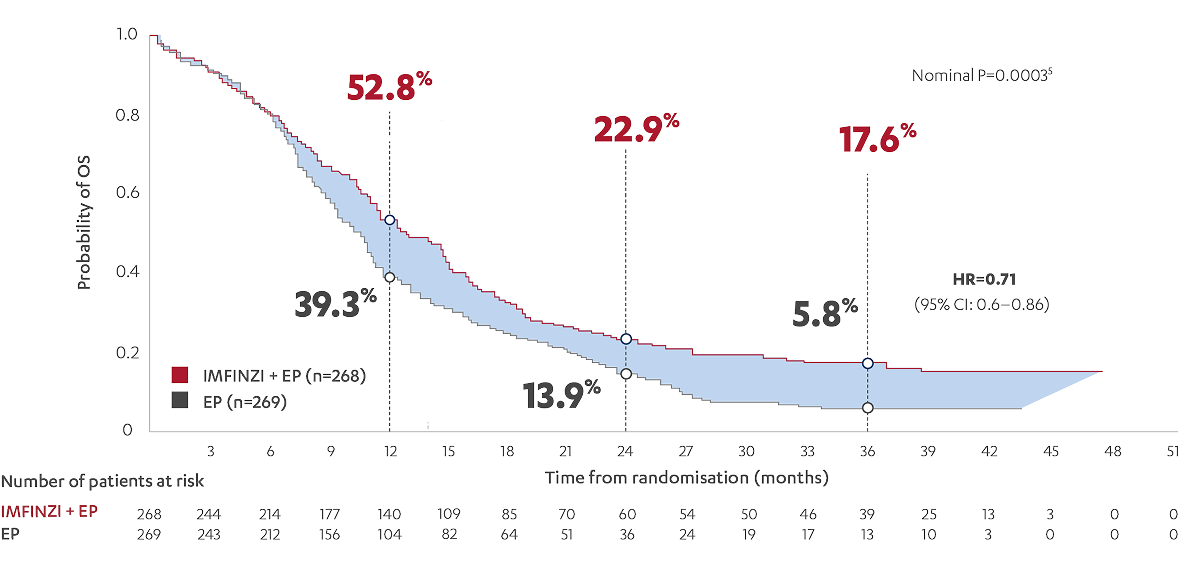
Exploratory 3-year OS data: IMFINZI + EP IO combination in first line ES-SCLC1,5,6

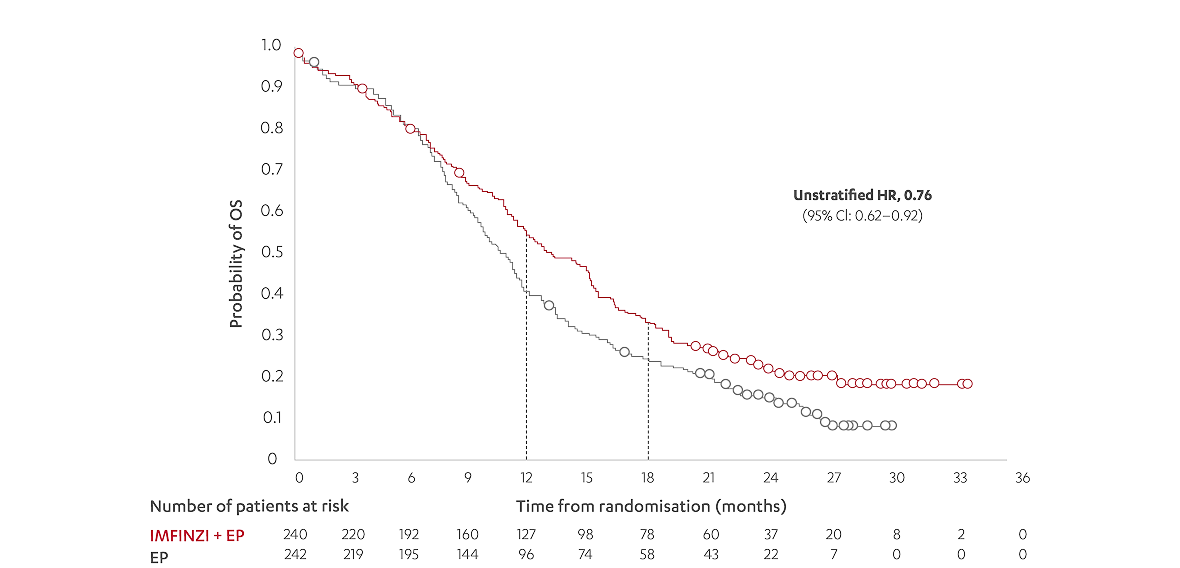
CASPIAN regimen improved OS for patients with ES-SCLC. At the time of the 3-year analysis, mOS was 12.9 months (95% CI: 11.3–14.7) with IMFINZI + EP vs 10.5 months (95% CI: 9.3–11.2) with EP alone (HR 0.71 [95% CI: 0.60–0.86] nominal P=0.0003).5

OS at 3-year planned exploratory analysis*5

(Median duration of follow-up 39.4 months)†

Graph showing CASPIAN improved OS by ~3x at 3 years for ES-SCLC patients vs. EP alone

Adapted from Paz-Ares L et al. ESMO Open 2022.5

* 3-year analysis of OS was conducted after 469 events had occurred across the IMFINZI + EP and EP alone arms (86% maturity).5


† Landmark OS estimates calculated using the Kaplan–Meier estimator.5


CI – confidence interval; EP – etoposide + cisplatin or carboplatin; ESMO – European Society for Medical Oncology; ES-SCLC – extensive-stage small-cell lung cancer; HR – hazard ratio; IO – immuno-oncology; mOS – median overall survival; OS – overall survival.

Patients treated with IMFINZI + EP had ~3x higher survival rate at 3 years vs those on EP alone5

In a prespecified exploratory subgroup analysis, the 18-month OS rate was 25% (95% CI: 11.1–41.8) with IMFINZI + EP, compared to 23.3% (95% CI: 9.5–40.7) with EP alone in patients with ES-SCLC.8

Patients with asymptomatic or treated-and-stable brain metastases were eligible for inclusion in the CASPIAN exploratory subgroup analyses.8

  1. Brain metastases at baseline9
  2. No brain metastses at baseline9

Brain metastases at baseline

Graph showing CASPIAN showed consistent OS benefit with brain mets at baseline
Graph showing 58.5% EFS at 36 months with AEGEAN plus carboplatin vs 46.1% with placebo plus carboplatin in resectable NSCLC

Adapted from Chen Y et al. JTO Clin Resp Rep 2022.8


Prespecified analyses of OS and PFS in subgroups with or without brain metastases used unstratified-Cox proportional hazards models.8


CI – confidence interval; EP – etoposide + cisplatin or carboplatin; ES-SCLC – extensive-stage small-cell lung cancer; HR – hazard ratio; OS – overall survival.

No brain metastases at baseline

Graph showing CASPIAN showed consistent OS benefit without brain mets at baseline
Graph showing 58.5% EFS at 36 months with AEGEAN plus carboplatin vs 46.1% with placebo plus carboplatin in resectable NSCLC

Adapted from Chen Y et al. JTO Clin Resp Rep 2022.8


Prespecified analyses of OS and PFS in subgroups with or without brain metastases used unstratified-Cox proportional hazards models.8


CI – confidence interval; EP – etoposide + cisplatin or carboplatin; ES-SCLC – extensive-stage small-cell lung cancer; HR – hazard ratio; OS – overall survival.

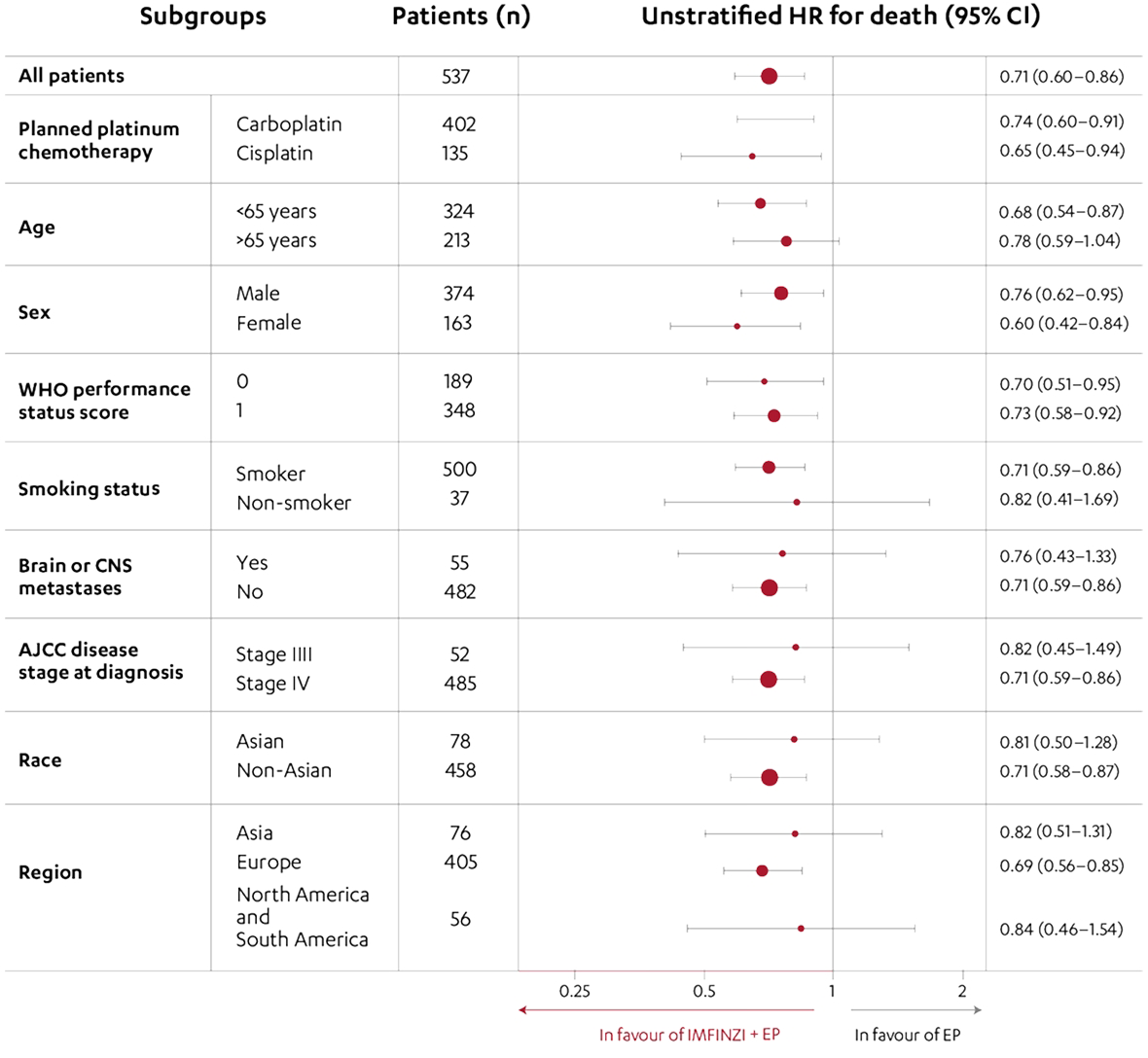
OS results in some of the subgroups favoured IMFINZI + EP vs EP alone:*5

  • Patients who received cisplatin or carboplatin
  • Patients with WHO score of 0 or 1
  • Patients with Stage IV disease at diagnosis
Graph showing 64.6% EFS at 36 months with AEGEAN plus cisplatin vs 51.3% with placebo plus cisplatin in resectable NSCLC

* OS subgroup analysis was not powered to show a statistically significant difference between or within individual subgroups.4


AJCC – American Joint Committee on Cancer; CI – confidence interval; CNS – central nervous system; EP – etoposide + cisplatin or carboplatin; HR – hazard ratio; OS – overall survival; WHO – World Health Organization.

The CASPIAN Regimen provided a meaningful and sustained long-term survival benefit at 3 years in patients with ES-SCLC5

Post-hoc analysis of IMFINZI + EP: revealing 24-month PFS follow-up data (median duration of follow-up 25.1 months)*9

In the ongoing open-label, Phase III CASPIAN trial, PFS rate at 12 months was evaluated as a secondary endpoint. At this time, the mPFS was 5.1 months (95% CI: 4.7–6.2) for patients treated with IMFINZI + EP, compared to 5.4 months (95% CI: 4.8–6.2) for those receiving EP alone.9

Graph showing CASPIAN resulted in a ~4x increase in 25-month PFS rates vs. EP alone

Adapted from Goldman JW et al. Lancet Oncol 2021 and DOF. REF-217111.9,10


* PFS rate at 12, 18 and 24 months are the estimated proportion of patients alive and progression-free based on the planned follow-up analysis.9,10


† PFS was not formally tested for statistical significance at the planned interim (primary) analysis or the planned follow-up analysis.5,9


CI – confidence interval; EP – etoposide + cisplatin or carboplatin; HR – hazard ratio; OS – overall survival; PFS – progression-free survival.

IMFINZI + EP resulted in a ~4x increase in 24-month progression-free rates vs EP alone9

Combination therapy with IMFINZI + EP resulted in improved response rates compared to EP alone4

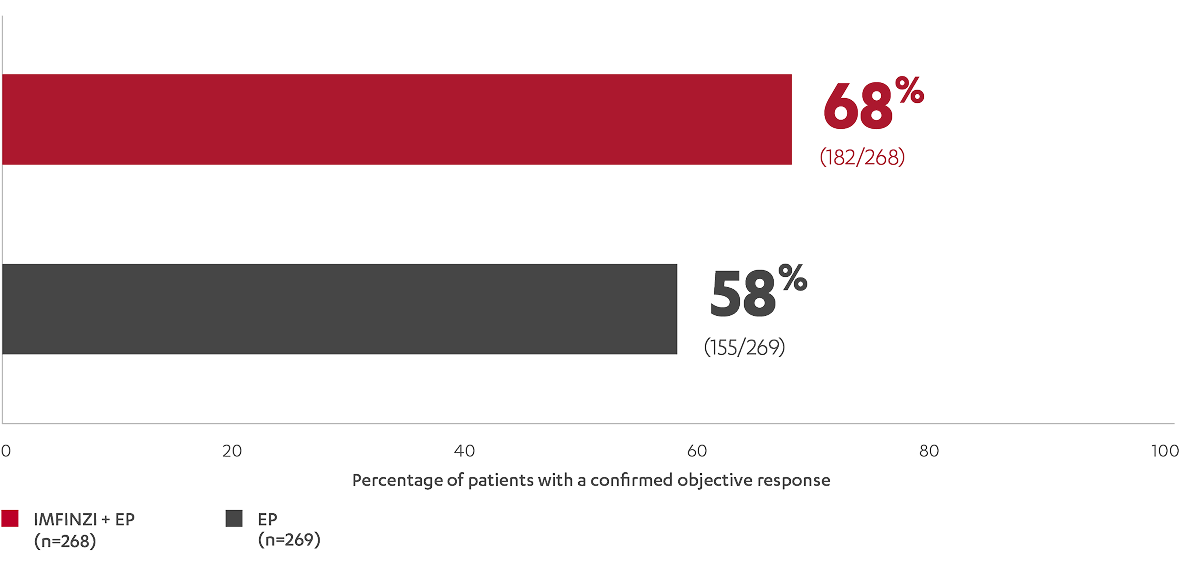
In a post-hoc analysis of confirmed responses, IMFINZI + EP achieved a higher objective response, compared to EP alone with an odds ratio of 1.56 (95% CI: 1.10–2.22)4

  • Complete responses: 2% with IMFINZI + EP and 1% with EP4
  • Partial responses: 66% with IMFINZI + EP and 57% with EP4

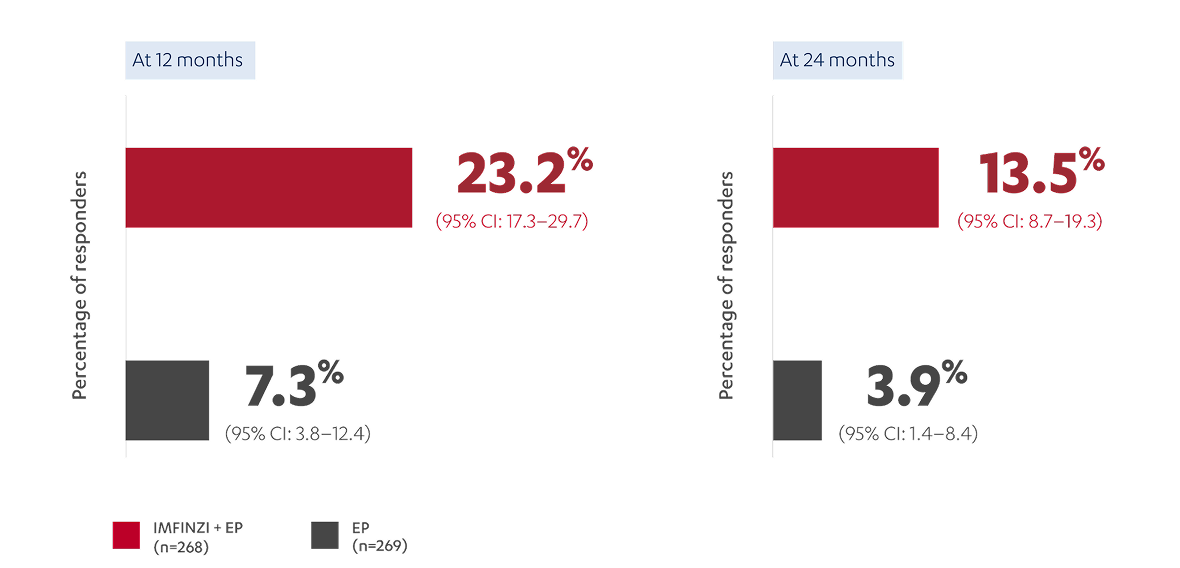
IMFINZI + EP resulted in over 3x as many patients maintaining a response at both 12 and 24 months compared to EP alone.9 ORR and duration of response were not evaluated at the 3-year planned exploratory OS analysis.5

  1. Confirmed ORR with IMFINZI + EP
  2. Percentage of responders with ongoing responses

Confirmed ORR with IMFINZI + EP

(Post-hoc analysis)*†4

Graph showing CASPIAN resulted in improved ORR vs. EP alone

Adapted from Paz-Ares L et al. Lancet 2019.4

Percentage of responders with ongoing responses

Post-hoc analysis (median duration of follow-up 25.1 months)9

Graph showing CASPIAN improved the percentage of patients with ongoing response vs. EP alone

Adapted from Goldman JW et al. Lancet Oncol 2021.9


* Confirmed objective response and duration of confirmed objective response were analysed post-hoc. For confirmed responses, a confirmatory scan was required no sooner than 4 weeks after the initial response or partial response.4


† Unconfirmed ORR was a secondary endpoint, with the confirmed responses (68% vs 58%) further supporting the unconfirmed responses (79% vs 70%) seen during the trial.4


CI – confidence interval; EP – etoposide + cisplatin or carboplatin; ORR – objective response rate; OS – overall survival.

IMFINZI + EP not only achieved a higher response rate than EP alone, but also maintained response in over 3x more patients at 12 and 24 months4,9

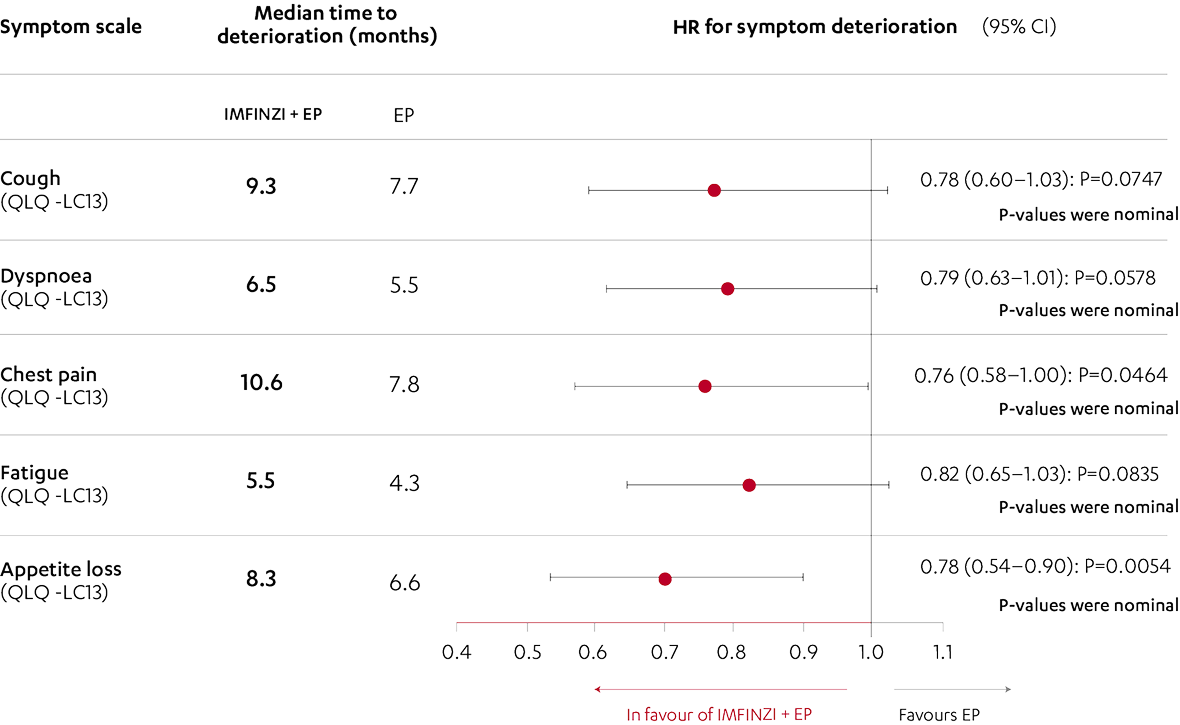
IMFINZI + EP sustained control of select symptoms compared to EP alone11

Symptoms were assessed using the EORTC QLQ-C30 and QLQ-LC13.*11 Time to deterioration was defined as the time from randomisation until the first clinically meaningful deterioration confirmed at a subsequent visit or death by any cause in the absence of a clinically meaningful deterioration.11

Time to deterioration in select symptoms11

Graph showing OS HRs favoured CASPIAN in varioys subgroups over more than 3 years vs. EP alone

Adapted from Goldman JW et al. Lung Cancer 2020.11

* EORTC QLQ-C30 is an integrated questionnaire for assessing HRQoL of cancer patients participating in clinical trials using a global health status/quality of life scale, 5 functional scales, 3 symptom scales and 6 single items. EORTC QLQ-LC13 is a supplementary system designed to evaluate symptoms and side effects specifically in patients with lung cancer when used in conjunction with the QLQ-C30.12


CI – confidence interval; EORTC – European Organisation for Research and Treatment of Cancer; EP – etoposide + cisplatin or carboplatin; HR – hazard ratio; HRQoL – health-related quality of life; QLQ – Quality of Life Questionnaire.

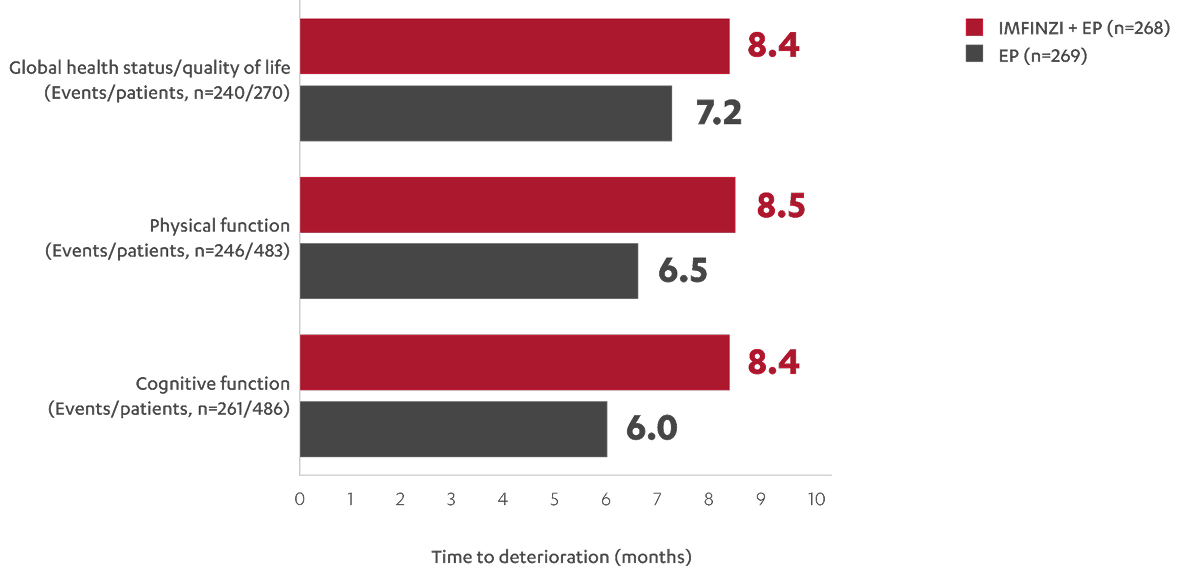
Treatment with IMFINZI + EP maintained patient QoL and delayed worsening of symptoms, comparable to outcomes observed with EP alone (secondary endpoint)11

Patients receiving IMFINZI + EP experienced a longer median TTD than those receiving EP alone across global health status/QoL, all functioning domains, and all symptom scales of the QLQ-C30 and QLQ-LC1311

  • Global health status/QoL was 1.2 months longer with IMFINZI + EP than with EP (8.4 months vs 7.2 months, respectively; nominal P=0.1166)11
  • Time to deterioration in physical function was 2 months longer with IMFINZI + EP than with EP (8.5 months vs 6.5 months, respectively; nominal P=0.0276)11
  • Time to deterioration in cognitive function was 2.4 months longer with IMFINZI + EP than with EP (8.4 months vs 6.0 months, respectively; nominal P<0.0001)11

Time to deterioration in global health status/quality of life and select functions11

Graph showing CASPIAN sustained control of select symptoms vs. EP alone

Adapted from Goldman JW et al. Lung Cancer 2020.11

EP – etoposide + cisplatin or carboplatin; QoL – quality of life; TTD – time to deterioration.

IMFINZI + EP maintained QoL and delayed select symptom deterioration vs EP alone in patients with ES-SCLC11

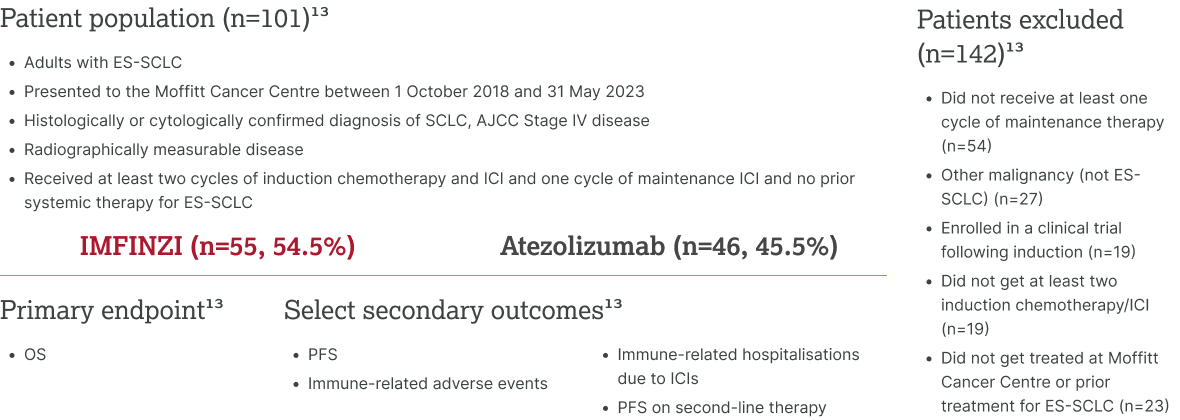
A retrospective real-world evidence study of atezolizumab and IMFINZI in ES-SCLC13

A single-centre, real-world, retrospective study compared the efficacy and safety of atezolizumab and IMFINZI in combination with chemotherapy in the first-line setting of ES-SCLC.13

Study design13

Dosing groups13

  • IMFINZI plus chemotherapy (carboplatin or cisplatin plus EP)13
  • Atezolizumab plus chemotherapy (carboplatin plus EP)13
Graph showing CASPIAN preserved patient QoL and sustained control of select symptoms vs. EP alone

IMFINZI and atezolizumab have not been compared in head-to-head trials.

Adapted from Vince M et al. Lung Cancer 2024.13

AJCC – American Joint Committee on Cancer; ES-SCLC – extensive-stage small cell lung cancer; ICI – immune checkpoint inhibitor; OS – overall survival; PFS – progression-free survival; SCLC – small-cell lung cancer.

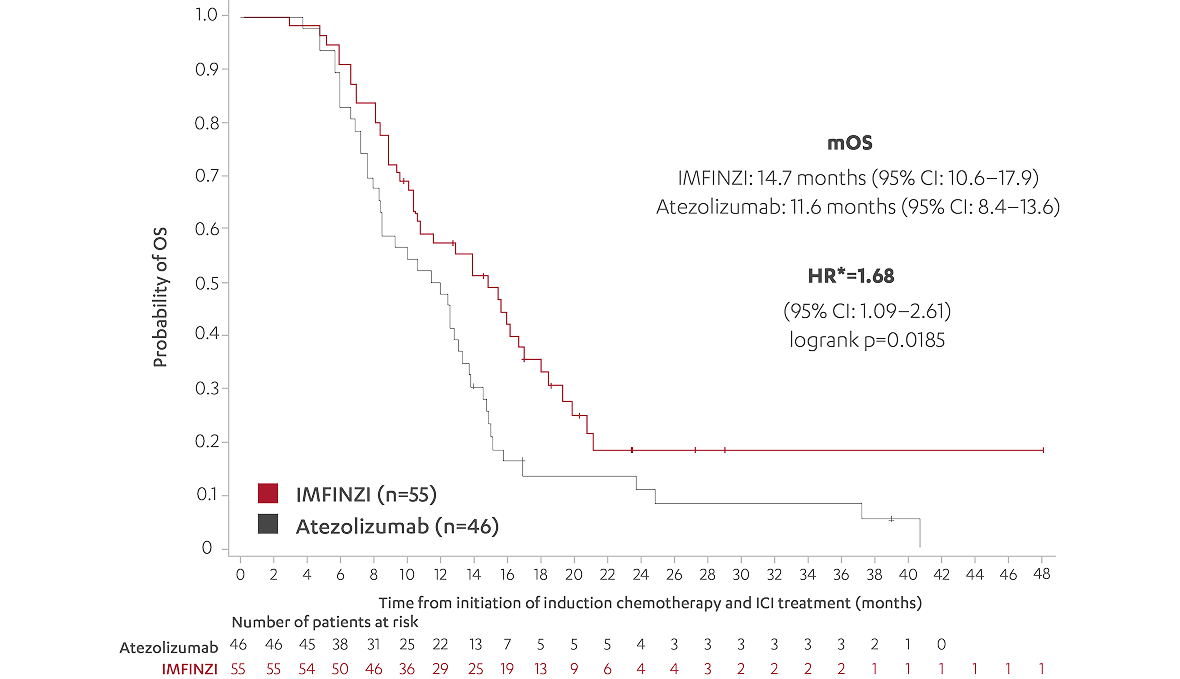
mOS and PFS outcomes in a real-world evidence study of atezolizumab and IMFINZI in ES-SCLC13

Graph comparing mOS and PFS outcomes in real-world comparison of CASPIAN vs. IMPower133
mPFS results:13
  • IMFINZI: 6.3 months (95% CI: 5.8–7.0)
  • Atezolizumab: 5.9 months (95% CI: 5.7–6.7)
  • HR*=1.22, 95% CI: 0.81–1.84, logrank P=0.3440
mPFS on second-line therapy results:13
  • IMFINZI: 3.4 months (95% CI: 2.3–5.0)
  • Atezolizumab: 2.3 months (95% CI: 1.3–6.4)
  • HR*=1.24, 95% CI: 0.69–2.23, P=0.4664)

Adapted from Vince M et al. Lung Cancer 2024.13

* Considering IMFINZI as the reference.13

CI – confidence interval; HR – hazard ratio; ICI – immune checkpoint inhibitors; mOS – median overall survival; mPFS – median progression-free survival; OS – overall survival.

Incidence of irAEs observed with IMFINZI and atezolizumab13

irAEs:13
  • IMFINZI: 32.7% (18/55)
  • Atezolizumab: 47.8% (22/46)
Patients with irAEs requiring hospitalisation:13
  • IMFINZI: 16.7% (3/18)
  • Atezolizumab: 36.4% (8/22)
  • P=0.204

Immune-related adverse events

 IMFINZI (n=55)Atezolizumab (n=46)p-value
Any irAEs, n (%)18 (32.7)*22 (47.8)0.157
Type, n (%)   
Colitis2 (3.6)6 (13)0.083
Pneumonitis4 (7.3)5 (10.9)0.53
Skin/Rash7 (12.7)5 (10.9)0.775
Other1 (1.8)3 (6.5)0.23
Hepatitis1 (1.8)3 (6.5)0.23

Adapted from Vince M et al. Lung Cancer 2024.13

Immune-mediated adverse reactions, including immune-mediated hyperthyroidism and hypothyroidism, colitis, pneumonitis, rash and hepatitis are special warnings in the IMFINZI SmPC. Please refer to the IMFINZI SmPC for a full list of adverse events and their management.1


* Follow-up of irAE management for one patient not available.13

irAE – immune-related adverse event.

IMFINZI and atezolizumab have not been compared in head-to-head trials13

Continue exploring the CASPIAN Regimen

Get to know the CASPIAN safety profile

Explore safety data

Learn more about the dosing details in the CASPIAN Regimen

Explore dosing and administration

Take a closer look at how IMFINZI works within the CASPIAN Regimen

Explore MOA

AJCC – American Joint Committee on Cancer; AUC – area under the curve; CD-80 – cluster of differentiation 80; CI – confidence interval; CNS – central nervous system; CT – computed tomography; ECOG – Eastern Cooperative Oncology Group; EORTC – European Organisation for Research and Treatment of Cancer; EP – etoposide + cisplatin or carboplatin; ESMO – European Society for Medical Oncology; ES-SCLC – extensive-stage small-cell lung cancer; HR – hazard ratio; HRQoL – health-related quality of life; ICI – immune checkpoint inhibitor; IO – immuno-oncology; irAE – immune-related adverse event; ITT – intention-to-treat; LS-SCLC – limited-stage small cell lung cancer; MoA – mechanism of action;  mOS – median overall survival; mPFS – median progression-free survival; MRI – magnetic resonance imaging; NICE – National Institute for Health and Care Excellence; ORR – objective response rate; OS – overall survival;  PCI – prophylactic cranial irradiation; PD-1 – programmed cell death protein 1; PD-L1 – programmed death ligand 1; PFS – progression-free survival; PRO – patient-reported outcome; Q3W – once every 3 weeks; Q4W – once every 4 weeks; QLQ – Quality of Life Questionnaire; QoL – quality of life; RECIST – Response Evaluation Criteria in Solid Tumours; SCLC – small cell lung cancer; SMC – Scottish Medicines Consortium; TTD – time to deterioration ; WHO – World Health Organization.

  1. IMFINZI Summary of Product Characteristics.
  2. NICE. Durvalumab with etoposide and either carboplatin or cisplatin for untreated extensive-stage small-cell lung cancer. https://www.nice.org.uk/guidance/ta1041 [Accessed August 2025].
  3. SMC. Durvalumab 50 mg/mL concentrate for solution for infusion (Imfinzi®). https://scottishmedicines.org.uk/media/8945/durvalumab-imfinzi-abbreviated-final-jan-2025-for-website.pdf [Accessed August 2025].
  4. Paz-Ares L, Dvorkin M, Chen Y et al. Lancet 2019;394(10212):1929-1939.
  5. Paz-Ares L, Chen Y, Reinmuth N et al. ESMO Open 2022;7(2):100408.
  6. Tecentriq Summary of Product Characteristics.
  7. Paz-Ares L, Dvorkin M, Chen Y et al. Lancet 2019;394(10212):1929-1939 (supplementary appendix).
  8. Chen Y, Paz-Ares L, Reinmuth N et al. JTO Clin Res Rep 2022;3(6):100330.
  9. Goldman JW, Dvorkin M, Chen Y et al. Lancet Oncol 2021;22(1):51-65.
  10. AstraZeneca Pharmaceuticals LP. Data on file. REF-217111.
  11. Goldman JW, Garassino MC, Chen Y et al. Lung Cancer 2020:149:46-52.
  12. Fayers PM, Aaronson NK, Bjordal K et al; on behalf of the EORTC Quality of Life Group. The EORTC QLQ-C30 Scoring Manual (3rd ed), 2001. European Organisation for Research and Treatment of Cancer.
  13. Vince M, Naqvi SMH, Pellini B et al. Lung Cancer 2024:198:107999.

GB-68886 | DOP: August 2025

Adverse events should be reported. Reporting forms and information can be found at www.mhra.gov.uk/yellowcard or search for MHRA Yellow Card in the Google Play or Apple App Store. Adverse events should also be reported to AstraZeneca by visiting https://contactazmedical.astrazeneca.com/ or by calling ‌‌‌0‌‌‌8‌‌‌‌‌0‌‌‌‌0‌‌‌ ‌‌7‌‌‌‌‌‌8‌‌‌3‌‌‌ ‌‌0‌‌‌‌‌0‌‌‌‌3‌‌‌‌3‌‌‌.

Connessiallasalute.it

This website was created for UK HCPs and has been designed to provide information to educate, empower and enable them in the great work they are doing for patients across a range of therapy areas. This website is intended for doctors, nurses, and pharmacists in the UK. Other UK residents please visit astrazeneca.co.uk.

Terms of use

Privacy Policy

Cookie Policy

Contact Us

LinkedIn

Twitter

©2025 AstraZeneca. GB-73925 | February 2026

Enhance your knowledge, stay informed

Be the first to know. Hear about events, products and ways to support your patients.

Thank you. We will be in touch

GB-74216| DOP : February 2026